What is red cabbage powder E163 used for
What is Red Cabbage Powder (E163)
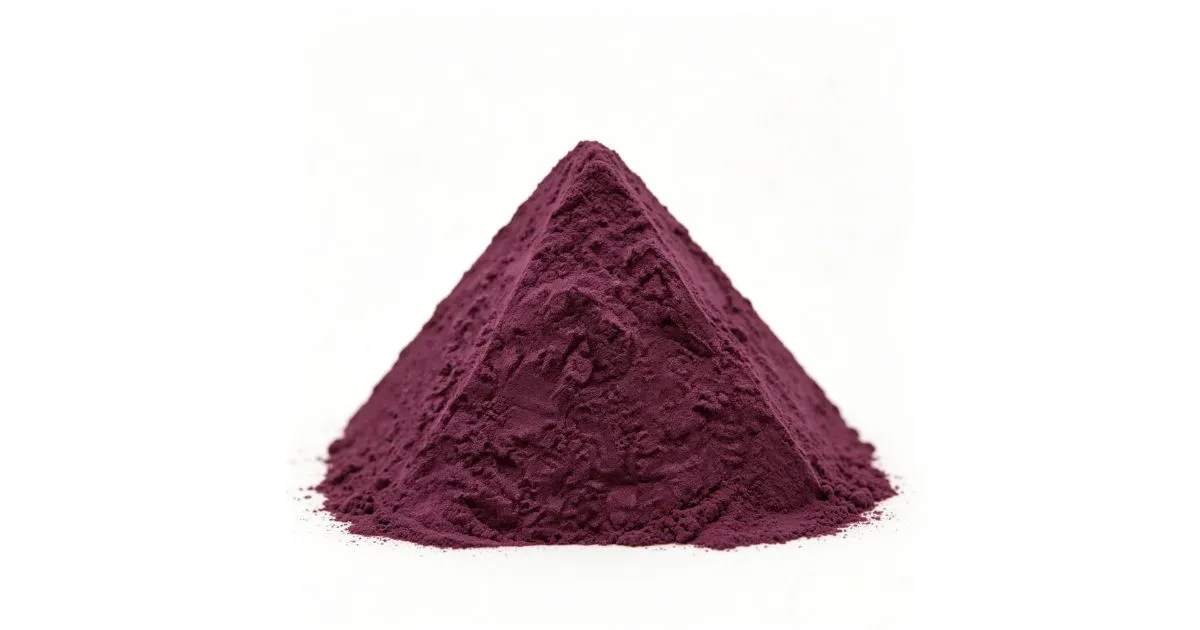
Red Cabbage Powder (E163) is a natural food colorant derived from the leaves of red cabbage (Brassica oleracea var. capitata f. rubra). Rich in anthocyanins, it provides vibrant shades of red, purple, and blue depending on the pH of the food system. As consumer demand for clean-label ingredients continues to grow, Red Cabbage Powder has become a preferred alternative to synthetic food colorings in the food, beverage, and nutraceutical industries.
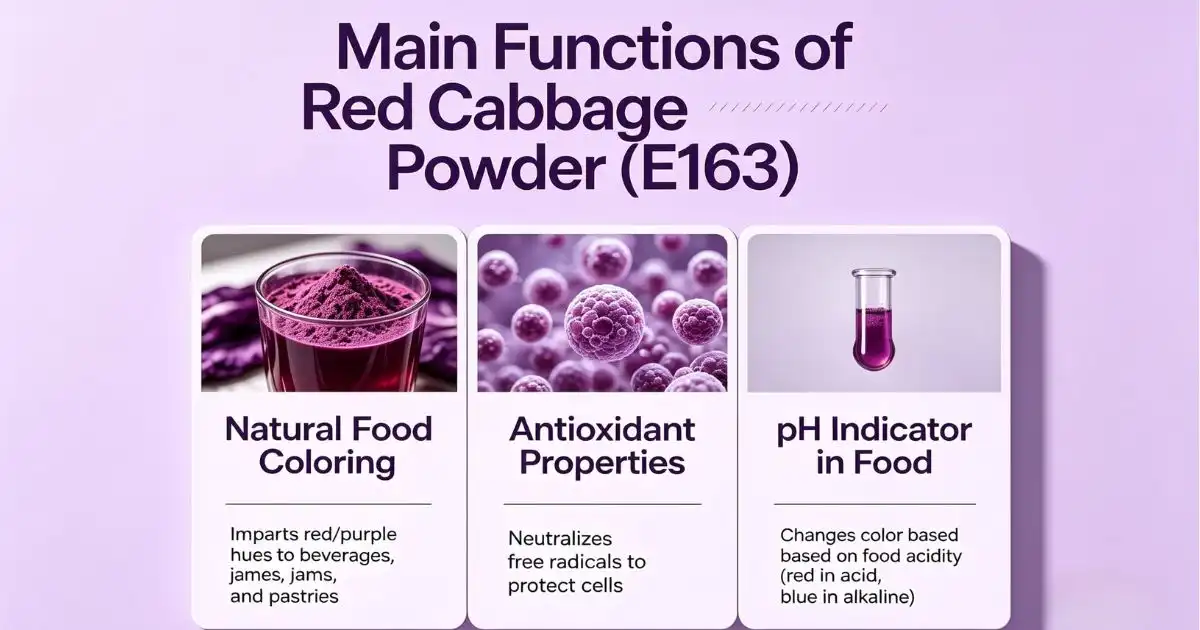
Main Functions of Red Cabbage Powder (E163)
Red Cabbage Powder offers several functional benefits beyond simply adding color to food products.
1. Natural Food Coloring
Provides attractive red, purple, violet, and blue hues without the use of artificial dyes.
2. Clean-Label Ingredient
Supports product formulations that use recognizable, plant-derived ingredients preferred by today's consumers.
3. pH-Sensitive Colorant
Changes color depending on acidity, making it useful for innovative food and beverage applications.
4. Antioxidant Source
Contains naturally occurring anthocyanins, which possess antioxidant properties.
5. Plant-Based Ingredient
Suitable for vegan, vegetarian, halal, and kosher products (subject to certification).
6. Water-Soluble Color
Easily disperses in aqueous food systems for uniform coloring.
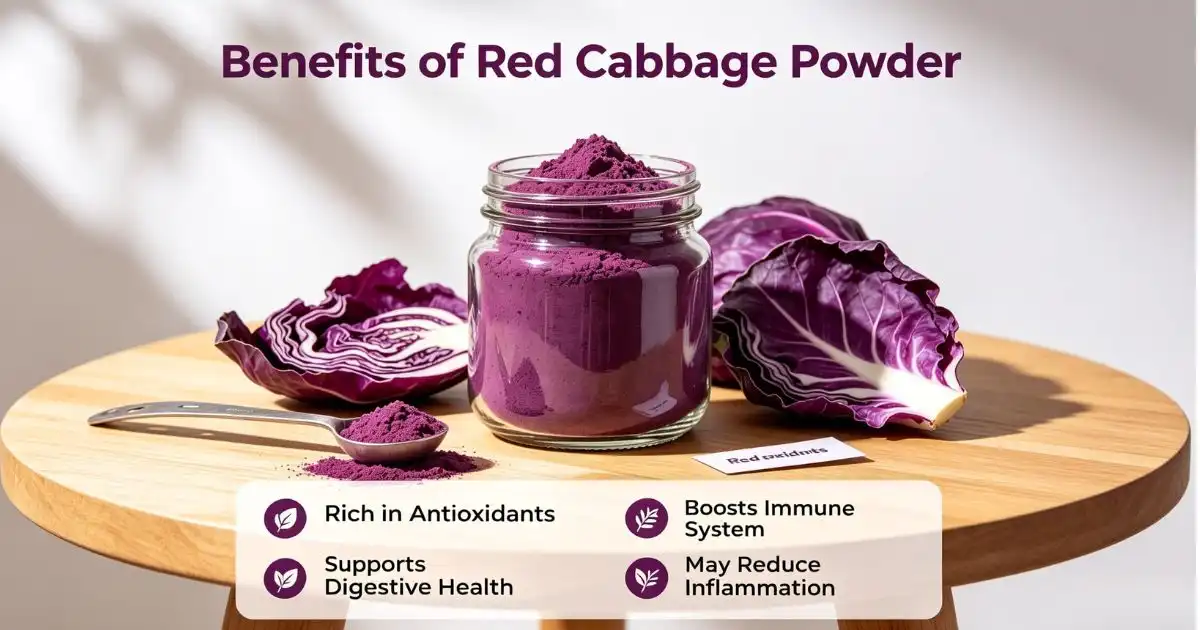
Benefits of Red Cabbage Powder
100% natural plant-derived colorant
Free from synthetic dyes
Excellent clean-label appeal
Rich in anthocyanins
Water soluble
Suitable for a wide range of food applications
Vegan and vegetarian friendly
Easy to incorporate into food formulations
Helps brands meet consumer demand for natural ingredients
Available in different color strengths depending on formulation
Product Specifications
The following specifications are typical values. Actual specifications may vary by manufacturer.
|
Parameter |
Specification |
|
Product Name |
Red Cabbage Powder |
|
Food Additive Code |
E163 |
|
Botanical Name |
Brassica oleracea var. capitata f. rubra |
|
Plant Part Used |
Leaf |
|
Appearance |
Fine purple to reddish-purple powder |
|
Color |
Purple, reddish-purple |
|
Odor |
Mild, characteristic |
|
Taste |
Mild vegetable taste |
|
Solubility |
Water soluble |
|
Moisture |
≤ 8% |
|
Particle Size |
80–100 mesh |
|
Anthocyanin Content |
5–25% (depending on grade) |
|
Loss on Drying |
≤ 8% |
|
Ash |
≤ 10% |
|
pH Stability |
Best under acidic to neutral conditions |
|
Heavy Metals |
Complies with food regulations |
|
Lead |
≤ 2 ppm |
|
Arsenic |
≤ 1 ppm |
|
Cadmium |
≤ 1 ppm |
|
Mercury |
≤ 0.1 ppm |
|
Total Plate Count |
≤ 10,000 CFU/g |
|
Yeast & Mold |
≤ 100 CFU/g |
|
E. coli |
Negative |
|
Salmonella |
Negative in 25 g |
|
Shelf Life |
24 months |
|
Storage |
Cool, dry place away from sunlight |
|
Packaging |
1 kg, 5 kg, 10 kg, 25 kg food-grade packaging |
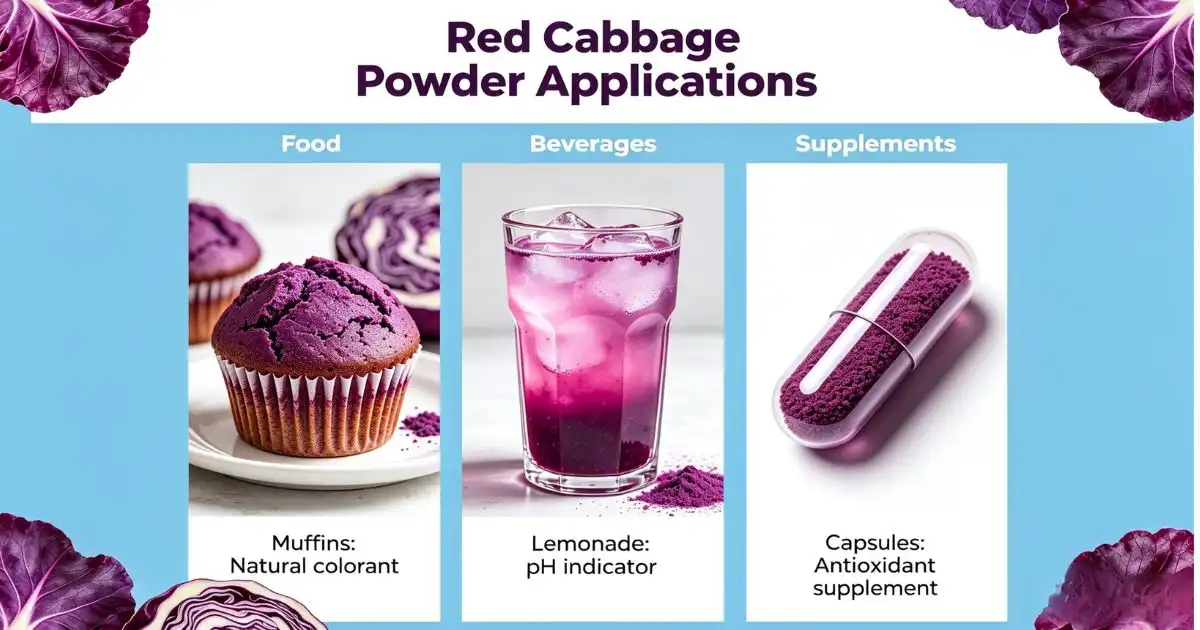
Applications
Red Cabbage Powder is widely used in various industries.
Food & Beverage
Fruit juices
Soft drinks
Sports drinks
Tea beverages
Dairy drinks
Yogurt
Ice cream
Cheese products
Bakery products
Cakes
Frostings
Cookies
Macarons
Chocolate decorations
Confectionery
Gummies
Hard candies
Marshmallows
Jellies
Fruit fillings
Jam
Nutraceutical Industry
Dietary supplements
Functional foods
Powder drink mixes
Meal replacement powders
Plant-Based Foods
Vegan desserts
Plant-based beverages
Alternative dairy products
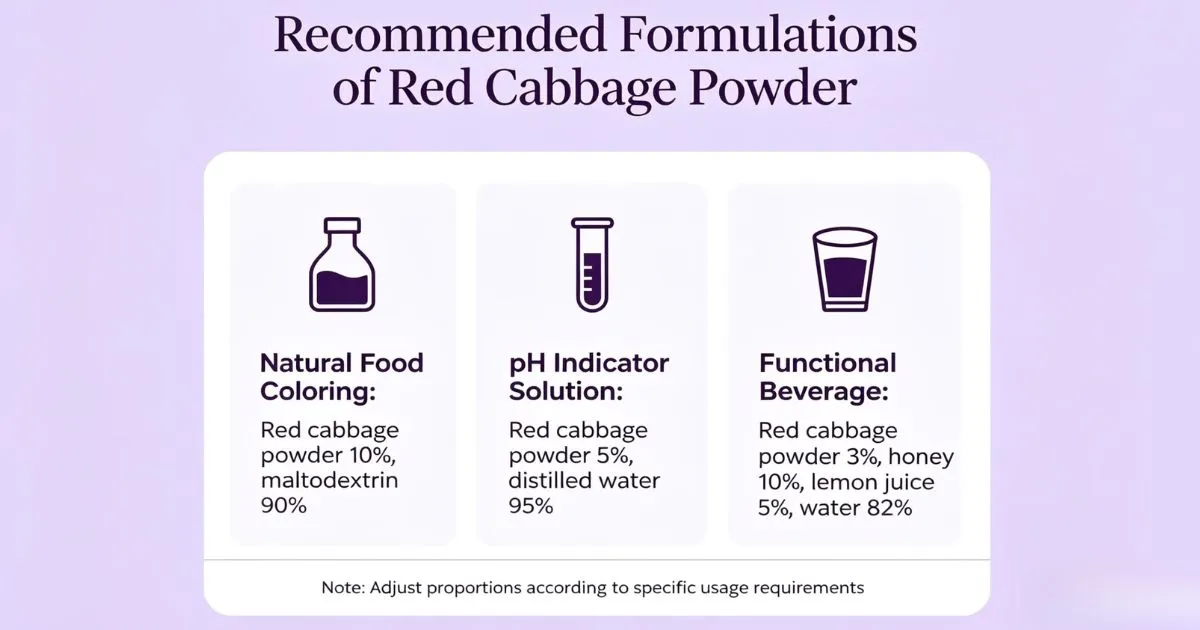
Recommended Formulations
The appropriate dosage depends on the desired color intensity and product type.
|
Product |
Recommended Dosage |
|
Fruit Juice |
0.02–0.08% |
|
Soft Drinks |
0.02–0.06% |
|
Sports Drinks |
0.02–0.05% |
|
Yogurt |
0.03–0.10% |
|
Ice Cream |
0.03–0.10% |
|
Gummies |
0.05–0.30% |
|
Hard Candy |
0.05–0.25% |
|
Jelly |
0.05–0.20% |
|
Bakery Products |
0.03–0.15% |
|
Frostings |
0.05–0.20% |
|
Nutritional Powders |
0.02–0.10% |
Note: Actual usage levels should be optimized through formulation trials based on the product's pH, processing conditions, and desired color intensity.
OEM & Private Label Manufacturing Services
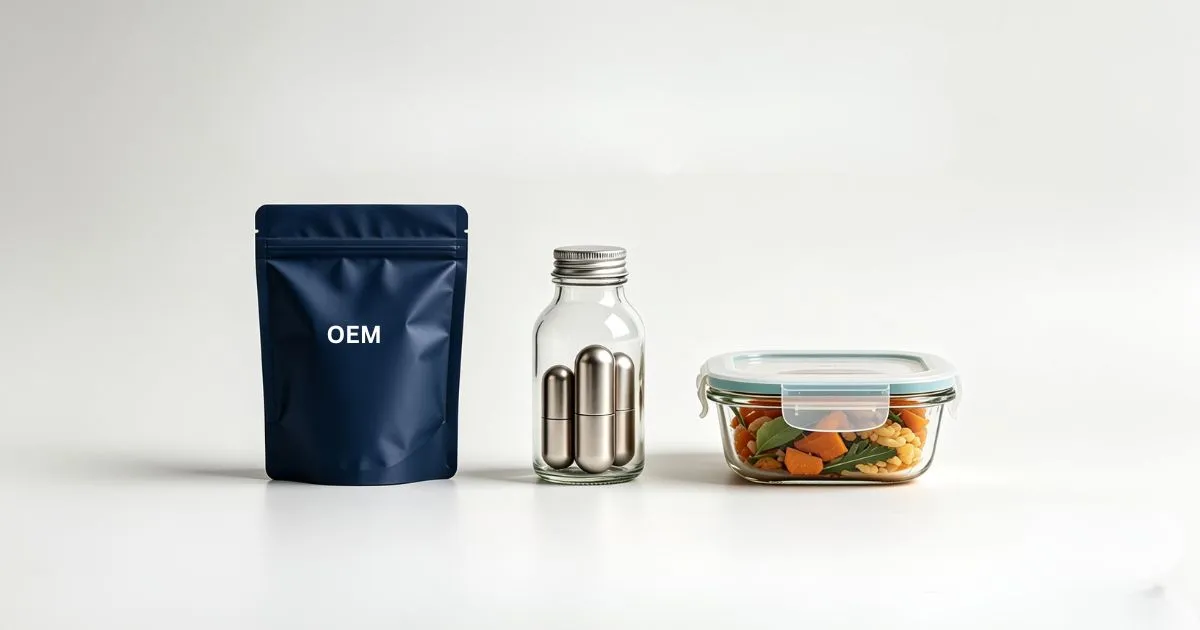
Many ingredient manufacturers offer comprehensive OEM (Original Equipment Manufacturer) and Private Label services for Red Cabbage Powder to help businesses launch customized products efficiently.
Typical OEM services include:
Custom Formulation
Customized anthocyanin concentration
Tailored color intensity
Application-specific formulations
Blended natural color systems
Packaging Options
100 g retail pouches
250 g and 500 g packs
1 kg foil bags
5 kg bags
10 kg cartons
25 kg fiber drums or food-grade bags
Custom private-label packaging
Private Label Services
Custom brand logo and packaging design
Product labeling compliant with target markets
Multilingual labels
Barcode printing
Batch coding and traceability
Quality Assurance
GMP manufacturing
HACCP-compliant production
ISO-certified facilities
Third-party laboratory testing
Certificate of Analysis (COA)
Microbiological testing
Heavy metal testing
Documentation Support
· Product Specification Sheet
Technical Data Sheet (TDS)
Safety Data Sheet (SDS), if applicable
Certificate of Analysis (COA)
Allergen Statement
Non-GMO Statement (where applicable)
Halal and Kosher certificates (if certified)
Storage and Handling
To maintain product quality:
Store below 25°C in a cool, dry place.
Keep away from direct sunlight and high humidity.
Reseal packaging immediately after opening.
Avoid prolonged exposure to air, heat, and moisture.
Use clean, dry utensils during handling.
Conclusion
Red Cabbage Powder (E163) is a versatile, plant-based food colorant that provides vibrant natural shades while supporting the growing demand for clean-label products. Its anthocyanin-rich composition, water solubility, and broad application range make it an excellent choice for beverages, confectionery, dairy, bakery, and nutraceutical formulations. In addition to its coloring capability, it offers the advantages of being vegan-friendly, naturally derived, and suitable for a variety of product innovations. With customizable formulations, comprehensive OEM and private-label services, and adherence to international quality standards, Red Cabbage Powder is an ideal ingredient for brands looking to develop high-quality, naturally colored food and beverage products.
Partner with Yangge for Premium Natural Colorant Solutions
You can trust Yangge Biotech as your Red Cabbage Powder E163 source because they have the technical know-how, use safe sourcing methods, and make sure the quality is top-notch. Our GMP-certified factories make sure that every batch has the same amount of anthocyanin and is stable. This is backed up by full legal paperwork that includes ISO, HACCP, Kosher, and Halal certifications. We keep a lot of items in stock so that orders can be filled quickly, and our minimum orders start at just 1 kg for recipe development. Send an email to info@yanggebiotech.com today to get a free sample and see for yourself why Yangge is the chosen Red Cabbage Powder E163 maker for many high-end brands around the world. During product development, our customer service team is available 24 hours a day, 7 days a week. They will help you make sure that your clean-label ideas hit the market with trust in the performance of their ingredients and the stability of their supply.
FAQ
Q: Can we get some samples to test before purchasing?
A: Of course, we can provide free samples of 20 to 100 grams, but the shipping cost is at the customer's expense. The shipping cost can be deducted from the next order, or the samples can be sent through your courier account.
Q: Do your products have relevant certifications?
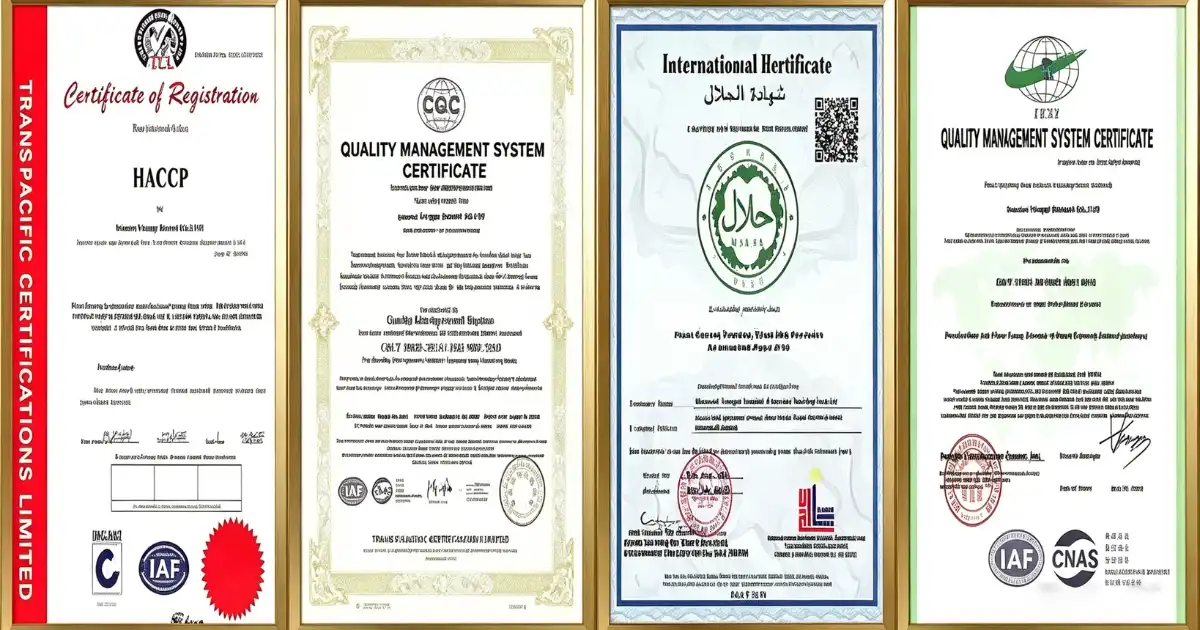
A: Yes, our products are certified for HALAL, ISO, HACCP, Kosher, and other certifications.
Q: What is the minimum order quantity (MOQ)?
A: Small batches of samples can be customized according to your requirements.
Q: Do you offer OEM and ODM services? Can the formula be customized based on our own?
A: Of course, we provide ODM and OEM services to many customers. Our product range includes softgels, capsules, tablets, sachets, granules, and private label services. Simply contact us and let us know your requirements. Our experienced R&D team can also develop new products with specific formulas.
Please contact us to design your own branded products.
Q: How do you handle quality complaints?
A: First, we have a comprehensive quality control SOP. We provide authoritative third-party inspection reports for almost all products before shipment to minimize the possibility of quality issues. Second, we have a comprehensive return and exchange procedure. If there is a genuine quality dispute, we will strictly follow the SOP.
Q: How do you ship? How long does delivery take?
A: For small orders, we typically use DHL, UPS, EMS, FedEx, or TNT. Delivery typically takes 3-7 days. We also offer air and sea freight services. We have a strong freight forwarding team and can provide you with a one-stop service, including DDP and DDU.
Q: What are your payment terms?
A: 100% prepayment, payable by T/T, Western Union, MoneyGram, or PayPal.
Q: What is the shelf life of your products?
A: 2 years with proper storage.
References
1. Rodriguez-Amaya, D.B. (2019). Natural Food Pigments and Colorants. Current Opinion in Food Science, Volume 7, Pages 20-26.
2. Jackman, R.L. and Smith, J.L. (2018). Anthocyanins and Betalains: Chemistry and Applications in Food Processing. Handbook of Natural Colorants, Second Edition, John Wiley & Sons.
3. Giusti, M.M. and Wrolstad, R.E. (2021). Acylated Anthocyanins from Edible Sources and Their Applications in Food Systems. Annual Review of Food Science and Technology, Volume 12, Pages 327-353.
4. Sigurdson, G.T., Tang, P., and Giusti, M.M. (2017). Natural Colorants: Food Colorants from Natural Sources. Comprehensive Reviews in Food Science and Food Safety, Volume 16, Issue 1, Pages 180-198.
5. European Food Safety Authority (EFSA). (2020). Scientific Opinion on the Re-evaluation of Anthocyanins (E163) as Food Additives. EFSA Journal, Volume 18, Issue 11.
6. Gould, K., Davies, K.M., and Winefield, C. (2018). Anthocyanins: Biosynthesis, Functions, and Applications. Springer Science & Business Media, Plant Biology Series.

Based on your location and order quantity, you will have the opportunity to receive a limited time free shipping promotion!
Who we are
Popular Blogs