What Is Oat Beta Glucan Powder Used for in Food Products?
Yangge Biotech supplies high-quality Oat Beta Glucan Powder, a natural soluble dietary fiber derived from oats and widely used in dietary supplements, functional foods, beverages, nutrition powders, cereals, and other health-focused formulations. Oat beta glucan is valued for its excellent functional properties and is commonly used in products designed to support digestive wellness, heart health, healthy cholesterol management, and daily fiber intake. Yangge Biotech provides reliable bulk supply, customized specifications, OEM packaging, and strict quality control to meet the requirements of food, beverage, and dietary supplement manufacturers worldwide. For product specifications, COA, samples, bulk pricing, or customized solutions, contact us or email at info@yanggebiotech.com.
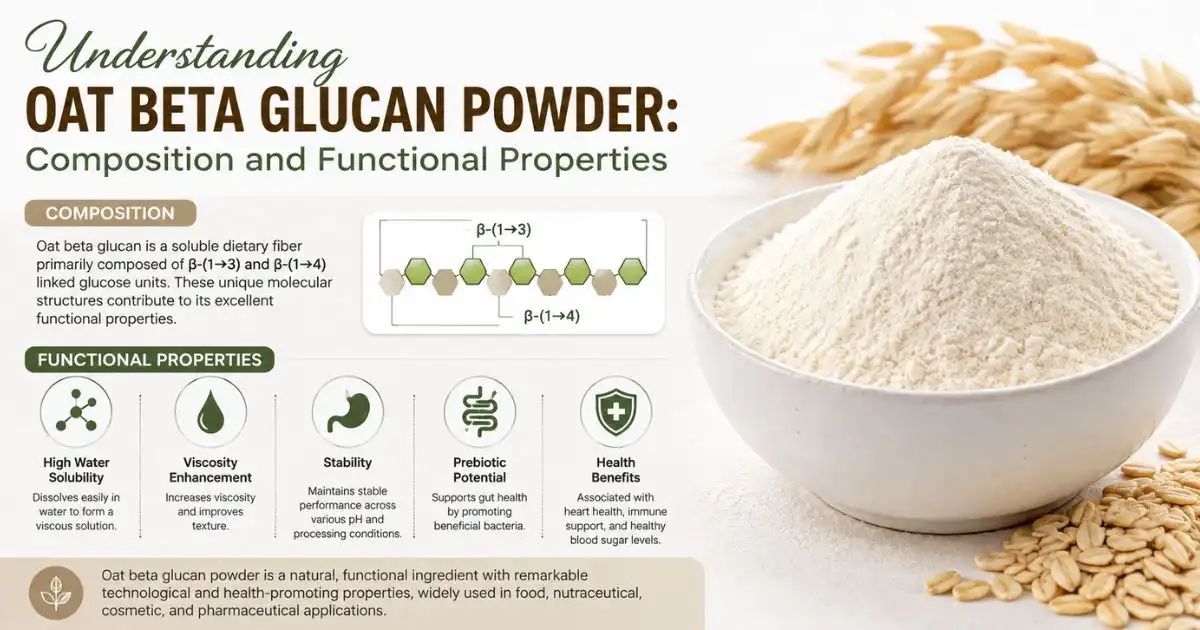
Oat Beta Glucan powder serves as a multifunctional ingredient widely utilized across functional foods, dietary supplements, and beverage formulations. Derived from the endosperm cell walls of oats, this water-soluble fiber consists of β-(1→3) and β-(1→4) linked glucose polymers that deliver scientifically validated cardiovascular benefits while improving product texture, viscosity, and shelf stability.
Food manufacturers incorporate this bioactive polysaccharide to meet FDA and EFSA health claim requirements, enhance nutritional labeling, and address consumer demand for clean-label, heart-healthy ingredients with proven efficacy in cholesterol management and glycemic regulation.
Understanding Oat Beta Glucan Powder: Composition and Functional Properties
What Makes This Soluble Fiber Unique?
The molecular structure of Oat Beta Glucan is different from other food fibers because it has a mixed-linkage structure. In contrast to yeast or mushroom glucans, which have branched structures, this straight polysaccharide has about 70% β-(1→4) links and 30% β-(1→3) connections. This design makes it possible for the molecule to dissolve fully in water, creating thick solutions that are useful in food preparation. Our thirty-year study shows that molecular weight is directly related to viscosity and biological activity, with higher molecular weight parts (>1,000 kDa) having the best effects on the body.
Extraction and Processing for Food-Grade Quality
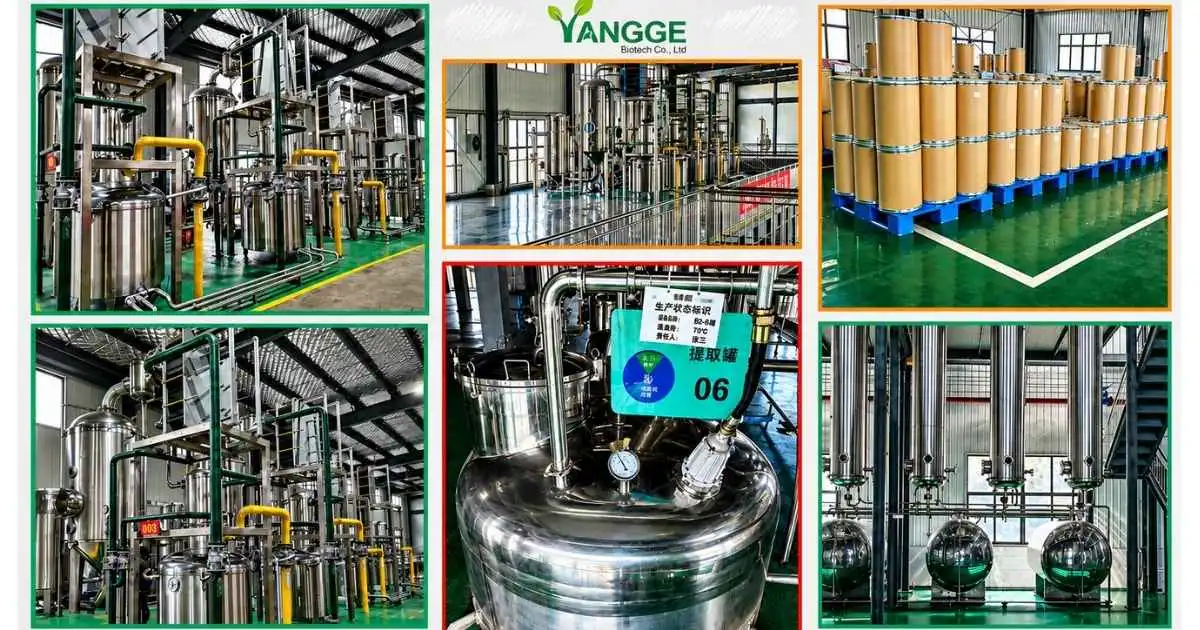
Modern methods of separation use enzymes to separate Oat Beta Glucan from oat bran while getting rid of the starch, protein, and fatty parts. First, controlled grinding is used to expose the cell wall materials. Next, alpha-amylase is used to get rid of any remaining carbs.
After that, the polysaccharide is concentrated through filter and precipitation until it reaches the desired amount of purity, which is usually between 70% and 90% Oat Beta Glucan content. In Yangge's production process, temperatures stay below 60°C during extraction to protect the structure of molecules and stop enzymes from breaking them down in a way that would change the viscosity profiles.
Functional Properties in Food Matrices
Oat Beta Glucan's hydrocolloid structure gives product developers a number of technical benefits. When the fiber is wet, it turns into stable gels that help baked goods keep their moisture longer by lowering the rate at which they dry out. Because it can emulsify, it can be used to replace some fat in dairy products without changing the texture or softness.
The powder behaves like pseudoplastic, which means that its viscosity decreases under shear stress during processing but increases again during storage. This gives the processor a lot of options for how to use it. Because of these qualities, Oat Beta Glucan can be used to change the texture, keep foods stable, and add nutrients to a wide range of food types.
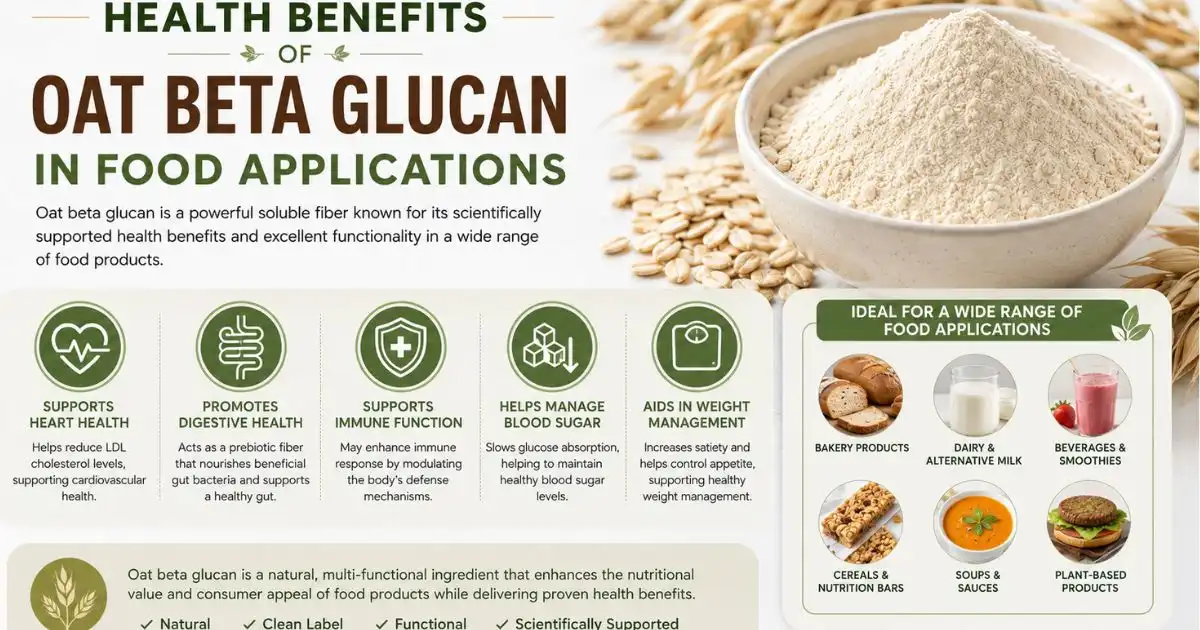
Health Benefits of Oat Beta Glucan in Food Applications
Cardiovascular Support and Cholesterol Reduction
There is clinical proof that eating 3 grams of Oat Beta Glucan every day lowers total and LDL cholesterol levels by 5 to 10 percent in four to six weeks. The process involves interfering with the reabsorption of bile acids in the small intestine based on thickness. This makes the liver change cholesterol into new bile acids.
The FDA (21 CFR 101.81) and EFSA both allow health claims that say Oat Beta Glucan helps keep blood cholesterol levels normal as long as the product has at least 1 gram of Oat Beta Glucan per serving. With this regulatory support, companies can set their products apart by emphasizing their cardiovascular health in a way that appeals to older people and people who are interested in their health.
Glycemic Control and Weight Management
Soluble fiber slows down the emptying of the stomach and lowers the rate at which glucose is absorbed. This lowers blood sugar spikes after a meal. Continuous glucose monitoring studies have shown that meals with 4 grams of Oat Beta Glucan lower glycemic response by 20–30% compared to control formulations. Better satisfaction and lower hunger hormones (ghrelin) help people with diabetes and those trying to lose weight, so this feature supports the development of foods that are good for them. The fiber's low caloric density (about 2 kcal/g) makes it even more useful in low-calorie products that aim to improve metabolic health.
Immune Modulation and Digestive Health
While claims about cardiovascular health are what most regulatory decisions are based on, new study shows how Oat Beta Glucan interacts with immune cells in the gut. The fiber acts as a prebiotic base, encouraging the growth of good Bifidobacteria and Lactobacilli in the gut. Byproducts of fermentation, especially short-chain fatty acids like butyrate, help keep the colon healthy and lower inflammation.
Recent research suggests that Oat Beta Glucan may improve the activity of macrophages and natural killer cells. However, these immune effects need higher doses (5–10 g/day) than cardiovascular uses, and most countries do not yet allow specific health claims to be made.
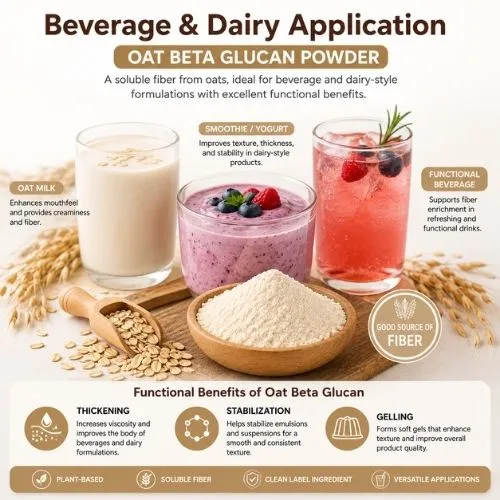
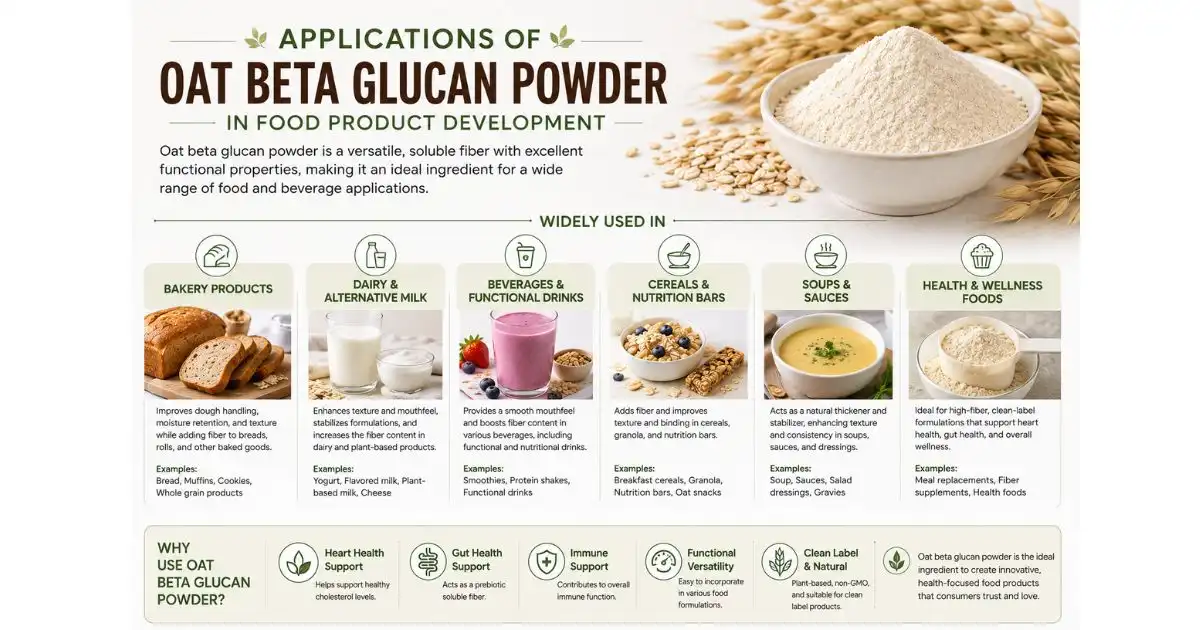
Applications of Oat Beta Glucan Powder in Food Product Development
It's important to look at specific application categories where the fiber offers measurable performance gains and market benefits in order to understand how procurement managers and R&D engineers successfully combine this functional ingredient.
Bakery and Grain-Based Products
Adding Oat Beta Glucan to bread, muffins, and breakfast foods helps them keep their wetness while baking and keeps them fresh for 30–40% longer than regular recipes. The fiber links water molecules, which slows down the breakdown of starch, which makes the food hard and stale. Usually, between 2 and 5 percent of the weight of the flour is used. This is the right amount to balance nutritional benefits with the ability to handle dough.
The ability to bind works especially well in energy bars and breakfast mixes, cutting down on the need for sugar syrups while keeping the mixture together. When working on these applications, making sure that the hydration ratios are right (1:15 fiber-to-water minimum) stops the viscosity from getting too high, which could make extrusion or sheeting operations harder.
Dairy and Plant-Based Alternatives
Oat Beta Glucan is added to yogurt at concentrations between 0.3% and 0.8% to make it creamier and give it more body without adding fat or thickening starches. During fermentation, the fiber keeps the protein structures stable, which stops syneresis (whey separation), which hurts the texture and appearance.
Oat Beta Glucan at 0.2% to 0.5% amounts imitates the mouthfeel of dairy fats in plant-based milk replacements. This fixes the problem of oat, almond, and rice-based drinks tasting thin and watery. The fiber's ability to stop ice crystals from forming is used in ice cream and frozen desserts to make the textures smoother and less icy after temperature changes during distribution.
Beverage and Supplement Formulations
Adding high-molecular-weight Oat Beta Glucan to functional drinks can be hard from a technical standpoint because too much viscosity can make the drinks taste bad or make them harder to process. Using forms that have been broken down by enzymes and have molecular weights between 50 and 300 kDa makes them soluble in cold water while keeping their cholesterol-lowering effects.
Smoothies, protein shakes, and meal replacement drinks that are ready to drink usually have between 0.75 and 1.5 grams of protein per serving. This means that people can meet their daily 3 grams of protein goal by drinking more than one serve. Oat Beta Glucan is hygroscopic, which means it can clump in humid places if protective barriers fail. This means that powder supplement sachets and capsules need to be carefully packaged to keep moisture levels low.
Table 1: Recommended Dosage Ranges Across Food Categories
| Product Category | Usage Level | Beta Glucan Content/Serving | Primary Function |
|---|---|---|---|
| Bread & Baked Goods | 2-5% of flour | 0.5-1.0 g | Shelf life and keeping moisture |
| Breakfast Cereals | 5-10% inclusion | 1.0-2.0 g | Follow-up on health claims |
| Yogurt & Dairy | 0.3-0.8% | 0.3-0.7 g | Feel and creaminess |
| Beverages (RTD) | 0.1-0.3% | 0.75-1.5 g | Viscosity and fullness |
| Dietary Supplements | Form-only | 3.0 g | Dealing with cholesterol |
Comparison and Selection of Oat Beta Glucan Ingredients for B2B Procurement
Evaluating Alternative Beta Glucan Sources
Procurement experts often look at Oat Beta Glucan sources other than oats, such as wheat and yeast. Barley beta glucan has the same mixed-linkage structure as oat varieties and lowers cholesterol in the same way. However, it doesn't have independent FDA health claim authorization and is hard to get because it's hard to grow. Yeast beta glucans have twisted structures with β-(1→3) and β-(1→6) that don't dissolve easily.
They are more useful for supporting the defense system than for cardiovascular purposes. Because of the changes in how they work, yeast glucans can't be used instead of oat types in recipes that want to make FDA-approved claims about heart health. While psyllium husk can help keep your digestive system regular, it has a different viscosity profile and doesn't have the same regulatory claim framework as cereal beta glucans.
Powder Form Advantages for Manufacturing
Whether to use powder instead of liquid concentrates or granules that are ready to be put into capsules depends on the size of the production and the need for recipe freedom. Powdered Oat Beta Glucan has a longer shelf life (24 months if kept properly), is easier to keep track of, and is easier to dose precisely when making batches.
Yangge's off-white fine powder breaks evenly in both cold and warm processing conditions, so you don't need any special tools to make it work. Capsule-grade materials go through extra agglomeration to make them move better through automatic encapsulation lines. They are more expensive, but food makers who use normal mixing systems may not see the value in the price difference.
Supplier Evaluation Criteria
As a first step in quality control, the amount of Oat Beta Glucan must be checked using enzymatic methods (AOAC 995.16), since standard spectrophotometric methods can give false readings of purity by picking up on interfering polysaccharides. Yangge gives third-party certificates from recognized labs that confirm the amounts of Oat Beta Glucan, the distribution of molecular weights using SEC-MALLS analysis, and the viscosity measurements done in standard conditions (0.5% solution, 20°C).
As required by European safety standards, compliance paperwork should include proof that the product is non-GMO, allergen testing that shows it is gluten-free below 20 ppm, and PAH4 analysis that shows benzopyrene levels are less than 10 ppb. Flexible minimum order amounts (starting at 1 kg) from suppliers allow for cost-effective testing of samples and applications before committing to large-scale purchases.
Procuring Oat Beta Glucan Powder: Best Practices for B2B Buyers
Sourcing Strategy and Supply Chain Considerations
To build solid trade relationships, you need to know what kinds of Oat Beta Glucan goods can be made in your area and how consistent the quality is. Oats are mostly grown in temperate climates, like North America, Northern Europe, and Australia. Processing plants are located close to agricultural areas to keep the cost of transporting raw materials as low as possible.
Lead times are usually between 3 and 4 weeks for stock items and between 6 and 8 weeks for OEM packing or custom purity requirements. Dual-source strategies that combine lowering costs with ensuring supply are good for buyers, especially when making items that need to be available all the time. Yangge keeps normal inventory levels of 50 to 100 kg, which means they can support both new development projects and established production plans without having to worry about allocation issues.
Certification Requirements and Regulatory Compliance
To get into global markets, companies need to get a lot of different kinds of certifications that cover things like food safety, religious dietary laws, and, if necessary, organic claims. The ISO 22000 and HACCP standards show that hazards are controlled in a planned way throughout the production process. They cover important control points for chemical residues, allergen cross-contact, and microbial contamination.
The ability to sell to specific groups of people with special food needs is increased by Kosher and Halal licenses. For European markets, following the rules for PAH4 limits and heavy metal testing (for example, lead, arsenic, cadmium, and mercury) as outlined in Commission Regulation (EC) No 1881/2006 keeps shipments from being rejected and regulatory holds from happening. By asking for records of analysis for each output lot, you can keep track of them and do your research in case there are quality problems later on.
Pricing Dynamics and Contract Negotiation
Oat Beta Glucan powder prices on the market vary a lot depending on the purity grade, the amount of the order, and any extra services that are offered. Standard 70% purity material costs between $45 and $65 per kg when bought in 25-kg amounts. Pharmaceutical-grade 85% purity or higher costs between $80 and $120 per kg. When you commit to buying more than 500 kg of goods every year, you usually get 15-20% off the price and get priority when supplies are low.
To find the total landed costs, you need to think about more than just the unit price. You also need to think about shipping (container shipping vs. air freight for urgent needs), import duties, and storage costs for large purchases. Long-term supply deals with price reviews every three months protect against changes in the prices of commodities while still allowing standards to be changed as formulations change during the lifecycle management of a product.
Table 2: Comparison of Beta Glucan Powder Specifications
| Specification | Standard Grade | Premium Grade | Pharmaceutical Grade |
|---|---|---|---|
| Beta Glucan Content | 70–75% | 80 to 85% | ≥90% |
| Molecular Weight | >1000 kDa | >1200 kDa | >1500 kDa |
| Viscosity (0.5% solution) | 50 to 100 cPs | 100 to 200 cPs | >200 cPs |
| Protein Content | <10% | <5% | <3% |
| Target Application | Foods and drinks | Adding Things | Nutrition in hospitals |
| Price Range (USD/kg) | $45 to $65 | $65 to $95 | $95 to $150 |
Emerging Market Trends and Innovation Opportunities
As people become more aware of gut health and metabolic wellness, applications are growing beyond their usual cardiovascular placement. Functional food bars, protein-rich pasta, and beverage lines that focus on defense are all high-growth areas where Oat Beta Glucan can be used to make products that offer multiple benefits. When it comes to clean labels, recognizable ingredient names like "oat fiber" are preferred over synthetic additives. This makes Oat Beta Glucan a better choice than modified starches and synthetic gums.
Controlled hydrolysis technology has led to the creation of instant-soluble versions that can be sold in single-serve stick packs and on-the-go formats. This means that these products can be sold in places like convenience stores and vending machines. By keeping an eye on these trends, procurement teams can predict changes in formulation and make smart partnerships with ingredient providers that help competitive product innovation cycles.
Conclusion
Oat Beta Glucan powder is a commercially useful ingredient that has been proven to work in functional foods, dietary supplements, and health-focused drinks. It solves important formulation problems. Its special chemical structure is good for your heart health, as claimed by the FDA and EFSA. It also helps with changing textures, controlling moisture, and putting products on the market without any mess.
To make sure uniform quality and legal compliance, it's important to look at the supplier's certifications, Oat Beta Glucan content, and molecular weight specs when you're buying something. As the need for functional ingredients backed by proof and clear sourcing grows, Oat Beta Glucan is set to continue growing across global markets. Manufacturers who carefully include this bioactive fiber in their product development plans will benefit.
FAQ
What is the difference between oat beta glucan and yeast beta glucan?
The main difference is in the makeup of the molecules and how they work biologically. Oat Beta Glucan has both β-(1→3) and β-(1→4) links, making it a straight, water-soluble carbohydrate that lowers cholesterol and is good for heart health. Yeast beta glucan has β-(1→3) and β-(1→6) branching structures that don't dissolve, helping the defense system more than managing fats. The FDA only allows beta glucan that comes from oats to be used for heart health claims, which require 3 grams of daily intake.
How should manufacturers store beta glucan powder to prevent quality degradation?
Oat Beta Glucan is hygroscopic, which means it absorbs water from the air around it. This makes it clump together and possibly break down by enzymes, which lowers its viscosity. Keep in tightly sealed, moisture-proof aluminum foil bags in controlled settings where the temperature stays between 15°C and 25°C and the relative humidity stays below 60%. Keep away from direct light, which can speed up the oxidative breakdown of remaining fat parts. When stored properly, material stays in good shape for 24 months after it was made.
Can beta glucan powder dissolve completely in cold water formulations?
Native Oat Beta Glucan with a high molecular weight needs heat or high pressure to fully hydrate, which makes it hard to use in cold-processed drinks. Versions that have been broken down by enzymes have a smaller molecular weight (50–300 kDa), so they dissolve instantly in cold water while still lowering cholesterol. This makes them perfect for ready-to-mix protein shakes and single-serve packets. Yangge offers both standard and instant-soluble grades to meet the needs of different applications and processing methods.
Partner with Yangge Biotech for Premium Oat Beta Glucan Powder Supply
Yangge Biotech Co., Ltd. sells pharmaceutical-grade Oat Beta Glucan powder and offers a wide range of quality assurance and flexible OEM packing options for supplement and functional food brands. Our non-GMO, non-irradiated product meets European PAH4 standards with benzopyrene levels ≤10 ppb, which was confirmed by testing by a third-party lab. With ISO, HACCP, Kosher, and Halal approvals, we can sell our products on markets around the world and keep an inventory that can handle sales as small as 1 kg.
Our specialized research and development (R&D) team works directly with purchasing managers and product creators to improve formulations, fix problems with processing, and make sure that all of our products are in line with regulations in North America, Europe, and Southeast Asia. Contact us or you can email our experts at info@yanggebiotech.com to ask for samples, talk about custom requirements, or look into partnership opportunities with a reliable Oat Beta Glucan supplier that is committed to sustainability and new ideas.
References
1. Othman, R. A., Moghadasian, M. H., & Jones, P. J. (2011). Cholesterol-lowering effects of oat β-glucan. Nutrition Reviews, 69(6), 299-309.
2. Tiwari, U., & Cummins, E. (2011). Meta-analysis of the effect of β-glucan intake on blood cholesterol and glucose levels. Nutrition, 27(10), 1008-1016.
3. Grundy, M. M., Quint, J., Rieder, A., Ballance, S., Dreiss, C. A., Cross, K. L., & Gray, R. (2017). The impact of oat structure and β-glucan on in vitro lipid digestion. Journal of Functional Foods, 38, 378-388.
4. Ahmad, A., Anjum, F. M., Zahoor, T., Nawaz, H., & Dilshad, S. M. (2012). Beta glucan: a valuable functional ingredient in foods. Critical Reviews in Food Science and Nutrition, 52(3), 201-212.
5. Rebello, C. J., O'Neil, C. E., & Greenway, F. L. (2016). Dietary fiber and satiety: the effects of oats on satiety. Nutrition Reviews, 74(2), 131-147.
6. Lazaridou, A., & Biliaderis, C. G. (2007). Molecular aspects of cereal β-glucan functionality: Physical properties, technological applications and physiological effects. Journal of Cereal Science, 46(2), 101-118.

Based on your location and order quantity, you will have the opportunity to receive a limited time free shipping promotion!
Who we are
Popular Blogs