What is Gardenia Blue natural color used for?
Yangge Biotech supplies high-quality Gardenia Blue Powder, a natural blue food color produced from carefully selected gardenia fruit using advanced extraction and processing technology. This vibrant plant-based colorant is water-soluble and available in specifications such as E30, E60, E80, E100, and E200. Gardenia Blue Powder provides an attractive blue color and is widely suitable for beverages, confectionery, dairy products, bakery products, desserts, functional foods, dietary supplements, and cosmetic formulations. Yangge Biotech provides reliable bulk supply, strict quality control, customized specifications, and OEM/ODM packaging solutions for manufacturers, distributors, and brands worldwide. For product specifications, COA, samples, pricing, or customized solutions, contact Yangge Biotech at info@yanggebiotech.com.
Gardenia Blue natural color is primarily used in the food and beverage industry as a clean-label alternative to synthetic blue dyes, derived from the fruit of Gardenia jasminoides. Manufacturers worldwide apply this vibrant pigment in confectionery, beverages, dairy products, and baked goods to achieve appealing blue hues without artificial additives. Its stability across varying pH levels and heat conditions makes it invaluable for product developers seeking natural solutions that maintain color integrity throughout processing and shelf life.
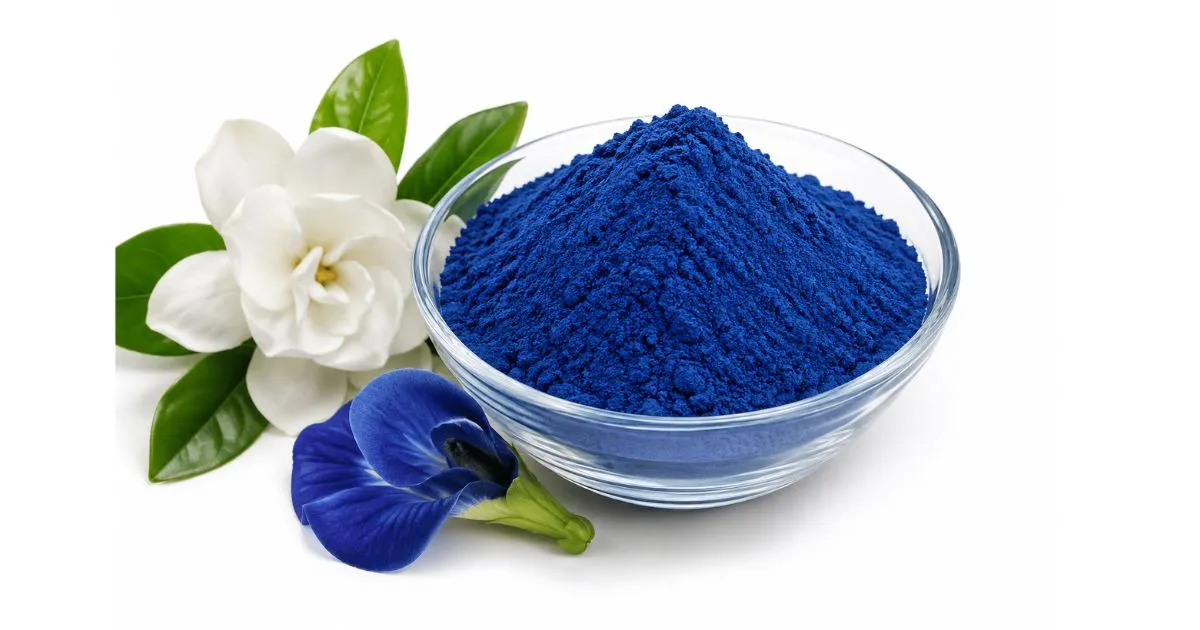
Introduction to Gardenia Blue Natural Color
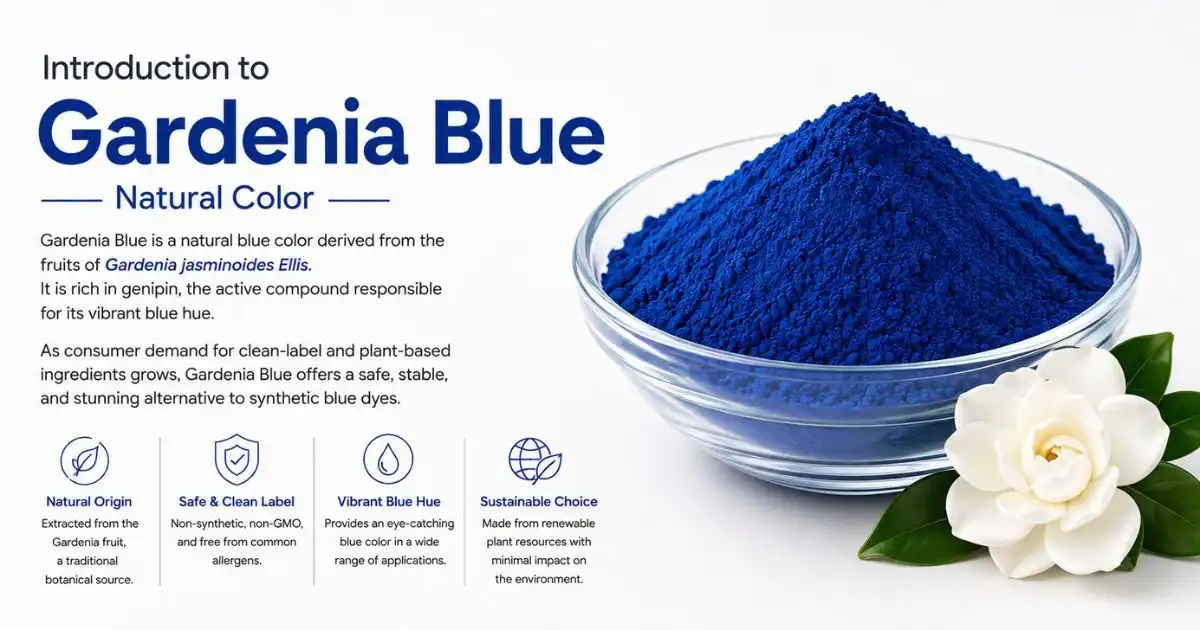
Manufacturers have changed how they use food coloring because more people want goods with clean labels. Gardenia Blue Pigment is a great natural option that comes from the seeds of the cape jasmine plant Gardenia jasminoides, which is in the family Rubiaceae. This flowering plant that never dies and is native to Asia makes deep orange fruits that look like berries and have been used in traditional Chinese medicine for thousands of years as "Zhi Zi."
The complex process used to make this natural colorant is what makes it so appealing. Manufacturers turn geniposide, which is taken from Gardenia Blue fruits, into a stable blue pigment by using enzymes to break it down, fermentation, and careful refining methods. The end result is a fine, dark blue powder that comes in different grades, from E30 to E200, to meet the needs of different industrial applications that need different levels of color intensity.
Key Composition and Properties
Crocin and genipin chemicals, which come from carotenoids, are the main parts of this natural food coloring. Because these bioactive molecules are biocompatible, they turn water, watery ethanol, and propylene glycol solutions into a light gray to dark blue powder that dissolves very easily but not in organic liquids. Because of these properties, it can be used in a wide range of water-based food systems.
One unique benefit is that it doesn't change in pH. In contrast to anthocyanin-based blues, which change a lot when the pH level drops, Gardenia Blue pigments stay the same color from 4.0 to 8.0. This stability also applies to thermal processing; it can withstand temperatures of up to 120°C for 60 minutes without changing color, which is very important for companies that make foods that are heated.
Why Procurement Managers Choose Natural Blue Pigments
More and more pressure is being put on procurement professionals in the food manufacturing sector to move away from synthetic colorants like FD&C Blue No. 1 (Brilliant Blue) and No. 2 (Indigo Carmine). People are more aware than ever about fake ingredients, and clean-label goods now have a big share of the market. This change in the market is met by Gardenia Blue pigments, which also meet strict production standards for technical performance.
The plant-based source fits with many food tastes and approvals, such as organic, Halal, and Kosher rules. This broad compliance makes it easier to get into markets in a lot of different places and with a lot of different kinds of customers. Traceability from farm to table is becoming more and more important, and trustworthy suppliers keep close ties with farming communities to make sure they use sustainable methods of sourcing.
Applications of Gardenia Blue in Different Industries
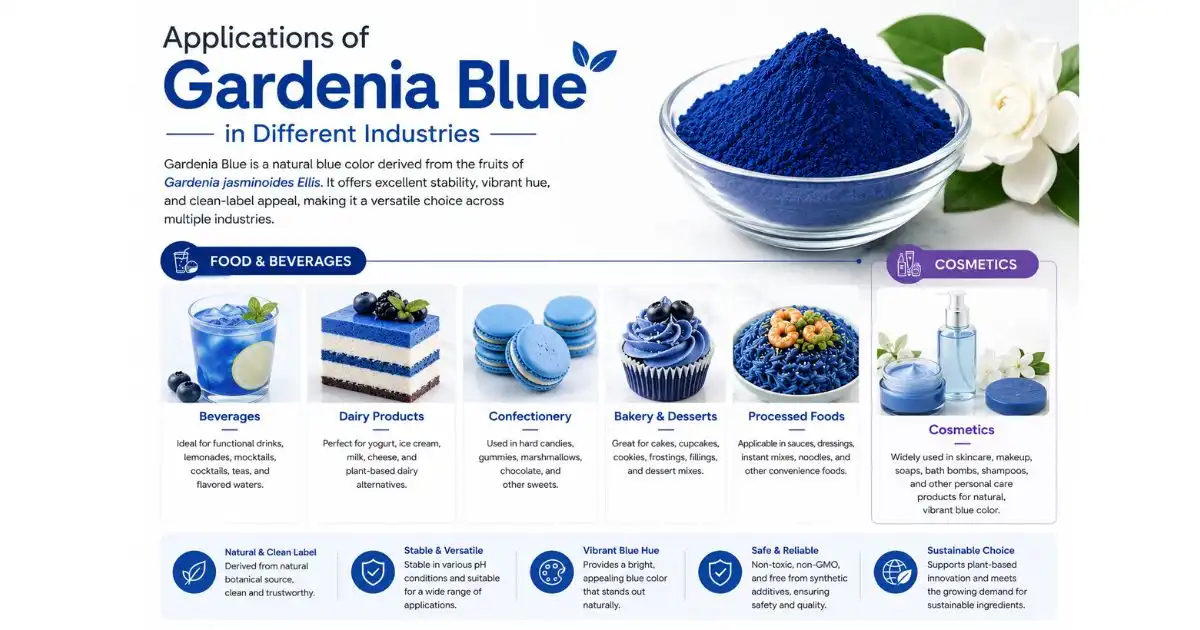
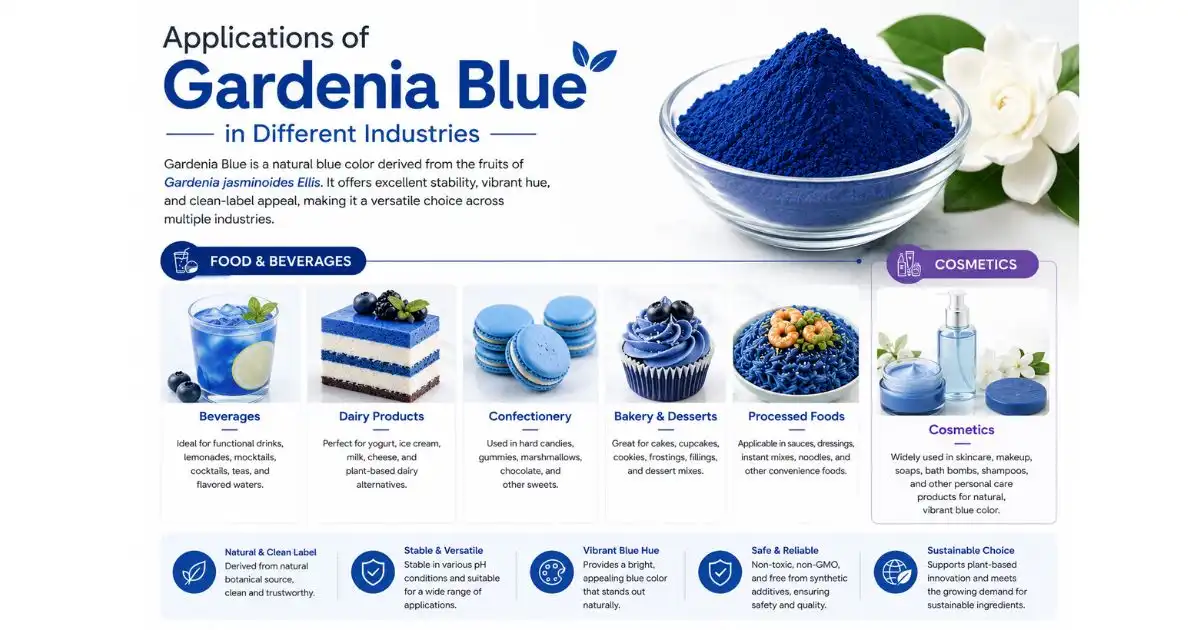
Gardenia Blue colorants can be used in a lot of different industries. Each one uses their unique performance traits to solve its own formulation problems. Knowing about these applications helps procurement professionals find the best ways to use them and judge the skills of potential suppliers.
Food and Beverage Manufacturing
The making of candies and gum is one of the toughest settings for applications. Natural colorants are put to the test by high-sugar matrices, long processing times, and high temperatures. Gardenia Blue coloring works really well here because it keeps its color even when pectin or gelatin is heated up and down many times without bleeding or crystallizing. Because the color has a strong affinity for protein, it works especially well in gelatin-based systems. This makes bright blue sweets that look good for a long time.
Because of the way pH works in beverages, many natural color options can't be used. A lot of carbonated soft drinks, sports drinks, and functional waters work best in acidic pH ranges (2.5–4.0), which is where anthocyanins turn purple or settle out completely. Acid-resistant Gardenia Blue varieties keep their color in these tough conditions without settling, giving quality drinking goods the clean, appealing color that customers expect. 100% water absorption makes sure that the color is spread out evenly and there are no clouds.
For frozen dairy products and making ice cream, you need pigments that don't lose their color or intensity when they freeze and thaw. Gardenia Blue powder stays very stable through many freeze-thaw cycles, which keeps the color from running in frozen treats with many layers. The protein-rich environment of dairy products makes the pigment work better because it stains proteins more preferentially, which leads to deeper, more stable color development than starch-based systems.
The pigment's resistance to heat makes it useful in bakeries. The blue color of cookie decorations, cake batters, and pastry fillings stays the same when baked at 180°C or higher. The flavorless and odorless profile makes sure that off-flavors don't mess up carefully planned recipes. Moisture uptake stays low, which keeps dry mix formulas from clumping.
Beyond Food: Cosmetic and Industrial Applications
Formulators of cosmetics are looking for natural alternatives to chemicals in more and more color makeup and skin care items. The gentle, plant-based profile of Gardenia Blue pigments makes them suitable for goods sold to health-conscious customers. Without synthetic lake pigments, eye shadows, nail polishes, and soaps can have beautiful blue tones. The fact that it is non-toxic takes care of safety issues that come up with regular makeup colorants.
Concerns about ecology are driving the growth of textile dying as a new application area. Gardenia Blue pigments are an eco-friendly alternative to synthetic textile dyes, and they keep their color well on some types of fabric. Light resistance is still a problem that needs careful thought, but the environmental benefits are good for indoor textiles and other special uses.
Specialty industry uses include wrapping inks, paper goods, and craft supplies where the fact that they are natural helps with marketing. These niche applications often accept higher costs in exchange for environmental benefits and unique selling ideas.
Comparing Gardenia Blue to Other Blue Dyes for Procurement Decisions
When choosing blue colorants, procurement managers and R&D leaders have to look at a lot of things. The choice has an effect on the quality of the product, how well it meets regulations, how customers see it, and the overall prices. By comparing things in a planned way, you can see when Gardenia Blue pigments are the best deal.
Performance Against Synthetic Blue Dyes
Synthetic blue dyes, such as FD&C Blue No. 1 (Brilliant Blue FCF), have been the most popular food coloring for decades because they are cheap, have a strong color, and don't fade. They work consistently in almost all food matrixes and only need a small amount to be used. Synthetic blues usually have stronger colors than natural ones; only 10 to 50 parts per million are needed to get the shades you want.
Gardenia Blue pigment can compete well because it is similarly stable at pH levels and resistant to heat, which are two important performance factors. Even though it needs higher doses (usually 100 to 500 ppm), the natural pigment meets the basic customer need that is changing the business. Products with clean labels cost more, but the higher cost of the colorants makes up for it. Regulatory environments are becoming more favorable to natural ingredients, and some places require warnings to be put on the labels of synthetic colorants.
In the past, synthetic dyes were more consistent from batch to batch than natural ones. This gap is much smaller now that production methods are more advanced. Gardenia Blue pigments from reputable sources now come with color value standards (E30, E60, E80, E100, E200) that make sure they work as expected. Quality control methods, such as HPLC tests and spectrophotometric analysis at 590nm, make sure that the E-values given are accurate within a ±5% range.
Natural Blue Alternatives: Spirulina vs. Gardenia
Not every natural blue works the same. Another plant-based blue choice is spirulina extract (phycocyanin), but it has some major problems that make it less useful. Phycocyanin quickly loses its shape above 45°C to 60°C, so it can't be used in foods that have been heated. Because it is made of proteins, it can precipitate in acidic environments and add taste notes that can be noticed in some uses.
Gardenia Blue colors get around these problems with temperature and pH. The color made by enzymes can resist temperatures above 100°C and stays stable over a wider pH range. This performance boost lets you do things that you couldn't do with spirulina-based blues. The flavor profile stays balanced, without the "seaweed" or "protein" off-notes that can come from colorants made from algae.
Another natural blue source that is getting a lot of attention is butterfly pea flower extract. It has a beautiful color in neutral pH drinks, but it turns a very different color to purple when the pH is high, which limits its use in drinks. The color intensity is usually not as strong as Gardenia Blues, so higher usage rates are needed.
| Colorant Type | Heat Stability (°C) | pH Range (Stable) | Typical Dosage (ppm) | Main Limitation |
|---|---|---|---|---|
| Gardenia Blue | 100 to 120 | 4.0 to 8.0 | 100 to 500 | Easily hurt by light |
| Spirulina Blue | 45 to 60 | 6.0 to 8.0 | 50 to 200 | Breakdown of heat |
| Butterfly Pea | 60 to 80 | 6.0 to 9.0 | 200 to 800 | Change in pH color |
| FD&C Blue No. 1 | 150 or more | 2.0 to 11.0 | 10 to 50 | Synthetic source |
Cost-Benefit Analysis for Manufacturers
Gardenia Blue pigments' raw materials cost between $80 and $250 per kilogram, based on the specification and order number. Synthetic blue pigments' raw materials cost between $20 and $40 per kilogram. This 5–10X difference in cost needs to be carefully explained. Putting products in high-end natural areas usually pays off the expense. Market research regularly shows that people are ready to pay 15–30% more for goods that say they are clean on the label.
The study of total costs includes more than just raw materials. Reformulation costs, stability tests, and changes to production all add up to one-time costs during the change. These investments pay off because they improve the brand's reputation, give them access to more channels for selling natural products, and lower their regulatory risk as rules on synthetic colorants get stricter around the world.
How to Procure and Source Gardenia Blue for Global B2B Clients
A good procurement strategy strikes a balance between making sure quality, making sure the supply chain works, following the rules, and lowering costs. Manufacturers can avoid quality problems that stop production and hurt brand reputation by learning about the different suppliers and how to evaluate them.
Essential Quality Certifications and Documentation
Gardenia Blue pigment sources who are good to work with must have food-grade approval. Certifications like ISO 22000, HACCP, and GMP show that quality management and food safety controls are carried out in a planned way. These certificates show that production facilities keep things clean, use risk analysis methods, and follow good manufacturing practices all the way through the extraction and processing process.
Certifications like Halal and Kosher make it easier for companies that serve a wide range of customers to get into new markets. In order to get these religious dietary certifications, third parties have to check that the sources of the ingredients and the way they are made are in line with Jewish and Islamic dietary laws. Products that are approved for both titles can sell on as many global markets as possible without having to change their formulas.
For each batch, the Certificate of Analysis (COA) should list the color value (E-value), pH, heavy metal content, microbiological tests results, and leftover solvent analysis. Reliable sellers include COAs with all shipments immediately, showing that they are honest and consistent with quality. Managers of procurement should make sure that the testing methods used are in line with international standards.
Evaluating Supplier Capabilities and Reliability
Professional suppliers can tell the difference between opportunistic traders and those who are good at making things and exporting. Manufacturers who need a steady supply should make sure that their suppliers' production rates are at least three to five times higher than what they think they will need. This will give them extra capacity when demand goes up. Export history to target markets shows that you know about regulations and how to handle logistics.
Having technical help skills is very important during the product creation stages. Time-to-market for new goods is sped up by suppliers who offer application advice, formulation suggestions, and help with fixing problems. Having access to food scientists and colorant experts can help you get the most out of your processing factors and dosage amounts for each application.
Concerns about quality stability between batches are still the main ones Gardenia Blue colorant buyers bring up. Requesting samples from more than one production batch while evaluating a supplier shows how batch-to-batch variation really works in the real world. Spectrophotometric testing of samples at a certain wavelength (about 590nm) measures differences in color values. Acceptable providers make sure that the E-value stays within ±5% of one batch to the next.
| Supplier Evaluation Criteria | Minimum Standard | Preferred Standard |
|---|---|---|
| Production Capacity | 5 tons a month | 20 tons or more per month |
| Quality Certifications | ISO and HACCP | ISO, HACCP, Halal, and Kosher |
| Batch Consistency (E-value) | ±8% | ±5% |
| Technical Support | Response by email | Dedicated food scientist |
| Sample Policy | Paid samples | Free 10-30g samples |
| MOQ (Minimum Order) | 50 kg | 25 kg |
Negotiating Terms and Managing Supply Chains
Minimum order quantities (MOQ) affect how much working capital is needed and how inventory is managed. Most providers of Gardenia Blue colorants have minimum order quantities (MOQs) between 25 kg and 100 kg, but some are open and will take smaller orders at first while a product is being developed. Buying once a year and delivering every three months is the best way to get the best prices and keep track of your inventory costs.
Payment terms depend on the supplier and how long the relationship has been going. Most of the time, new buyers are asked to put down a 30–50% deposit, and the rest is due before the shipment. Once you've shown that you can be trusted to pay, established ties move toward net-30 or net-60 terms. With a letter of credit, both parties are protected when they make big purchases.
When shipping things, you need to pay attention to keeping the right temperature and keeping wetness out. Even though the pigment doesn't absorb much water, the quality is kept during foreign shipping when it is properly packed in food-grade cases with desiccants. For international shipments, the time between placing an order and receiving it is usually between 3 and 6 weeks. This means that planning needs to take into account production schedules and the need for safety stock.
Extraction and Stability of Gardenia Blue for Industrial Use
Formulators can improve the performance of applications and fix quality problems when they happen by understanding the production process and how stable the product is. The complex extraction process has a direct effect on the quality and usefulness of the final pigment.
Modern Extraction and Production Techniques
The steps in the production process are carefully planned: picking gardenia fruits, extracting the juice, enzyme fermentation, polishing, concentration, and spray drying. Each step affects the quality of the final product and needs precise control of the parameters, with the natural pigment Gardenia Blue being one of the key colorants whose stability depends on these conditions. Statistical Process Control (SPC) methods are used by good providers to reduce volatility.
To get geniposide out of crushed gardenia fruits, the first step is usually to use aqueous or aqueous-ethanol solvents. Yield and purity are affected by the temperature, time, and solvent ratios used in the extraction process. After that, beta-glucosidase enzymes change geniposide into genipin, which is the reacting building block for Gardenia Blue production.
During the fermentation stage, genipin reacts with amino acids in a controlled way, creating the blue color by polymerization. The color is determined by the amino acids used; some produce reddish-blue (violet) tones, while others produce cyan tones. To make sure the seller sends the right variations, the procurement specs should make it clear what shade characteristics are wanted.
Refinement gets rid of any leftover geniposide, unreacted intermediates, and waste products from fermentation. This cleaning is necessary to get rid of the bitter tastes that come from geniposide leftovers. The HPLC test confirms that the amounts of geniposide are still below what is considered appropriate. The end powder has controlled particle size and moisture content because it is concentrated and sprayed dry.
Stability Profile and Application Considerations
Most food uses are stable between pH 4.0 and 8.0, but for highly acidic drinks, acid-resistant variants make stability possible down to pH 2.5 to 3.0. If you go outside of this area, color changes or rain may happen. Formulators who are making products with pH levels that are too high or too low should test the products' shelf-life stability under accelerated conditions to make sure the colors stay the same.
Most thermal processing needs, like pasteurization, baking, and making candy, can be met by heat stability up to 120°C for 60 minutes. Standard retort sterilizing methods used in shelf-stable soups and drinks don't change the color of the pigment. Stability testing may be needed before ultra-high-temperature (UHT) processing or long-term exposure to high temperatures.
Light resistance is the main problem that needs to be fixed in the recipe. Compared to manufactured blues, this pigment is not very stable in light, and it fades noticeably in direct sunlight or strong artificial lighting. This problem can be fixed with opaque packaging, dark bottles, or containers that block UV light. Products that can be seen for a long time in clear packages may need a higher starting dose to keep their color at a good level until the end of their useful life.
The color sticks to proteins better than it does to starches, which is good for dairy and gelatin uses but means that starch-based products need to have their dose changed. Metal ions like calcium, magnesium, and aluminum usually have neutral effects, but acidic situations may make colors stronger when metal ions are present. To get the best results, formulators should look at certain product patterns while the product is being made.
Conclusion
Gardenia fruit-based Gardenia Blue colorants are a game-changing solution for companies trying to keep up with the clean-label revolution. This pigment is the best alternative to synthetic blue dyes in food, drink, and specialty applications because it is naturally plant-based, has strong pH stability, and is very resistant to heat. Even though they are more expensive and sensitive to light, clean-label goods are worth the extra money because they sell better on the market.
Professionals in charge of buying things should give priority to suppliers who can show consistent quality through strict testing, full certifications, and technical support. The right provider relationship makes sure that new natural food coloring products are developed smoothly, that regulations are followed, and that there is a steady supply over the long term.
FAQ
How does natural blue pigment compare to spirulina blue for heat stability?
A Gardenia Blue is much more stable at high temperatures than blues made from spirulina (phycocyanin). Gardenia Blue stays the same color at temperatures above 100°C, while spirulina blue breaks down and crystallizes at temperatures above 45°C to 60°C. This means it can be used in baked goods, boiled sweets, and sterilized drinks where spirulina fails.
Can this dye be used in soft drinks that are acidic (pH 2.5–3.0)?
Standard formulas may separate at pH levels lower than 3.5 because of the isoelectric point. Specialized acid-resistant types are available from reputable sources for use in drinks with a lot of acid. Before ordering acidic products, purchasing managers should ask for stability testing results that show no sedimentation over the product's intended shelf life.
Why do colors vary between different suppliers?
The different shades come from the amino acids that are used during enzymatic cross-linking. Tones that are pure cyan or reddish-blue (violet) are caused by different amino acid profiles. When you ask for samples, be clear about the hue direction you want (red-shade vs. green-shade blue) and ask for spectrophotometric data with absorbance curves to make sure the color will be the same on all future orders.
Partner with Yangge for Premium Natural Blue Colorant Supply
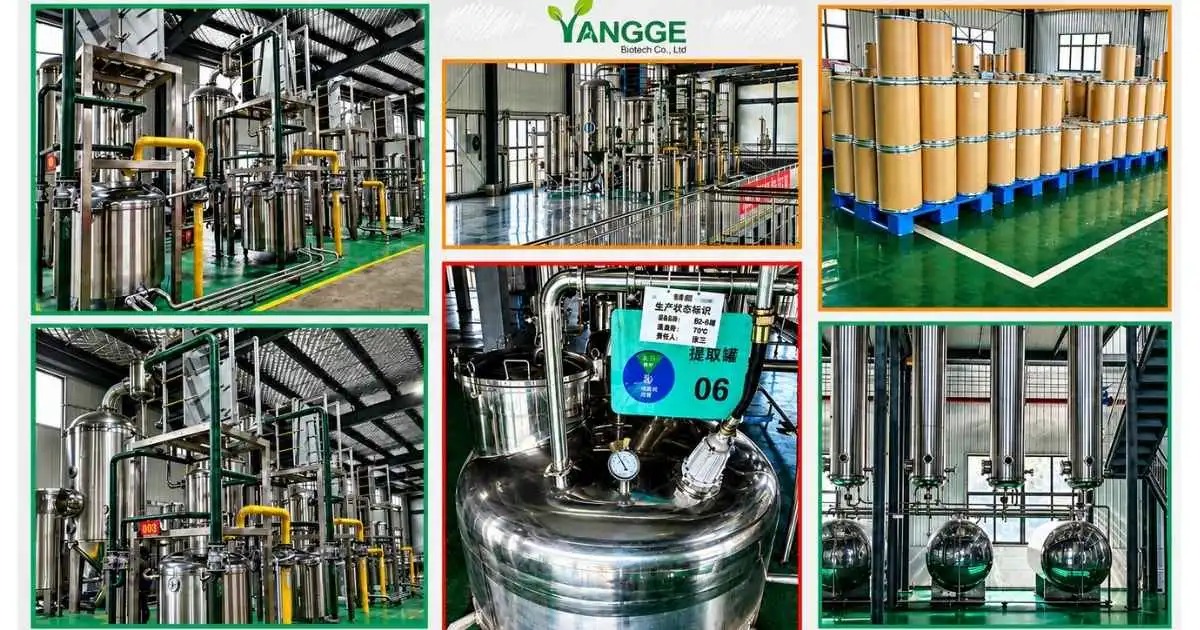
Yangge Biotech specializes in providing high-quality Gardenia Blue pigment powder with specifications ranging from E30 to E200. Their products are backed by ISO, HACCP, Halal, and Kosher certifications that meet the strictest global regulatory requirements. Our GMP-compliant production plant makes sure that the quality of each batch is the same by using strict HPLC testing and spectrophotometric proof. We know the technical problems that food manufacturers have to deal with, and our team of dedicated food scientists is here to help with all of your application needs.
You can get free 10–30g samples and full COA paperwork from our Gardenia Blue pigment source to see for yourself how good they are. Contact us you can reach our team at info@yanggebiotech.com or visit blog.yanggebiotech.com to get access to scientific tools that will help you speed up the development of your product and make sure that clean-label reformulations go smoothly.
References
1. Chen, Y., & Zhang, H. (2019). Natural Food Colorants: Chemistry, Application and Stability. Academic Press.
2. Downham, A., & Collins, P. (2000). Coloring our foods in the last and next millennium. International Journal of Food Science and Technology, 35(1), 5-22.
3. Rodriguez-Amaya, D. B. (2016). Natural food pigments and colorants. Current Opinion in Food Science, 7, 20-26.
4. Sigurdson, G. T., Tang, P., & Giusti, M. M. (2017). Natural colorants: Food colorants from natural sources. Annual Review of Food Science and Technology, 8, 261-280.
5. Wrolstad, R. E., & Culver, C. A. (2012). Alternatives to Those Artificial FD&C Food Colorants. Annual Review of Food Science and Technology, 3, 59-77.
6. Yamada, M., Nakamura, K., & Watabe, T. (2018). Gardenia Blue Pigment: Production, Properties and Applications in Food Industry. Journal of Agricultural and Food Chemistry, 66(12), 3024-3031.

Based on your location and order quantity, you will have the opportunity to receive a limited time free shipping promotion!
Who we are
Popular Blogs