What Is Gardenia Yellow Used For in Food and Beverage Products?
Gardenia yellow is a natural carotenoid pigment extracted from the fruit of Gardenia jasminoides Ellis, composed primarily of crocin and crocetin. It delivers a vibrant, stable yellow-to-orange hue across a broad range of food and beverage applications—from instant noodles and pickled vegetables to functional beverages and confectionery. Unlike synthetic dyes such as Tartrazine (Yellow 5), it meets the clean-label demands of today's market while offering superior water solubility and thermal stability. For manufacturers seeking a compliant, plant-based colorant, it represents one of the most reliable natural alternatives available. Reach us at info@yanggebiotech.com to explore our full product range and request a sample today.
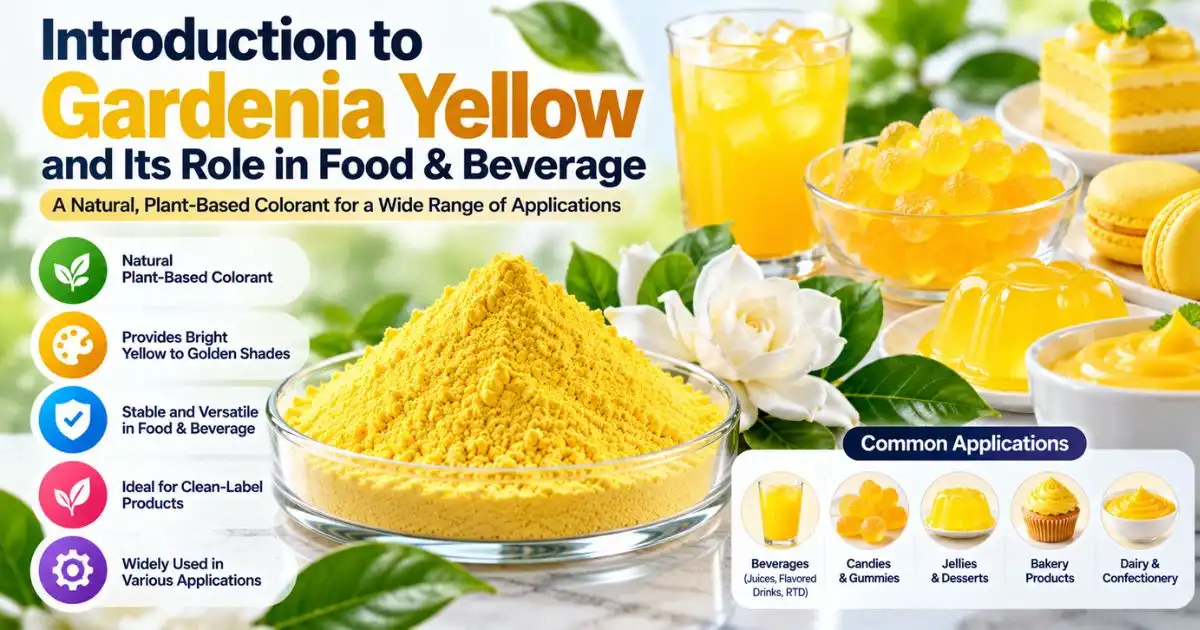
Introduction to Gardenia Yellow and Its Role in Food & Beverage
In East Asian cooking for hundreds of years, especially in Korean, Japanese, and Chinese customs, the Gardenia jasminoides fruit has been used to add color naturally. The color taken from this fruit dissolves in water, stays stable in pH levels between neutral and alkaline, and has a main UV absorption peak at 440nm, which is used as a standard to measure color value.
The fast-growing trend around the world away from manmade dyes is what makes this pigment economically important right now. Because people are more aware of ingredients like Tartrazine, both regulators and brands are looking into plant-based alternatives. Gardenia yellow is a colorant that meets both traditional heritage and current clean-label standards. It is scientifically proven to be safe and has a botanical source that can be tracked. This is what Yangge Biotech's Gardenia yellow Powder E60 does in a standard, spray-dried form. It is made from carefully chosen gardenia fruit using advanced HPLC-verified extraction. It comes out as an orange yellow powder with a consistent color value and great uniformity from batch to batch, which are very important in large-scale food production.
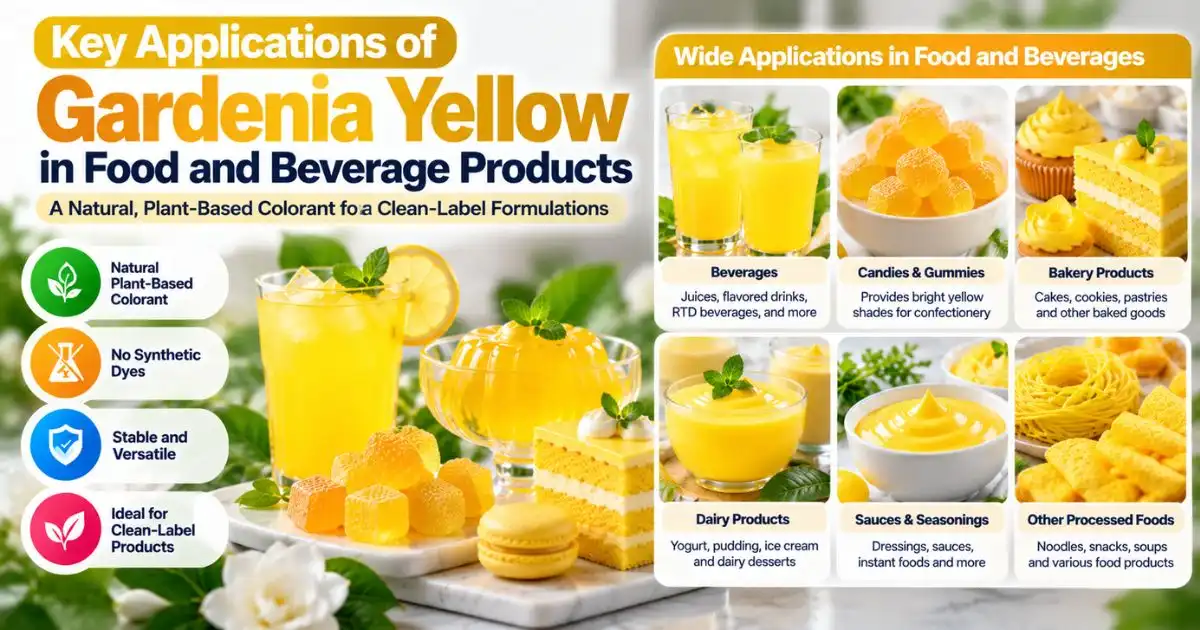
Key Applications of Gardenia Yellow in Food and Beverage Products
The buying and research and development teams can more accurately use this color when they know where it works best. The uses cover a wide range of products, each with its own processing needs. The following are some examples:
- Noodles and Flour Products: These include instant noodles, fresh wet noodles, and wonton wrappers. They have a high starch/protein affinity and keep their color when they boil.
- Beverages: These include clear functional drinks, juices, herbal teas, and alcoholic pre-mixes. They are water-soluble and don't settle or become cloudy.
- Confectionery: these include hard candies, panned chocolates, and sugar coatings. They have consistent batch shading and don't change the flavor.
- Dairy and Desserts: these include puddings, ice cream, and yogurt toppings. They are stable at low pH ranges used in dairy processing.
- Condiments and Pickled Foods: these include pickled vegetables, soy-based sauces, and fermented foods. They can handle moderate heat during pasteurization.
| Application Category | Specific Use Cases | Key Performance Benefit |
|---|---|---|
| Noodles & Flour Products | Instant noodles, fresh wet noodles, wonton wrappers | High starch/protein affinity; color stable during boiling |
| Beverages | Clear functional drinks, juices, herbal teas, alcoholic pre-mixes | Water-soluble; no sedimentation or turbidity |
| Confectionery | Hard candies, panned chocolates, sugar coatings | Consistent batch shading; no flavor interference |
| Dairy & Desserts | Puddings, ice cream, yogurt toppings | Stable at low pH ranges used in dairy processing |
| Condiments & Pickled Foods | Pickled vegetables, soy-based sauces, fermented products | Resistant to moderate heat during pasteurization |
In Asia-Pacific markets, these are the main types of natural yellow colors that businesses want. The colorant sticks well to both starch and protein, which makes it perfect for noodle goods where color migration and fading from cooking are common problems with other colorants. Manufacturers of drinks like how clear its dissolution profile is. It mixes easily into clear drinking systems because it dissolves fully in water without emulsification. This is important for business reasons because turbidity is not acceptable. It works better than beta-carotene in candy because it stays the same color from batch to batch, which is a problem with oil-dispersible colorants.
Quality Parameters and Procurement Considerations
For B2B buyers, color value is not enough to tell them if a colorant is good. Before a seller can be added to the accepted vendor list, a number of analytical factors must match up.
Color Value and Spectral Integrity
The most important number for gardenia yellow is the color value, which is E1%1cm at 440nm. Yangge's E60 grade has a color value of at least 60. For higher-intensity uses, E300 and E500 grades are also available. The OD ratio of 440nm to 328nm is a good way to tell if the quality is good. A higher ratio means there is less residual geniposide content, which lowers the risk of blue discoloration when the pigment comes into contact with amino groups in protein-rich formulas.
Geniposide Control and Safety Indicators
Geniposide is an iridoid glycoside that is found naturally in gardenia fruit. It mixes with primary amines (proteins, amino acids) to make blue-green pigment when it's present in large amounts in the end extract. This is a clear sign of a quality problem in finished goods. When professionals buy colorants from gardenia, they always include HPLC-based geniposide measurement as a quality control check that they can't skip.
Heavy metal analysis (Pb, As, Hg, and Cd via ICP-MS), full microbiological screening, solvent residue testing for residual ethanol, and a 1% solution transparency test are some of the extra safety measures that are used. The color value is ≥60 (E60 grade) and the geniposide content is controlled (low-geniposide grade is preferred). Heavy metals (Pb, As, Hg, and Cd) are measured by ICP-MS and meet global food safety limits. Microbiological tests (TPC, Yeast/Mold) are done using a standard plate count and the results are food-grade compliant. Residual solvent (Ethanol) is tested by GC and is within regulatory limits.
| QC Parameter | Test Method | Threshold/Standard |
|---|---|---|
| Color Value (E1%1cm at 440nm) | UV-Vis Spectrophotometry | ≥60 (E60 grade) |
| Geniposide Content | HPLC | Controlled; low-geniposide grade preferred |
| Heavy Metals (Pb, As, Hg, Cd) | ICP-MS | Meets global food safety limits |
| Microbiological (TPC, Yeast/Mold) | Standard plate count | Food-grade compliant |
| Residual Solvent (Ethanol) | GC | Within regulatory limits |
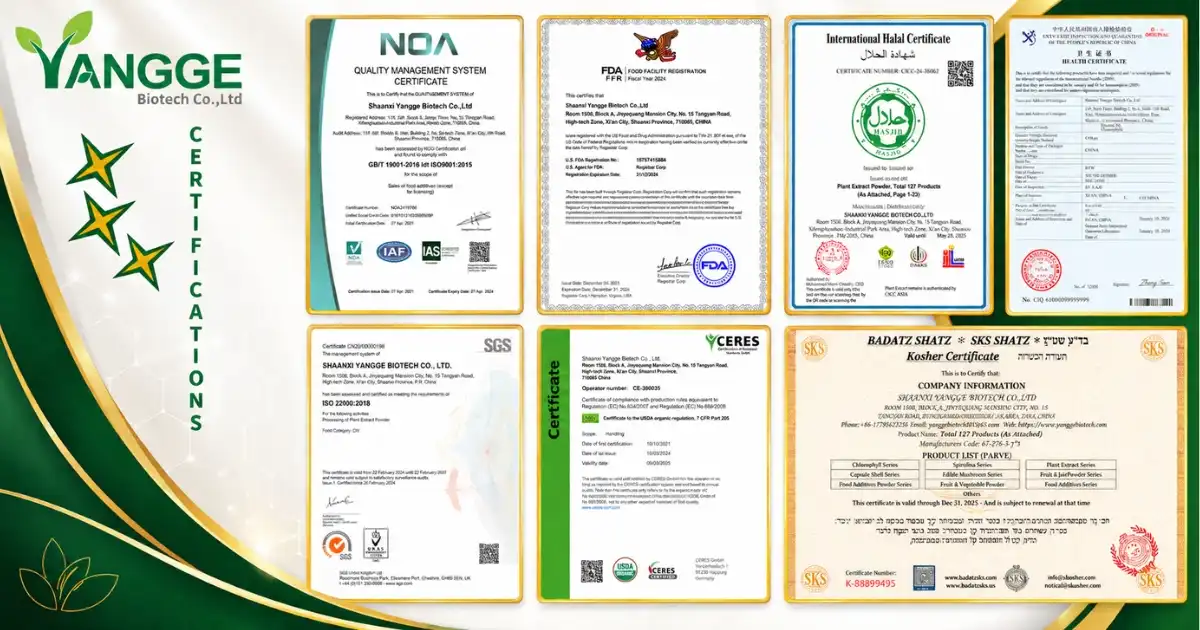
Yangge Biotech has ISO, HACCP, Kosher, and Halal standards, which helps buyers who do business in a number of different legal areas. Samples can be sent upon request, and documentation packages come with certificates of analysis, specification sheets, and records of compliance that are relevant.
Cultivation and Processing Insights Impacting Food-Grade Quality
The upper limit of extract quality is set by the main supply chain. Gardenia fruit grown in well-kept, mineral-balanced soils that are watered in a controlled way has higher crocin levels and lower pollution loads. Yangge Biotech keeps farm-to-table transparency by working with farming groups in a way that is sustainable. This lets them keep track of each lot from harvesting to spray drying.
The extraction method for gardenia yellow is very important. Yangge uses extraction methods that have been checked by HPLC to get rid of unwanted co-pigments, solvents that are still present, and geniposide fractions. The spray-dried powder that is made keeps the pigment's original color profile and gives long-lasting ingredients the moisture stability they need. Manufacturers who want to sell must now use sustainable sources. Big food companies in North America, Europe, and Japan use Yangge as a supplier because they care about the earth and have done great things with using green energy.
Comparative Analysis: Gardenia Yellow vs. Other Natural Colorants
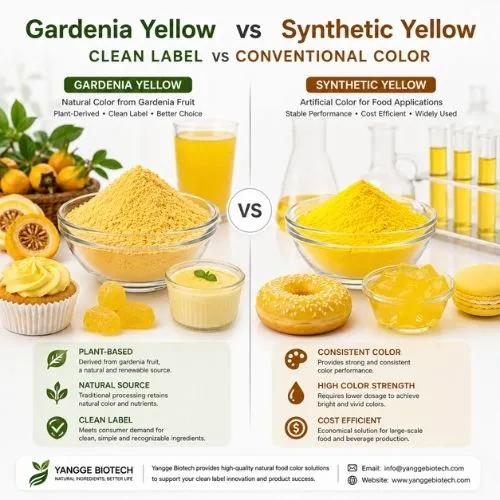
Teams in charge of buying things often compare this color to fake Yellow 5 and turmeric (curcumin). The differences are important.
Turmeric gives food a warm yellow color, but it also has a strong earthy flavor and isn't very stable in water at high temperatures. Gardenia yellow pigment doesn't change flavor and can withstand 80°C for 120 minutes without losing much of its color. Turmeric, on the other hand, can't handle being heated for that long in baked goods or drinks. Beet and crocin both contain chemicals in the carotenoid class, but crocin doesn't need to be emulsified in water like beta-carotene and turmeric do.
When compared to manmade Yellow 5 (Tartrazine), gardenia-derived colorants offer a clean-label edge that has real-world business value. More and more people are turning away from manmade dyes, especially in high-end and health-conscious product categories. The higher price compared to manmade dyes is balanced out by the added value to the brand that comes from using natural ingredients.
One regulatory note that should be clear: gardenia yellow has not yet been approved by the European Union as a legal food additive. Buyers who want to sell in the EU should check with their regulatory teams to make sure they are currently compliant before formulating. For markets in the US, Japan, Korea, and Southeast Asia, regulatory acceptance is well-established.
Conclusion
Gardenia yellow is a useful and clean-label coloring option for companies that make soda, noodles, drinks, candy, cheese, and sauces. Its better ability to dissolve in water, withstand high temperatures, and not change the taste of food are the main problems with competing natural colorants. For business-to-business buyers, the choice framework is based on color value grade, geniposide control, and certification alignment. A qualified provider like Yangge Biotech can provide structured, verifiable paperwork for all of these areas. From sample to buy, the finding process usually takes two to four weeks, which makes it easy to switch from synthetic options.
FAQ
Q1: Why does my product sometimes turn green after adding this pigment?
A: A blue-green color is created when high levels of leftover geniposide in the extract react with main amino groups in proteins and amino acids. This reaction can't happen if you ask your supplier for a low-geniposide refined grade.
Q2: How stable is it under heat processing?
A: The color stays true at 80°C for up to 120 minutes, showing that it is very resistant to heat. Because of this, it works better than beta-carotene in heated water-based applications.
Q3: Is it approved in the United States?
A: It can be used in food items in the US market, yes. People who want to buy in the European Union should check with the EU's regulators on their own before using.
Q4: How should it be stored?
A: Keep away from direct UV light and keep in a cool, dry place. Clear drinks that can last on the shelf longer keep their color longer when they are packaged in UV-blocking materials or with vitamins like Vitamin C.
Q5: What is the difference between E60, E300, and E500 grades?
A: The number shows the lowest color value, which is E1%1cm at 440nm. Higher grades have more coloring power per unit weight, which means that they can be used at lower rates in high-intensity situations.
Source Yangge's Gardenia Yellow Powder E60 for Your Next Formulation
Yangge Biotech is a trusted gardenia yellow supplier offering food-grade Gardenia Yellow Powder E60 backed by ISO, HACCP, Kosher, and Halal certifications. Whether you are reformulating an existing product or developing a clean-label line, our technical team provides sample support and application guidance tailored to your production environment. Reach us at info@yanggebiotech.com to explore our full product range and request a sample today.
References
1. Buchecker, R., & Eugster, C. H. (1973). Helvetica Chimica Acta — Structural analysis of crocin and crocetin from Gardenia jasminoides.
2. Downham, A., & Collins, P. (2000). Colouring our foods in the last and next millennium. International Journal of Food Science & Technology, 35(1), 5–22.
3. Hadden, W. L., et al. (1999). Carotenoid composition of marigold (Tagetes erecta) flower extract used as nutritional supplement. Journal of Agricultural and Food Chemistry, 47(10), 4189–4194.
4. Mortensen, A. (2006). Carotenoids and other pigments as natural colorants. Pure and Applied Chemistry, 78(8), 1477–1491.
5. Yoshikawa, M., et al. (1999). Bioactive constituents of Gardeniae fructus: Iridoid glycosides and pharmacological effects. Chemical & Pharmaceutical Bulletin, 47(12), 1676–1682.
6. Lauro, G. J., & Francis, F. J. (Eds.). (2000). Natural Food Colorants: Science and Technology. Marcel Dekker.

Based on your location and order quantity, you will have the opportunity to receive a limited time free shipping promotion!
Who we are
Popular Blogs