What Is Carbon Black E153? A B2B Guide to Uses and Key Benefits
Carbon Black E153 Powder is a high-purity black food coloring ingredient used to achieve deep, uniform black shades in food and beverage formulations. Its fine powder form provides excellent color intensity and dispersion, making it suitable for applications such as confectionery, bakery products, coatings, and other color-sensitive formulations where permitted by local regulations. Yangge Biotech supplies Carbon Black E153 Powder for B2B applications with customizable specifications and bulk supply options. Contact us at info@yanggebiotech.com.
If you're a procurement manager or R&D engineer sourcing black colorants for food or pet food manufacturing, carbon black E153 is likely already on your radar. This guide breaks down exactly what it is, where it performs best, how it compares to alternatives, and what to verify before placing a bulk order. Whether you're formulating Halloween candy, black burger buns, or premium pet kibble, understanding E153 at a technical and regulatory level is essential to making a confident sourcing decision.
What Is Carbon Black E153? Definition and Chemical Properties?
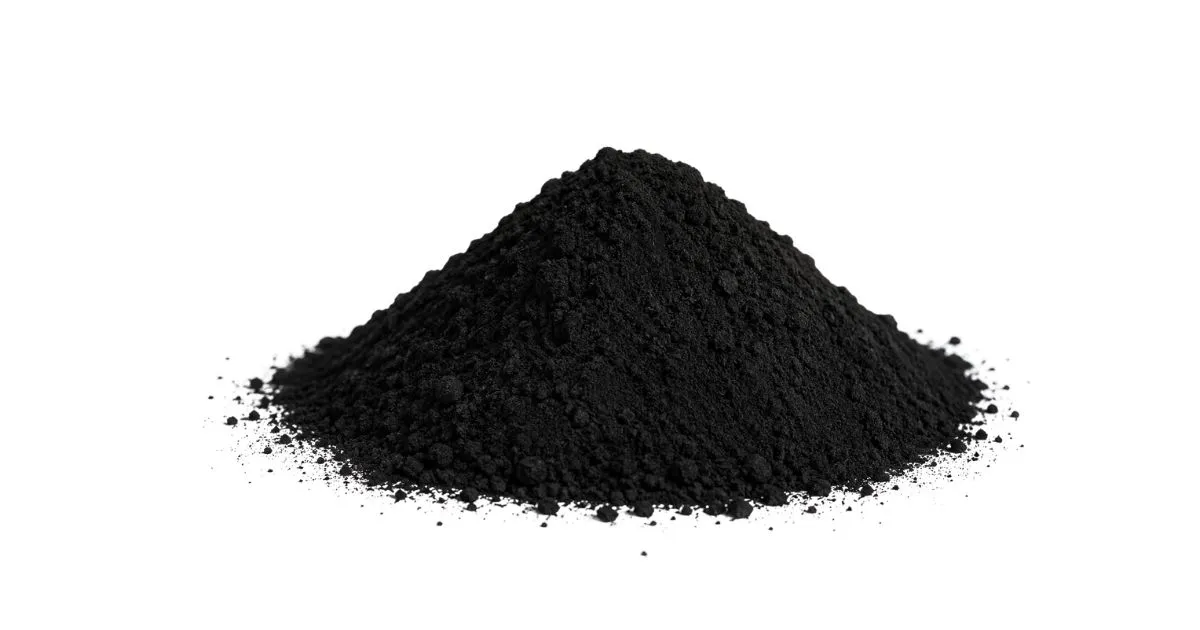
Vegetable Carbon Black E153, which is also called vegetable carbon or vegetable black, is a natural black food colorant that is made by carbonizing plant-based materials in a controlled way, mostly coconut shells. The end product is a black powder that has no smell or taste and is made up of more than 95% pure carbon on a dry basis. It is fully recognized by EU Commission Regulation (EU) No 231/2012 and has the INS number E153. It looks like a fine black powder and doesn't dissolve in water or organic solvents. Its carbon content is over 95% (anhydrous basis), and its mean particle size is less than 5 µm (micronized grade). It is stable at temperatures above 200°C, and it loses less than 12% of its weight when it dries. It also has less than 4% sulfated ash.
Because it is micro-crystalline, E153 only works as a dispersed color and not as a liquid dye. It doesn't react with flavor compounds, active ingredients, or pH-sensitive matrices because it stays chemically inert. This is very helpful when processing at high temperatures, like when baking or extruding.
Why Particle Size Matters for Manufacturers?
In industrial settings, the mean particle width of carbon black e153 has a direct effect on how colors spread and stay regular. Micronized E153 with particles smaller than 5 µm gives better surface coverage and reduces agglomeration, which is the main reason why final goods have black streaks or spots that can be seen. When you write down your CoA requirements, procurement teams must include particle size.
Key Applications of Carbon Black E153 Across B2B Industries
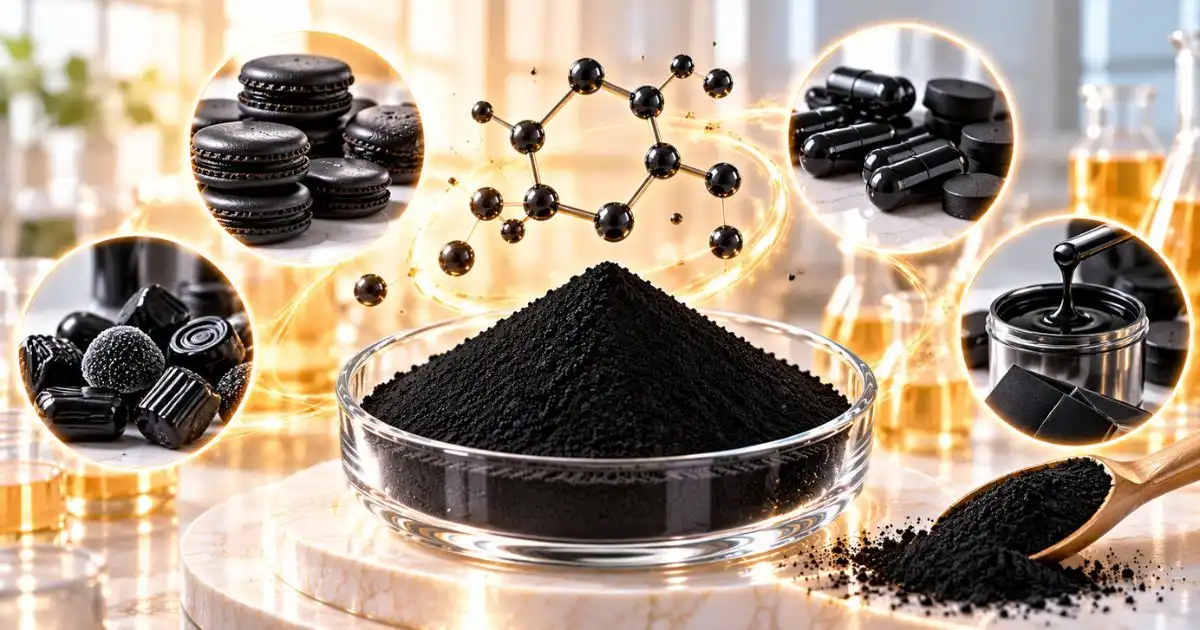
Vegetable Carbon Black can be used in a lot of different production fields, each with its own performance requirements. Here are the main types of business-to-business applications where E153 really shines:
- Confectionery and Halloween candy: For Halloween and other sweets, E153 hides differences in color in natural materials and gives jelly beans, hard candies, and licorice a deep, shiny black finish. Importantly, it doesn't bleed into colored levels next to it, which keeps the purity of the multi-tone design.
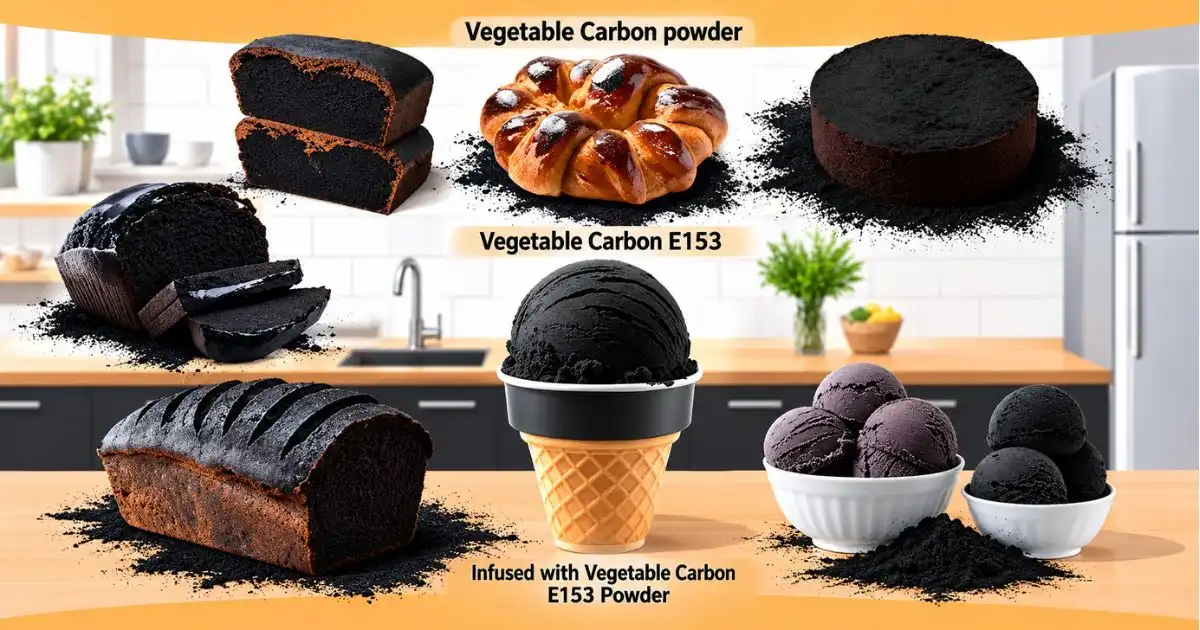
- Bakery and savory products: For Halloween-themed desserts, charcoal pizza crusts, black burger buns, and other baked goods, the colorant needs to be able to withstand the Maillard reaction. E153 stays bright even when baked at temperatures above 180°C, while chemical dyes break down above 150°C.
- Pet food manufacturing: E153's processing stability during high-temperature compression helps make black kibble bits for dog and cat food. The colorant stays in place in the pellet structure and doesn't move, so the look of the product is the same from batch to batch.
The need in all of these situations is for color that works well under heat stress. E153 meets that standard without changing the nutritional value, taste, or smell, which are all very important factors for both pet food and food formulators.
Carbon Black E153 vs. Other Black Colorants: A Practical Comparison
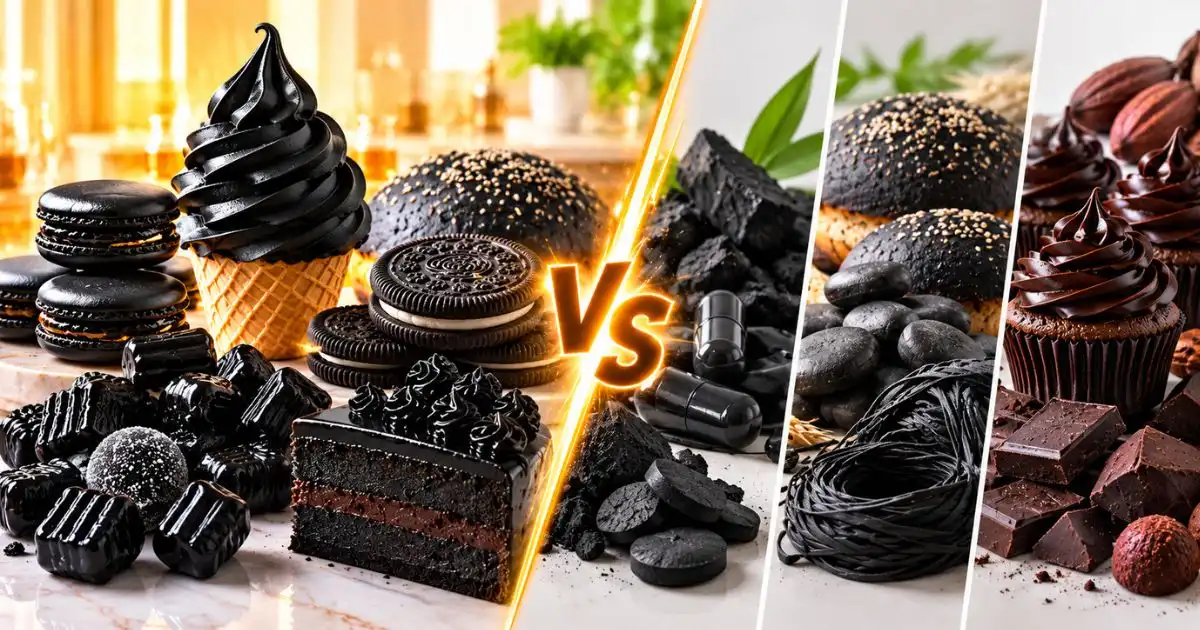
R&D teams usually compare carbon black e153 to two other popular options before choosing a provider. These are Brilliant Black BN (E151) and activated charcoal. The differences are big enough to change both the result of your formulation and your ability to get governmental approval.
| Attribute | E153 Vegetable Carbon | E151 Brilliant Black BN | Activated Charcoal |
|---|---|---|---|
| Origin | Plant-based (coconut shell) | Synthetic azo dye | Activated plant carbon |
| EU approval | Yes | Yes (restricted categories) | Not approved as food colorant |
| Clean-label status | Yes | No | Varies |
| Heat stability | Excellent (>200°C) | Moderate | Moderate |
| PAH risk | Manageable with CoA | None | Potential |
| Adsorption concern | Minimal | None | High (can strip nutrients) |
As a manufactured azo dye, E151 is getting more and more attention from consumers, and some EU member states have put even more limits on it. Even though activated charcoal is famous in the wellness trend, it is not allowed as a food colorant in the EU. It also has the potential to absorb medications or nutrients in the gut, which is the responsibility of responsible producers. E153 is a good middle ground because it comes from plants, is suitable with clean labels, is safe at high temperatures, and has been approved by regulators in the EU and Canada for decades.
How to Procure Carbon Black E153: A B2B Buyer's Checklist
There's more to finding food-grade carbon black e153 than just checking prices per kilogram. The usual procurement cycle lasts for three to six weeks and includes testing samples, trials for dispersion, PAH analysis, and a review of compliance. To make that process go more quickly, base your evaluation of suppliers on the following checked factors:
- PAH compliance: European Union rules say that benzo(a)pyrene must be less than 50 µg/kg. Always ask for ICP or HPLC test results from a third party, not just data that the company says it has.
- Heavy metal limits: Arsenic (<3 mg/kg), Lead (<2 mg/kg), and Mercury (<1 mg/kg) must be confirmed by an official lab test before every shipment.
- Certifications: Manufacturers who want to serve more than one market at the same time must have Kosher, Halal, and FDA paperwork.
- CoA transparency: To back up claims of being vegan or kosher, the Certificate of Analysis must clearly say that the precursor material came from plants.
- Dispersion form availability: Ask suppliers if they have powder, paste, or dispersions made from glycerin. Paste and dispersion forms make production areas much safer by lowering the risk of dusting and cross-contamination.
Yangge Biotech's Vegetable Carbon Black E153 is Kosher, Halal, and FDA-approved, and every batch is inspected and tested by foreign labs before it is shipped. For technical review, you can download a CoA (COA-Vegetable carbon blackE153-YANGGEBIOTECH.pdf).
Why Carbon Black E153 Remains a Strong Long-Term Sourcing Choice?
The business case for E153 keeps getting stronger. More and more people in North America, Europe, and Southeast Asia want products with clean labels. This is putting more and more pressure on synthetic dyes. At the same time, the market for pet food colorants is steadily growing. This is due to premiumization trends that put an emphasis on both the nutritional value and the look of a product.
E153's regulatory profile lasts for a long time. In the EU, it has quantum satis status for most food categories (Group II), which means that makers can use it at any level that gets the job done. There is no set maximum amount. This is helpful for product development teams that have to work with different dosage rates and formats usually 0.1% to 0.5% gets you deep black tones. From a supply chain point of view, E153 is a reliable input for mid-sized manufacturers with annual purchasing budgets of $20,000 to $200,000. This is because it is always available at a competitive bulk price.
Conclusion
Vegetable Carbon Black E153 is one of the most reliable and useful black colorants that food and pet food manufacturers can get right now. It can withstand high temperatures, has a clean label, is chemically neutral, and is widely accepted by regulators. These factors make it a good choice for use in pet food, sweets, and bakeries. Buying from a verified, qualified maker greatly lowers the risk that will happen later, especially for procurement teams that have to deal with PAH compliance, dispersion quality, and multi-market certification standards.
FAQ
Q1: Is E153 the same as activated charcoal?
A: No, they are not the same. Both come from carbonized plant matter, but the processing goals are different. E153 is made to work best as a color by controlling the size of the particles, and activated charcoal is treated to have the most surface area for binding. Activated charcoal is not approved as a food colorant in the EU, and using it as a colorant could cause nutrients or medicines to be absorbed without intention.
Q2: Is carbon black E153 approved in the United States?
A: E153 is fully approved in both the EU and Canada. At this time, the US Food and Drug Administration (FDA) does not allow it to be used as a direct food color additive. Manufacturers in the US or sellers to the US market should talk to legal experts about other colorants that could be used in their products.
Q3: How do I prevent dusting when handling E153 powder?
A: Your supplier should give you E153 in the form of a paste or a glycerin-dispersion. These forms get rid of the low-bulk-density dusting problems that come with fine black powder and make it much less likely that shared production tools will get contaminated.
Q4: What dosage rate achieves a true black color?
A: A loading rate of between 0.1% and 0.5% usually makes deep black tones in EU-regulated applications. How opaque you want the color to be relies on the matrix, the processing temperature, and the desired visual opacity.
Request a Sample of Yangge's Vegetable Carbon Black E153
Yangge Biotech currently holds 5 tons of Kosher/USP-grade Vegetable Carbon Black E153 in stock, with FOB/CIF delivery available from 1 ton. As a trusted Carbon Black E153 supplier with ISO, HACCP, Halal, and Kosher certifications, we offer 10–30g free samples for R&D trials. Contact us our team at info@yanggebiotech.com to request your sample and CoA today.
References
1. European Food Safety Authority (EFSA). Re-evaluation of vegetable carbon (E 153) as a food additive. EFSA Journal, 2012.
2. Joint FAO/WHO Expert Committee on Food Additives (JECFA). Compendium of Food Additive Specifications: Vegetable Carbon. FAO JECFA Monographs, 2006.
3. European Commission. Commission Regulation (EU) No 231/2012 laying down specifications for food additives. Official Journal of the European Union, 2012.
4. Downham, A., & Collins, P. Colouring our foods in the last and next millennium. International Journal of Food Science & Technology, 2000.
5. Chung, K. T. Azo dyes and human health: A review. Journal of Environmental Science and Health, Part C, 2016.
6. Grand View Research. Natural Food Colors Market Size, Share & Trends Analysis Report. Grand View Research Industry Report, 2023.

Based on your location and order quantity, you will have the opportunity to receive a limited time free shipping promotion!
Who we are
Popular Blogs