What does eicosapentaenoic acid do
The word for EPA stands for a long-chain omega-3 polyunsaturated fatty acid that has important effects on heart health, inflammation control, and brain function. This naturally occurring substance mostly works by changing the pathways that cause inflammation, lowering the amount of triglycerides in the blood plasma, and protecting the health of cell membranes all over the body. In the nutraceutical, pharmaceutical, and cosmetics industries, procurement managers and research and development teams need to know what this omega-3 fatty acid does at both the biochemical and commercial levels in order to make smart sourcing decisions that balance effectiveness, regulatory compliance, and cost-effectiveness.
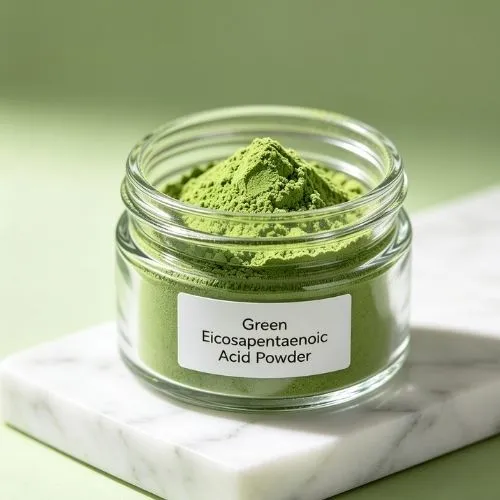
Introducing Eicosapentaenoic Acid: Definition and Core Functions
Chemical Nature and Biological Significance
Eicosapentaenoic acid is a 20-carbon chain fatty acid with five double bonds. It is in the omega-3 family because of where its first double bond is located. Compared to alpha-linolenic acid (ALA), which has a shorter chain, this molecule is more bioavailable and has direct physiological action without needing to be changed metabolically. Marine sources have traditionally been the main source of supply, but new science has made microalgae farming a sustainable option that avoids overfishing problems and maintains regular purity levels.
Cardiovascular and Anti-Inflammatory Mechanisms
The compound's benefits for the heart happen in more than one way. It lowers the production of hepatic triglycerides, raises the size of LDL particles, and lowers the clumping of platelets. All of these things work together to lower the chance of cardiovascular events in groups with high triglyceride levels. When it comes to inflammation, it helps make resolvins and protectins, which are special pro-resolving molecules that stop inflammatory reactions instead of just slowing them down. This difference is very important for formulation engineers who are making focused therapeutic goods.
Procurement Implications: EPA Versus DHA and ALA
When choosing omega-3 raw materials, smart buying is based on knowing how these fatty acids work in different ways. Docosahexaenoic acid (DHA) is mostly found in nerve and eye tissue, while EPA has anti-inflammatory benefits throughout the body. This difference affects how products are positioned—supplements for heart health and joint health tend to favor higher amounts of this compound, while maternal formulas tend to favor DHA. For maximum effectiveness and governmental support, purchasing managers must make sure that the specs of raw materials match the claims made about the finished product.\
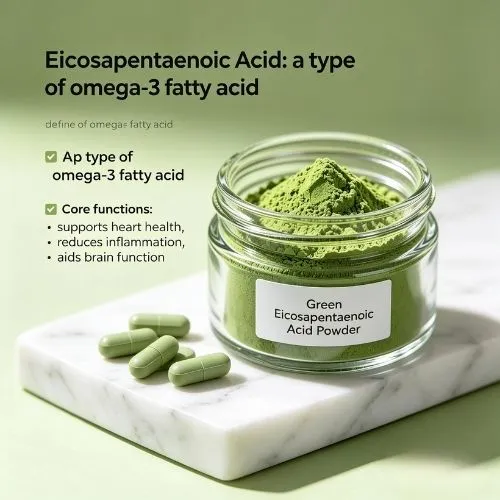
Innovative Extraction from Nannochloropsis: A Sustainable Breakthrough
Why Microalgae Sourcing Matters
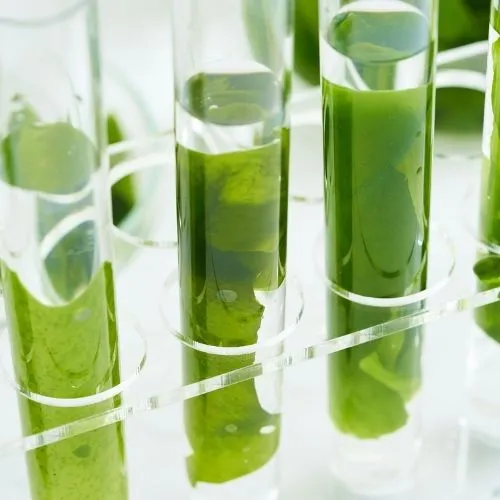
Switching from oils derived from fish to microalgae farming is more than just a matter of choice for the environment; it also fixes important supply chain problems. Nannochloropsis species store a lot of this omega-3 fatty acid without worrying about heavy metals, marine pollutants, or the difficulties of getting a sustainability license. The growing process takes place in controlled photobioreactors, which makes sure that the stability from batch to batch that is needed for pharmaceutical uses.
Yangge's special way of extracting Nannochloropsis spp. gives a particular amount of ≥220 mg/g, shown as a green oleoresin with more than 50% polar lipids. This mixture improves bioavailability compared to regular ethyl ester mixtures. It solves a problem that has been bothering the business for a long time: manmade forms don't work as well at absorption. The polar lipid matrix looks like the structures of natural foods, which makes it easier for the body to absorb without adding extra steps to the manufacturing process.
Quality Assurance and Traceability
When buying managers have to meet strict requirements for various foreign markets, the non-GMO, non-allergen status and no-irradiation processing make this product perfect. Working with approved testing labs lets us check the purity profiles, oxidation signs (like the peroxide value and anisidine value), and microbial safety factors on our own. This validation by a third party is very important when sending paperwork to the FDA, the EU for novel food laws, or organic certification groups.
Industry Applications and Strategic Value Propositions
Pharmaceutical-Grade Active Ingredients
Active pharmaceutical ingredients (APIs) in prescription drugs that treat hypertriglyceridemia are ultra-pure amounts of EPA reaching 97% purity. For these therapeutic uses, it's important to do a lot of stability tests under fast conditions to show that the raw material stays effective over time without going through a lot of oxidative breakdown. When looking for manufacturers to make pharmaceuticals, procurement teams should give preference to those who keep their Good Manufacturing Practice (cGMP) certifications up to date and provide full stability data sets.
Nutraceutical and Functional Food Formulations
People who study mental diet, especially those who need help with major depressive disorder, have become interested in the 4:1 ratio that favors this omega-3 over DHA. According to clinical studies, having higher levels of this particular fatty acid is linked to better mood control. Nannochloropsis has a lot of different nutrients that can be used as a food ingredient. It contains proteins, sugars, vitamins, and minerals. These nutrients make it possible for labels to say more than just one nutrient, which helps brands stand out.
Cosmetic and Personal Care Integration
This ingredient is useful in skin care products because it moisturizes, reduces inflammation, and protects against UV rays. Anti-aging creams use its ability to help cell membranes work and lower the levels of inflammation markers linked to photoaging. It is added to sunscreens as an extra ingredient that helps fight oxidative stress caused by UV light. The unusual green color of the oleoresin appeals to clean beauty groups that value natural ingredients that can be seen. Formulators can change the amounts to get the look they want.
Natural Pigment Applications
In addition to omega-3s, Nannochloropsis extraction gives rise to natural colorants like chlorophylls, carotenoids, and phycobiliproteins. These pigments give food bright green to orange colors instead of manmade dyes, which are being looked at more closely by regulators and turned down by consumers. These stable, toxicologically safe options are good for cosmetic uses like makeup and eyeshadows. Purchasing managers who are in charge of more than one type of product can cut costs by finding a single raw material that has both useful actives and natural colors.
Key Procurement Considerations for Quality Assurance
Certification Standards and Compliance Documentation
Food safety management standards like ISO 22000, HACCP, and certifications specific to regions like Kosher and Halal are maintained by providers you can trust. These certificates show that quality control is done in a planned way, from getting the raw materials to packing them up. When looking at possible suppliers, make sure you get audit reports, certificate of analysis (COA) templates that show the factors that were tried, and records of how corrective action was taken. Quality systems that can give batch-specific test results within 48 hours of being asked for them are strong.
Oxidative Stability and Shelf Life Management
Polyunsaturated fatty acids naturally oxidize, which gives foods bad tastes and lowers their biological activity. Yangge's storage requirements—original cases that are tightly closed and kept out of light—are best practices in the business. Suppliers should tell customers about preferred antioxidant systems that work with their product, such as mixed tocopherols and rosemary extract. To avoid expensive quality problems, purchasing managers must make sure that storage suggestions are in line with what the warehouse can handle.
Minimum Order Quantities and Flexible Packaging
The minimum order amount of 1 kg for EPA allows for R&D samples and small-batch production runs, which makes recipe testing easier. Stock levels of 50 to 100 kg support medium-scale production, and OEM packaging choices allow private labeling without having to invest in separate packaging equipment. This freedom is especially helpful for new brands that want to see how well the market accepts them before committing to bigger volume contracts.
Future Trends and Strategic Insights for Procurement Excellence
Biotechnology Advancements in Yield Optimization
Genetic engineering of algal strains keeps raising the rates at which lipids build up and the amounts of certain omega-3s. As production prices go down, these changes lead to more competitive pricing systems. Purchasing managers who build early relationships with biotechnology-forward suppliers can get next-generation ingredients before their rivals. This gives them a brief edge in the market while their products are being launched.
Sustainability as a Competitive Differentiator
People decide what to buy in both the health supplement and cosmetic areas based on their desire for ingredients that can be tracked and are good for the world. Suppliers who show closed-loop water systems, the use of green energy in farming, and carbon-neutral shipping choices make marketing messages that end users can relate to. Yangge Biotech is dedicated to green energy and farm-to-table traceability. This makes us a partner that can improve your brand's environmental values while also providing technical performance.
Long-Term Partnership Value Beyond Price
The price per kilogram is still important, but the total value also includes expert help, advice on how to follow the rules, and a reliable supply. Suppliers who offer formulation advice can help you get the most out of your dosing and transport methods. People who help with legal issues before a new food application or health claim is submitted cut down on the time it takes to get the product on the market. When you build relationships with sellers who invest in these value-added services, you create a competitive moat that other companies that focus on price can't easily copy.
Conclusion
EPA is one of the few raw materials that can help people's health, protect the environment, and be used in a wide range of ways. Its anti-inflammatory, neurological, and circulatory effects help with important global health issues and give formulators many ways to use it in cosmetics, nutraceuticals, functional foods, and medicines. The switch to algal sources solves problems with sustainability and makes the product more pure and consistent. Procurement professionals who understand these multidimensional value propositions and work with suppliers who offer strong quality systems, flexible terms, and technical expertise can help their companies take advantage of the growing omega-3 market while also meeting the needs of regulators and customers who are becoming more picky.
Partner with Yangge for Premium EPA Solutions
Yangge Biotech provides pharmaceutical-grade eicosapentaenoic acid that is derived from Nannochloropsis plants that are grown in a way that doesn't hurt the environment. This gives formulation engineers and purchasing managers a high-purity omega-3 source that can be tracked and fits global regulatory standards. Our ISO-certified facilities, along with following HACCP and GMP rules, make sure that the quality of every batch is the same.
As a provider with a lot of experience working with the EPA, we can help you develop your product by giving you technical documentation, legal advice, and flexible minimum orders that start at just 1 kg. Our green oleoresin formulation with better bioavailability makes your goods more likely to be successful on the market, whether you're making vitamins for heart health, anti-aging cosmetics, or useful foods. Contact us or you can email info@yanggebiotech.com to get samples, technical information, or to talk about unique packaging options that are made to fit your production needs.
FAQ
Q: Can we get some samples to test before purchasing?
A: Of course, we can provide free samples of 20 to 100 grams, but the shipping cost is at the customer's expense. The shipping cost can be deducted from the next order, or the samples can be sent through your courier account.
Q: Do your products have relevant certifications?
A: Yes, our products are certified for HALAL, ISO, HACCP, Kosher, and other certifications.
Q: What is the minimum order quantity (MOQ)?
A: Small batches of samples can be customized according to your requirements.
Q: Do you offer OEM and ODM services? Can the formula be customized based on our own?
A: Of course, we provide ODM and OEM services to many customers. Our product range includes softgels, capsules, tablets, sachets, granules, and private label services. Simply contact us and let us know your requirements. Our experienced R&D team can also develop new products with specific formulas.
Please contact us to design your own branded products.
Q: How do you handle quality complaints?
A: First, we have a comprehensive quality control SOP. We provide authoritative third-party inspection reports for almost all products before shipment to minimize the possibility of quality issues. Second, we have a comprehensive return and exchange procedure. If there is a genuine quality dispute, we will strictly follow the SOP.
Q: How do you ship? How long does delivery take?
A: For small orders, we typically use DHL, UPS, EMS, FedEx, or TNT. Delivery typically takes 3-7 days. We also offer air and sea freight services. We have a strong freight forwarding team and can provide you with a one-stop service, including DDP and DDU.
Q: What are your payment terms?
A: 100% prepayment, payable by T/T, Western Union, MoneyGram, or PayPal.
Q: What is the shelf life of your products?
A: 2 years with proper storage.
References
1. Arterburn, L.M., Hall, E.B., Oken, H. (2006). Distribution, interconversion, and dose response of n-3 fatty acids in humans. American Journal of Clinical Nutrition, 83(6), 1467S-1476S.
2. Calder, P.C. (2015). Marine omega-3 fatty acids and inflammatory processes: Effects, mechanisms and clinical relevance. Biochimica et Biophysica Acta, 1851(4), 469-484.
3. Khozin-Goldberg, I., Cohen, Z. (2011). Unraveling algal lipid metabolism: Recent advances in gene identification. Biochimie, 93(1), 91-100.
4. Ma, X.N., Chen, T.P., Yang, B., Liu, J., Chen, F. (2016). Lipid production from Nannochloropsis. Marine Drugs, 14(4), 61.
5. Shearer, G.C., Savinova, O.V., Harris, W.S. (2012). Fish oil—how does it reduce plasma triglycerides? Biochimica et Biophysica Acta, 1821(5), 843-851.
6. Sussarellu, R., Suquet, M., Thomas, Y., Lambert, C., Fabioux, C., Pernet, M.E., Le Goïc, N., Quillien, V., Mingant, C., Epelboin, Y., Corporeau, C. (2016). Oyster reproduction is affected by exposure to polystyrene microplastics. Proceedings of the National Academy of Sciences, 113(9), 2430-2435.

Based on your location and order quantity, you will have the opportunity to receive a limited time free shipping promotion!
Who we are
Popular Blogs