What Applications Use Yeast Beta-glucan Ingredients?
Yangge Biotech supplies high-quality Yeast Beta-Glucan Powder manufactured from premium baker's yeast using advanced extraction and purification technology. Our yeast beta-glucan is carefully processed to achieve excellent purity, stability, and consistent quality, making it suitable for dietary supplements, functional foods, beverages, sports nutrition, and nutraceutical formulations. Every production batch undergoes strict quality control and comprehensive laboratory testing to ensure compliance with international quality standards. With extensive OEM and ODM capabilities, Yangge Biotech delivers reliable ingredient solutions for global brands seeking premium immune-support ingredients you may contact us or email as at info@yanggebiotech.com.
Yeast beta-glucan is experiencing surging demand across numerous industries from dietary supplements and functional foods to pet nutrition and cosmetics. Derived from the cell walls of Saccharomyces cerevisiae (baker's yeast), this bioactive polysaccharide is valued for its β-1,3/1,6-glucan molecular structure, which provides potent immune-modulating effects, supports metabolic health, and enhances product stability. For procurement managers and R&D engineers in mid-sized nutraceutical brands and pet food manufacturers, understanding these applications is essential to sourcing high-quality ingredients that meet both regulatory standards and consumer expectations.
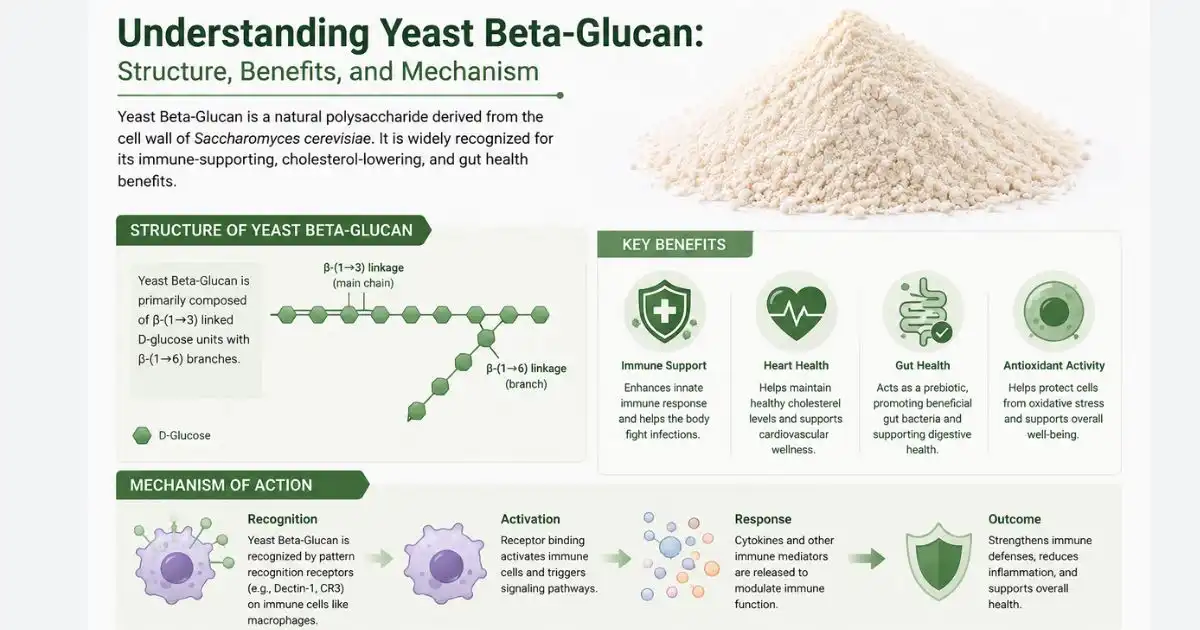
Understanding Yeast Beta-Glucan: Structure, Benefits, and Mechanism
What Makes β-1,3/1,6-Glucan Structurally Unique?
Because its molecules are twisted in a unique way, Yeast Beta-glucan is not the same as beta-glucan from oats or mushrooms. Yeast Beta-glucan has β-1,3/1,6 linkages that connect directly with Dectin-1 receptors on immune cells, whereas oat beta-glucan primarily has β-1,3/1,4 linkages and is primarily used as soluble dietary fiber for cardiovascular health. Because of this molecular difference, Yeast Beta-glucan can change the way cells respond physiologically, getting macrophages and dendritic cells ready to work without starting inflammatory cytokine storms. It works great in many industrial settings, like high-shear mixing and processing, because it doesn't change when heated up to the point where it needs to be cleaned.
How Yeast Beta-Glucan Enhances Immune Function
In the Peyer's patches of the small intestine, Yeast Beta-glucan is identified by immune receptors. This sets off innate immunity pathways, which strengthen the body's defense against viruses and bacteria that try to get in. Clinical studies have shown that giving 250 mg to 500 mg every day can make an adult's immune system much stronger. Because of this, it is often found in supplements that help the immune system. Yeast Beta-glucan is an antioxidant that protects cells from toxic stress and helps the metabolism by keeping blood sugar and cholesterol levels in control.
Key Health Benefits for B2B Formulation Development
There are a lot of health claims that have been proven to be true when Yeast Beta-glucan is added to foods. Some of these are making the immune system stronger, lowering LDL cholesterol, improving gut health with prebiotics, and making wounds heal faster. Right now, the market wants B2B clients who make pills, tablets, or functional foods to use materials that are clean, non-GMO, and backed by science. These benefits are in line with that. There is a lot of evidence that Yeast Beta-glucan is safe for people of all ages and from certified sources who follow GMP and ISO standards. This means that the safety rate is high.
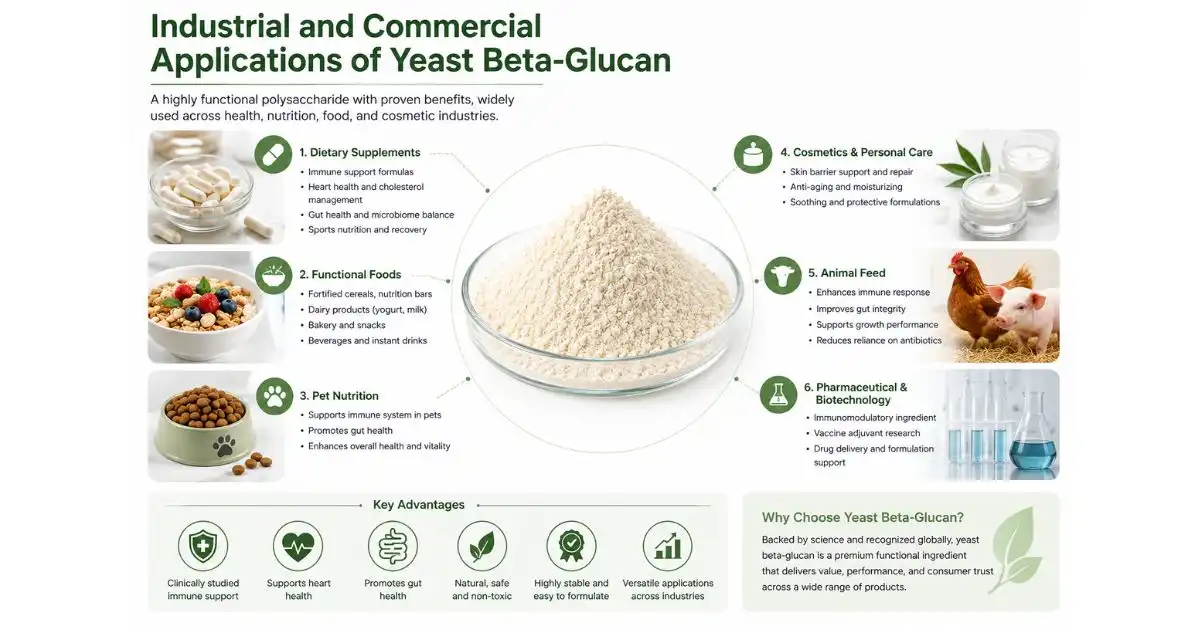
Industrial and Commercial Applications of Yeast Beta-Glucan
Nutraceuticals and Dietary Supplements
Yeast Beta-glucan serves as the cornerstone ingredient in immune health supplements, available in formats such as capsules, softgels, tablets, and powder sachets. Little amounts (usually 250 mg to 500 mg per serving) can work well because it is highly bioavailable. This is appealing to companies that want to stand out in markets that are already full of products. When immune-boosting ingredients are mixed with vitamin C, zinc, or probiotics, the product looks better. It stays stable over time and works with capsule technologies, which is something that doesn't happen as often with vitamins that are sensitive to heat or light.
Yeast Beta-glucan is used more and more in products that help reduce cholesterol, as well as in goods that help the immune system. Yeast Beta-glucan works at lower concentrations to speed up digestion than forms made from oats, which need higher amounts. Making it this way is cheaper and easier for customers to do what they need to do. It helps keep the balance of gut bacteria because it is prebiotic. This makes it a useful ingredient for digestive health goods for people who have stomach pain or issues with going to the bathroom.
Functional Foods and Beverages
The flexibility of Yeast Beta-glucan stretches into useful food structures, including sports nutrition mixes, protein shakes, yogurt drinks, and gummy vitamins. It can be used to replace fat in low-fat dairy products or make them smoother because it can hold water and form a film. This makes them taste better without lowering their nutritional value. People who make drinks can be sure that the bioactivity and quality of the finished product will not change because it can handle mechanical shear forces during mixing and heat shocks during UHT processing.
Because intense physical stress can weaken the immune system, athletes and exercise fans buy a lot of goods that are high in Yeast Beta-glucan. Putting Yeast Beta-glucan in recovery drinks keeps the immune system healthy, so you can train harder without missing time because you're sick. It's easier to make because the ingredient doesn't taste very good on its own and can be mixed with sweeteners and flavors. Customers also like that it has a clean label, which means it is non-GMO, allergen-free, and vegan.
Pet Food and Animal Nutrition
The pet food industry has adopted Yeast Beta-glucan as a natural option to antibiotic growth promoters, especially in formulas targeting immune health and stress resistance. When animals get Yeast Beta-glucan, they are less likely to get sick and have a better chance of surviving important times in their lives, like when pups are weaned or when pets move to a new place. Another thing that helps farming is adding Yeast Beta-glucan to fish food. This lowers the number of fish that die from pathogens and raises feed conversion rates in places where there are a lot of bacteria and viruses.
The fact that Yeast Beta-glucan stays stable during pelleting and processing is very helpful for companies that make cat food. It doesn't lose its bioactivity at high temperatures or pressures, so finished goods will always work the same way. Animal nutrition markets are controlled and cleared by groups like the FDA and EFSA, so brands that are adding useful pet treats and high-end kibble to their lines can feel safe. When companies can change the particle sizes and moisture levels to fit the needs of different production methods, procurement teams like it.
Cosmetic and Dermatological Formulations
Yeast Beta-glucan is very valuable in the makeup business because it can calm the skin and slow down the aging process. It reduces swelling, speeds up the healing of cuts, and helps Langerhans cells, which are defense cells in the skin, do a better job of protecting and fixing the skin. It's used to make serums, creams, and lotions. Its film-forming properties keep the skin hydrated and shield it from oxidative damage caused by UV light. Because it has these benefits, it works well in anti-aging and skin care products for people with sensitive skin who want natural ingredients that work.
It's easy to add Yeast Beta-glucan to products since it doesn't combine with stabilizers or emulsifiers. Tests by dermatologists also show that it doesn't bother skin. It's becoming more and more clear that Yeast Beta-glucan is an important nutrient for brands that care about clean beauty and scientific proof. These brands use the scientific proof of Yeast Beta-glucan to get people to trust them. Procurement workers have to make sure that sellers meet cosmetic-grade pure standards to keep goods safe and in line with the law. Some of these guidelines are bacterial safety and low levels of heavy metals.
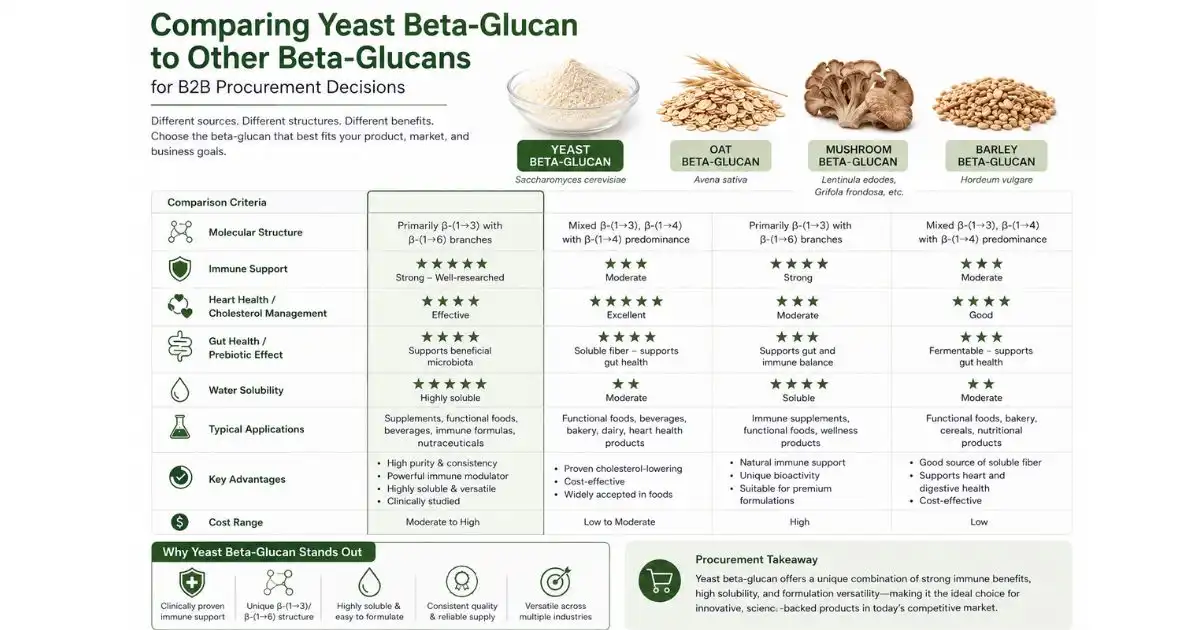
Comparing Yeast Beta-Glucan to Other Beta-Glucans for B2B Procurement Decisions
Molecular Differences and Their Functional Implications
When you buy something, you should know the difference between Yeast Beta-glucan, oat, mushroom, and cellulose beta-glucans. Here is a list of the most important things that determine how well a program works:
| Source | Molecular Structure | Primary Function | Solubility | Target Application |
|---|---|---|---|---|
| Yeast (Saccharomyces cerevisiae) | β-1,3/1,6 linkage | Immunomodulation | Water-soluble | Dietary supplements, pet food |
| Oat | β-1,3/1,4 linkage | Cholesterol reduction | Water-soluble | Functional foods, cereals |
| Mushroom | β-1,3/1,6 linkage | Immune support | Partially soluble | Supplements, teas |
| Cellulose | β-1,4 linkage | Fiber/bulking | Insoluble | Fiber supplements |
The bioavailability and solubility of Yeast Beta-glucan are better to those of mushroom-derived versions, which usually require higher amounts to produce the same immune responses. Oat beta-glucan is good for your heart, but it doesn't interact directly with immune receptors like Yeast Beta-glucan does, which is why it's important in formulations that target the immune system.
Cost-Effectiveness and Regulatory Considerations
When it comes to purchasing, Yeast Beta-glucan offers a good deal for its bioactivity. Products made from mushrooms may cost more because they are harder to find, but Yeast Beta-glucan is less expensive because it can be made in large amounts and has a well-established supply chain. Regulatory status is equally favorable: Yeast Beta-glucan holds GRAS status in the United States and is allowed as a new food ingredient in the European Union, easing market entry across major areas.
Making it simple to use makes it more appealing. Yeast Beta-glucan's stability under various pH levels and temperatures lowers formulation challenges, cutting reformulation costs during product development. Proteins derived from Yeast Beta-glucan can help brands that care about being clear about their ingredients avoid the allergen issues that come with foods that contain gluten. This supports their clean-label stance.
Procurement Guide: Where and How to Source Quality Yeast Beta-Glucan Ingredients
Supplier Evaluation Criteria and Quality Assurance
To find a trustworthy service, you should carefully consider their credentials, the work they can do, and their quality control standards. For handling quality, ISO 9001 is a good choice. HACCP is good for keeping food safe, and GMP is good for making sure that products are made right. Plus, getting more labels, like organic, Kosher, and Halal, lets you reach more people and follow more government rules. Purchasing managers should make sure that sellers work with unbiased labs to test their goods again. This keeps the Yeast Beta-glucan clean and effective at all times.
A big part of quality is making sure that the Yeast Beta-glucan content is correct using standard ways like the Megazyme Enzymatic Method or USP routines. When buyers look at certificates of analysis (COAs), they should make sure that they only show the amount of beta-glucans and not the total polysaccharides, which could include inactive alpha-glucans or starch that isn't pure. Yeast Beta-glucan of high quality should have less than 2% to 3% alpha-glucan and strict standards for heavy metals (lead 1 ppm, arsenic 1 ppm, mercury 0.1 ppm) and bacterial toxins (no Salmonella or E. coli).
Product Forms and Procurement Logistics
Yeast Beta-glucan comes in different types to meet the needs of different industries. Fine powders that are at least 70% pure are often used for vitamin and functional food purposes because they are easy to blend and put into capsules. Custom branding and recipe needs can be met by suppliers that offer OEM package services. This makes it easier for private-label brands to get on the market faster. The smallest amount that can be ordered for tests and samples is usually 1 kg. If you buy more than 50 to 100 kg, you can get a discount.
This company, Yangge Biotech, really knows how to make Yeast Beta-glucan the right way. They are pure (>70%), meet European PAH4 standards (Benzopyrene ≤10 ppb), and have not been exposed to radiation. Our products are also certified to be non-GMO and allergen-free. Our Yeast Beta-glucan powder is kept and moved in metal foil bags that don't let light through. This keeps it steady and protects its bioactivity until it is mixed with other ingredients. We keep 50–100 kg of stock on hand and can ship orders quickly, so we can handle both small test runs and large-scale production needs.
The buying process goes faster when businesses can talk to each other well. When you ask for a sample, it generally takes three to six weeks for testing, trial production, and the final buy. Clients and suppliers can build long-term relationships by giving detailed technical data sheets, regulatory documents, and application advice. This speeds up the decision-making process. It is even easier to buy things when the prices are clear and there are a lot of shipping options, like air and sea freight.
Future Trends and Innovations in Yeast Beta-Glucan Applications
Advancements in Delivery Systems and Personalized Nutrition
New developments in drug delivery methods and individual diet are making the market for Yeast Beta-glucan grow very quickly. Nanotechnology is being used to make drugs more bioavailable by enclosing them in nanoparticles. This lets the drugs be released selectively in certain parts of the digestive tract, where they can better interact with immunity receptors. It should work better with less medicine, cost less to make, and people will be more likely to follow the directions because of these changes.
Yeast Beta-glucan is being added to supplement plans that are made just for each person based on their genes, microbes, and way of life by personalized nutrition systems. This trend goes along with the growing desire for health solutions that are tailored to each person. One way for brands to stand out is to offer options for precise nutrition. Teams that want to buy things will need to work with suppliers that can handle orders that are small and have a lot of flexibility.
Sustainability and Regulatory Evolution
Sustainability is changing where ingredients come from, and consumers and government officials are paying more attention to how products impact the environment. Reusable fermentation methods that make little waste and use leftovers from the baking and brewing industries aid in the production of Yeast Beta-glucan, which supports the ideas of the circular economy. Green suppliers who use renewable energy and make it easy to see where the raw materials come from and where the final product goes will have an advantage over their rivals.
Laws and rules are always changing. For example, there are now tighter rules for making health claims, labeling, and tests for contaminants. Keeping up with changes to FDA, EFSA, and local rules helps make sure that everyone is following the rules and speeds up the time it takes to get into new markets. Together with providers to help with paperwork and keep an eye on rules speeds up the approval process and lowers risk.
Strategic Recommendations for Procurement Professionals
Here are some things to keep in mind to make sure your buying plans will work in the future:
- Get in touch with a lot of different sellers to find the best price, quality, and supply chain flexibility to deal with foreign or organizational issues.
- Spend money on providers who can help you with technical issues, give you tips on how to make things, and let you work with them on OEM/ODM projects.
- Keep an eye on new areas of use, such as brain health vitamins, sports recovery products, and high-end pet wellness recipes, to find early-stage market opportunities.
- More weight should be given to buyers who show they care about the environment, getting things in an honest way, and building communities. This will get your brand's name out there and help you reach your CSR goals.
Up until 2028, the following areas are anticipated to see an increase in Yeast Beta-glucan applications:
| Application Segment | Growth Driver | Projected CAGR (2024-2028) |
|---|---|---|
| Immune Health Supplements | Post-pandemic wellness focus | 8-10% |
| Pet Food & Treats | Humanization of pet care | 12-15% |
| Sports Nutrition | Performance optimization demand | 9-11% |
| Cosmetics (Anti-aging) | Clean beauty trend | 7-9% |
Conclusion
Makeup, functional foods, nutraceuticals, and pet food can all benefit from the use of Yeast Beta-glucan. It is different from other beta-glucan sources because of its unique β-1,3/1,6 structure, high solubility, and safety during production. This makes it a good choice for procurement managers who need to make items that help the immune system, digestive health, and skin care. As customer needs change and government rules get stricter, companies can safely add Yeast Beta-glucan to new products as long as they work with certified suppliers who put quality control, following the rules, and sustainability first.
FAQ
How Are Yeast Beta-Glucan and Oat Beta-Glucan Different?
Yeast Beta-glucan has β-1,3/1,6 links and mostly helps the immune system by connecting to Dectin-1 receptors on immune cells. β-1,3/1,4 links make up oat beta-glucan. It is mostly used to improve heart health, especially by cutting cholesterol and making food more fiber-rich. Because of their different structures, they have different health benefits and levels of efficiency.
Is Yeast Beta-glucan infected with yeast or does it contain gluten?
High-purity Yeast Beta-glucan comes from dead Saccharomyces cerevisiae cells that have been broken down. It does not cause yeast illnesses. People usually don't eat gluten with this, but there is a chance that it could get gluten if it is made in the same place as gluten-containing foods. Always check a supplier's licensing to make sure they don't list allergens.
Can Yeast Beta-glucan be added to hot liquids without losing efficacy?
Without losing much of its biological activity, Yeast Beta-glucan can survive temperatures that are high enough to kill germs. In other words, it can be put in hot drinks, soups, and things that need to be heated up, like UHT processing.
What is the recommended dosage for immune support in supplements?
Clinical tests show that adults should take between 250 mg and 500 mg every day to see a noticeable improvement in their immune systems. Because different formulations have different goals and chemicals that work well together, it is best to look at existing studies and government rules before making a new product.
Partner with Yangge for Premium Yeast Beta-Glucan Supply
The people at Yangge Biotech know how to get high-quality Yeast Beta-glucan (β-1,3/1,6-Glucan) powder from Saccharomyces cerevisiae in a way that doesn't hurt the environment. There are strict rules about our product. It has to be at least 70% pure, not contain GMOs or allergens, and meet European PAH4 standards (benzopyrene ≤10 ppb). Our OEM packaging is flexible, and the smallest order we take is just 1 kg. We can also finish jobs quickly because we keep 50–100 kg in stock. With ISO, HACCP, Kosher, and Halal approvals, Yangge makes sure that your recipes meet safety standards around the world and support your brand's commitment to quality and sustainability.
Because they work with well-known labs, our expert research and development (R&D) team can help with technical questions and retesting. The buying of things and making of new ones goes faster now. Contact us or you can email us at info@yanggebiotech.com to get samples, or you can buy Yeast Beta-glucan in bulk from a trusted source and talk about how we can help you with your supplement, functional food, or pet nutrition product lines.
References
1. Murphy, E.A., Davis, J.M., & Carmichael, M.D. (2010). Immune modulating effects of β-glucan. Current Opinion in Clinical Nutrition & Metabolic Care, 13(6), 656-661.
2. Vetvicka, V., & Vetvickova, J. (2011). Immune-enhancing effects of Maitake (Grifola frondosa) and Shiitake (Lentinula edodes) extracts. Annals of Translational Medicine, 2(2), 14.
3. Volman, J.J., Ramakers, J.D., & Plat, J. (2008). Dietary modulation of immune function by β-glucans. Physiology & Behavior, 94(2), 276-284.
4. Talbott, S.M., & Talbott, J.A. (2012). Baker's yeast beta-glucan supplement reduces upper respiratory symptoms and improves mood state in stressed women. Journal of the American College of Nutrition, 31(4), 295-300.
5. Richter, J., Svozil, V., & Král, V. (2015). β-glucans affect the immune system and metabolism. Journal of Applied Biomedicine, 13(3), 141-149.
6. Brown, G.D., & Gordon, S. (2001). Immune recognition of fungal β-glucans. Cellular Microbiology, 3(7), 471-479.

Based on your location and order quantity, you will have the opportunity to receive a limited time free shipping promotion!
Who we are
Popular Blogs