Top Blue Phycocyanin Uses in Functional Foods and Beverages Today
Blue phycocyanin is a protein-pigment complex extracted from Arthrospira platensis (spirulina), recognized as the only natural blue pigment approved by both the FDA (21 CFR 73.530) and EFSA for use in food and beverages. Beyond its striking cyan-blue color, it carries measurable antioxidant and anti-inflammatory activity, making it a functional ingredient rather than a simple colorant. For procurement teams sourcing actives for supplements, functional foods, and beverages, phycocyanin content, batch consistency, and HPLC-verified purity are the metrics that matter most.
What Is Blue Phycocyanin? Molecular Profile and Why It Matters
A Protein-Pigment With Dual Function
The family of phycobiliproteins includes blue phycocyanin. Phycocyanobilin, the part that changes color, sticks very strongly to the protein structure. The molecule's color (E1% at 618 nm) and its ability to get rid of free radicals come from this. This means that one ingredient can be both an active ingredient and a colorant, as claimed on the label.
Key Purity Benchmarks Buyers Track
Most of the time, teams that are buying things need at least 25% phycocyanin. Spectrophotometry or HPLC can be used to show this. If the protein level is between 60% and 70%, the food is good for you but not dye-grade quality. From least pure to most intense, the color grades E10 to E25 show more of it. E25 is a good supplement for getting a lot done.
| Grade | Color Value (E1% 618 nm) | Phycocyanin % | Typical Application |
|---|---|---|---|
| E10 | ≥ 100 | ~10–15% | Natural colorant in beverages, confectionery |
| E18 | ≥ 180 | ~25% | Functional foods, nutraceuticals |
| E25 | ≥ 250 | ~30%+ | High-potency supplements, clinical-grade formulas |
Regulatory Standing
In 21 CFR 73.530, the FDA says that phycocyanin from spirulina extract can be used to color some foods. Besides that, they let the EU use it. It will be easier for companies that sell their goods in both North America and Europe to follow global label laws now that they are known by both sets of rules. Blue phycocyanin is the pigment that carries the color, and its regulatory status differs meaningfully between the two markets.
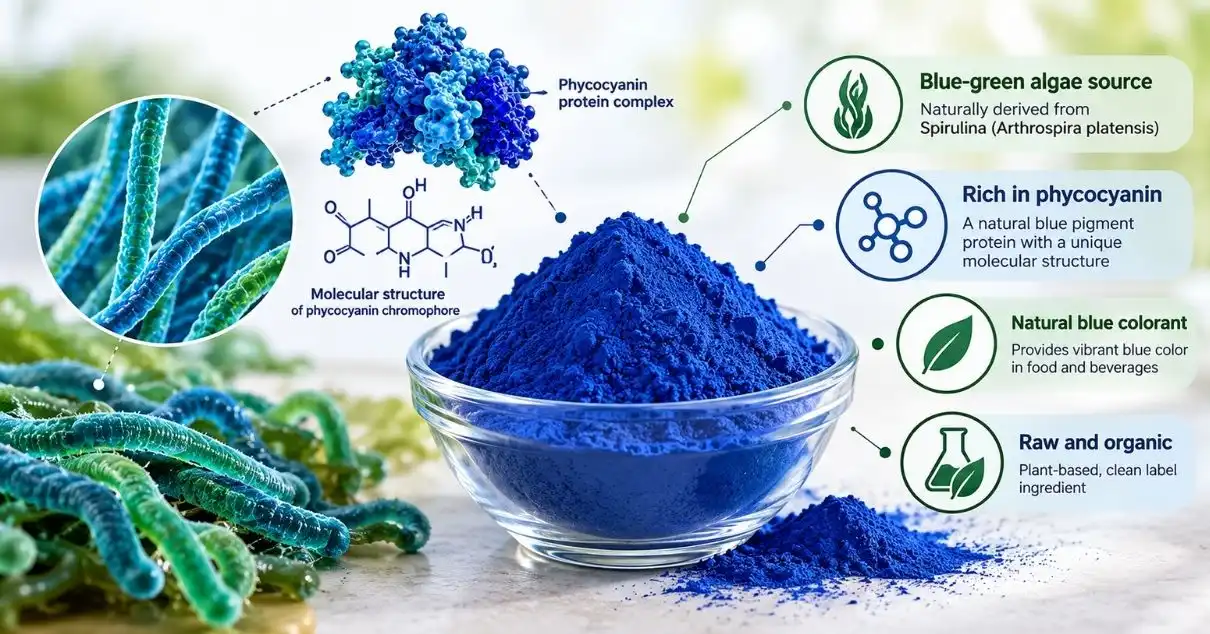
Top Blue Phycocyanin Uses in Functional Foods and Beverages
Functional Beverages and Drink Mixes
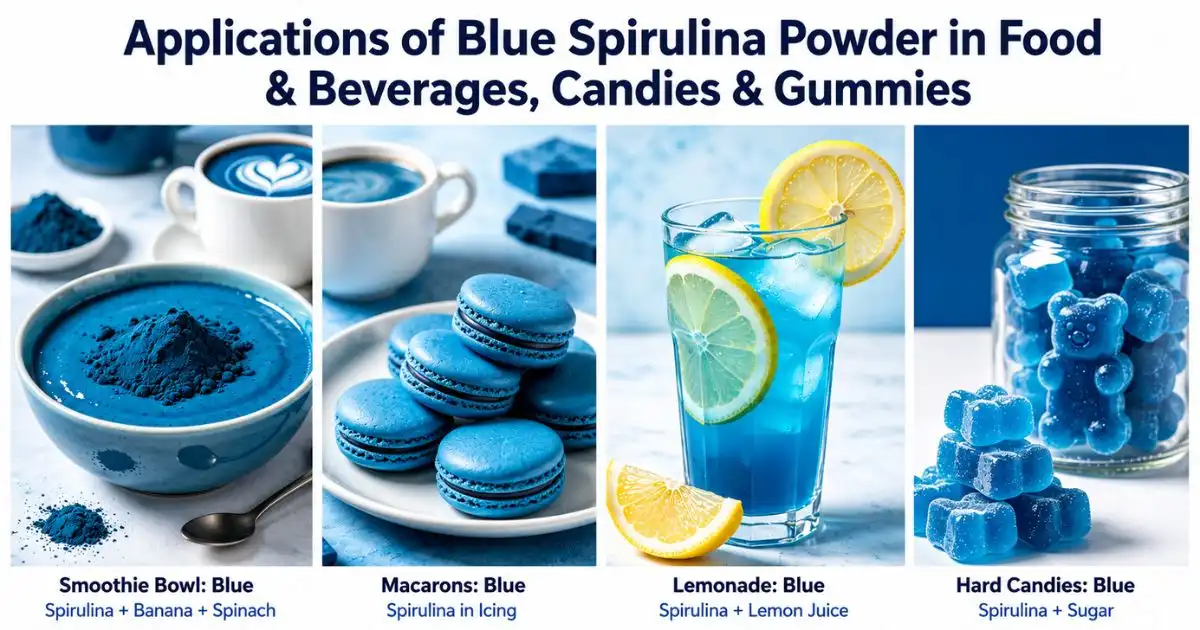
Phycocyanin's 100% water solubility makes it a natural fit for instant drink powders, ready-to-drink functional beverages, and sports nutrition hydration products. At neutral pH, the color remains a stable cyan-blue without the purple shift seen with butterfly pea flower. Formulators typically use E18 grade at 0.1–0.5% w/w to achieve clean-label blue tones alongside immune and antioxidant label claims.
Gummies, Confectionery, and Frozen Foods
Heat sensitivity is a real formulation challenge. However, microencapsulated or stabilized liquid phycocyanin forms retain color integrity through mild pasteurization and gummy molding temperatures below 65°C. Ice cream, yogurt coatings, and frostings benefit from its water-soluble nature, producing consistent blue without synthetic dye residues.
| Dosage Form | Recommended Grade | Processing Consideration |
|---|---|---|
| Gummies / soft chews | E18 | Keep processing temp below 65°C |
| Instant beverage powder | E10 / E18 | Spray-dry compatible; protect from UV |
| Capsules / tablets | E18 / E25 | Low-moisture compression; HPLC-verified lot |
| Protein bars / nutrition bars | E18 | Use encapsulated form for heat stability |
Dietary Supplements: Capsules, Tablets, and Powders
In supplement applications, blue phycocyanin functions as an active ingredient, not just a colorant. Published research documents its role in reducing oxidative stress markers and modulating inflammatory pathways. Formulators developing antioxidant and immune-support SKUs use E25 grade to justify quantitative label claims backed by HPLC batch certificates.
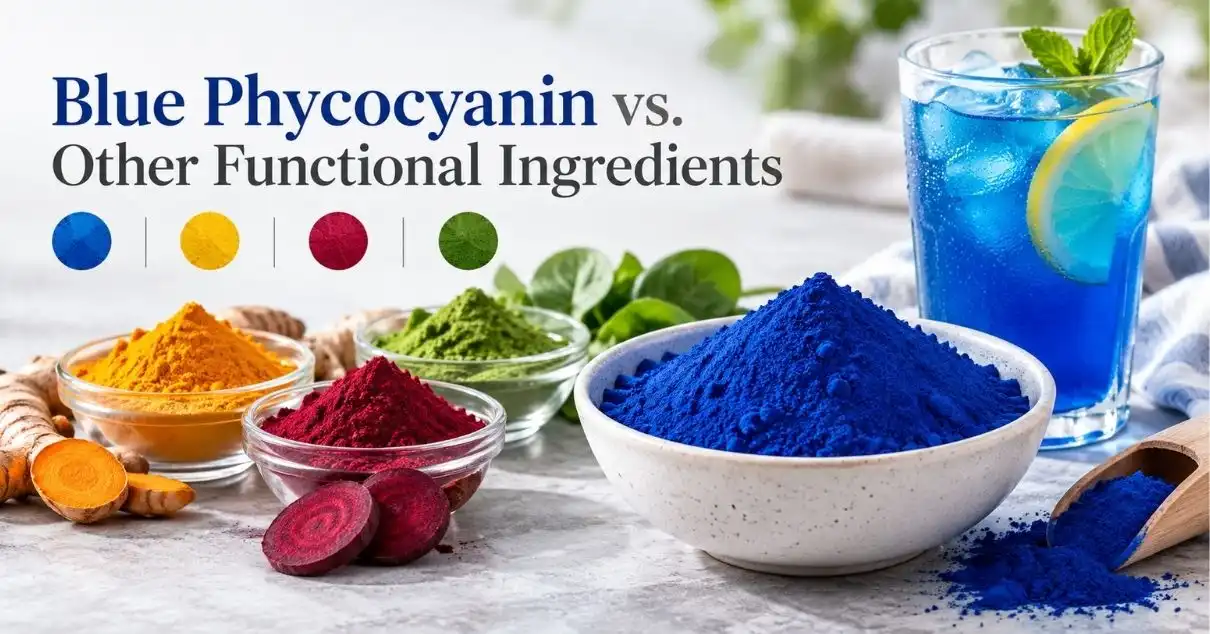
Blue Phycocyanin vs. Other Functional Ingredients
Phycocyanin vs. Whole Spirulina Powder
Whole spirulina powder has colors like chlorophyll and carotenoids. Also, between 14 and 20% of it is protein. When standardized phycocyanin extract is used, the amount of active chromoprotein goes up by at least 25%. To get the right amount, this helps. It also makes the color look clean blue without the green tints that algae adds. When you want to make something that looks good and has a lot of active ingredient, this works better than whole powder.
Phycocyanin vs. Astaxanthin and Chlorophyll
They found that astaxanthin, a type of carotene, can protect cells from damage in the lipid phase. But it breaks down in oil, turns orange when mixed with water, and can't be used in water-based paints or lotions. Chlorophyll is green, but when the pH level changes, it changes color. Phycocyanin is a blue antioxidant that stays stable and breaks down in water. Because of this, it is the best choice for clear water systems and natural blue color claims.
Powder vs. Liquid Extract, Organic vs. Conventional
Powder types E10, E18, and E25 last longer and are easy to ship in big amounts. In the liquor business, liquid extracts work well when exact color control is needed for each batch. Standard non-GMO material is cheaper than organically certified material, but organically certified material costs more and meets most of the marking standards for nutraceuticals. Before they decide on the specifics, buyers should make sure that the certification covers documents that are Kosher, USP-grade, and not made with GMOs.
Procurement Guide: Sourcing Quality Phycocyanin at Scale
Verifying Supplier Credentials
An honest seller will give you records of analysis that have been checked by HPLC for each batch. The records will show how much blue phycocyanin, color, protein, heavy metals, and microbes are in the food. There are still problems in the ingredient business most of the time when what is named doesn't match up with what is checked for phycocyanin levels. If the buying team knows a lot about the samples, they will often ask a third-party lab to look them over again.
If a buyer wants to do business with a seller, they should make sure of these important things:
- Phycocyanin content: ≥25% (E18 grade), confirmed by HPLC or spectrophotometry at 618 nm
- Protein content: 60–70% (nutritional grade, not dye grade)
- Heavy metals: Compliant with USP or EU limits; individual lot reports required
- Microbial: Total plate count, yeast/mold, and Salmonella per applicable pharmacopoeial standard
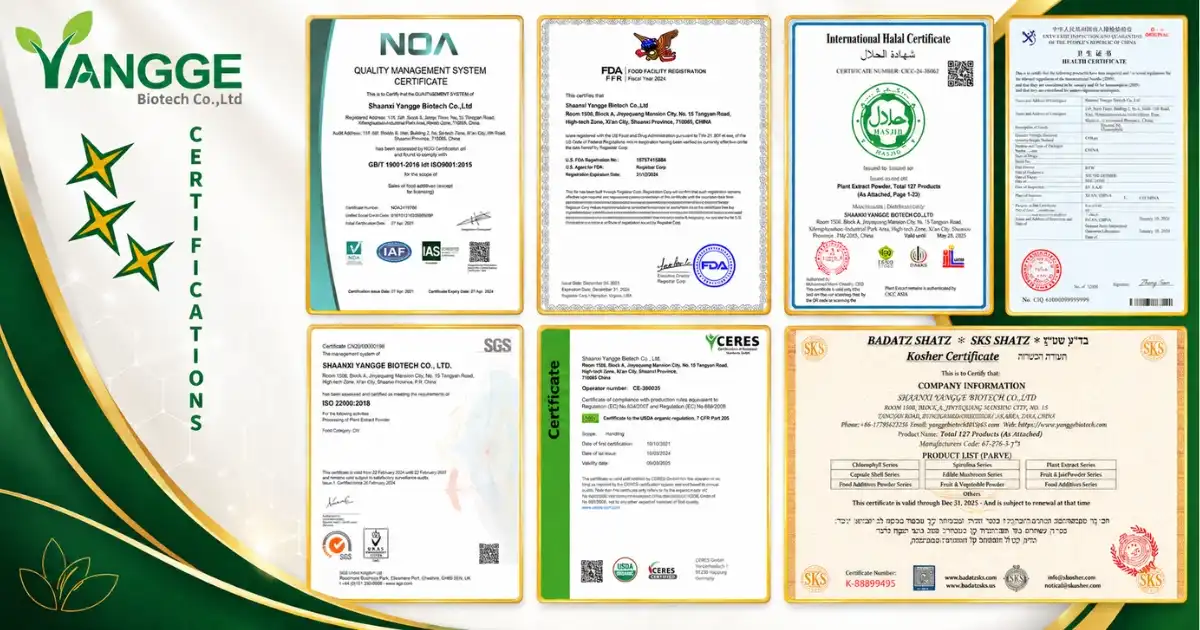
- Certifications on file: Kosher, Non-GMO, ISO, HACCP; USP-grade documentation for supplement applications
There are Kosher, non-GMO, ISO, and HACCP certifications and USP-grade instructions on how to use the supplements on file.
MOQ, Lead Times, and Supply Continuity
With these checks, it's less likely that phycocyanin for dye will get mixed up with phycocyanin for food. This is still a known problem in the market for big goods when it comes to getting them.
Future Trends: Where the Market Is Heading?
Clean-Label Demand Is Reshaping Ingredient Specs
It is expected that the market for natural food colors will grow at a CAGR of 7–8% through 2030 and was worth about USD 2.5 billion in 2023. Phycocyanin is one of the few natural colors that can be used as both a color and an element that does something.
Stabilization Technology Is Expanding Application Range
It is now possible to protect phycocyanin with gentle heat thanks to improvements in microencapsulation and spray drying. Before, no one thought it could be used in baked goods or hot drinks. Now, it can. Formulators don't worry about heat loss as much as they used to because of these changes in technology.
Regulatory Expansion Will Open New Markets
Phycocyanin is being thought about as a food ingredient in some Southeast Asian and Latin American countries. A seller will be better off if they have proof of things like FDA GRAS status, EFSA permission records, or Kosher and Halal certificates ready before government approvals are given in more places.
Conclusion
One of the few natural things that can be used for both color and how it works is blue phycocyanin. The drug breaks down in water, and HPLC can be used to check it. Getting the right grade (E10, E18, or E25) for the job is what makes something valuable. This is always the case, whether it's a green drink, a powerful antioxidant capsule, or a candy bar with a clear label. It's not the price per kilogram that counts for these specifics. What matters is how consistent the batches are from one to the next, how certified the provider is, and how clear the records of tests are.
FAQ
What phycocyanin content should I specify for supplement applications?
Any food supplement that says it is an antioxidant or helps the immune system has to have at least E18 grade (≥25% phycocyanin, protein 60–70%) written on the label. In order for HPLC data to directly back up what's written on the label, strong or clinically-positioned recipes that need it should use the grade E25.
How do I confirm I am receiving nutritional-grade, not dye-grade, material?
Ask for the HPLC certificate of analysis that shows how much protein and phycocyanin are present. A lot of color is found in things that can be dyed, but not much protein (less than 20%). The stuff that is nutritional grade has a lot of phycocyanin and between 60 and 70% total protein.
Is phycocyanin stable in hot-fill or pasteurized beverages?
Powders that are heated above 65°C break down. Mild pasteurization keeps the color of stable or microencapsulated forms. You should get steady data from your provider about the working temperature and pH if you want to use hot-fill.
What certifications should a qualified supplier hold?
Most supplement companies in North America need paperwork at the USP level to show that their products are at least ISO, HACCP, Kosher, and non-GMO. In Southeast Asia and the Middle East, it's important to have a halal certificate for sales.
What is the typical procurement timeline from sample to volume order?
"Approval of technical specifications" comes before "request for sample and third-party recheck," "formulation and stability testing," "trial production," and finally "volume purchase order." This long is how long most people who have done this before take to finish the run.
Partner With Yangge — Certified Blue Phycocyanin Supplier Ready for Scale
Phycocyanin E10, E18, and E25 that is Kosher and USP-grade are in stock at Yangge Biotech. They also have all the paperwork that goes with them. For orders of at least 25 kg, we can make OEM pills, tablets, powders, and gummies. There is proof that we make blue phycocyanin. If you email info@yanggebiotech.com, you can get samples, COAs, and costs that are specific to your recipe needs.
References
1. Romay, C., et al. "C-Phycocyanin: A Biliprotein with Antioxidant, Anti-Inflammatory and Neuroprotective Effects." Current Protein & Peptide Science, 2003.
2. Benedetti, S., et al. "Antioxidant Properties of a Novel Phycocyanin Extract from the Blue-Green Alga Aphanizomenon flos-aquae." Life Sciences, 2004.
3. Dartsch, P.C. "Antioxidant Potential of Selected Spirulina Platensis Preparations." Phytotherapy Research, 2008.
4. Deng, R. & Chow, T.J. "Hypolipidemic, Antioxidant, and Antiinflammatory Activities of Microalgae Spirulina." Cardiovascular Therapeutics, 2010.
5. Grand View Research. "Natural Food Colors Market Size, Share & Trends Analysis Report." Grand View Research, 2024.
6. Eriksen, N.T. "Production of Phycocyanin — a Pigment with Applications in Biology, Biotechnology, Foods and Medicine." Applied Microbiology and Biotechnology, 2008.

Based on your location and order quantity, you will have the opportunity to receive a limited time free shipping promotion!
Who we are
Popular Blogs