Sweet Potato Protein Powder vs Pea Protein: Which Fits Best?
If you are sourcing plant-based ingredients for food and beverage formulation, you have likely weighed purple sweet potato powder against pea protein at some point. While the term "sweet potato protein powder" appears frequently in procurement searches, it often refers to two distinct product categories: a whole-food purple sweet potato powder rich in anthocyanins and dietary fiber, or a concentrated vegetable protein isolate. This guide clarifies that distinction and compares both ingredient types across nutrition, function, and B2B sourcing helping you choose the specification that fits your application.
Understanding Sweet Potato Powder and Pea Protein Powder
It's important to know what each part is, how it's made, and what it adds to a mix before you compare them.
What Is Purple Sweet Potato Powder?
Yangge's Powder Sweet Potato comes from the plant Ipomoea batatas. It is dried in cool air and then ground into a fine powder that is violet-red to violet. It works because of anthocyanidins. There are different types, such as powder, liquids with ratios between 4:1 and 50:1, and amounts of anthocyanin that have been tested that range from 1% to 25%. The UV/TLC tests show that water is the only thing that can break it down. It's mostly used in recipes because it turns purple to red on its own and is high in fiber and antioxidants.
What Is Pea Protein Powder?
If you separate yellow split peas (Pisum sativum) while they are still wet, you get a protein powder that is very concentrated. It usually has 80% to 85% protein by dry weight. The name for this is pea protein isolate. It has a lot of leucine, which helps cells make protein, and all nine amino acids. Vegan and clean-label foods often have pea protein because it doesn't have any toxins or gluten in it. It can be used in most drinks and bars because it is off-yellow and tastes like mild beans. Sweet potato protein powder is a separate ingredient with a different amino acid profile and protein content.
Nutrient Comparison at a Glance
It's made up of pea protein extract and purple sweet potato powder. Adding color, vitamins, and protein is one of their main jobs. Whole food has between 2% and 6% protein, and protein powder has between 80% and 85% protein. Its main parts are anthocyanidins that have been acylated and leucine and BCAAs. There are small pieces of white powder in the water that shield it from view. There are no allergens in it.
| Parameter | Purple Sweet Potato Powder | Pea Protein Isolate |
|---|---|---|
| Primary Function | Natural colorant + antioxidant | Protein fortification |
| Protein Content | 2%–6% (whole food) | 80%–85% |
| Active Compounds | Anthocyanidins (acylated) | Leucine, BCAA profile |
| Solubility | 100% water-soluble | Dispersible (not fully clear) |
| Allergen Status | Allergen-free | Allergen-free |
| Color Contribution | Violet-red to purple | Off-white to pale yellow |
One thing is clear from the table: pea protein is the best way to add protein to something that needs more than 20%. Purple sweet potato powder is the best natural dye for dying things purple that is also good for you.
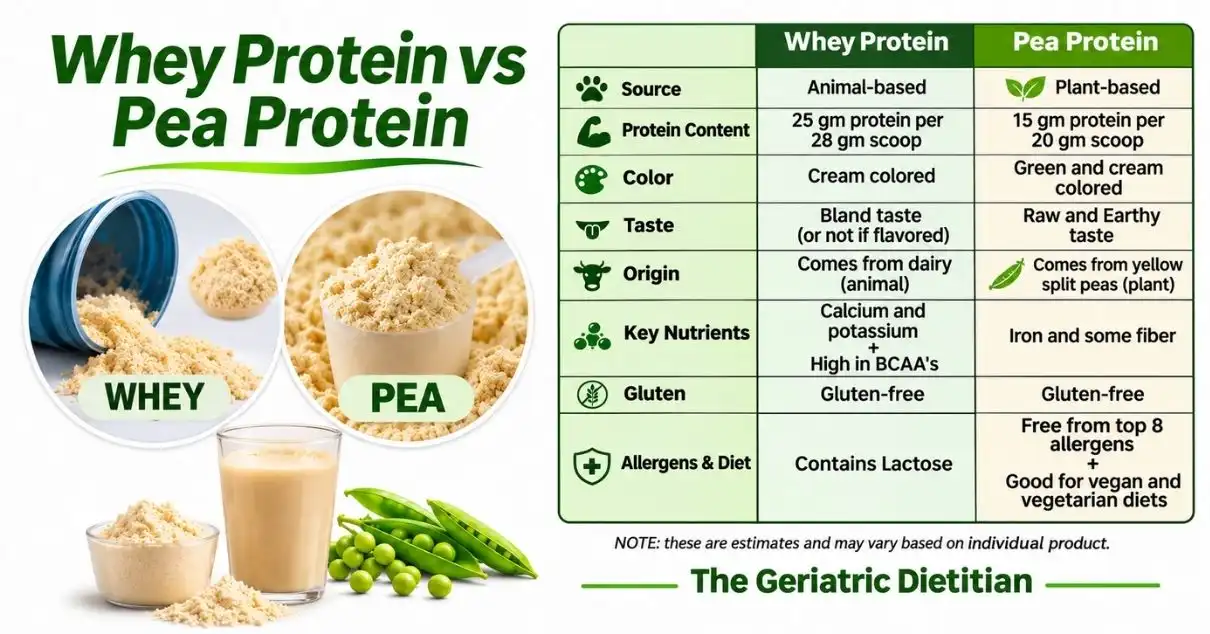
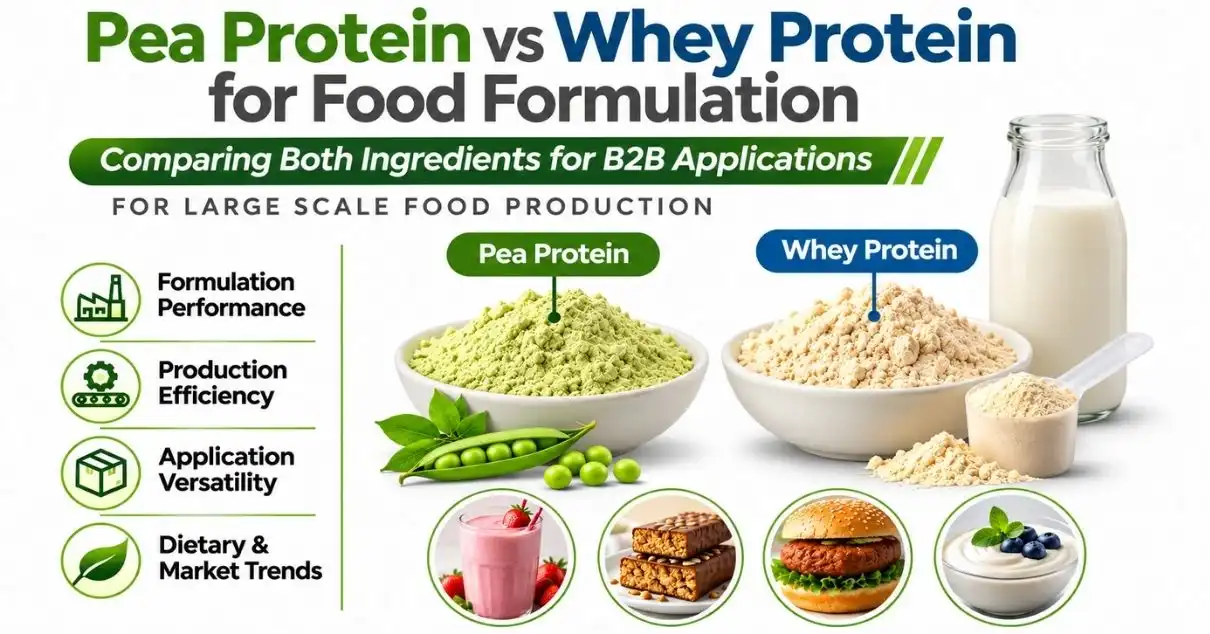
Comparing Both Ingredients for B2B Applications
There are other things besides diet facts that can help you match an item to a use. The choice that is made is based on how the supply chain works and how people think about and process information.
Functional Performance in Formulations
When you add purple sweet potato powder to drinks, baked goods, healthy snacks, meal replacement packs, or sweets, they turn purple on their own. Most fruit-based dyes lose their color when they get hot, but these anthocyanins can stay colored in baked goods up to 180°C. Don't forget that the pH level changes the color. It turns a blue-green color when it comes in contact with something acidic, like baking soda. The purple-to-red range comes back when you add citric acid or lemon juice to the mix.
Pea protein should be used to make high-protein drinks, plant-based meat substitutes, and protein shakes for sports. It has more than 80% protein, which means it has the right amount of macronutrients per dose. It tastes neutral and a little earthy, so it goes well with vanilla, chocolate, or berry flavors. Sweet potato protein powder is a different plant protein with its own profile, and comparing the two helps formulators pick the right one for each application.
Health Benefit Positioning by Consumer Segment
| Consumer Segment | Best Fit Ingredient | Key Claim |
|---|---|---|
| Sports / Muscle Recovery | Pea Protein Isolate | BCAA-rich, supports muscle synthesis |
| Clean-Label Snacks & Beverages | Purple Sweet Potato Powder | Natural color, no synthetic dyes |
| Antioxidant / Wellness Drinks | Purple Sweet Potato Powder | Anthocyanin content, polyphenol nutrition |
| Vegan Meal Replacements | Pea Protein Isolate | Complete amino acid profile |
| Functional Bakery | Purple Sweet Potato Powder | Natural coloring + fiber |
There are no dyes added to the purple sweet potato powder; it is just that color. Because it has a lot of BCAAs and helps build muscle, it is good for sports and building muscle. Because it has anthocyanins and polyphenols, which are good for you, it is also good for health and wellness drinks. Because it has all the amino acids, it can also be used as a veggie meal alternative. Last but not least, it can be used in baking because it has fiber and a natural color.
Sustainability and Supply Chain
They are both good for the earth, so they get good marks for that. The purple sweet potato is a root vegetable that doesn't need as much water. When you buy sweet potatoes from Yangge, you can follow them from the farm to your table. A plan for long-term purchases is made with the help of farming groups. Also, less carbon is used to make pea protein than to make soy or whey protein. We have more pea protein now than we did in 2018. This is because more people want to eat plant-based foods.
Procurement Considerations
That alone isn't enough to help you choose what to buy. Cost, licenses, and shipping must all be thought about in order for a supply connection to work on a large scale.
Pricing, MOQ, and Sampling
The price Yangge charges for a ton of Powder Sweet Potato is fair, and they give away free samples of 10–20 g to try and study. People who are in charge of buying things can use this easy starting point to make sure the color is right and the item will stay stable before making big orders. For small-scale production and testing, different types of packaging can be used, such as 25 kg paper drums, 10 kg drums, and 1–5 kg metal foil bags.
Certifications and Quality Standards
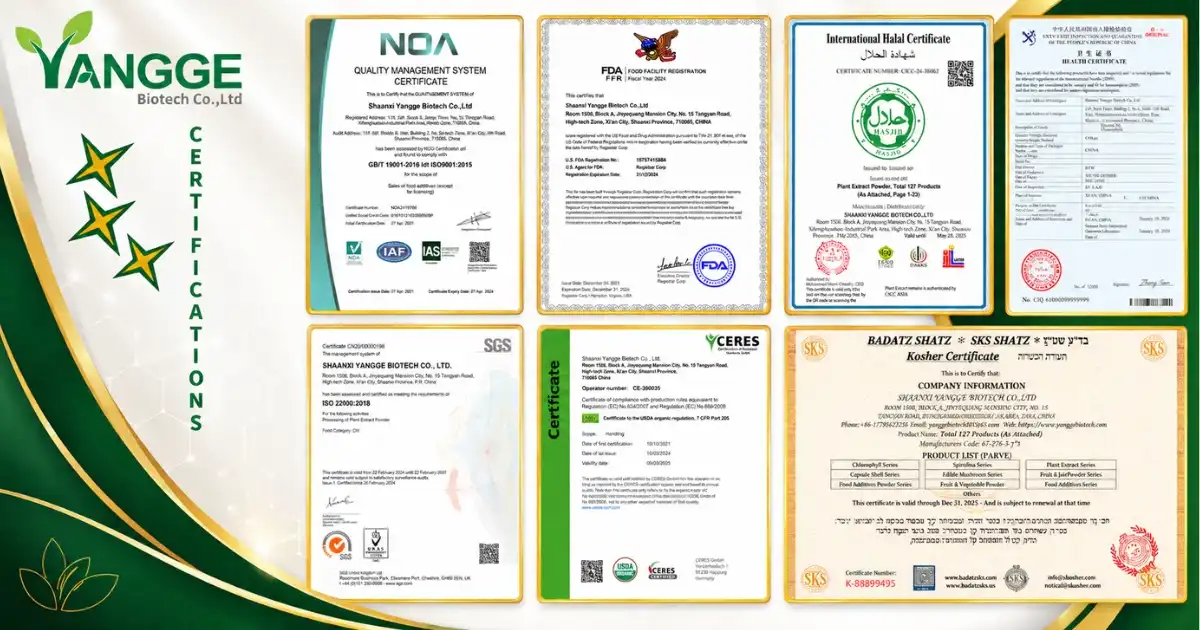
Yangge is certified in ISO, HACCP, Kosher, and Halal, which helps them follow the rules in markets in the US, EU, and Middle East. As a way to make sure the purple sweet potato powder is good, we test it for heavy metals like Pb, As, Cd, and Hg, check for bacteria (TPC < 100,000 CFU/g, no Salmonella or E. coli), and look for pesticide residues in over 500 compounds. Mold won't be able to grow because the water action is kept below 0.3.
Storage and Logistics Requirements
Purple sweet potato powder shouldn't be kept near direct light or heat. Keep it somewhere dry and cool. To keep water out and stop caking, you have to close the drum back up tight after opening it. If food is stored right, it stays fresh for 24 months after it was made. In this state, flavored plant extracts should be kept. This is simple to do in the warehouse with some simple humidity controls. sweet potato protein powder follows similar storage principles, though its protein fraction makes it more sensitive to moisture and heat than the colour-focused purple variety.
Which Ingredient Fits Your Business Best?
It depends on what your service is meant to do. It's easy to think about this way:
- Purple sweet potato powder: If your product needs a natural red or purple color, you should use food dyes like Red 40 or Blue 1 instead of man-made ones. On the other hand, you could improve your recipe by adding fiber and vitamins. Some of the things that can be used are healthy drinks, baked foods, dairy-free options, and meal powders.
- Pea protein isolate: Your product should say that it has a lot of protein as its main health claim. This could be in protein bars, plant-based meat, or sports drinks. Pick pea protein isolate if the customer doesn't care about color.
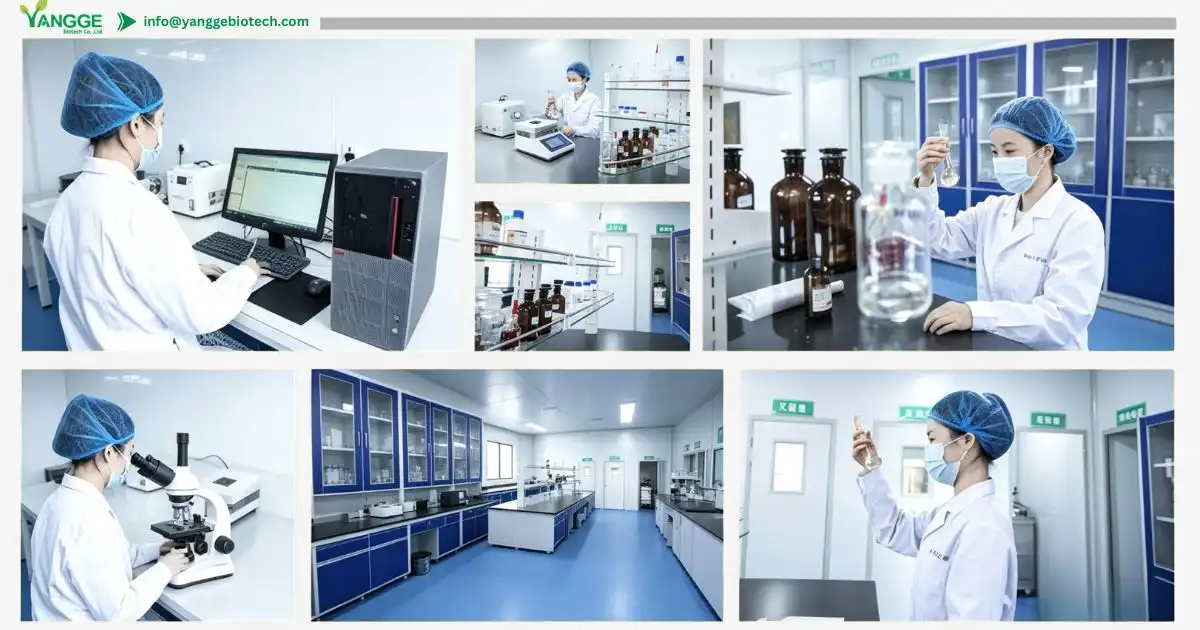
It's important to get your ingredients from companies that you can keep working with. Yangge has a specialized research and development team that helps with data on batch consistency, samples for applications, and formula compatibility. This speeds up the process from getting a sample to selling the whole thing.
Conclusion
Pea protein and purple sweet potato powder both help recipes, but they do so in different ways. One is made from whole foods and has anthocyanins that give it its color. The other one has a lot of plant protein in it, which helps you build muscle and feels full. Figure out which feature is most important to the product. This will help you find the right specification faster. You can pick between straight powder or extract amounts ranging from 4:1 to 50:1 in Yangge's Powder Sweet Potato line. Many things can be colored and healthy with it. To start your review, ask for a free taste. Sweet potato protein powder sits at the intersection of these two functions, offering both plant protein and the natural pigments of the tuber.
FAQ
Does purple sweet potato powder provide protein like pea protein?
Not at all. Anthocyanins are what make purple sweet potato powder work. It comes from plants and is a whole food. It doesn't have enough protein by itself because the dry weight is only 2% to 6%. If you need to put on the sign that the item has a lot of protein, you should use pea protein isolate (80%+ protein).
Why does my purple sweet potato powder turn blue or green in baking?
Changes in pH can be bad for anthocyanins. When you add baking soda and other alkaline things, the color changes to blue-green. Adding something acidic, like buttermilk, cream of tartar, or citric acid, to your baked goods will bring back the purple-to-red color.
What anthocyanin specification should I order for a beverage application?
For drinks that need to be purple and have anthocyanin claims that are okay on the label, a 10:1–25:1 extract or a 5%–10% standardized anthocyanin powder is a good place to start. You can get 10–20 g of free samples from Yangge before you place a large order. This way, your team can test the color yield and stability in your specific matrix.
Is Yangge's purple sweet potato powder compliant for the U.S. market?
To answer your question, Yangge is certified in ISO, HACCP, Kosher, and Halal. In line with FDA and EU rules, items are checked for signs of microbiology, heavy metals, and herbicides.
Request Your Sample from Yangge Purple Sweet Potato Powder Supplier
You can buy high-quality Powder Sweet Potato from Yangge Biotech in a number of different forms, such as powder and 50:1 extract. You can mix some of these with water, and they are all okay with ISO, HACCP, Kosher, and Halal. This is purple sweet potato powder that we can send to you for free. Each sample will weigh 10–20 g. There is no need to buy more. Prices for businesses start at 1 ton.Contact us or you may ask a question right away, email us at info@yanggebiotech.com.
References
1. Steed, L. E., & Truong, V. D. (2008). Anthocyanin content, antioxidant activity, and selected physical properties of flowable purple-fleshed sweet potato purees. Journal of Food Science.
2. Tömösközi, S., & Lásztity, R. (2002). Pea proteins: Functional properties and applications in food systems. Food Reviews International.
3. Jing, P., & Giusti, M. M. (2005). Characterization of anthocyanin-rich waste from purple corncobs and its application to color milk. Journal of Agricultural and Food Chemistry.
4. Boye, J., Zare, F., & Pletch, A. (2010). Pulse proteins: Processing, characterization, functional properties and applications in food and feed. Food Research International.
5. Lim, S., & Xu, J. (2012). Flavonoids: Biosynthesis, biological functions, and biotechnological applications. Frontiers in Plant Science.
6. SPINS Natural Products Industry Data Report. (2023). Plant-based protein ingredient trends in U.S. retail food and supplement markets. SPINS Market Research.

Based on your location and order quantity, you will have the opportunity to receive a limited time free shipping promotion!
Who we are
Popular Blogs