Nutrition and Uses of Sweet Potato Protein Powder for Brands
Sweet potato protein powder attracts brands that want a plant-based ingredient with a root-crop story, but buyers need to read specifications closely. Raw sweet potato holds only about 1.6 g of protein per 100 g, so much of its nutrition value comes from fiber, carbohydrates, and anthocyanins. The market lists protein concentrates, purple sweet potato powders, and anthocyanin extracts under similar names. This guide separates them and explains nutrition, uses, and sourcing for U.S. brands. I also show where Yangge Powder Sweet Potato fits in drinks, bakery, dairy, and supplements.
What Sweet Potato Protein Powder Means for Buyers?
Protein Concentrate, Flour, Starch, or Extract
A lot of the time, web ads show four different things that all have the same name. With sweet potato protein powder, the protein doesn't mix with the root. The dried and ground root of the sweet potato is used to make flour. Starch is the only food that can stand on its own. It has a lot of certain chemicals, like anthocyanins. Because they all work in a formula differently, the name is more important than the search term. In the beginning, sweet potato roots are pretty weak. The main protein that is kept in the roots is sporamin, they have found. Before you buy, look at the spec sheet to see if it clearly shows the test method, the protein percentage, and the raw ingredients.
Where Yangge Powder Sweet Potato Fits
I want to tell you the truth about what we sell. Yangge sells Powder Sweet Potato, which is also known as sweet potato extract. The fine powder, which is violet red to violet, is made up of anthocyanins. It's more than just proteins. On the package, it says something about plants, which is why some brands choose it. Your main goal should be to get a lot of protein in each serving. We'll let you know if this grade meets your goal after you tell us what it is. The plans we made are in the table.
| Item | Detail |
|---|---|
| Product name | Powder Sweet Potato (sweet potato extract) |
| Appearance | Violet red to violet fine powder |
| Specification | 4:1–50:1, 1%–25%, straight powder |
| Active ingredient | Anthocyanins |
| Test method | UV/TLC |
| Solubility | Water soluble |
| Free sample | 10–20 g |
| Packaging | 25 kg or 10 kg paper drum with two plastic bags inside; 1–5 kg aluminum foil bag in a carton |
| Storage | Cool, dry place, away from strong light and heat |
The powder from sweet potatoes is fine and a violet-red to violet color. It's a straight powder with specs of 4:1 to 50:1, 1% to 25%. It works because of anthocyanins. To test it, UV/TLC is used. When you add water to the powder, it breaks down. 10–20 g will be given to you for free. The powder comes in paper drums that weigh 15 kg or 25 kg and have two plastic bags inside each one. Each box also comes with a 1–5 kg metal foil bag. Keep it away from heat and bright light, where it will stay cool and dry. Your R&D team can use these facts to pick a grade before the bench test.
How Purple Sweet Potato Powders Are Produced
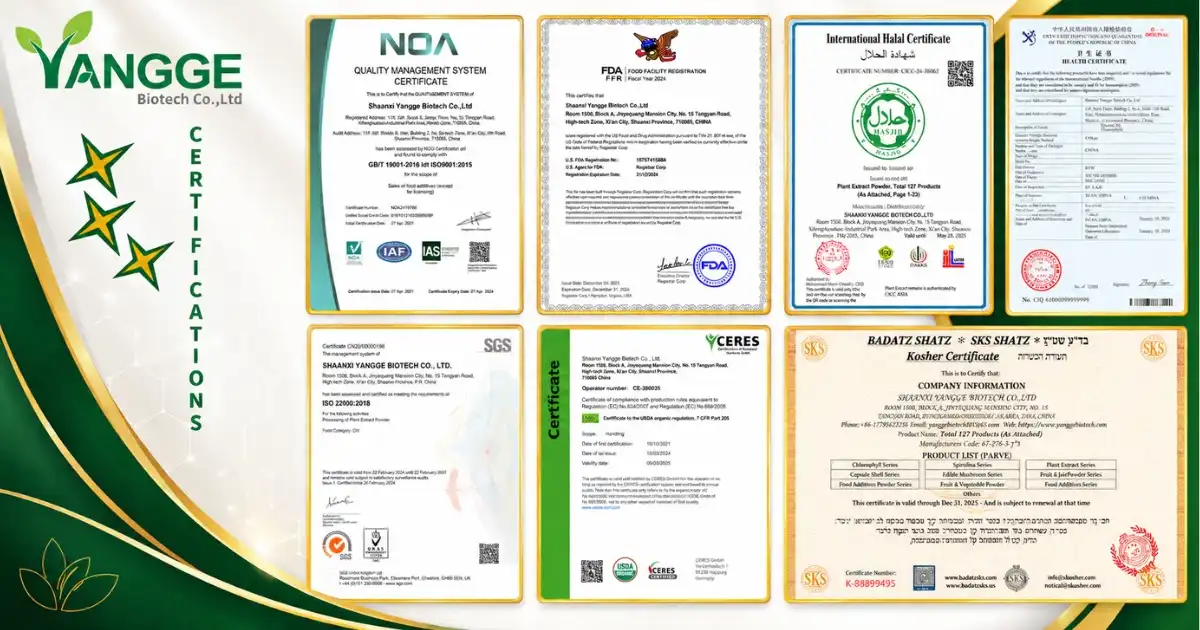
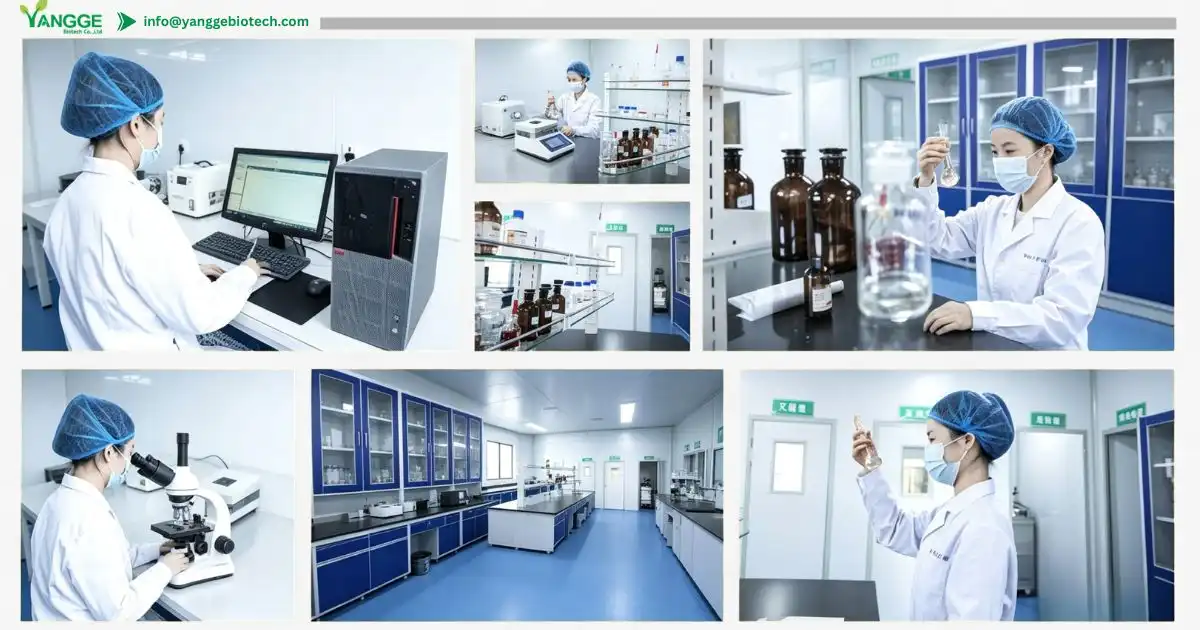
First, the raw roots are checked to make sure they are purple sweet potatoes. Then they are washed, drained or dried, filtered, compressed, dried, milled, and tested again. This number shows how much of the raw material you need to make one part of the finished extract. So, ten parts of root are used to make one part of the extract. It's possible that less of an inclusion rate is needed for a certain shade as the ratio goes up because the color becomes more concentrated. The taste, the size of the grains, and how well they mix depend on how you dry and mill them. Yangge follows GMP rules and makes products that are ISO, HACCP, Kosher, and Halal certified. Farmers help us keep track of food from the field to the table.
Sweet Potato Protein Powder Nutrition: What to Check
Macronutrients in the Raw Root
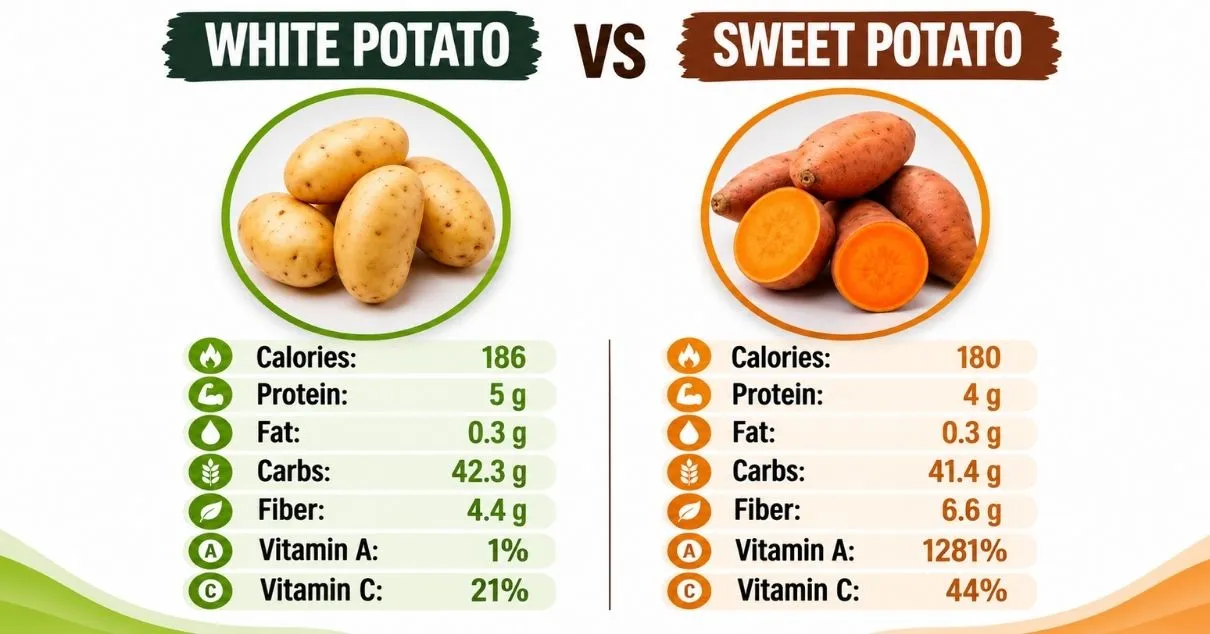
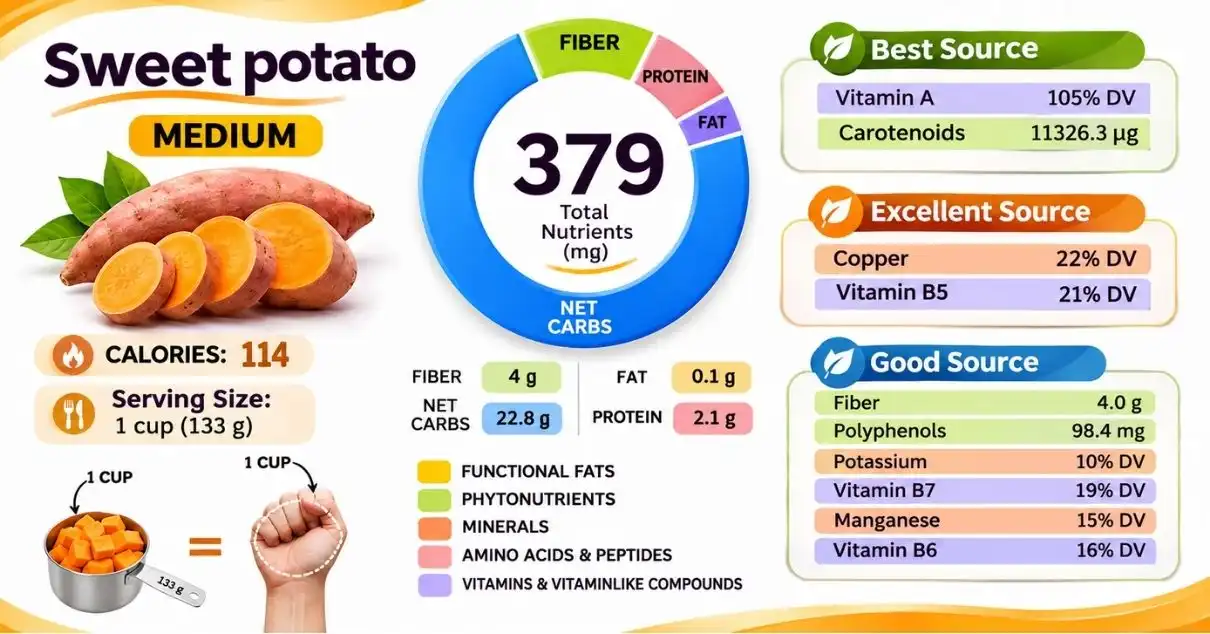
Nutrition Facts for 100 grams of raw sweet potato: 86 calories, 1.6 grams of protein, 20 grams of carbs, and 3 grams of fiber. It's clear why the root is known for its carbs and fiber rather than its iron. There are more of them in 100 grams of whole-root sweet potato protein powder because the water is taken away when it is dried. During processing, parts can be added or taken away, which can make an extract or concentrate even more special. I believe that the best way to compare candidates is to read the full COA and look at their dry matter. This will show you the amount of water, ash, fat, fiber, carbs, and the test method used to find each answer. Don't guess how much protein something has based on its name.
Amino Acids and the Complete Protein Question
A full protein gives your body all nine amino acids that it needs. When the FAO talks about protein quality, they use the digestibility-adjusted number as a guide. But in the U.S., PDCAAS is used instead of protein when a product says it has it. It was found in 2018 that plant proteins sometimes have less methionine, lysine, or leucine than animal proteins. The Amino Acids magazine wrote about the work. So, I think you should ask any company that says their sweet potato protein is "complete" for a full amino acid makeup. Say that it comes from plants if you don't have any test results. Don't say anything else; the numbers will say it all.
Anthocyanins and Fiber
Sweet potatoes are purple because anthocyanins have been changed into acyl groups. The public knows that HPLC-MS research has found peonidin and cyanidin derivatives. Anthocyanins are what make our Powder Sweet Potato work, according to tests with UV and TLC. Because anthocyanins are vitamin colors, many brands use them with a story about how healthy plants are. When you write, remember the FDA's rules: just say that it's good for you. Do not say that it cures or stops sickness. Most of the time, whole-root powders have more fiber than higher-ratio extracts, which have more color and less fiber. Make sure you know what kind you're getting by reading the specs.
Uses and Product Development Applications
Where Brands Use It
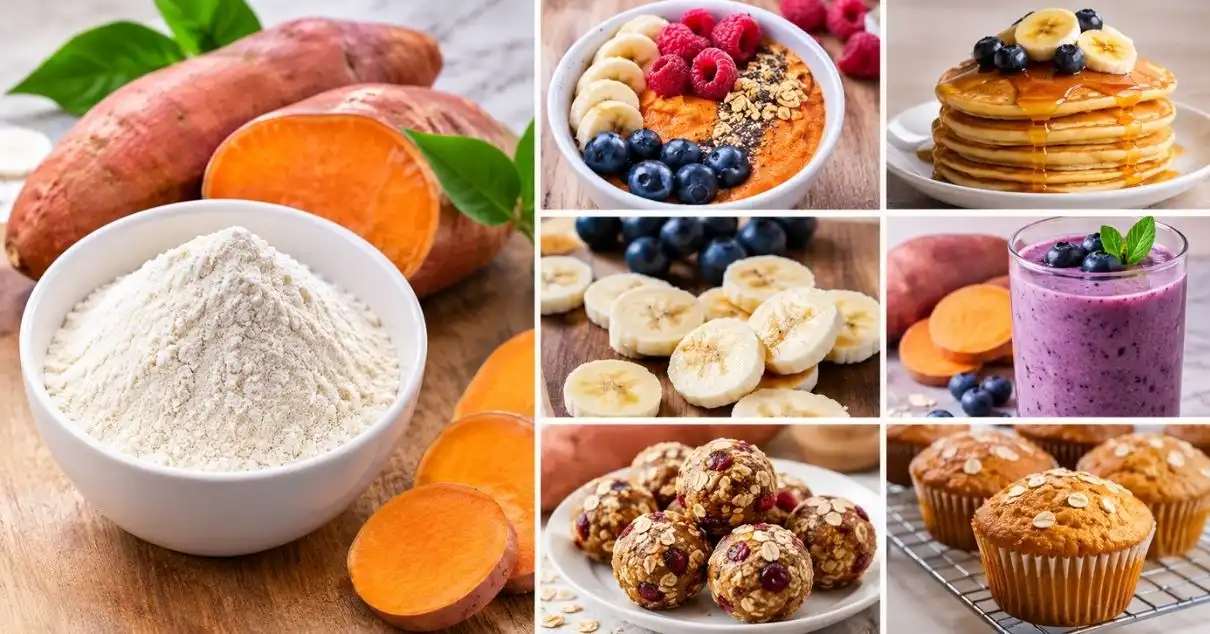
There are several ways to use the ingredients for purple sweet potatoes. To give smoothies, quick drink mixes, and healthy drinks more color, people use them. You can bake cookies, bread, and stuffing in them. They are used by both dairy and non-dairy brands in soy, ice cream, and plant-based treats. You can eat powders instead of meals, and the supplements get some color and a story about plants. As a main protein source in sports nutrition and protein bars, I use this powder to give them color and taste. It is not the protein source itself. Before you put a style on the market, you should test it to make sure it mixes well, settles, can handle heat, reacts with water, and lasts a long time.
Managing pH and Color Stability
The color of anthocyanin changes when the pH level does. This is the issue that formulators talk to me about most often. Acylated anthocyanins make up most of the purple sweet potato. These anthocyanins block heat and light better than many other types. But they do change when the surroundings are acidic. Most of the time, the table shows how things work.
| System pH | Typical color | Formulation tip |
|---|---|---|
| Strongly acidic (about 3 or below) | Red to pink | Fruit acids hold a redder tone |
| Mildly acidic to near neutral (about 4–7) | Purple to violet | Best range for true purple |
| Alkaline (above about 8) | Blue to green-gray | Limit baking soda; add food acid |
The color will change from red to pink if the pH level is 3 or less. Fruit acids will keep the color red. True purple does best when the pH is between 4 and 7. The color will be purple to violet in this range. After 8 or more, the color will change from blue to green-gray. It's better to use less baking soda and more food acid. Salts and leavening agents can change the color of the cake, so check the pH after it's done.
Dosage, Flavor, and Pilot Testing
Sweet potato protein powder works for different people at different doses. For each color, the base pH, the amount of heat used, and the kind of anthocyanin used will vary. Start by adding small amounts. Then, put the rates and grades (1% to 25% and 4:1 to 50:1) next to each other and make small changes. A 10–20 g sample is enough for a few small tests on a bench. Some grades may have earthy notes, but vanilla, fruit, or cocoa can hide them. Do a test batch and a shelf-life test that are similar to how the product will be stored and shown to light in real life after the bench work. After that, you can choose how much to make and buy some.
Comparing Protein Sources and Choosing a Supplier
Sweet Potato Compared With Pea, Rice, Soy, and Whey
Also, judge the source by look at what you get as well as the protein rate. You can see some common trade-offs in the table below.
| Source | Common strength | Watch point |
|---|---|---|
| Pea | Widely used plant protein | Often lower in methionine |
| Rice | Mild taste, pairs well with pea | Often lower in lysine |
| Soy | Strong amino acid profile | Major U.S. allergen; check non-GMO needs |
| Whey | High protein density | Milk-based, not vegan; major allergen |
| Sweet potato | Root-crop, plant-based story | Confirm protein level and amino acids by lab data |
Pea protein is one type of plant protein that doesn't have much methionine. For a mild taste, peas go well with rice. Most of the time, it has less lysine. In the U.S., soy is a major allergen and high in amino acids. Make sure it doesn't have any GMOs in it. This is whey, which is made from milk and has a lot of protein. No, it's not vegan. The sweet potato is a root vegetable. In a lab, you can show the amount of protein and amino acids. Peas and rice often fill in the amino acid gaps when they are mixed together. It might be easier to name sweet potatoes even though they aren't one of the nine most common food allergens in the U.S. You still need to back up your allergen claim, though. If you only use one protein, there won't be many things on the list. It might taste better and have more nutrients if you use a mix.
Supplier Checks Before You Order
First, make a good spec sheet. Ask for a COA for the item and, if possible, the exact batch. Look at the food's particle size, anthocyanins, bacteria, heavy metals, chemical residues, and how long it will last. The next thing you should do is look at the supplier's plant state, certifications, ability to keep track of goods, history of exporting goods, and ability to get expert help. Yangge is approved by GMP, ISO, HACCP, Kosher, and Halal, so you can buy from them anywhere in the world. You can look at more than one price. Tests, shipping, taxes, and freight costs should all be added up and looked at.
Bulk Orders, Packaging, and Samples
Are you going to buy a lot of sweet potato protein powder? You should think about how much you need every year, how long it will take to deliver, how much space you have in your warehouse, and how often you can let batches out. Yangge puts Powder Sweet Potato into 25 kg and 10 kg paper drums with two plastic bags inside or into cardboard boxes with 1–5 kg aluminum foil bags inside. It will stay cool and dry if you keep it away from heat and bright light. We give away free 10- to 20-gram samples and charge a business price for every ton of sales. Something usually goes through a sample process, bench and stable tests, and trial production before it is bought. This is done after it has been used and the specs have been checked. Once you tell us how much you buy every year, we can talk about when and how much.
Quality, Safety, and Risk Control
Common Sourcing Risks
Heavy metals, microbial counts that don't match the product name, heavy metals that change color from batch to batch, and other problems are common for people who buy plant ingredients. This piece of writing shows that something called "protein powder" might actually be a lot of different colors. Powders that contain carbs can soak up water, so it's important to know how to package them. With written specs, batch COAs, and trial approval before the first big order, it's easy to keep each risk in check. If you do small checks at the beginning, you won't have to make big changes later.
Testing and Documents to Request
You should ask for a COA that shows the weight of the particles, the amount of anthocyanin by UV and TLC, the presence of microbes, heavy metals, pesticide residues, and moisture. Get fresh copies of the ISO, HACCP, Kosher, and Halal certificates, as well as a list of allergens. Save a bit of each lot and compare its color and taste to the standard you agreed on. If a brand says a product is organic or non-GMO, you can't just tell by looking at the name of it. First, you should look at what the certificate covers and where the raw materials come from.
Storage, Handling, and Claims
Keep the powder somewhere cool and dry, away from heat and bright light, with the lid on. Use the first-in, first-out method and make sure lot numbers are clear. You should only open what you need and close the bags back up quickly. When you're bragging, don't talk about being sick. Instead, talk about nutrition and plant-based sources. If you want to use purple sweet potato as a color in the U.S., you should check with a regulatory advisor first. That check makes sure your label and date of release are safe.
Conclusion
Before comparing prices, people should make sure they know what each item is made of, since sweet potato protein powder can mean a lot of different things. There are about 1.6 grams of protein in 100 grams of raw sweet potato. That is, the fiber, carbs, and anthocyanins are the good parts. To make full protein claims, you need to know about amino acids and how to score them. You can put purple sweet potato oils in drinks, food, cheese, and supplement powders. They have to make small amounts to test the acidity, dose, taste, and shelf life, though, because the pH changes the color. Pea, rice, soy, and whey all have their own pros and cons when it comes to allergens. That's possible with batch COAs, checks with suppliers, and the right way to store things to keep quality consistent.
FAQ
Q1: Is Yangge Powder Sweet Potato a protein isolate?
A: It's not a food. This dark powder is high in anthocyanins and is also known as sweet potato extract. We'll tell you what protein-rich food you need based on your goal.
Q2: Can I call sweet potato protein powder a complete protein?
A: There should be enough of all nine necessary amino acids, as shown by lab tests, and your market should also be given a way to rate the food.
Q3: Why did my purple color turn blue or green?
A: For anthocyanins, the pH level is important. Acidic things, like baking soda, change color to blue or green. To make the purple back more red, add a food acid.
Q4: Is the powder water soluble?
A: It says in our specs that it breaks down in water. Even so, you should still test your own mix or drink because the pH, minerals, and sugars can be different.
Contact Yangge for Sweet Potato Protein Powder Samples and Bulk Pricing
If you need to buy sweet potato protein powder, Yangge is the only place you need to go. They'll let you know right away if our Powder Sweet Potato is good for your job. Tell us about your idea, the color you want, and how much you need every year in an email to info@yanggebiotech.com.
References
1. U.S. Department of Agriculture, FoodData Central: Sweet Potato, Raw, Unprepared, 2019.
2. Truong, V.D. et al., "Characterization of Anthocyanins and Anthocyanidins in Purple-Fleshed Sweet Potatoes by HPLC-DAD/ESI-MS/MS," Journal of Agricultural and Food Chemistry, 2010.
3. Giusti, M.M. and Wrolstad, R.E., "Acylated Anthocyanins from Edible Sources and Their Applications in Food Systems," Biochemical Engineering Journal, 2003.
4. Food and Agriculture Organization of the United Nations, Dietary Protein Quality Evaluation in Human Nutrition (FAO Food and Nutrition Paper 92), 2013.
5. Maeshima, M., Sasaki, T. and Asahi, T., "Characterization of Major Proteins in Sweet Potato Tuberous Roots," Phytochemistry, 1985.
6. Gorissen, S.H.M. et al., "Protein Content and Amino Acid Composition of Commercially Available Plant-Based Protein Isolates," Amino Acids, 2018.

Based on your location and order quantity, you will have the opportunity to receive a limited time free shipping promotion!
Who we are
Popular Blogs