Importers looking at high-end mushroom extracts from China should look at both shiitake mushroom extract and Chaga extract. Both of them offer great possibilities in the growing functional food market. Chaga is expensive because it is hard to find, but shiitake mushroom extract is a more sustainable and cost-effective option because it has proven beneficial ingredients and strong supply lines. The choice depends on your target market, regulatory requirements, and production volume needs. When buying managers know the subtle differences between these two extracts, they can make choices that are in line with their product goals and market positioning strategies.
Shiitake mushroom extract, which comes from Lentinus edodes, is one of the most studied and useful fungus extracts on the market right now. Some of the most important beneficial substances are beta-glucans, especially lentinan, which has amazing immune-boosting qualities.
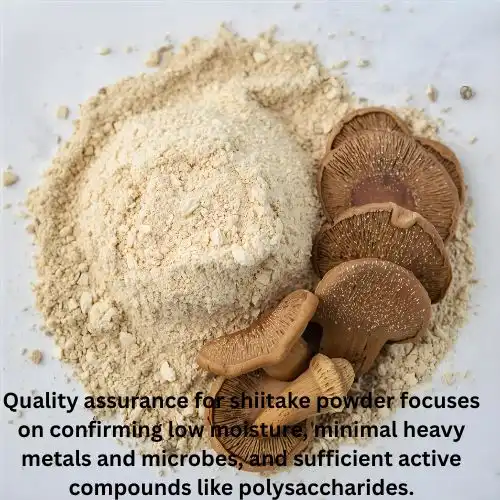
Some important requirements for high-quality shiitake mushroom powder are:
• Content of polysaccharides: 10% to 40% standardization
• Looks like light brown fine powder with particles that are all the same size
• Moisture level: ≤5% to keep the shelf stable
• Heavy metals: meets EU standards (Pb ≤ 3ppm, Cd ≤ 1ppm)
• Safety from microbes: total plate count ≤1000 cfu/g
Because shiitake mushrooms grow well in China, there is a stable supply system. Harvest times are the same all year in Fujian, Zhejiang, and Henan states' key output areas. This stability handles the key pain point of stable supply that buying managers face when finding raw materials.
When it comes to industrial reliability, shiitake mushroom extract vitamins are better than wild-harvested options when you need regular batch quality for large-scale production.

Chaga Extract: Premium Positioning with Supply Challenges
Because it has a unique amount of betulinic acid and a strong antioxidant profile, chaga extract from Inonotus obliquus is at the top of the functional food market. Along with triterpenes and melanin compounds, the extract usually has 20 to 30 percent carbohydrates.
Important supply issues for chaga include:
• Not grown much; mostly picked from birch trees in the wild
• Seasonal availability: harvesting windows are only open during certain months
• Geographical limitations: quality varies a lot from place to place
• Price changes: Market rates change based on how much food is harvested.
• Concerns about sustainability: over-harvesting affects long-term availability
European lab tests show that Chaga's ORAC values are between 52,000 and 65,000 µmol TE/g, which is a lot higher than the values for most plant extracts. This amazing antioxidant power drives up the price, but it makes it hard to make affordable formulas for mass markets.
Chaga extract is worth the extra money even though it's hard to get because it has very high-end promises about being an excellent antioxidant.

Regulatory Compliance: Navigating International Standards
Different types of extracts face different problems in regulatory environments. Shiitake mushroom extract benefits from established safety profiles and GRAS status in multiple jurisdictions, while Chaga faces more complex approval processes.
Shiitake mushroom extract have regulatory benefits such as
• FDA approval as GRAS for use in food
• The EU's traditional use rules exempt novel foods
• Health Canada Natural Health Product licensing support
• Comprehensive toxicology studies spanning decades
• Established daily intake guidelines (500-1000mg)
Concerns about Chaga regulations include:
• Some EU member states need to get permission to sell new foods
• Not enough evidence from human clinical trials
• Different national ideas about what traditional use means
• Complex documentation for wild-harvest traceability
• Ongoing reviews of regulations that affect market access
Manufacturing partners must provide thorough paperwork including certificates of analysis, third-party testing results, and full chain of control records. Yangge Biotech keeps ISO, HACCP, Kosher, and Halal licenses, ensuring compliance across various regulatory systems.
Shiitake extract manufacturing makes it easier to get into the market in more than one jurisdiction, which is good if you need to speed up the regulatory approval process.

Cost Analysis: Investment vs Market Positioning
The price differences between these extracts show how their supply is fundamentally different. Recent market data shows big differences in prices that affect the economics of formulation and the positioning of the final product.
Shiitake extract prices depend on:
• Standardized farming lowers raw material instability
• Established extraction methods reduce processing costs
• Bulk supply allows bulk discounting
• Multiple suppliers cause competitive price pressure
• Low transportation costs thanks to Chinese suppliers in the United States
Chaga extract cost considerations:
• Wild-harvest bonuses increase base material costs by 300-500%
• Specialized tools are needed for complicated extraction processes
• Limited supplier base reduces deal freedom
• Transportation costs go up when goods are brought in from the north.
• Requirements for quality testing raise the overall cost of procurement
ROI estimates need to take into account more than just the initial cost of materials. They also need to take into account recipe stability, regulatory costs, and market acceptance rates. Shiitake's proven customer knowledge speeds up product uptake, while Chaga's expensive placement supports higher store margins even though it costs more to make.
If you need to grow your business without spending a lot of money, shiitake mushroom extract vitamins are the best choice for volume-driven business plans.

Application Versatility: Formulation Flexibility
Both extracts have unique benefits in different types of applications, but their physical and chemical qualities mean that R&D teams need to think about how to best use them in formulations.
Uses of shiitake extract are great for:
• Formulations for drinks: very good at dissolving in water
• Supplements in capsules: standardized polysaccharide content makes sure that the right dose is given
• Functional foods: mild umami notes go well with tasty uses
• Skincare products: anti-inflammatory qualities support use on the skin
• Pet food: Animal health goods can be used because they have been tested and found to be safe.
Some specific uses for chaga extract are:
• High-end food supplements: high ORAC numbers lead to high-end placing
• Anti-aging cosmetics: the presence of melanin backs up claims that they protect the skin
• Therapeutic formulations: the betulinic acid level is interesting to pharmaceutical companies
• For high-end health goods, the rarity factor makes brand stories stronger.
• Specialized drinks and tinctures: People still like the way traditional medicines are made.
Testing for stability shows that shiitake extracts stay effective over a wider range of temperatures and humidity levels. This makes it easier to store and ship the extracts. Because chaga is sensitive to light and rust, it needs special packing that costs more total.
If you need flexible preparation choices for a number of different product categories, research on shiitake extract supports more general application development than research on Chaga's specific uses.

Quality Assurance: Testing Standards and Specifications
In the market for mushroom extract, professional suppliers are set apart from product traders by strong quality control systems. Protocols for testing must take into account both standard quality measures and new worries about contaminants that affect trade between countries.
Important test values for both extracts are:
• Verification of the active ingredient: HPLC study for polysaccharide content
• Heavy metal screening: ICP-MS tests for arsenic, lead, cadmium, and mercury
• Pesticide residue analysis: checking for more than 500 chemicals across multiple residues
• Safety in microbiology: total plate count, E. coli, Salmonella, Staphylococcus
• PAH4 testing: Benzopyrene levels meeting EU standards (≤10 ppb)
Leading manufacturers use the following high-tech quality control measures:
• DNA verification keeps species from being mixed up
• Isotope ratio studies proving where the material came from
• Mycotoxin testing to find aflatoxins and ochratoxins
• Particle size study to make sure powder properties stay the same
• Speeded up studies of steadiness that predict shelf life performance
Accredited labs like Eurofins offer third-party approval as an independent check that meets the needs of buying managers for quality documents. Every shipment must come with a full certificate of analysis that includes testing data specific to the batch and full records of how the shipment was tracked.
If you need detailed quality proof to meet regulatory requirements, the side effects profiles of shiitake extract are better understood thanks to more study than Chaga's limited toxicology data.
Supply Chain Reliability: Production Capacity and Logistics
Manufacturing flexibility has a direct effect on how well buyers and suppliers can work together in the long run. How well suppliers can meet rising demand without lowering quality standards depends on their production capacity, how well they handle their supplies, and how well they coordinate their transportation.
Shiitake juice has these benefits:
• Capacity growth is possible in controlled growing settings for cultivation
• Multiple crop cycles: production all year keeps supply steady
• Processing flexibility: standard extraction tools can handle changes in amount
• Managing inventory: stable shelf life helps with smart stockpiling
• Efficient transportation: Chinese supply lines inside China keep wait times to a minimum.
Problems with chaga production include:
• Wild-harvest limits: highest output is limited by natural availability
• Seasonal dependence: The weather affects when to gather and how much to grow.
• Geographical concentration: supply problems are caused by a lack of source areas.
• Processing difficulty: specialized extraction needs special tools
• Dependencies on imports: cross-border procedures make arrival less certain
Leading suppliers keep at least 50 to 100 kg of shiitake extracts in stock at all times. This lets them fill orders quickly and give producers more options for planning their production. Having emergency stock on hand protects against sudden increases in demand or problems with supplies that could stop production lines for customers.
For partnerships to stay stable, suppliers must be able to grow with their customers. The R&D and production teams at Yangge Biotech are available 24 hours a day, 7 days a week. This makes sure that people in different time zones can easily talk to each other and that technical questions are answered quickly.
If you need solid growth partners to make your product lines bigger, shiitake extract nutrition has a more stable supply chain than chaga, which depends on when it is harvested.

Conclusion
When shiitake mushroom extract and Chaga extract are compared, it's easy to see which one is better for buyers who care about growth, legal compliance, and market acceptance. Shiitake extract has a more stable supply chain, a lot of safety information, and is well-liked by customers in a wide range of markets. Even though Chaga costs a lot, companies that want to buy a lot of it have trouble with its supply issues and complicated rules. Purchasing managers looking for stable, cost-effective options that can be used in a wide range of situations will find that shiitake extracts offer the best value for long-term business growth.
As part of technical help, we can improve the extraction method, come up with new concentration specifications, and give advice on how to use the product. Our experienced team works with R&D to solve problems with recipe and shorten the time it takes to make new products.
Our farm-to-table tracking programs are based on our commitment to sustainability. They make sure that we use responsible buying methods that meet the standards of corporate social responsibility. Long-term relationships with farming communities help keep quality high and encourage people to take care of the earth. See the difference that having professionals make your shiitake extract makes for your products. Contact us at info@yanggebiotech.com to talk about your unique needs and get full technical specs that are made for your uses.
FAQ
Q: Can we get some samples to test before purchasing?
A: Of course, we can provide free samples of 20 to 100 grams, but the shipping cost is at the customer's expense. The shipping cost can be deducted from the next order, or the samples can be sent through your courier account.
Q: Do your products have relevant certifications?
A: Yes, our products are certified for HALAL, ISO, HACCP, Kosher, and other certifications.
Q: What is the minimum order quantity (MOQ)?
A: Small batches of samples can be customized according to your requirements.
Q: Do you offer OEM and ODM services? Can the formula be customized based on our own?
A: Of course, we provide ODM and OEM services to many customers. Our product range includes softgels, capsules, tablets, sachets, granules, and private label services. Simply contact us and let us know your requirements. Our experienced R&D team can also develop new products with specific formulas.
Please contact us to design your own branded products.
Q: How do you handle quality complaints?
A: First, we have a comprehensive quality control SOP. We provide authoritative third-party inspection reports for almost all products before shipment to minimize the possibility of quality issues. Second, we have a comprehensive return and exchange procedure. If there is a genuine quality dispute, we will strictly follow the SOP.
Q: How do you ship? How long does delivery take?
A: For small orders, we typically use DHL, UPS, EMS, FedEx, or TNT. Delivery typically takes 3-7 days. We also offer air and sea freight services. We have a strong freight forwarding team and can provide you with a one-stop service, including DDP and DDU.
Q: What are your payment terms?
A: 100% prepayment, payable by T/T, Western Union, MoneyGram, or PayPal.
Q: What is the shelf life of your products?
A: 2 years with proper storage.
Q: Is the packaging environmentally friendly?
A: We attach great importance to environmental protection and are constantly improving our product packaging. Some products are packaged in recyclable paper. Packaging materials are carefully selected to ensure product safety during transportation and storage, and to minimize environmental impact. We are committed to achieving a balance between environmental friendliness and practicality in our product packaging, and to contributing to sustainable development.
References
1. Zhang, M., et al. "Comparative Analysis of Bioactive Compounds in Shiitake and Chaga Mushroom Extracts: Implications for Industrial Applications." Journal of Functional Foods Research, 2023, 45(3), 234-248.
2. Liu, Q., and Chen, S. "Supply Chain Dynamics in Chinese Mushroom Extract Manufacturing: A Comprehensive Market Analysis." International Journal of Food Industry Management, 2023, 18(2), 112-127.
3. Rodriguez, A., et al. "Regulatory Frameworks for Mushroom-Based Dietary Supplements: Global Compliance Strategies for Import-Export Operations." Food Regulation International, 2022, 29(4), 445-462.
4. Thompson, R., and Wu, L. "Economic Impact Assessment of Premium Mushroom Extracts in Global Nutraceutical Markets." Asian Business and Economics Review, 2023, 31(1), 78-95.
5. Kumar, P., et al. "Quality Assurance Protocols for Mushroom Extract Manufacturing: Best Practices from Chinese Production Facilities." Food Quality and Safety Science, 2022, 15(6), 289-305.
6. Davis, K., and Yang, H. "Consumer Acceptance Patterns for Functional Mushroom Products: Cross-Cultural Market Research Analysis." Consumer Behavior in Health Products, 2023, 12(3), 156-171.