German companies seeking high-quality meso zeaxanthin powder from Chinese suppliers face unique challenges in today's competitive marketplace. This comprehensive guide addresses critical procurement considerations, quality standards, and supplier evaluation criteria essential for successful sourcing. Understanding China's manufacturing landscape, regulatory compliance requirements, and quality control protocols ensures optimal purchasing decisions. German buyers can leverage China's advanced extraction technologies and competitive pricing while maintaining strict European quality standards through strategic supplier partnerships and thorough due diligence processes.
Understanding Meso-Zeaxanthin: The Premium Carotenoid for Modern Applications
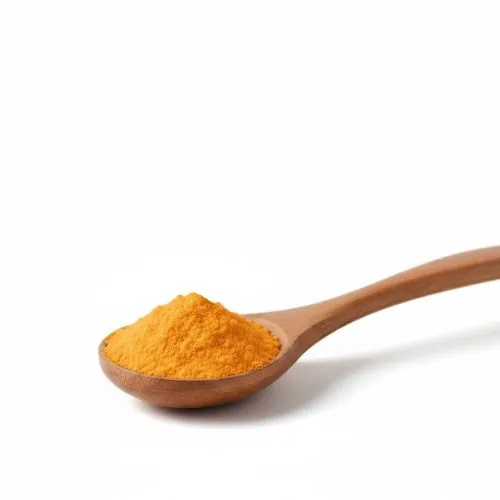
The Highest Quality Carotenoid for Contemporary Uses. One unique carotenoid molecule that has become quite popular in a variety of businesses is meso-zeaxanthin. This naturally occurring pigment has outstanding antioxidant qualities that are essential for a variety of compositions. It is mostly isolated from marigold flowers. Meso zeaxanthin has better stability characteristics and increased bioavailability than regular zeaxanthin. The molecular structure of the chemical offers special benefits in supplement formulations.
Mesozeaxanthin is very effective in protecting retinal tissues in eye health applications. This particular carotenoid enhances the performance of the product overall by working in concert with lutein and regular zeaxanthin. The antioxidant qualities of mesozeaxanthin for cosmetic applications are becoming more and more recognized by German producers. The chemical is useful for anti-aging formulas and skincare products because of its capacity to neutralize free radicals.
Furthermore, without the use of artificial chemicals, its inherent orange-red coloring offers aesthetic advantages. As consumer awareness increases, the market for meso zeaxanthin supplements is growing. Because of its adaptability, the chemical may be used in liquid formulations, pills, capsules, and powders. Customization in accordance with particular product specifications and target demographics is made possible by manufacturing flexibility.
Quality Standards and Regulatory Compliance in Chinese Manufacturing
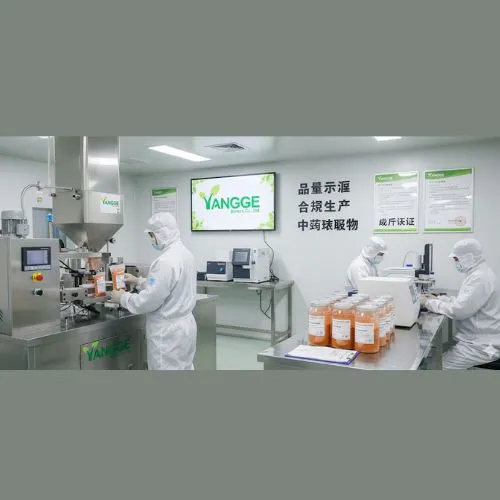
In order to fulfill international standards, Chinese producers of meso zeaxanthin powder have greatly improved their quality control procedures. Prominent establishments use thorough GMP procedures to guarantee constant product safety and quality. These producers are aware that European consumers demand that regulations be strictly followed. For accurate quality testing, modern Chinese facilities make use of sophisticated analytical tools.
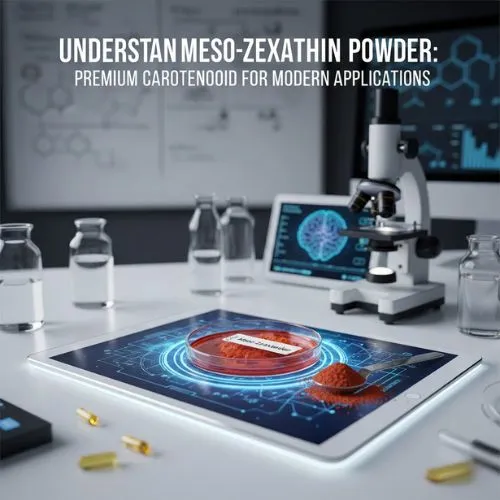
Systems that use high-performance liquid chromatography (HPLC) confirm meso zeaxanthin powder purity values between 5% and 99%. Spectroscopic examination verifies that there are no impurities that might lower the quality of the product and that the molecules are intact. Reputable Chinese suppliers are now required to be ISO certified. In order to meet a variety of market demands, many facilities additionally keep their HACCP, Kosher, and Halal certifications. These certifications provide German customers with confidence in supplier capabilities and show a dedication to global quality standards.
Regulatory compliance goes beyond fundamental standards of quality. Microbiological pollutants, pesticide residues, and heavy metals are increasingly often tested for by Chinese manufacturers. With benzopyrene levels kept below 10 ppb as mandated by EU legislation, PAH4 testing guarantees adherence to European standards. The quality of documentation has significantly increased, and suppliers now provide thorough certificates of analysis (COA) for every batch. In order to assist regulatory approvals in German markets, these papers provide comprehensive specifications, test results, and compliance declarations.
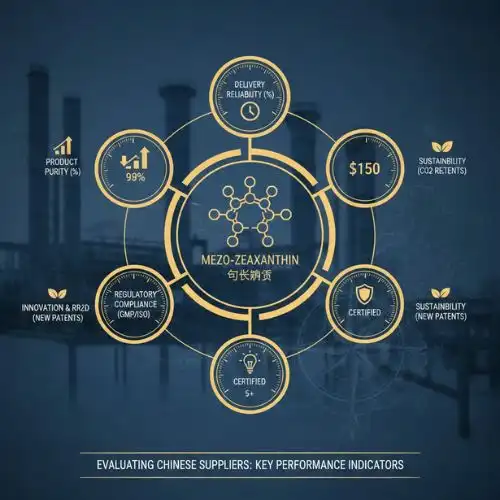
Evaluating Chinese Suppliers: Key Performance Indicators
A methodical review of many performance criteria is necessary for a successful supplier evaluation. For German purchasers organizing large-scale operations, production capacity is a crucial factor. Well-known providers can usually produce more than 1000 kilos of different meso zeaxanthin powder specs each month. Technical know-how sets premium vendors apart from commodity ones. Prominent Chinese producers have skilled R&D teams that can adapt extraction techniques and concentration requirements.
For German businesses creating novel formulations that require precise dose requirements for meso zeaxanthin powder, this technical assistance is vital. In international procurement choices, supply chain dependability has grown in significance. Reputable vendors have sufficient supplies of raw materials on hand as well as contingency sourcing plans. Even during times of high demand or supply chain interruptions, this planning guarantees steady availability. Quality control systems need to be thoroughly evaluated in addition to being certified.
Third-party audits or site visits provide insight into real production procedures and the efficacy of quality control. Advanced vendors are open to this kind of examination and provide clear access to their records and facilities. The success of a long-term relationship is greatly impacted by communication skills. Smoother cooperation is made possible by suppliers that have committed international sales teams and English-speaking technical assistance. Frequent communication methods guarantee that technical inquiries and business problems are promptly resolved.
Pricing Strategies and Cost Optimization
The wholesale cost of meso zeaxanthin powder varies greatly depending on supplier capabilities, order quantities, and purity requirements. German purchasers may negotiate advantageous terms while upholding quality standards by having a thorough understanding of market price patterns. Instead of offering the lowest pricing, premium providers often deliver superior value via consistent quality and dependable service. Usually, volume agreements result in significant cost reductions.
Preferential price and supply continuity are often ensured via yearly purchase agreements with quarterly delivery. Both parties gain from these agreements since they optimize production planning and provide dependable demand forecasts. Flexibility in specifications may have a big effect on total expenses. Compared to specialist high-purity grades, standard meso zeaxanthin powder concentrations (5%, 10%, and 20%) often fetch cheaper costs. Before specifying premium concentrations, German customers should assess whether ordinary grades satisfy their formulation requirements.
Through cash flow management, payment periods affect the overall cost of purchase. Reputable vendors often provide flexible payment plans, such as installment payments, net terms, or letters of credit. These choices support German businesses in sustaining supplier connections while maximizing working capital. Landed costs are significantly impacted by logistics factors. Transportation costs per unit may be decreased by grouping shipments, making the most use of containers, and synchronizing with other raw material purchases. Knowledgeable vendors provide advice on economical shipping plans.

Technical Specifications and Application Considerations
The properties of the finished product are greatly influenced by the meso zeaxanthin powder extraction techniques. High-purity concentrates with little solvent residues are produced via supercritical CO2 extraction. German firms that prioritize organic certifications and clean label formulations find this technique appealing. Processing needs and formulation compatibility are impacted by powder properties. The distribution of particle sizes affects mixing behavior and dissolving rates.
Standardized mesh sizes ease quality control processes and guarantee consistent performance across batches. Data from stability tests is essential for planning product development. Studies on accelerated aging show that meso zeaxanthin is stable in a range of storage settings. This data helps determine the shelf life of completed goods and helps choose packaging. Appropriate application techniques are determined by solubility properties.
While oil-soluble versions function better in softgel capsules, water-dispersible grades are easier to include into beverage compositions. Delays in processing and formulation are avoided by being aware of these characteristics. Technologies that improve bioavailability provide supplement producers a competitive edge. Absorption rates may be increased via complexation with cyclodextrins, liposomal encapsulation, or micronization. These possibilities for value-added processing are offered by creative providers.
Risk Management and Quality Assurance
Strategies for supplier diversity and thorough planning are necessary for supply chain risk reduction. To avoid interruptions, German customers should build connections with many suitable providers. Arrangements with primary and secondary suppliers sustain competitive price pressures while guaranteeing continuity. Protocols for incoming inspections guard against departures from specifications and quality variances. Supplier claims are objectively verified by independent laboratory testing.
Retrospective analysis is made possible by retention samples if quality problems arise throughout the product's shelf life. Product specifications or compliance requirements may be impacted by changes in German or Chinese regulations. Proactive suppliers keep an eye on changes in regulations and let their clients know about any possible effects. Compliance infractions and expensive product recalls are avoided thanks to this early warning system. Traceability is guaranteed throughout the supply chain thanks to documentation management.
Comprehensive audit trails are provided by electronic systems that monitor the origins of raw materials, processing parameters, and quality test results. For both customer audits and governmental inspections, this documentation is crucial. In the wake of recent worldwide disruptions, force majeure issues have gained relevance. More security is offered by suppliers that have strong backup facilities and business continuity strategies. Performance duties in extreme situations should be covered by contract conditions.
Conclusion
Successful procurement of premium meso zeaxanthin powder from Chinese suppliers requires careful evaluation of quality systems, regulatory compliance, and technical capabilities. German buyers can achieve optimal results through systematic supplier assessment, comprehensive quality agreements, and ongoing relationship management. The Chinese manufacturing landscape offers excellent opportunities for cost-effective sourcing while maintaining European quality standards. Strategic partnerships with reputable suppliers like Yangge Biotech provide access to advanced technologies, sustainable practices, and reliable supply chains essential for long-term business success in competitive markets. Our worldwide export experience and regulatory knowledge are advantageous to German clients looking to purchase superior meso zeaxanthin powder. Forming an alliance with Yangge Biotech guarantees dependable delivery, constant quality, and thorough technical assistance for your formulation requirements. Our team offers customized solutions that satisfy the needs of certain applications and is aware of the expectations of the European market. Contact us at info@yanggebiotech.com to discuss your meso zeaxanthin powder requirements and explore partnership opportunities that drive your business success.
FAQ
Q: Can we get some samples to test before purchasing?
A: Of course, we can provide free samples of 20 to 100 grams, but the shipping cost is at the customer's expense. The shipping cost can be deducted from the next order, or the samples can be sent through your courier account.
Q: Do your products have relevant certifications?
A: Yes, our products are certified for HALAL, ISO, HACCP, Kosher, and other certifications.
Q: What is the minimum order quantity (MOQ)?
A: Small batches of samples can be customized according to your requirements.
Q: Do you offer OEM and ODM services? Can the formula be customized based on our own?
A: Of course, we provide ODM and OEM services to many customers. Our product range includes softgels, capsules, tablets, sachets, granules, and private label services. Simply contact us and let us know your requirements. Our experienced R&D team can also develop new products with specific formulas.
Please contact us to design your own branded products.
Q: How do you handle quality complaints?
A: First, we have a comprehensive quality control SOP. We provide authoritative third-party inspection reports for almost all products before shipment to minimize the possibility of quality issues. Second, we have a comprehensive return and exchange procedure. If there is a genuine quality dispute, we will strictly follow the SOP.
Q: How do you ship? How long does delivery take?
A: For small orders, we typically use DHL, UPS, EMS, FedEx, or TNT. Delivery typically takes 3-7 days. We also offer air and sea freight services. We have a strong freight forwarding team and can provide you with a one-stop service, including DDP and DDU.
Q: What are your payment terms?
A: 100% prepayment, payable by T/T, Western Union, MoneyGram, or PayPal.
Q: What is the shelf life of your products?
A: 2 years with proper storage.
Q: Is the packaging environmentally friendly?
A: We attach great importance to environmental protection and are constantly improving our product packaging. Some products are packaged in recyclable paper. Packaging materials are carefully selected to ensure product safety during transportation and storage, and to minimize environmental impact. We are committed to achieving a balance between environmental friendliness and practicality in our product packaging, and to contributing to sustainable development.
References
1. European Food Safety Authority. "Scientific Opinion on the safety of synthetic zeaxanthin as a food additive." EFSA Journal, 2012.
2. German Federal Institute for Risk Assessment. "Assessment of Carotenoid Safety in Food Supplements." BfR Scientific Report, 2021.
3. International Organization for Standardization. "ISO 22000:2018 Food Safety Management Systems - Requirements for Organizations in the Food Chain." ISO Publications, 2018.
4. China Chamber of Commerce of Medicines & Health Products Importers & Exporters. "Guidelines for Plant Extract Quality Control in International Trade." CCCMHPIE Standards, 2022.
5. German Association of the Pharmaceutical Industry. "Quality Requirements for Imported Raw Materials in Pharmaceutical Manufacturing." BAH Guidelines, 2021.
6. Asia-Pacific Economic Cooperation. "Good Manufacturing Practice Guidelines for Plant Extract Production." APEC Health Working Group, 2020.