OEM Phycocyanin Blends: Custom Blue Spirulina Formulation Guide
OEM phycocyanin blends are custom formulas that pair phycocyanin, the blue pigment-protein from Spirulina, with carriers and functional ingredients to hit a brand's exact color, solubility, and format targets. A strong blend starts with the right color-value grade. It then matches pH, heat exposure, and flavor to the finished product. I wrote this guide for U.S. supplement brands and beverage makers who want a clear path from first sample to repeat orders. Below, I cover formulation limits, grade selection, supplier checks, and compliance, along with the specifications Yangge offers.
What Are OEM Phycocyanin Blends?
Phycocyanin Versus Whole Spirulina Powder
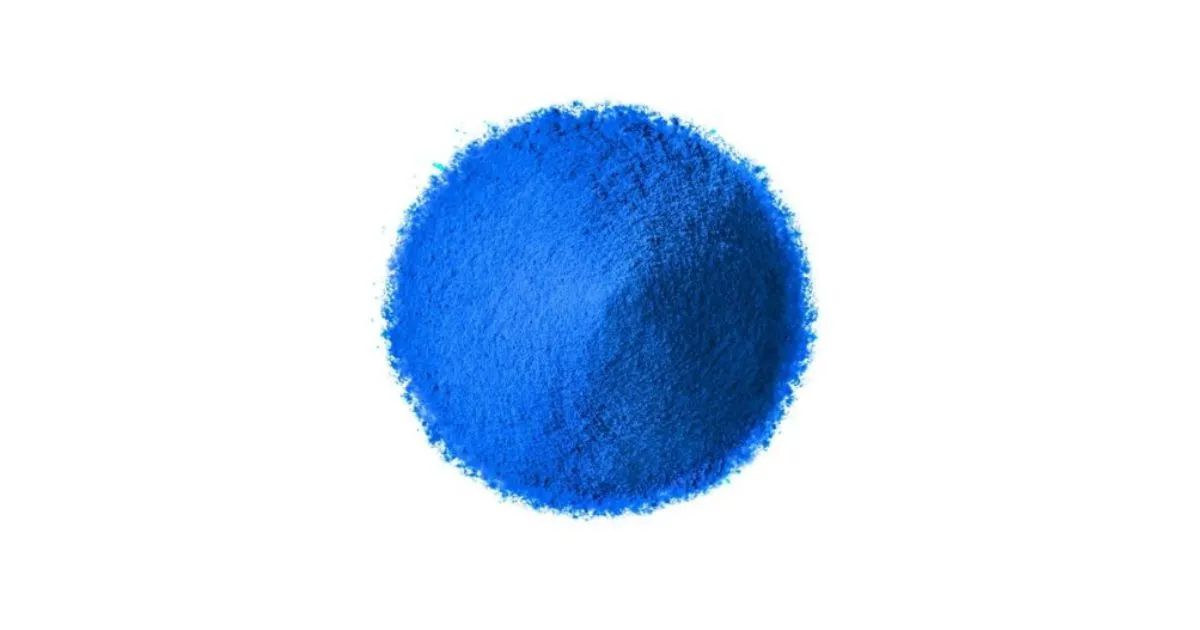
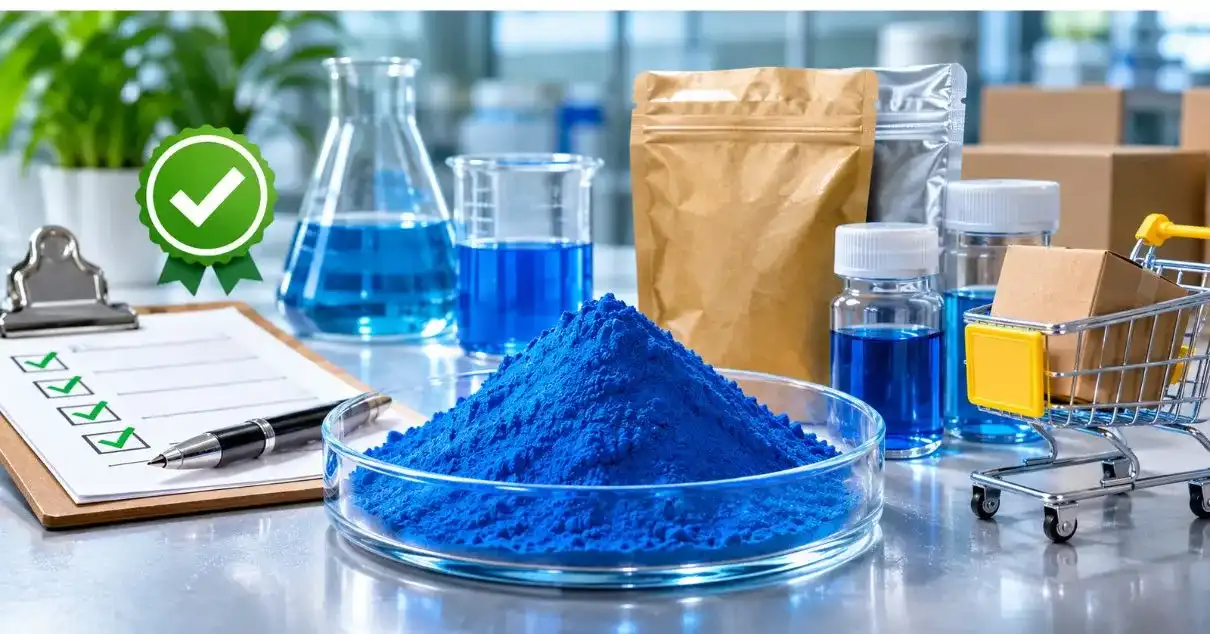
Spirulina (Arthrospira platensis) contains a protein called phycocyanin, which is blue. The green color and taste of whole spirulina powder come from the chlorophyll, proteins, and vitamins that are in it. The piece of text in the middle of the blue area makes the blue color look better. It tastes like fresh spirulina and is made from blue spirulina. Yangge phycocyanin is a fine blue powder. It's not GMO, it's not an allergy, and it wasn't irradiated. Stronger grades have a high color value, which means that a small amount of color is needed to color the whole batch.
Why Brands Choose Custom Blends
In its raw state, an extract is only the beginning. They add carriers, acidity regulators, or other helpful things to the powder in an OEM blend to make sure it spreads out well and always turns out the same color. It's also up to the brand to choose the serving size, color goal, and style of the package. In turn, this helps the brand sell its own goods. It doesn't matter how big or small a business is; people rate things by their color first. C-phycocyanin has also been shown to lower swelling and keep cells from getting hurt in the lab. This is a scientific reason for brands to talk to their regulatory managers about this.
Where These Blends Are Used
Phycocyanin can be added to protein drinks, gels, capsules, smoothie powders, sweets, and baked goods to make them healthy. Vitamin companies also use them to show people what's in superfood powders. Our product is on the list of natural food and drink colors. This means that it can be used instead of Brilliant Blue FCF or other man-made blue dyes without messing up the label. In 2013, the FDA said that spirulina extract could be used as a colorant without first getting their approval. At first, it could only be used in candy and gum. After some time, it could be used for more things. Different ways of making phycocyanin give it different shades of blue.
Formulation Challenges When Developing Phycocyanin Blends
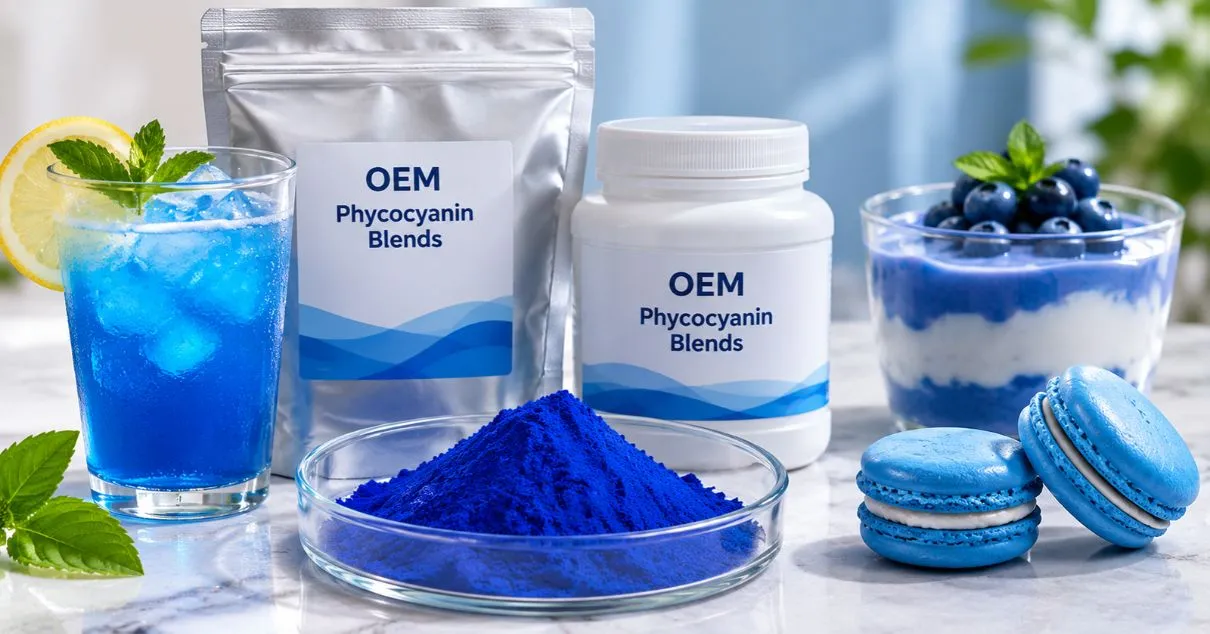
How pH, Heat, and Light Affect Color
The most stable conditions were between pH 5 and 6 and below 45°C, as found by Chaiklahan and his staff. Heat or strong acids can cause proteins to unfold, which can change the color or make it fade. Because of oxygen and light, more is lost over time. To keep our powder safe, please keep it out of the light and in its original, tightly sealed box. To be sure of the grade, brands that make hot drinks, baked goods, or extruded snacks should test the color at the real process temperature.
Solubility, Dispersion, and Flavor
If you add water to a dry mix, it can stick together, and powder that isn't spread out well can leave spots or sediment in your drink. There are different types of carriers that can be used, and how they are mixed affects how quickly the powder breaks down. Protein drinks can foam, and light drinks like clear water can taste like spirulina. Also, the two foods should go well together. Acids, minerals, sweets, and plant-based foods all respond with protein in different ways. Chems and some sugars have been shown to make phycocyanin more stable. To avoid this, it is better to use real ingredients in a test matrix instead of making a rule.
Regulatory Rules and Final-Matrix Testing
In the U.S., there are different rules for each type of goods. Under 21 CFR 73.530, the FDA says that spirulina extract is a color additive that does not need to be approved. There is, however, a list of things that are fine. Make sure you know where you are before you put it on something. There are different rules for dietary things, such as the DSHEA's boundaries on claims about form and function. Before you go all out, test each prototype in the final matrix to see how it breaks down, changes color, tastes, and holds up over time. In a lab, testing raw powder doesn't tell you anything about how it will work in candy, juice, or pills.
How to Develop a Custom OEM Phycocyanin Blend
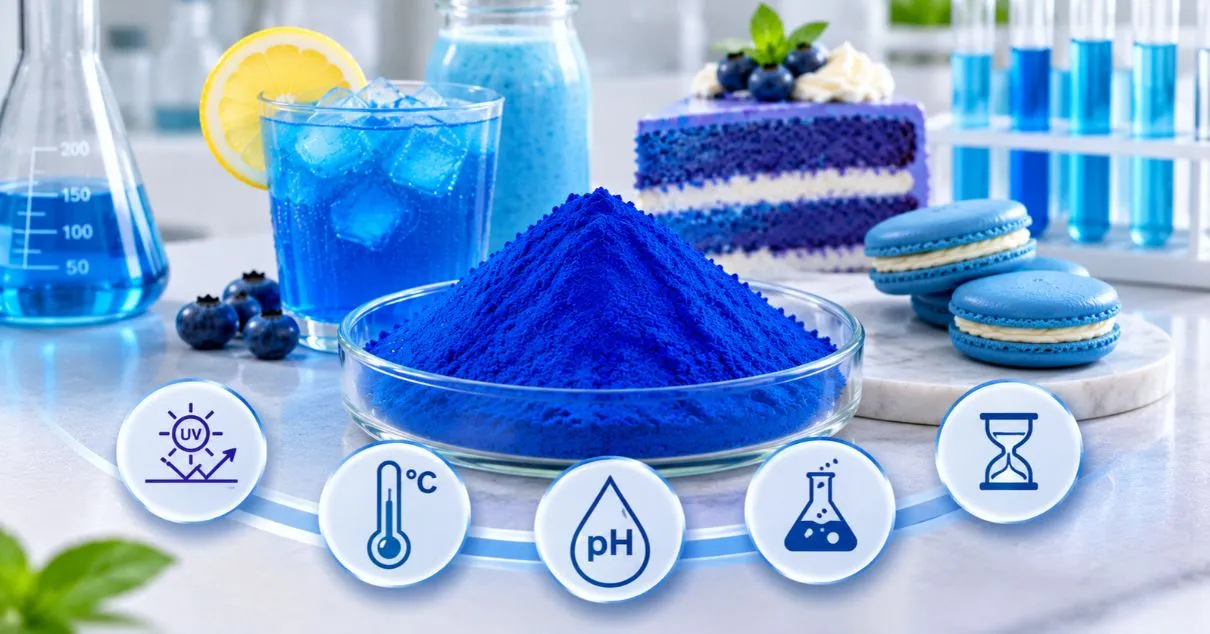
Start With a Clear Product Brief
Writing a brief is the first thing that should be done for any good project. You can pick the serving size, color, taste, shelf life, package, shipping method, and people you want to sell it to. Write down the method used, like whether it's dry mixing, hot fill, or extrusion. Our R&D team can quickly come up with a grade and service if you give them a clear plan. Because of this, there will be less review rounds. Labels and claims change the formula just as much as the color, so people who work for the government should read the report right away. If a brand skips this step, they might not find out that the grade they chose doesn't work with the process until it's too late.
Select the Right Color-Value Grade
At 618 nm, the value E1% tells you how strong the color is. It's written as E+a. Yangge has E3, E6, E18, E25, E30, and E40. There is more phycocyanin per gram when the number is higher. This means that a better grade can color the same thing with less added. Still, the color you want, how to make it, and the price per serve will help you decide. It's more important to look at the price per color unit than the bulk price. A certificate of analysis is something else you should ask for. That's the most up-to-date information about our goods in this table.
| Item | Yangge Phycocyanin |
|---|---|
| Grades | E3, E6, E18, E25, E30, E40 |
| Appearance | Blue fine powder |
| Source | Blue Spirulina |
| Extraction method | HPLC |
| Odour | Natural fresh spirulina flavor |
| Status | No irradiation, non-GMO, non-allergen |
| Minimum order | 1 kg |
| Package | 1 kg aluminum foil bag or custom |
| Inventory | 50 kg to 100 kg in stock |
| Certifications | ISO, HACCP, Kosher, Halal |
Thanks for giving me the info. It will help your team make a list of sample requests very fast.
Pilot Testing, Scale-Up, and Ordering
Try a little of the real thing before you buy the whole thing. Accept a reference sample and a signed specification only after you are sure of the color, how well it melts, how it feels, and how stable it is. During the process of scaling up, you need to figure out how long to mix, how much moisture is too much, how to package, and the batch limit. Also, agree on how to inform each other of any changes. On the purchase order, you should write down the low-ball quantity, Incoterms, payment terms, and delivery dates. Many people who buy things look at the fixings for four to eight weeks before making a test batch. As long as you order at least 1 kg, you can test a recipe before making bigger batches. We keep 50 to 100 kg in stock.
Evaluating Specifications and Suppliers
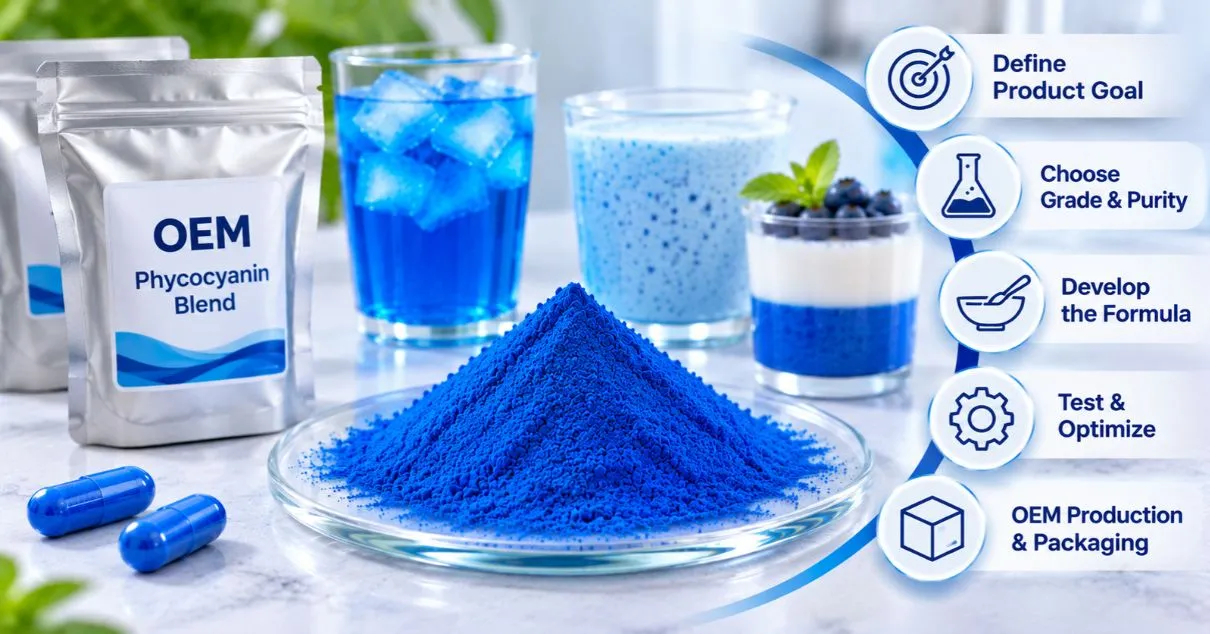
Specifications Worth Comparing
Price per kg doesn't always tell you what's going on. See how the amount, color, particle size, wetness, mass density, and flowability of phycocyanin are all compared. You should also look at the standards to see if there are still GMOs, heavy metals, bacteria, pesticides, allergens, or solvents present. You should ask for the formal papers, the lab report, and the list of requirements for each lot. Third-party data is more trusted, and Yangge does more tests with a well-known lab. Make sure you get heavy metal results for the exact lot you want to buy. They are most important for expensive items.
Powder, Liquid Extract, or Spirulina Powder
Process, logistics, and location are all taken into account when picking the best structure. It's easier to ship, store, and give powder than dry mixes, pills, gummies, and sachets. But they need more protection and a better way to keep track of how long they last before they can be used in ready-to-drink drinks. It looks better and gives you more nutrients when you use whole spirulina powder. The three items are ranked by format, best fit, and watch points in the table below.
| Format | Best fit | Watch points |
|---|---|---|
| Phycocyanin powder | Capsules, gummies, sachets, powder drinks | Protect from moisture and light |
| Liquid extract | Ready-to-drink products | Preservation, microbial control, shelf life |
| Whole spirulina powder | Broad nutrient products | Green color, stronger algae flavor |
Powder is easy to handle and give, so it is often the first step in dry-format work.
How to Vet a Phycocyanin Manufacturer
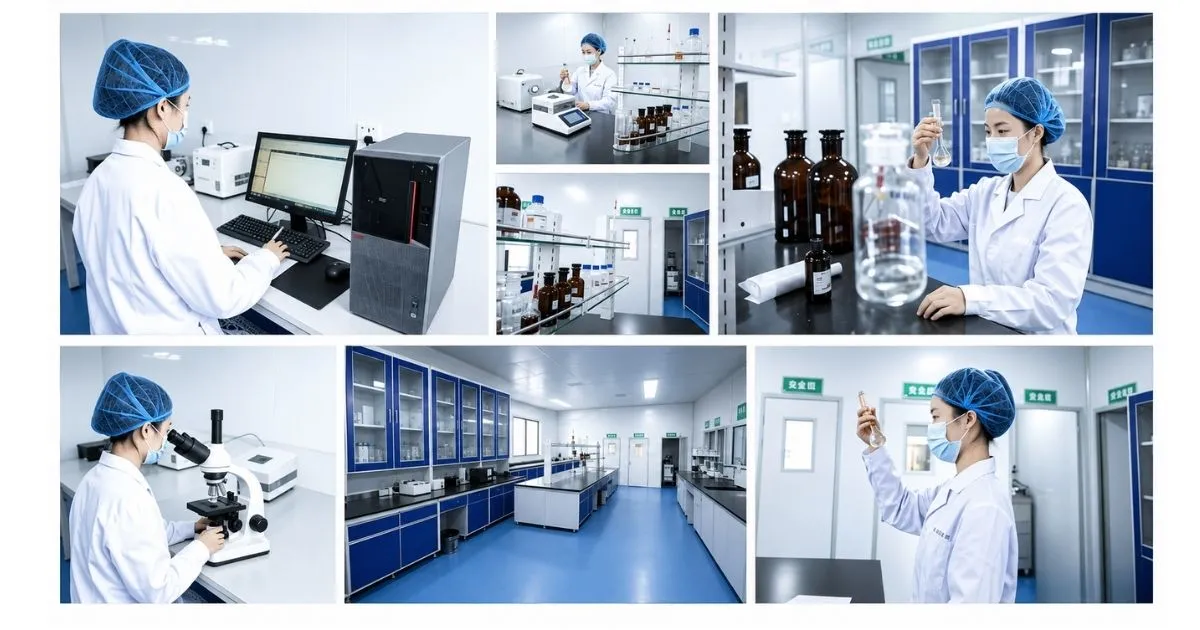
Be sure the business is legitimate before buying. Service providers include processors, bespoke blenders, and distributors. GMP, HACCP, ISO, tracking, batch testing, capacity, wait periods, minimum order, export paperwork, and quick shipping are next. Change notice, privacy, intellectual property ownership, bespoke authoring, and artwork assistance are important for private-label applications. Yangge is fully licensed by ISO, HACCP, Kosher, and Halal boards. They use distinct R&D and manufacturing teams and follow GMPs. We're online 24/7, so Americans can contact us anytime. We export to various nations.
Quality Control, Compliance, and Smart Purchasing
Safety, Dosage, and Claims
There should be no contaminants or microbes in the phycocyanin you choose, and it should be safe for food. There isn't a single dose that works for all drinks, supplements, and useful things. Look at how many people are included in your style and market based on technology, taste, security, and rules. Don't forget to ask sellers about allergens and getting in touch with other people. It doesn't follow that what you say is true just because you study antioxidants in the lab. If the health, immunity, or performance claims on your labels aren't backed up by proof, don't put them there. Also, make sure that everyone in charge of rules reads every word of the copy before the product goes on sale.
Quality Control Workflow
From creation to disposal, a simple four-step procedure ensures excellence. The substance must arrive with an analytical certificate, supplier name, batch data, and package sealing information. Mixing requires information on wetness, flow, density, and consistency. It must include colour, smell, taste, solubility, bacteria, pollutants, and label compliance when concluded. Finally, samples, batch comparisons, and real-time shelf-life trends must be examined for stability.
| Stage | What to check |
|---|---|
| Incoming material | Supplier identity, batch data, package integrity, certificate of analysis |
| Blending | Mixing time, sampling points, moisture, flowability, bulk density, uniformity |
| Finished product | Color, odor, taste, solubility, microbiology, contaminants, label compliance |
| Stability monitoring | Retained samples, batch comparisons, real-time shelf-life trends |
You should always have samples and trend charts ready for every batch. They will let you see color change before your clients do.
Avoiding Mistakes and Matching Buyers to Solutions
Finding the cheapest powder, testing just the raw material, ignoring heat, or using one source might lead to mistakes. Low prices may indicate weak colour or missing documentation. Consider this while comparing costs. Many purchasers have diverse wants. Drinkmakers care about solubility, pH, and light resistance. Supplement brands should consider purity, quantity, and warranty. Distributors should examine export paperwork, suppliers that can keep providing products, and shelf life. New brands might start with a standard rating. If people enjoy it, they can make a custom mix.
Conclusion
They work best when the customer, the grade, and the service provider are all the same. The blue protein pigment is separated in phycocyanin, which is not the same as spirulina powder that is whole. But it needs to be studied in the real product matrix because this protein changes when it comes in touch with water, heat, light, and pH. Color-value grades from E3 to E40 help artists choose the shade that costs the least per serve.
There are also tests done by a third party, certificates of analysis, and statistics on contaminants that prove the quality. Powder, liquid, and whole spirulina all work best in different ways. For people in the U.S., the FDA also has rules about how much medicine can say and what colors can be added. You can be safer by having a written brief, a test batch, and clear order terms. This will help keep the color and supply the same.
FAQ
What is the difference between phycocyanin and blue spirulina?
That which makes blue blue is called phycocyanin. Most of the time, blue spirulina is made from a lot of blue spirulina. Whole spirulina powder, on the other hand, keeps the green parts, like chlorophyll, and tastes more like algae.
How do I choose a color-value grade?
You should choose the grade that gives you the best color, process, and cost per share. In your real method, use two different grades to see which one costs more per color unit.
Does heat damage phycocyanin?
Acid and heat can make the blue fade. Keep it below 45°C and close to pH 5 to 6 to keep it stable. So, try it out right away for extrusion, baking, or hot-filling.
What should I send for a quotation?
Share with us the style, serving size, color, grade, forecast, packing needs, and certification needs. Also tell us what you want to use it for and who you want to use it for. Cover the claims, rights, and security rules that are unique to each market.
Request Custom Phycocyanin Samples from Yangge
Are you ready to make the blue stuff? Yangge is licensed by ISO, HACCP, Kosher, and Halal to make phycocyanin. You can order as little as 1 kg, and the customer gets to choose how to package their goods. Email us at info@yanggebiotech.com with your use case, grade, dish size, estimate, and the people you want to reach. When we get back to you, we'll give you examples, specs, and a price. There are more ideas at blog.yanggebiotech.com.
References
1. Chaiklahan, R., Chirasuwan, N., & Bunnag, B. "Stability of phycocyanin extracted from Spirulina sp.: Influence of temperature, pH and preservatives." Process Biochemistry, 2012.
2. Eriksen, N. T. "Production of phycocyanin—a pigment with applications in biology, biotechnology, foods and medicine." Applied Microbiology and Biotechnology, 2008.
3. Martelli, G., Folli, C., Visai, L., Daglia, M., & Ferrari, D. "Thermal stability improvement of blue colorant C-Phycocyanin from Spirulina platensis for food industry applications." Process Biochemistry, 2014.
4. Romay, C., Gonzalez, R., Ledon, N., Remirez, D., & Rimbau, V. "C-phycocyanin: a biliprotein with antioxidant, anti-inflammatory and neuroprotective effects." Current Protein and Peptide Science, 2003.
5. U.S. Food and Drug Administration. "Listing of Color Additives Exempt From Certification; Spirulina Extract." Federal Register, 2013.
6. Sigurdson, G. T., Tang, P., & Giusti, M. M. "Natural Colorants: Food Colorants from Natural Sources." Annual Review of Food Science and Technology, 2017.

Based on your location and order quantity, you will have the opportunity to receive a limited time free shipping promotion!
Who we are
Popular Blogs