Matcha powder vs regular green tea
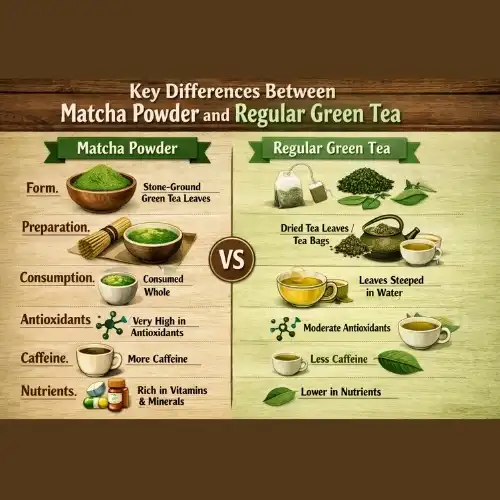
When business buyers compare Matcha Powder against regular green tea, they need to think about how the tea is made and how well it works then make their choice. A very fine powder is made from Camellia sinensis leaves that are grown in the shade. The mesh size ranges from 800 to 3000. And now you can eat the whole leaf. It has many healthy substances in it, like L-theanine, EGCG catechins, and tea polyphenols. For regular green tea, the leaves are soaked whole or cut up, and only the parts that dissolve in water are taken out. The leaf matter is then thrown away. Because of this simple difference, some kinds of Matcha Powder have more nutrients that the body can use, antioxidants, and caffeine. When you're making high-end cosmetics, functional drinks, or health supplements that need to always work the same way and have the same active ingredient profiles, keep these things in mind.
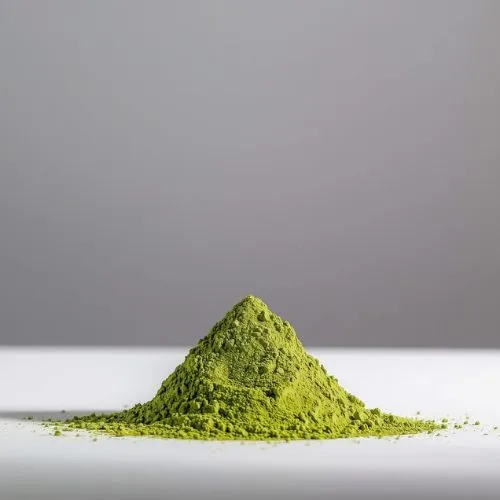
Understanding Matcha Powder and Regular Green Tea
Cultivation and Processing: The Foundation of Quality
From where they are grown to where they are sold, these two types of tea go through very different processes. For twenty to thirty days before it is picked, real Matcha Powder grows in a certain kind of shade. It keeps the plants from getting too much sunlight (10 to 20% of normal levels) because of the shade. This is how the plant's biochemistry changes when it is stressed in farming. It is said that plants make more chlorophyll and amino acids when there is less light. This speeds up the processes of photosynthesis. The body changes in these ways, and they have everything to do with how good Matcha Powder tastes and looks (bright emerald).
Normal farming methods are used to grow green tea, and the plants don't need to be shaded. For the Japanese method, the leaves are steamed right away, and for the Chinese method, they are pan-fired. This stops the oxidative enzymes from doing their job. Even if the leaves are cut into different grades, like whole-leaf sencha or broken fannings, the cells inside them don't change. Different businesses use very different temperatures and amounts of time to process food. This changes the taste of the food and how well the polyphenols stay fresh. For those who are making a lot of something, it's hard to keep things the same from one batch to the next.
Nutritional and Phytochemical Profiles: A Quantitative Comparison
You can position a product and back up health claims better if you know about the differences in biochemical composition before you buy it. A cup of Matcha Powder has about 137 times more EGCG than a cup of green tea made with coffee. This is because the whole leaf matrix is drunk, not just the extract that is mixed with water. It is natural for a 2-gram serving of ceremonial-grade Matcha Powder to have 25–35 mg of caffeine and 18–20 mg of L-theanine. This isn't just caffeine, so it keeps you alert for a long time without giving you the adrenergic spike that caffeine does by itself.
There are different strengths of regular green tea infusions based on the leaf-to-water ratio, steeping time, and water temperature. In a business setting, this makes it hard to standardize. Green tea that has been brewed usually has between 50 mg and 150 mg of catechins in every 240 ml. Too much heat can destroy many compounds, so things that steep for a long time lose a lot of them. Because they don't have dietary fiber, chlorophyll, or lipid-soluble nutrients, tea infusions can't be used to make products that fully support detoxification or antioxidant protocols. When purchasing managers buy ingredients that will be used in nutraceuticals, they have to check these differences in composition against what the labels say and the therapeutic goals.
Industrial Application Scenarios and Formulation Challenges
It is both useful and hard to use in industrial settings because Matcha Powder particles are very small, they mix with other particles, and they have a large surface area. So that it doesn't settle while it's being stored, Matcha Powder has to be mixed with other things and kept stable with pectin, gellan gum, or modified starches in ready-to-drink drinks. The part of catechin that doesn't like water can react with dairy proteins in latte mixes in different ways. This could make solids or an unpleasant taste appear. Because it has the same properties, Matcha Powder can be used as a natural dye (instead of FD&C dyes) and to change the texture of both baked and frozen treats.
For mixing into drinks, green tea extracts or brewed concentrates work better than Matcha Powder. However, Matcha Powder doesn't look or market itself as well. Green tea extracts that have been spray-dried dissolve better in water and stay fresh longer than raw tea leaves. However, the thermolabile polyphenols are lost when the extracts are concentrated and dried. Encapsulation technologies can protect delicate compounds, but they make the final ingredient cost a lot more. This is something to think about if you want to make as little money as possible in a market that is very competitive.
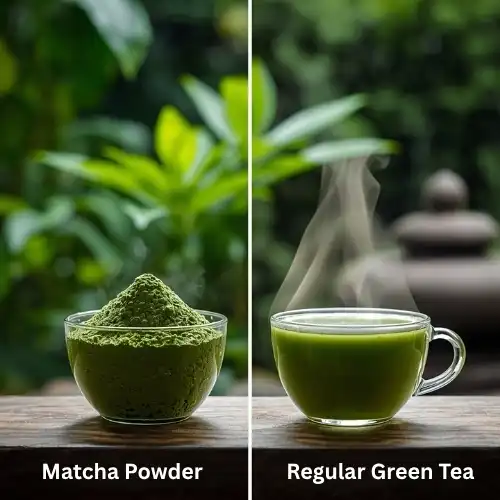
Key Differences Between Matcha Powder and Regular Green Tea
Preparation Methods and Usage Versatility Across Industries
Mix about 2 grams of Matcha Powder with 60–80ml of hot water (not more than 80°C, or the chlorophyll will break down). This is how Matcha Powder was made in the past. That's what you get instead of a real solution if you do that. If a factory needs high-shear mixers or rotor-stator homogenizers to mix things evenly and keep them from clumping, this method can be used. An emulsifier, such as lecithin, is often added to instant Matcha Powder drink mixes to make them easier to mix without having to whisk them as much.
Most of the time, water that is kept at a steady temperature (70–85°C) is used to soak the tea leaves for one to three minutes. The solid part is then strained out. It's easy to make a lot of tea with this method, but you can't use a lot of different flavors. Remember to keep brew tea concentrates cool. They only last for 24 to 72 hours before microbes start to grow on them or they break down from oxygen. To make instant green tea powders, you can freeze-dry or spray-dry green tea leaves. However, these powders don't have the unique flavor or high nutrient density that makes them worth the higher price in health-conscious markets.
Quality Grading Systems and Price Architecture
When teams buy things, they can handle the wide range of prices better if they know how to grade Matcha Powder. Matcha Powder that is good enough for ceremonies costs a lot of money. At stores, a 100g bag can cost $40 to $100 or more. It has to be a bright green color (with a* values below -8 in the CIELAB color space) and not too bitter. It has to meet strict quality standards, such as only using leaves from the first harvest and being ground on stones. That's why Matcha Powder that can be used in cooking comes from leaves that were picked at random or after the harvest is over. It looks a little duller and tastes a bit more bitter, so it works well in baked goods, sweets, and drinks where other flavors round it out. For $25 to $60 per kilogram, businesses can buy culinary-grade Matcha Powder in bulk. The price varies based on where the Matcha Powder comes from, how certified it is, and the size of the order.
A lot of different tests are used to judge the quality of green tea. Things like whole-leaf grades (like Japanese sencha and Chinese longjing) vs. broken grades (like fannings and the dust used in tea bags), when the flush happens (the first flush costs more), and how well the tea is processed are some of these things. Normal types of green tea cost between $8 and $30 per kilogram when bought in bulk. On the other hand, organic or single-estate teas cost $50 to $80 per kilogram. Most of the time, green tea is cheaper than Matcha Powder. This makes it a better choice when price is important or when the unique qualities of Matcha Powder don't give enough value to the consumer.
Sensory Profiles and Consumer Preference Dynamics
Every time you drink Matcha Powder, it tastes different. Umami tastes great because it has a lot of glutamate and L-theanine. It also smells like steamed edamame or freshly cut grass and has a light sweetness and a pleasant sourness that makes you want to drool. Color is a good way to tell if something is good. When the pH level is neutral, good Matcha Powder is bright jade green. When the pH level is acidic or when it gets too hot, it turns olive brown. Mixers who use Matcha Powder in their goods need to be aware of these problems with color stability. They can do this with systems that keep the pH level stable or packaging that keeps light out.
There is less of a kick to the taste of regular green tea. Most of the time, it tastes like grass, sweetness, and sea life in Japanese steamed teas. Different types of hops and how they are brewed can make a beer very sour. This light yellow-green liquid isn't as pretty as Matcha Powder, but it makes it easier to mix things that need more than one thing. High-end wellness categories are where people in North America and Europe are most interested in Matcha Powder. But regular green tea is still the most popular hot drink in traditional places and with people who care about values. If you want to reach a lot of different kinds of customers, these patterns can help you figure out what products to sell.
Procurement Considerations for B2B Buyers
Supplier Evaluation and Certification Requirements
If you want to find reliable Matcha Powder and green tea suppliers, you should learn a lot about quality management systems, how to follow the rules, and how to be honest about the supply chain. Yangge Biotech is easier to get ingredients for when it has ISO, HACCP, Kosher, and Halal certifications. All of these credentials are important because they show that the company is committed to meeting quality standards around the world. Purchasing managers should look at more than just basic certifications when they buy natural and organic goods. Also, they should check to see if the USDA, the EU, or JAS have given the products any organic awards. Also, they should make sure that the certification groups check the places where the food is grown and processed every year.
A system for keeping track of things is also an important part of critical evaluation. Suppliers you can trust will give you records for each processing batch that show where the raw materials came from, what tea gardens or cultivation regions they came from, and when they were picked, as well as paperwork for each lot. With this farm-to-table visibility, you can act quickly when quality changes, and it also supports claims of authenticity that smart consumers and regulators are looking into more closely.
It shows that suppliers care about quality when they give buyers reports from a third-party lab that check for heavy metals, microbial contamination, pesticide residue, and the amount of active ingredient, which also lowers the buyer's risk. For products like Matcha Powder, this level of traceability is especially critical. There are rules at Yangge Biotech that make sure every batch is the same and that all the rules are followed, so people who make things and have to follow strict GMP rules will no longer have to worry about this.
Pricing Structures and Volume Purchasing Strategies
Before you can find out how much Matcha Powder and green tea cost, you need to know why prices change and how to get what you want. The price of raw materials is strongly connected to where they come from. Matcha Powder from Japan costs a lot more than Matcha Powder from China because people think it is better. But chemical tests sometimes show that the profiles of phytochemicals are the same. These extra fees, like organic or fair trade, usually add 20–40% to the base price. But they let you sell to more expensive people, so you can make more money.
Unit economics is changed a lot by volume commitments. There is usually no less than a 25-kilogram order when you buy industrial Matcha Powder in bulk from a company like Yangge Biotech. The price goes down as you buy more. We have both KOSHER and USP-grade Matcha Powder in stock that can be bought by the ton, so we can start making a lot of it right away. A steady supply and prices that are 8–15% lower are often possible if you make long-term supply agreements with volume commitments every three or twelve months. This is important to keep to production schedules and avoid making changes to the line or the formula that will cost a lot of money.
Storage, Packaging, and Shelf-Life Management
Because Matcha Powder has a lot of surface area and lipids, smells can break it down. It will also lose volatile compounds and take in water. Cool places (below 20°C, ideally in a fridge at 4–8°C), dark places, and places with low humidity (below 50% relative humidity) are the best places to store things. When oxygen hits chlorophyll and catechins, they break down more quickly. It has been shown that 30–40% of EGCG is lost in 60 days when oxygen levels are normal. Aluminum barrier layers and food-grade polymers make up nitrogen-flushed metalized laminate films. If they are stored properly, they can last up to 18 to 24 months.
Yangge Biotech can change the way their products are packed to meet the needs of each customer. Larger amounts are sent in fiber drums lined with food-grade polyethylene that can hold 20 to 25 kg and are filled with oxygen absorbers and desiccant packets. Smaller amounts are put in vacuum-sealed bags or stand-up pouches that can be closed again. Whatever the client tells us about their brand, we can make custom packaging with branded inserts, lot coding, and label design. Even though green tea isn't as fragile as Matcha Powder, it should still be kept away from things that are wet, hot, or smelly. FEFO rules help keep quality high and cut down on the number of things that need to be thrown away because they have gone bad. For distributors who need to keep track of a lot of SKUs, this is very useful.
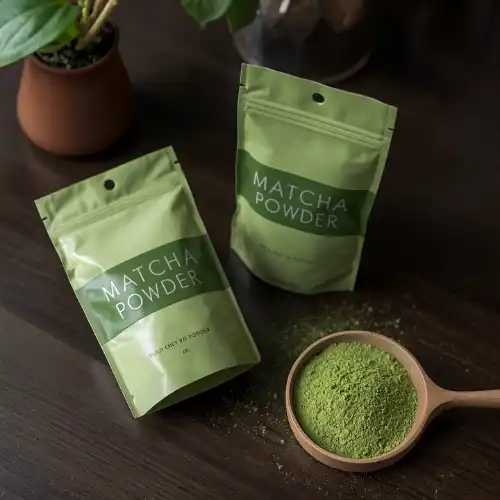
Decision Framework: Choosing Between Matcha Powder and Regular Green Tea
Application-Specific Selection Criteria
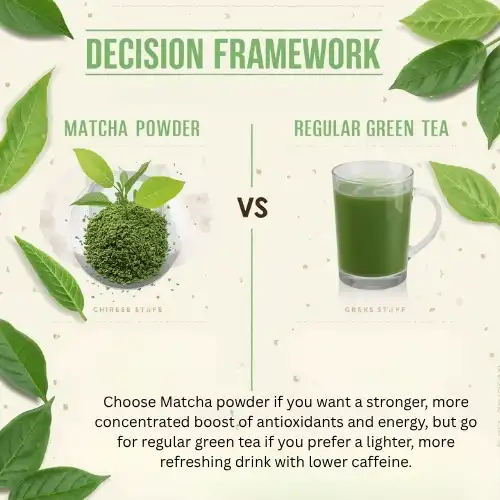
You should choose Matcha Powder or regular green tea based on how well the ingredients make the brand fit with what people expect from it. Matcha Powder is a great ingredient for high-end functional drinks aimed at health-conscious millennials and Gen Z because of its unique look and concentrated bioactive profile. This part of the market is growing 12–15% a year in North America. Because it has a lot of EGCG and caffeine-L-theanine, Matcha Powder is a good ingredient for products that focus on brain power, long-lasting energy, or antioxidant support. This means that the more pricey parts can be used to raise the price of the item.
Normal green tea, on the other hand, works best for value-driven uses, classic hot drink formats, and products that need to blend flavors in a subtle way. Iced tea concentrates, tea bags, and herbal blends with more than one plant often work better than green tea because they taste better and cost less. Most of the time, the cost of ingredients for culinary Matcha Powder is three to five times that of regular green tea. This has a big effect on margins, especially in retail channels that are very competitive and where customers are price conscious and it's hard to place high-end products.
Cost-Efficiency and Nutritional ROI Analysis
In order to do a full cost-benefit analysis, you need to know how much of each functional ingredient to put into each piece. Matcha Powder costs more, but each gram of it has more nutrients. This means that you only need a small amount to get the same or better bioactive effects. About 60 to 70 mg of total catechins and 25 to 30 mg of caffeine are in 2 grams of Matcha Powder in a functional drink. For the same amount of catechins as brewed green tea, you would need 300–400ml of a strong tea. It would be more difficult to make, store, and ship the drink, and it would cost more than the ingredients alone.
Because they help with formulation, Yangge Biotech's technical team helps clients boost use rates in many areas. Our specifications for Matcha Powder, which comes in grades with 800, 2000, and 3000 mesh, let you choose the exact particle size that you need for the job. This helps things spread out and cuts down on waste during production. You can get custom blending services that let you mix functional ingredients like plant proteins, adaptogens, and nootropics with Matcha Powder. These ingredients work well together. You can make your own formulas and keep costs low by using the right amounts of each ingredient.
Supplier Relationship and Technical Support Capabilities
The technical support, help with formulation, and speed of communication from the supplier are also very important. The prices and details of the ingredients are also very important. Yangge Biotech has rules about customer service that are in place 24 hours a day, seven days a week. This makes sure that people in all time zones can quickly get answers to technical questions, requests for samples, and needs for urgent orders. Our company's research and development team helps clients choose the right grade of Matcha Powder, figure out how to use it most effectively, set up reliable testing methods, and make sure they adhere to all the rules.
It's always full here, and there's a lot of KOSHER/USP-grade Matcha Powder. Now we don't have to wait for lead times that mess up our production plans to fill big orders. We can do it right away. You can change more than just the packaging with our flexible customization options. They also offer private labeling, mesh specifications that are made just for you, and mixed formulas that are made to fit your own recipes. This extra service speeds up the time it takes for new products to hit the market and makes it easier to buy things. This gives businesses an edge over their rivals, which is very important in markets that change quickly and where being the first to market is key to winning.
Future Trends and Strategic Opportunities in the Matcha and Green Tea Market
Consumer Demand Drivers and Market Growth Projections
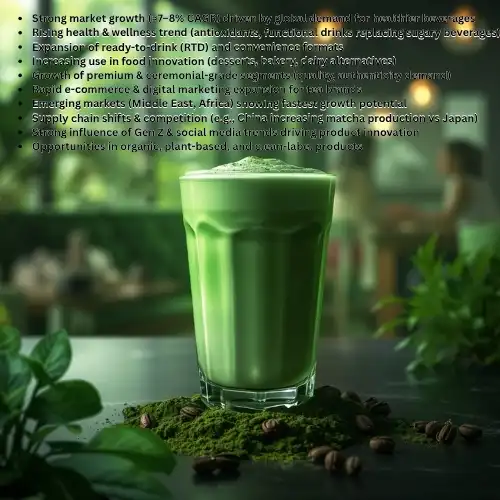
An honest study of the market says the world's Matcha Powder market will grow quickly, by 8 to 10 percent each year until 2028. This growth will mostly come from North America and Europe. Green tea and Matcha Powder are both good for people who know about polyphenol antioxidants, want clean labels, and keep up with plant-based nutrition trends. Possible rule changes, such as letting health claims for heart health benefits and metabolic support go through, could speed up the process even more in the functional food and dietary supplement categories.
The beauty business has a lot of room to grow because of new uses. There are antimicrobial catechins, chlorophyll, and anti-inflammatory properties in Matcha Powder that are being used more and more in natural skin care products that treat acne, slow down aging, and protect against free radicals. It can be used in clay masks, scrubs, and serums because it is naturally green and comes in small pieces. They can now make more money from the ingredients they sell when they make personal care products.
Innovation in Product Formats and Delivery Systems
New products are all about making things work better, be simpler to use, and be useful in more situations. Adding things like maltodextrin carriers or cold-water-dispersible systems to instant Matcha Powder recipes that make them easier to dissolve makes it easier to make products that customers will enjoy. These microencapsulation technologies make sure that environment-sensitive catechins don't break down, and they allow controlled-release profiles to be used in supplements. This might help plasma catechin levels stay high for longer, which could lead to better bioavailability metrics.
Yangge Biotech keeps putting money into improving processes and adding new features to meet the needs of new formats. We keep bioactives and volatile aromatic compounds that break down easily in hot conditions when we grind at a low temperature. These are things that we normally lose when milling. People are working on making more dispersion grades that can be used with cold drinks. This is because Matcha Powder naturally clumps together in cold liquids, making them hard to work with. Our partner clients are ahead of new consumer tastes and market trends thanks to these projects.
Sustainability and Ethical Sourcing Imperatives
Brands are paying more attention to sustainability issues as they try to please customers and investors who are watching how they run their businesses closely. Yangge Biotech works with farming communities to make sure that farmers are paid fairly and that sustainable farming methods are used to keep the soil healthy and the variety of life that lives on it safe. We show the supply chain by going with the food from the farm to the table. In high-end markets, this is a key way to make sure that products are real and build trust.
This is clear from the fact that we have environmental certifications and use renewable energy in our processing plants. We want to harm the environment as little as possible. Some people are willing to pay more for ingredients that were gathered in a good way. This makes these eco-friendly credentials even more important in a market that is already very competitive. Purchasing managers can use marketing stories that appeal to people who care about the environment and fit with their company's social responsibility goals when they work with certified suppliers that care about the environment, like Yangge Biotech.
Conclusion
Before you choose between Matcha Powder and regular green tea, you should carefully think about the needs of the application, how to position yourself in the target market, quality standards, and cost structures. Matcha Powder is a premium ingredient that is worth the extra cost because it has a lot of concentrated bioactive compounds, tastes and smells differently, and could be used to make a premium product. Plain green tea is a good choice if you want a cheap and classic drink. It's good for business because it tastes better and costs less.
Most of the time, good strategies for buying things use both of them in a number of different items. So, they can make sure there are various types of tea for various price ranges and customer groups. Working with certified, technically skilled suppliers makes sure that the rules are followed and that the supply chain is reliable. These are all things that are needed for long-term success in the market.
Partner with Yangge Biotech Your Trusted Matcha Powder Supplier
High-end companies that make functional drinks, cosmetics, and health supplements can get the Matcha Powder and green tea ingredients they need from Yangge Biotech. We follow all the rules in the US and around the world because we are certified ISO, HACCP, Kosher, and Halal. We also keep a ton of KOSHER/USP-grade Matcha Powder in 800, 2000, and 3000 mesh sizes on hand, so we can quickly fill large orders. As part of our technical support, we can custom blend, help with formulation, and make different kinds of flexible packaging that fit your brand's needs. Contact us our team at info@yanggebiotech.com to get samples or talk about bulk pricing for your needs and find out more about how our commitment to sustainability and traceability from farm to table can help your supply chain and make your products stand out.
FAQ
Q: Can we get some samples to test before purchasing?
A: Of course, we can provide free samples of 20 to 100 grams, but the shipping cost is at the customer's expense. The shipping cost can be deducted from the next order, or the samples can be sent through your courier account.
Q: Do your products have relevant certifications?
A: Yes, our products are certified for HALAL, ISO, HACCP, Kosher, and other certifications.
Q: What is the minimum order quantity (MOQ)?
A: Small batches of samples can be customized according to your requirements.
Q: Do you offer OEM and ODM services? Can the formula be customized based on our own?
A: Of course, we provide ODM and OEM services to many customers. Our product range includes softgels, capsules, tablets, sachets, granules, and private label services. Simply contact us and let us know your requirements. Our experienced R&D team can also develop new products with specific formulas.
Please contact us to design your own branded products.
Q: How do you handle quality complaints?
A: First, we have a comprehensive quality control SOP. We provide authoritative third-party inspection reports for almost all products before shipment to minimize the possibility of quality issues. Second, we have a comprehensive return and exchange procedure. If there is a genuine quality dispute, we will strictly follow the SOP.
A: For small orders, we typically use DHL, UPS, EMQ: How do you ship? How long does delivery take?S, FedEx, or TNT. Delivery typically takes 3-7 days. We also offer air and sea freight services. We have a strong freight forwarding team and can provide you with a one-stop service, including DDP and DDU.
Q: What are your payment terms?
A: 100% prepayment, payable by T/T, Western Union, MoneyGram, or PayPal.
Q: What is the shelf life of your products?
A: 2 years with proper storage.
Q: Is the packaging environmentally friendly?
A: We attach great importance to environmental protection and are constantly improving our product packaging. Some products are packaged in recyclable paper. Packaging materials are carefully selected to ensure product safety during transportation and storage, and to minimize environmental impact. We are committed to achieving a balance between environmental friendliness and practicality in our product packaging, and to contributing to sustainable development.
References
1. Weiss, D.J., & Anderton, C.R. (2003). "Determination of catechins in matcha green tea by micellar electrokinetic chromatography." Journal of Chromatography A, 1011(1-2), 173-180.
2. Kakuda, T. (2011). "Neuroprotective effects of theanine and its preventive effects on cognitive dysfunction." Pharmacological Research, 64(2), 162-168.
3. Graham, H.N. (1992). "Green tea composition, consumption, and polyphenol chemistry." Preventive Medicine, 21(3), 334-350.
4. Kochman, J., et al. (2021). "Health Benefits and Chemical Composition of Matcha Green Tea: A Review." Molecules, 26(1), 85.
5. Unno, K., et al. (2018). "Stress-reducing function of matcha green tea in animal experiments and clinical trials." Nutrients, 10(10), 1468.
6. Feng, L., et al. (2010). "Tea consumption reduces the incidence of neurocognitive disorders: Findings from the Singapore longitudinal aging study." Journal of Nutrition, Health & Aging, 14(6), 433-438.

Based on your location and order quantity, you will have the opportunity to receive a limited time free shipping promotion!
Who we are
Popular Blogs