Kombucha Powder vs Probiotic Powder
Purchasing managers need to know which is better kombucha powder or regular probiotic powders? based on the goals of the product and the standards of the customers. There are many types of nutrients in kombucha powder, such as organic acids, vitamins, postbiotic molecules, and probiotic strains that grow naturally during this process. Probiotic pills, on the other hand, have focused colony-forming units and uniform, strain-specific bacterial cultures that are meant to improve gut health. You can find both ingredients in functional foods and supplements. However, they need to be carefully studied to make sure they meet product development goals and legal requirements because they work, taste, and stay stable in different ways.
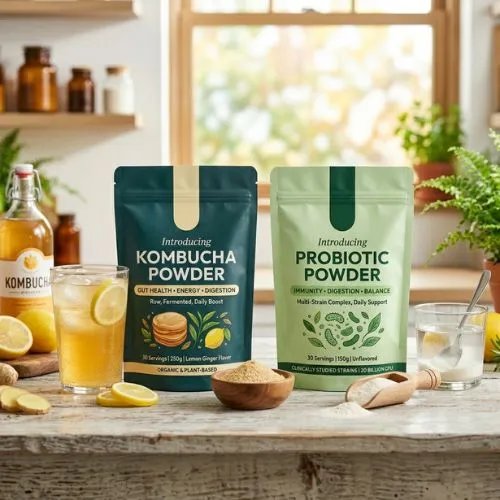
Introducing Kombucha Powder and Probiotic Powder
Origin and Production of Kombucha Powder
Making soured tea has been done for hundreds of years and is where kombucha powder comes from. In this tea, sweetened Camellia sinensis goes through microbial change in a SCOBY culture, which is a community of bacteria and yeast that live together and help each other. This old drink, which is mentioned in Chinese records from more than 2,000 years ago, has been turned into a modern useful ingredient using cutting edge drying technologies. Over the course of seven to ten days of fermentation at room temperature, the SCOBY turns carbs into acids such as acetic, gluconic, and glucuronic acids. Tea's antioxidants and B vitamins make it even better.
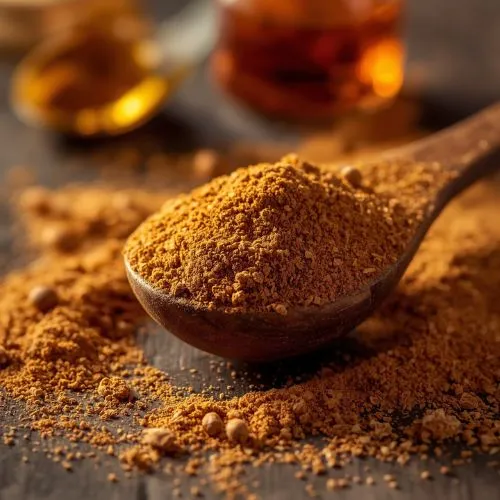
Kombucha powder is made by spray-drying or freeze-drying the soured drink to remove the water but keep the good bacteria. Some of the biggest problems with liquid kombucha can be solved by this change. No longer is there a need for a cold chain, and the kombucha can be kept for weeks, months, or even years. Kombucha drinks have a unique smell and taste that comes from being aged and earthy. The brown-yellow powder that is made from them keeps these flavors.
Probiotic Powder Composition and Cultivation
Taking microbe pills in the form of probiotic powder is a more targeted way to do so. They are made up of different kinds of bacteria that were grown in a lab under very strict rules. Most people have heard of Lactobacillus, Bifidobacterium, and Saccharomyces. The reason these were picked is that they are good for you and can make it through digestion. In factories, fermentation bioreactors are used to grow certain strains to very high numbers. The cells are then kept living while they are being dried and stored using stabilization methods.
It is possible for formulators to say with great accuracy how many CFU are in each dose. In the pharmaceutical and nutraceutical businesses, this meets the standards for stable doses. There are a lot of different kinds of bacteria in kombucha, but probiotic powders have strain profiles that can be forecast, and there is good clinical evidence to support some health claims. This standardization helps a lot when regulatory records need to show that ingredients are fully explained and batches can be made over and over again.
Microbial Diversity and Fermentation Methods
These ingredients are different from each other because they have different kinds of microbes. Kombucha has a group of bacteria and yeast species that are always changing. They work together to make many chemicals during fermentation, which is more than just bacteria growing. This kind of difference in the environment makes unique postbiotic chemicals. These are the good metabolic waste products of fermentation and may be helpful even if there aren't any live bacteria around.
When it comes to being right, probiotic pills don't measure up. When manufacturers use monoculture or set multi-strain mixes, they can control the strength, allergy profiles, and interactions between formula parts. They are grown in very different ways. Kombucha ferments naturally with the help of SCOBY inoculation, while probiotic strains are carefully chosen, their genes checked, and their growth methods adjusted to get the most health benefits and market value.
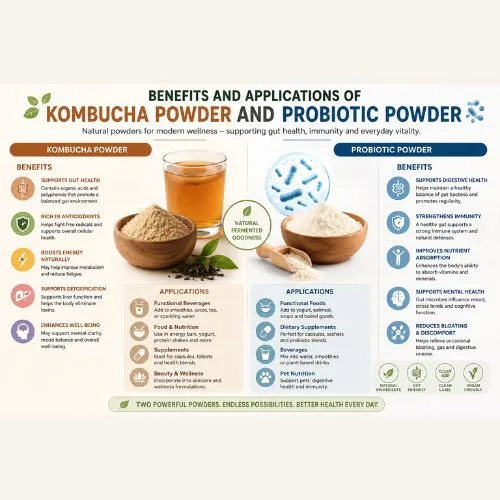
Benefits and Applications of Kombucha Powder and Probiotic Powder
Functional Advantages of Kombucha Powder
The tea polyphenols in kombucha powder are antioxidants. Together with the bacteria that live in it, they help fight oxidative stress and keep your gut system healthy. Organic acid helps keep the pH level of mixed foods fixed and adds to the complex tastes that people associate with fermented functional foods. Researchers say that glucuronic acid might help the liver get rid of toxins, but there isn't much clinical proof yet.
The powder can be made into drinks and used in other ways as well. It makes drinks taste like real kombucha when mixed with water, so you don't have to keep them cold. That's because kombucha is popular as a trendy health drink, which is why functional food makers use it in snack bars, smoothie mixes, and wellness shots. The ingredient comes from a natural source, which is good for brands that care about clean labels and plant-based ingredients.
Targeted Benefits of Probiotic Powders
There are types of probiotics in powders that have been shown to help with certain diseases in published clinical studies. These are great for improving gut health. Formulators can use Lactobacillus rhamnosus GG, Bifidobacterium lactis, and other known strains to make health claims that are backed up by proof. These claims can be about gut balance, immune modulation, or microbiome balance. It is very important for pharmaceutical-grade vitamins and medical foods that need to be cleared by the government to have this scientific proof.
You can easily mix most probiotic powders with other ingredients without changing the end product's taste or smell because they don't taste or smell different. This is especially helpful when making supplements for kids or other things that need to taste good. Technologies that encapsulate things make it even easier for bacteria to live in the stomach. This lets them get to the parts of the gut where growth takes place. Some fermented food items are less useful because they are hard to absorb. These technology improvements fix those problems.
Formulation Considerations and Stability
The amounts of security in these ingredients are not at all the same. The organic acid in kombucha powder naturally stops the growth of bacteria. However, over time, it may mix with active ingredients that are sensitive to pH or break down some vitamins. Scientists who make medicines have to think about how the tangy taste will work with balancing agents or alkaline minerals when they balance the tastes.
Probiotic products need to be carefully controlled for how wet they are, how much temperature they are exposed to, and the air inside the packaging so that CFU can live through the whole shelf life. The need for desiccant addition and airtight sealing is because oxygen, humidity, and heat all kill germs more quickly. There are some acids, stabilizers, or handling conditions that damage bacterial cells in a way that can't be fixed before they're eaten. This is why it's important to see how well they work with other parts of the recipe.
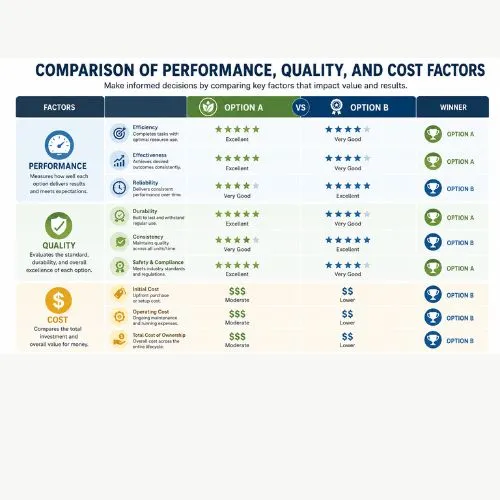
Comparison of Performance, Quality, and Cost Factors
Potency Metrics and Standardization
Colony-forming units (CFU) are a common way to rate how strong a probiotic is. Each dose of most vitamins has between 1 billion and 100 billion CFU. When food is stored, manufacturers claim minimum CFU numbers, but this is because the food will lose some of its effectiveness over time. Based on clinical study, this measurable factor lets labels make correct claims about dosage and statements about what the drug does.
The rules for standardizing kombucha powder are not all the same. The company may list the amount of organic acid, polyphenols, or general bacteria activity instead of giving exact CFU counts. It's hard to measure because the chemical profile is so complicated, which makes it hard to compare potencies. Ask for analysis results that show the pH level, the percentage of acetic acid, and the number of germs on the plate. This will help buyers hold all sellers to the same level of quality.
Shelf Life and Storage Requirements
Once they are made right, probiotic powders can last for twelve to twenty-four months if they are kept below 77°F in containers that keep moisture out. Putting things in the fridge makes them last longer, but it makes delivery harder. Some tests show that freeze-dried types are more stable than spray-dried types, but they cost more to make. Providers who are good at what they do give stable data that shows how long CFUs last when things are aged faster in ways that are similar to how things are kept in real life.
Kombucha powder doesn't need to be shipped in a cold chain like liquid kombucha does. It can be kept at room temperature for twelve to eighteen months. Because it is acidic and doesn't have much water in it, organisms that cause rotting can't live there. It is best to store the powder out of direct sunlight and high humidity. However, changes in temperature don't affect it as much as they do live beneficial bacteria. This organizational advantage makes it less likely that goods will be lost and easier for global brands to ship goods all over the world.
Pricing Analysis and Procurement Economics
There is a wide range in the bulk prices for probiotic powders based on the strain picked, the claimed strength, and the standards for approval. Unique strains or strains that have been clinically proven to work cost $800 to $2,000 per kilogram for pharmaceutical-grade material, while market strains may cost $200 to $500 per kilogram. When you use the metric ton scale, the shortest amount you can usually order is a 25-kilogram drum. If you order more than that, you can save money. Even though they cost more to make, encapsulated or gastro-resistant versions dissolve better, which makes up for the extra cost.
The cost of kombucha powder is based on where the ingredients come from, how long they brew, and how they are dried. Spray-dried material that is standard costs about $150 to $400 per kilogram, which is about the same as medium-level bacterial goods. The price goes up by the same amount whether the food is organic, non-GMO, or has a certain license. Because the ingredient can add flavor, acidity, vitamins, and bacteria metabolites, it may be cheaper to use one of these ingredients instead of several different ones in recipes that are hard to follow. It is important for buyers to do full cost-benefit analyses that look at more than just the price of the raw materials. They should also think about how easy the product is to make and how much it will sell for.
Sensory Profile Implications
The unique sour and slightly vinegary tastes of kombucha powder change how well a product is received and what it can be used for. It's good for drinks and health shots because it tastes like pickled foods, which is why people like it. It adds an interesting smell to tasty foods, but it can clash with the delicate tastes of fruit or flowers, so it needs to be carefully balanced. When a new product is being made, tasting tests must be done to find the best inclusion rates that meet the needs of the main taste systems without being too strong.
Probiotic pills usually don't have much of an effect on the nerves when they are stable. Some types, though, can add light cheese or fermented notes depending on the medium they grow in. It can be used in a bigger range of items because it is neutral. This includes sweet and savory foods, kid-friendly recipes, and areas where taste is important. Encapsulated probiotics get rid of any taste that's still there even more, so bigger doses can be used without changing the taste. Product makers can focus on making the main taste while still meeting claims of probiotic content because it doesn't affect the senses.
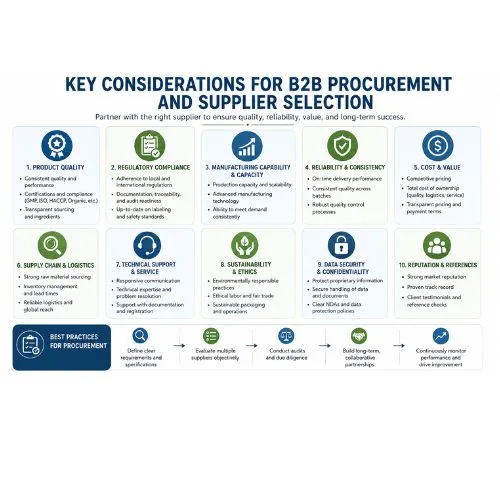
Key Considerations for B2B Procurement and Supplier Selection
Evaluating Supplier Capabilities and Certifications
Before buying something, it's important to look at a supplier's past work to make sure they can do it right and follow the rules. ISO 22000 certification checks that food safety management systems are up to par, and GMP certification makes sure that standards for making medicines are met. With Kosher and Halal certifications, brands that cater to religious food groups can reach more people. Organic brands and those that are certified by the Non-GMO Project get more attention, but they need proof of the food's supply chain, from where it comes from to how it is changed.
Tech know-how is also very important. There should be proof from suppliers of how they check the product's functionality, how they make sure it stays stable over time, and the results of checking for microbes, heavy metals, and mycotoxins. It has the HACCP approval and quality control labs that Yangge Biotech needs to be able to do large-scale production with consistent quality across runs. By getting audit reports from a third party and looking at production facilities as qualified providers, you can lower the risk of buying things and start building a relationship.
Assessing Product-Application Compatibility
You can escape costly rounds of reformulation by making sure that the properties of the ingredients match the needs of the end product. The normal kombucha powder from Yangge Biotech is 100% water-soluble, which meets the need for high solubility without sedimentation in drinking uses. The most important things for tablet or pill formulas are how well they run and how well they compress. This means that we need information on the size distribution of the particles and the mass density requirements. To be used in cosmetics, bacteria cleanliness standards must be better than those for food. The product must also be stable in emulsion systems and at pH levels that are high or low.
When checking for compatibility, you should see how an ingredient works with other parts of the formula while it is being made. If microencapsulation isn't used to protect probiotics, high-temperature extrusion or baking could kill them. Also, the organic acids in kombucha powder might weaken actives that are sensitive to pH or change the way candy gels when they are used. Before placing a large order, R&D teams can be sure of the technical performance by asking for small sample amounts to be tested on a bench.
Logistics and Supply Chain Management
With dependable supply lines, you can avoid production problems that hurt trust with customers and hurt your bottom line. Yangge Biotech keeps a ton of USP-grade kombucha powder on hand so that they can fill urgent orders right away and give makers some flexibility with their plans. When you talk to providers, they should make it clear how long it will take to get custom standards or big amounts. This is very important when buying from foreign sources and the buying process takes longer because of things like shipping delays or having to clear customs.
Things will be easier to handle later if they are packed well. Standard sealed 25-kilogram bags keep things safe and are a good unit size for storage work. There is less packing trash when the bins are bigger, but you need special tools to move them around. You have to weigh the cost of the way you're going against the time it takes and the need to keep the temperature fixed. Ocean freight is less expensive, but the things are exposed to more heat and dampness for longer. Air freight is faster, but costs more. Most of your working capital will be better used if you set up blanket buy deals with staged orders. This way, you can still keep a stock of goods in case demand changes.
Risk Mitigation Through Supplier Diversification
If you only get your supplies from one place, things like natural disasters, government actions, or companies going out of business can stop them from getting to you. Smart sourcing strategies find qualified backup providers for when they need to buy important parts, even if the main relationships meet performance standards. Double-sourcing rules make things harder to handle, but they protect you from things you can't control and give you more negotiating power when it comes to prices and service terms.
Geographic variety looks at the risks that are present in different places. You are more likely to be affected by natural disasters if you get all of your kombucha powder from companies in places that are prone to earthquakes or floods. Just like when trade policies change or politics get tough, it can be hard to get things from one country to another. This was clear during the recent global trade fights. Having providers in more than one country makes you less vulnerable to problems that only happen in that country. It also lets you save money and get certifications that are specific to that market.
Conclusion
When choosing between kombucha powder and probiotic powder, it's important to think about how well they work in clinical settings, how they taste, where they stand in the regulatory system, and how much it costs to get them to customers. Probiotic powders have benefits that depend on the type and the amount that is taken. For using proof to back up health claims in food and medicine goods, they are perfect. Because it tastes like real fermented tea and has postbiotic enzymes and vitamins, kombucha powder can be used for many things.
It works with both "clean label" and "traditional" language about health. To be good at buying, you need to carefully choose your sources, make sure they'll work with your brand, and set up quality control measures that protect the brand's image at every stage of production. More and more people want useful foods that are good for your gut health. These two ingredients meet that need. For each recipe, the best choice will depend on its goals, target groups, and strategies for fighting in global markets that are always changing.
Partner with Yangge for Premium Kombucha Powder Supply
The kombucha powder that Yangge Biotech sells on a large scale is exactly what your recipe calls for. We make sure that all of our USP-grade material stays water-soluble and that every run is the same. We also follow guidelines for Kosher, Halal, and non-GMO foods so that we can sell them all over the world. Our one-ton inventory spots are ready to ship right away, and our dedicated R&D team is available 24 hours a day, seven days a week for technical support. This way, we don't have supply problems that stop production plans from happening.
Every 25-kilogram drum that we ship meets pharmaceutical-grade standards so it can be used in food, drinks, and supplements. Our facilities are GMP-certified, and we have strict quality control measures in place. Send us an email at info@yanggebiotech.com to get proof of analysis, talk about special needs, or arrange for samples to be shipped. As a well-known business that makes kombucha powder and works with brands from all over the world, we can help you with technical issues, offer low bulk prices, and make sure you always have access to the ingredients you need. This turns getting ingredients from a problem into a benefit in the market.
FAQ
Q: Can we get some samples to test before purchasing?
A: Of course, we can provide free samples of 20 to 100 grams, but the shipping cost is at the customer's expense. The shipping cost can be deducted from the next order, or the samples can be sent through your courier account.
Q: Do your products have relevant certifications?
A: Yes, our products are certified for HALAL, ISO, HACCP, Kosher, and other certifications.
Q: What is the minimum order quantity (MOQ)?
A: Small batches of samples can be customized according to your requirements.
Q: Do you offer OEM and ODM services? Can the formula be customized based on our own?
A: Of course, we provide ODM and OEM services to many customers. Our product range includes softgels, capsules, tablets, sachets, granules, and private label services. Simply contact us and let us know your requirements. Our experienced R&D team can also develop new products with specific formulas.
Please contact us to design your own branded products.
Q: How do you handle quality complaints?
A: First, we have a comprehensive quality control SOP. We provide authoritative third-party inspection reports for almost all products before shipment to minimize the possibility of quality issues. Second, we have a comprehensive return and exchange procedure. If there is a genuine quality dispute, we will strictly follow the SOP.
Q: How do you ship? How long does delivery take?
A: For small orders, we typically use DHL, UPS, EMS, FedEx, or TNT. Delivery typically takes 3-7 days. We also offer air and sea freight services. We have a strong freight forwarding team and can provide you with a one-stop service, including DDP and DDU.
Q: What are your payment terms?
A: 100% prepayment, payable by T/T, Western Union, MoneyGram, or PayPal.
Q: What is the shelf life of your products?
A: 2 years with proper storage.
Q: Is the packaging environmentally friendly?
A: We attach great importance to environmental protection and are constantly improving our product packaging. Some products are packaged in recyclable paper. Packaging materials are carefully selected to ensure product safety during transportation and storage, and to minimize environmental impact. We are committed to achieving a balance between environmental friendliness and practicality in our product packaging, and to contributing to sustainable development.
References
1. Dufresne, C., & Farnworth, E. (2000). Tea, kombucha, and health: A review. Food Research International, 33(6), 409-421.
2. Jayabalan, R., Malbaša, R. V., Lončar, E. S., Vitas, J. S., & Sathishkumar, M. (2014). A review on kombucha tea—Microbiology, composition, fermentation, beneficial effects, toxicity, and tea fungus. Comprehensive Reviews in Food Science and Food Safety, 13(4), 538-550.
3. Sanders, M. E., Merenstein, D. J., Reid, G., Gibson, G. R., & Rastall, R. A. (2019). Probiotics and prebiotics in intestinal health and disease: From biology to the clinic. Nature Reviews Gastroenterology & Hepatology, 16(10), 605-616.
4. Markowiak, P., & Śliżewska, K. (2017). Effects of probiotics, prebiotics, and synbiotics on human health. Nutrients, 9(9), 1021.
5. Villarreal-Soto, S. A., Beaufort, S., Bouajila, J., Souchard, J. P., & Taillandier, P. (2018). Understanding kombucha tea fermentation: A review. Journal of Food Science, 83(3), 580-588.
6. Hill, C., Guarner, F., Reid, G., Gibson, G. R., Merenstein, D. J., Pot, B., & Sanders, M. E. (2014). Expert consensus document: The International Scientific Association for Probiotics and Prebiotics consensus statement on the scope and appropriate use of the term probiotic. Nature Reviews Gastroenterology & Hepatology, 11(8), 506-514.

Based on your location and order quantity, you will have the opportunity to receive a limited time free shipping promotion!
Who we are
Popular Blogs