Is almond protein a complete protein
Yangge Biotech supplies high-quality Almond Protein Powder, a nutritious plant-based protein ingredient made from carefully selected almonds. For product specifications, samples, pricing, or bulk orders, please contact us at our email address info@yanggebiotech.com
Almond Protein Powder has a mild nutty flavor and is suitable for protein shakes, nutritional supplements, bakery products, snack bars, functional foods, and vegan formulations. Yangge Biotech provides bulk supply, OEM packaging, quality certificates, COA, and third-party test reports for every batch.
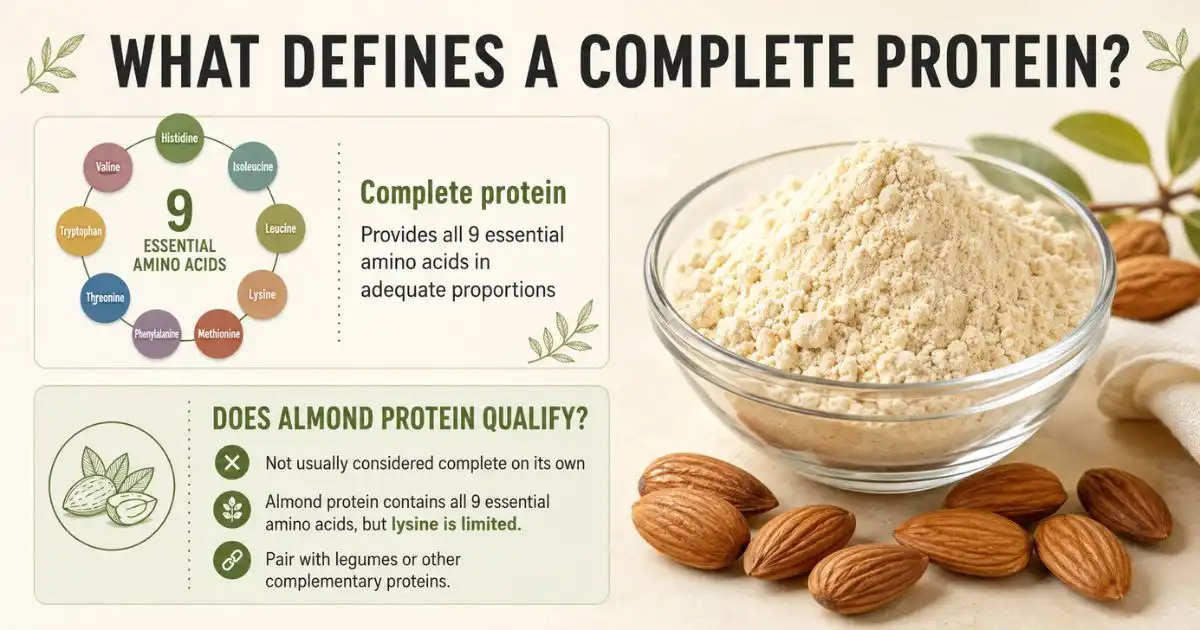
Almond protein is not technically a complete protein because it contains lower concentrations of lysine, an essential amino acid, compared to animal-based proteins or soy. However, when formulated strategically within multi-protein matrices or complemented with legume proteins, almond protein delivers exceptional functional and nutritional benefits for health supplements, beverages, and clean-label formulations. Its amino acid profile rich in arginine, branched-chain amino acids, and vitamin E—makes it a premium, plant-based ingredient for manufacturers targeting allergen-conscious and vegan consumer segments.
What Defines a "Complete Protein" and Does Almond Protein Qualify?
Understanding Complete Protein: The Essential Amino Acid Benchmark
A full protein has enough of all nine necessary amino acids to keep the body working. These are histidine, isoleucine, leucine, lysine, methionine, phenylalanine, threonine, tryptophan, and valine. The body can't make these amino acids, so they have to come from food. Animal proteins, like casein and whey, always meet this need because they have the right mix of amino acids to burn fat and build muscle. On the other hand, plant proteins change a lot. Soy protein isolate is still the best plant-based source because it has almost all of the essential amino acids. People like pea protein even though it doesn't have enough methionine. On the other hand, rice protein doesn't have enough lysine.
Almond Protein's Amino Acid Composition: A Detailed Analysis
Almond protein has many different amino acids, but only 9 grams of lysine per 100 grams of protein, while whey protein has 2.5 to 3.5 grams daily. The name for it is an imperfect protein because of this. But it has more arginine than most plant and animal proteins—often more than 10 grams per 100 grams—which is good for the heart and helps make nitric oxide. The leucine, isoleucine, and valine in Almond protein make it a good choice for sports nutrition mixes when mixed with other proteins like pea or rice. When making recipes, companies need to give some thought to what they want to achieve. Almond protein by itself works well for foods that are high in taste, texture, and clean labels. Mixes, on the other hand, have all the amino acids that muscles need to grow.
Strategic Formulation: When and How to Use Almond Protein?
Procurement teams should look at Almond protein to see how it fits into the market. It's great for making ready-to-drink plant-based drinks without the earthy notes that come from pea protein because it doesn't taste like much and separates well. Nutritional bars use the way it naturally holds things together without getting tough over time. To make sure that all the amino acids are present, Almond protein and pea or rice protein are combined in muscle repair products at a ratio of 40 to 60%. Being able to fix the lack of lysine without changing the taste of the food is very important if you want people to like it and buy it again.
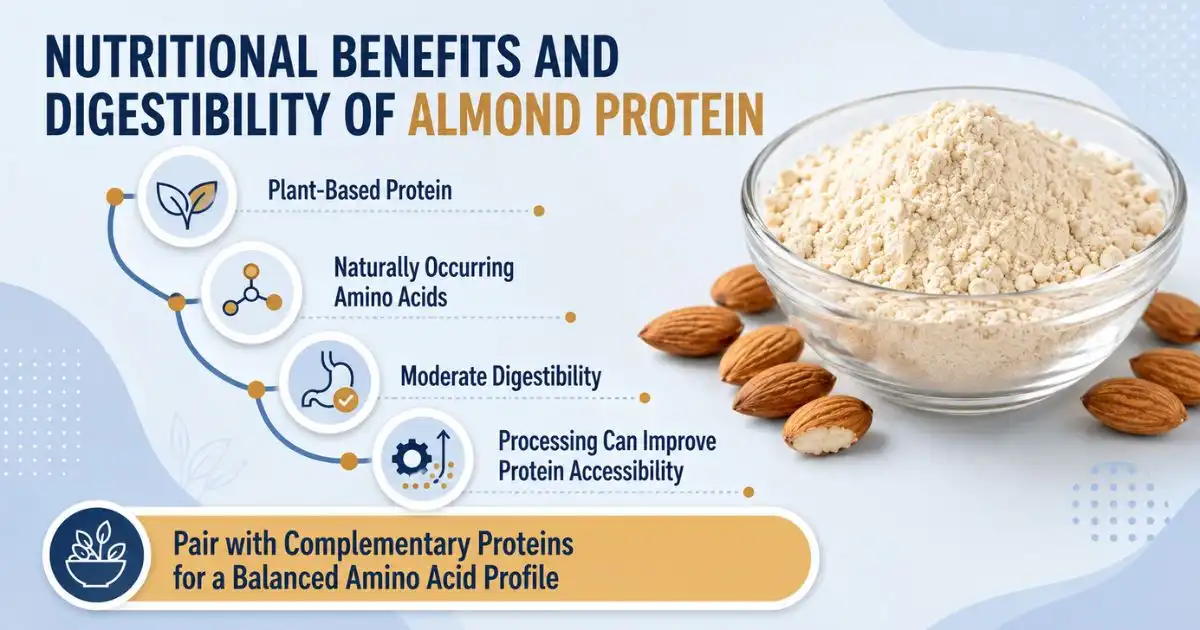
Nutritional Benefits and Digestibility of Almond Protein
Comprehensive Nutritional Profile Beyond Amino Acids
Almond protein powder of high quality, like Yangge's Best Almond protein Powder, contains between 50 and 90% protein, 10 to 15% fibre, and oleic acid, which is good for your heart. Items that help with gut health and feeling full work better with this mix. Micronutrients like vitamin E (alpha-tocopherol), magnesium, and potassium are in high amounts. These nutrients protect against free radicals and make the product more useful than just providing protein. One of the best things about vitamins that fight ageing and help players heal is that they deal with oxidative stress. Because it is mostly made up of insoluble fibre, which helps the digestive system function better, Almond protein is good for functional foods that aim to improve metabolic health.
Digestibility Metrics: PDCAAS and DIAAS Considerations
Almond protein has a lower Protein Digestibility-Corrected Amino Acid Score (PDCAAS) than whey (1.0) or soy (0.9–1.0). This is mostly because it lacks lysine. On the more recent Digestible Indispensable Amino Acid Score (DIAAS), which gauges actual ileal digestibility, Almond protein is ranked marginally higher than complete proteins. Because of how things work technically, you should be honest with R&D teams about how you plan to supplement. Yangge's HPLC-based production method breaks down harmful substances like phytic acid during extraction with enzymes to make absorption better. Almond flour that has been processed by hand doesn't dissolve or soak up things as well as the white powder that is made.
Allergen Profile: Balancing Opportunity and Risk
Almond protein is an allergy to tree nuts, so it has to have a clear label to follow FDA and EU rules. On the other hand, soy is an allergen for beans, but peas are not generally an allergy. Firms that want to make goods that are safe for people with allergies should switch to pea or rice proteins. But people who are allergic to dairy or soy are drawn to almonds, which makes a special market possible. As part of Yangge's strict testing processes, allergen paperwork is checked with a foreign lab before shipping to make sure it is right. This makes marking legal and lowers the risk. Buying managers should ask for thorough allergen testing results and batch traceability papers from sellers when they are being screened.
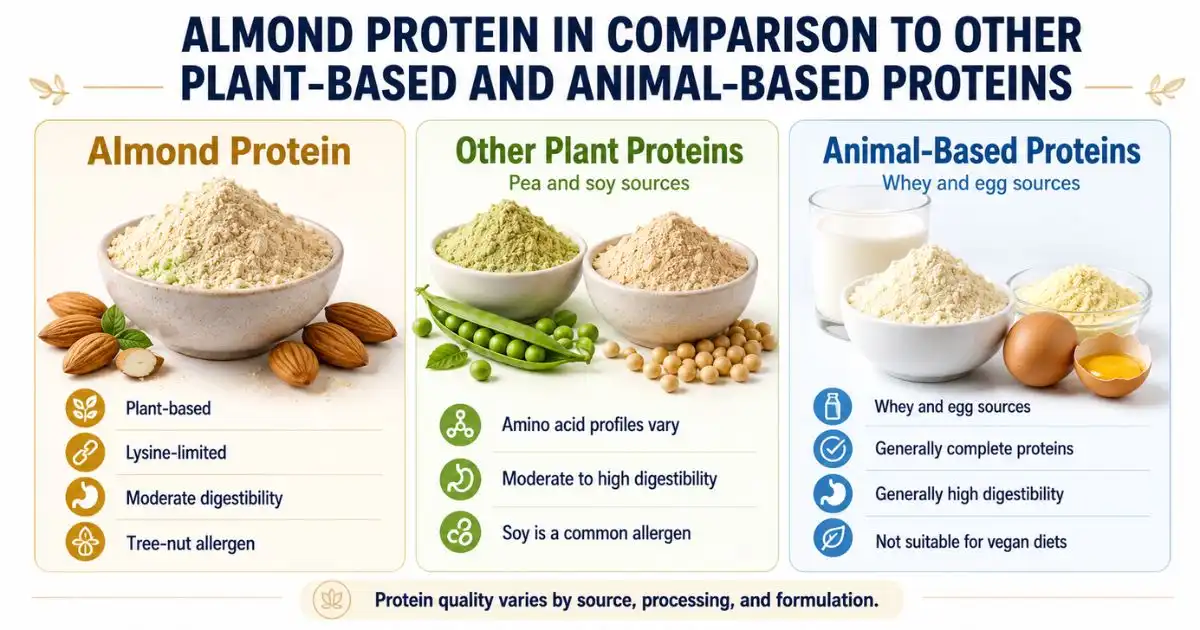
Almond Protein in Comparison to Other Plant-Based and Animal-Based Proteins
Understanding how almond protein compares to alternative protein sources enables informed formulation decisions. The table below summarizes key functional and nutritional parameters relevant to B2B buyers evaluating raw material options for diverse applications.
| Protein Source | Protein Content (%) | Complete Protein? | Key Functional Advantage | Primary Application |
|---|---|---|---|---|
| Almond Protein | 50 to 90 | No if you have low lysine. | bland taste, works well to emulsify | RTD bars and drinks |
| Whey Isolate | 90–95 | Yes | It works quickly and has a lot of BCAA. | Sports food |
| Soy Protein Isolate | 90+ | Yes | Fully charged amino acids that are cheap | Other options besides meat |
| Pea Protein | 80 to 85 | No, if your methionine level is low. | recyclable and safe for allergies | Vegans can drink protein drinks |
| Rice Protein | 70 to 80 | No if you have low lysine. | Tastes bland and is easy to digest. | Blends and formula for babies |
Where Almond Protein Excels: Functional and Sensory Superiority
Almond protein is unmatched in terms of usefulness and flavour. It is better than other proteins when used for sense purposes that don't need many blocking agents. It costs more to make things because the rusty aftertaste of pea protein and the bean notes of soy need a lot of flavour development. An added benefit of Almond protein is that it makes natural sweeteners and fruit flavours taste better. This means that artificial additives are not needed as much. It can hold about 3–4 grams of oil for every gram of protein. This makes low-fat foods taste better. This is one of the best things about high-quality plant-based yoghurts and other fermented foods. When UHT processing conditions (137–140°C) are used, whey can denature and precipitate, but Almond protein stays in suspension and doesn't clump together.
Sustainability Credentials: Meeting Corporate ESG Goals
It takes a lot more water to grow almonds than peas or oats. Brands that care about the earth should think about this. But almonds are better at storing carbon while they grow, and their nutrient-dense waste (hulls and shells) can be used in farming, which is in line with ideas of a circular economy. Because Yangge has worked with farmers for a long time, they can track their products from the farm to the factory. This meets the requirements for organic and non-GMO certification. When buying teams look at high-end, clean-label names, they should weigh worries about water footprint against better usefulness and market placement options.
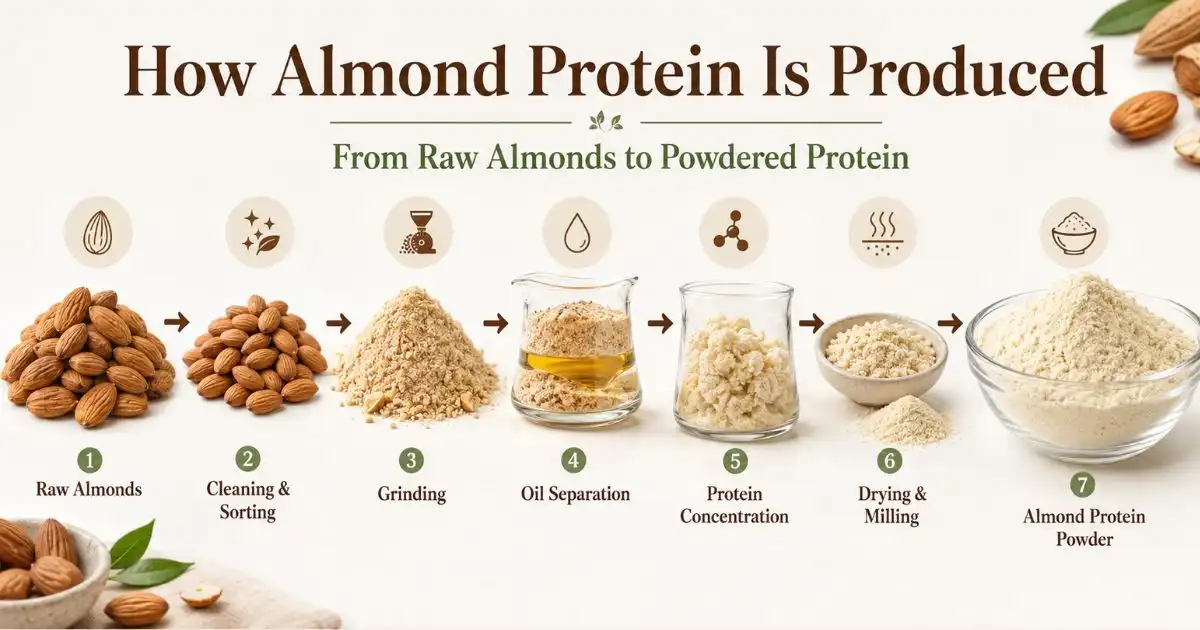
How Almond Protein Is Produced: From Raw Almonds to Powdered Protein?
Sourcing and Raw Material Selection: Quality Begins at Origin
When making premium Almond protein, Prunus dulcis types that have a high protein density and low moisture content are chosen first. Yangge only gets almonds from fields that have been checked to make sure they are good for the environment and follow the rules for getting organic approval when they need to. To make sure that raw materials meet safety guidelines set by the FDA, the EU, and other countries, they are checked for aflatoxin levels, pesticide residues, and microbial pollution. When it comes to positioning, the difference between regular and organic almonds is important. Organic almonds are more expensive and appeal to health-conscious customers, while regular almonds are cheaper and can be used in mass-market goods.
Extraction Techniques: Balancing Yield, Purity, and Functionality
Defatting by cold pressing is used to get rid of the oils while keeping the protein structure. The next step is fine grinding, which makes pieces no bigger than 200 mesh. Yangge's HPLC-based extraction method concentrates protein fractions by treating them with water or weak enzymes. The protein content can be 50%, 70%, or 90%, depending on what the customer wants. As little heat as possible is used in this controlled extraction. This keeps amino acids from becoming insoluble and stops Maillard reactions that darken colours and make flavours taste off. When white powder is made, the quality stays the same from batch to batch. This is very important for OEM makers who need performance to stay the same across production runs.
Quality Control and Certification: Ensuring Compliance and Consistency
Yangge's factory is certified by GMP, ISO, HACCP, Kosher, and Halal, which means it can meet the needs of a lot of different markets. Strict tests are done on each batch:
- Protein content verification using the Kjeldahl method to check the protein level
- Amino acid profiling use HPLC to look at different kinds of amino acids
- Heavy metal screening checking for mercury, lead, cadmium, and arsenic in heavy metals
- Microbiological testing checks for microbes (total plate count, Salmonella, E. coli)
- Moisture analysis checking the amount of water (kept below 6% to stop germs growth)
- Peroxide value assessment taking a look at the peroxide number (to make sure it's stable)
These rules fix the issues that purchasing managers are having with making sure that each batch is the same, following the rules, and making sure that the supply chain is reliable. A Certificate of Analysis (COA) is included with every package. This makes things clear and helps customers with their quality control.
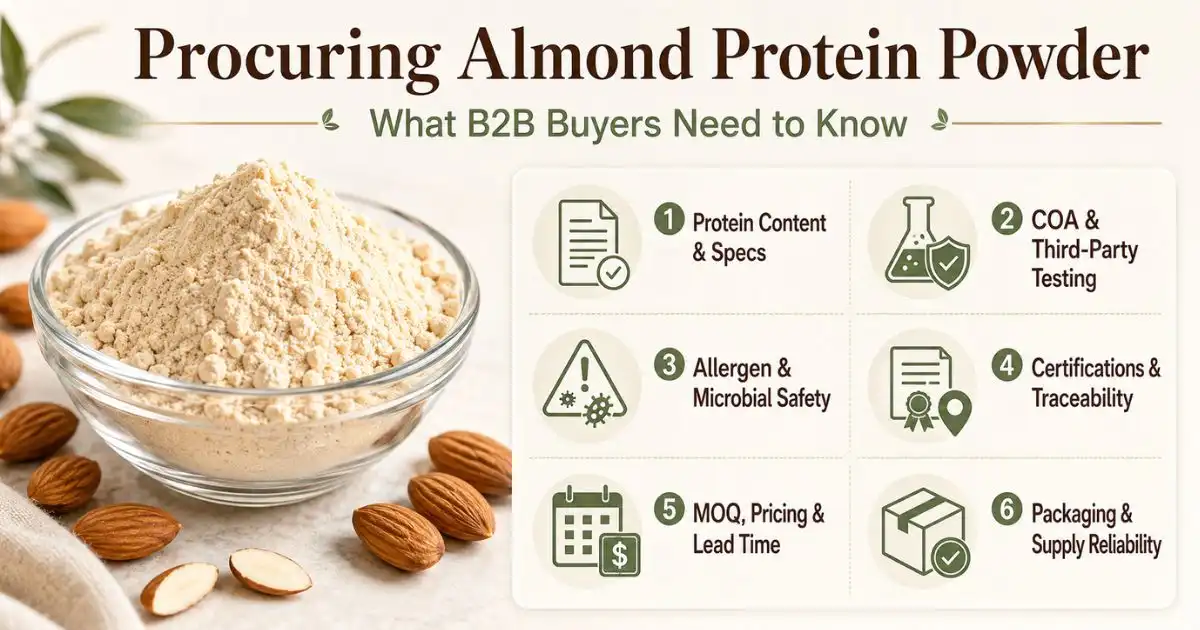
Procuring Almond Protein Powder: What B2B Buyers Need to Know?
Critical Specification Parameters for Industrial Applications
Procurement teams should establish clear specification requirements aligned with product development goals. The table below outlines typical specification ranges and their application implications for almond protein sourcing decisions.
| Specification Parameter | Typical Range | Application Impact | Procurement Consideration |
|---|---|---|---|
| Protein Content | 50–90% | There should be more in products that focus on protein. | Cost and the amount of protein needed should be taken into account. |
| Particle Size | 60–200 mesh | Liquids mix better when the mesh is finer. | There must be at least 200 holes in RTD goods. |
| Moisture Content | 4-6% | Food lasts longer when it has less water in it. | Check the COA to make sure of the moisture level. |
| Fat Content | 10 to 18% | Fats that are still in food make it feel better in your mouth, but they also lower the protein rate. | Get your macro and calorie goals in sync. |
| Fiber Content | 12 to 18% | Gut health claims are backed up by having more fibre. | Think about how it changes the way liquids look. |
Certification Requirements and Regulatory Compliance
Almond protein legal problems can be solved by getting FDA approval, Kosher certification, or Halal certification. This is true for markets in North America and around the world. Organic certification from the USDA or the EU can help you stand out as a high-end brand, but it usually costs more and needs proof of tracking. Every year, when contracts are renewed, procurement managers should ask sellers for new papers and make sure that their certifications are still valid. Customers who care about their health will buy products that are Non-GMO Project Verified, and products that are gluten-free will be able to sell in more places. It is faster to buy things from Yangge because they keep licenses up to date and let people see proof of IDs digitally.
Supply Chain Logistics and Pricing Considerations
Usually, you need to order at least 500 kg when you buy in bulk, and the prices are based on bigger deals. Lead times are between 15 and 30 days, but it depends on how detailed the needs are and what kind of organic approval is needed. You can put your things in 10 kg, 20 kg, or 25 kg fabric drums that have plastic bags inside to keep them clean and dry while they're being shipped. Delivery times should be flexible enough to work with production times so that products are always available without having to pay a lot of money to store them. This can be done by the procurement team. There are different types of things (FOB vs. CIF) and the amount of protein should be taken into account when setting costs. 70% protein specs cost between $12 and $25 per kilogram on the market right now.
Conclusion
Almond protein is a key ingredient for companies that want to make plant-based foods that taste great and have clean labels. It's not a full protein because it doesn't have lysine, but it's good for making drinks, bars, and dairy substitutes because it has a bland taste, works well with emulsifiers, and doesn't change when heated. Details about the protein level, which can be anywhere from 50 to 90%, let custom products be made for a lot of different uses. If procurement teams know about amino acid profiles, digestibility metrics, and production processes, they can choose where to get food in a smart way. Almond protein powder from Yangge is certified and traceable, and it offers stable quality, compliance with laws, and a reliable supply chain, all of which are important for making competitive goods.
FAQ
Is almond protein adequate for muscle-building supplements?
Almond protein doesn't have all the amino acids needed for muscle protein synthesis because it doesn't have much lysine. Almond protein contains a lot of leucine content, which, according to studies, initiates the processes that make muscles grow. However, all of the necessary amino acids must be present for ongoing production to take place. In order to get full profiles and retain a better flavour than formulas made entirely of peas, Almond protein should be mixed with pea or rice protein at a ratio of 40–60 percent. This method meets both the needs of consumers for taste and nutritional effectiveness.
How does almond protein's allergen profile compare to other plant proteins?
Almond protein contains allergens from tree nuts, so it must be clearly labelled in line with FDA FALCPA regulations and EU standards. Low-allergen pea protein and low-allergen rice protein are not the same thing. But it gives people who are allergic to gluten or soy (a bean) a choice. For companies that want to reach a lot of people who can't have certain foods, pea or rice proteins are the best choice. Almond proteins, on the other hand, are better for select groups of people who want tasty foods that are free of soy, dairy, and gluten.
Partner with Yangge for Premium Almond Protein Solutions
There is a trustworthy source of Almond protein called Yangge Biotech. They are committed to giving you high-quality, approved raw materials that will make your end goods better. Our Best Almond protein Powder, which is available in 50%, 70%, and 90% strengths, complies with FDA, Kosher, and Halal standards, ensuring widespread acceptance. Our production is GMP-certified, we keep full COA paperwork, and we track food from the farm to the table. This takes care of the main concerns of purchasing managers about consistent quality and supply reliability. The technical team at our company helps with making drinks, bars, and dairy alternatives and gives advice on how to use them. Contact us to get samples, talk about bulk pricing, and find out how our sustainable Almond protein solutions can help your products stand out in a crowded market by emailing us at info@yanggebiotech.com.
References
1. Phillips, S. M., & Van Loon, L. J. (2021). "Dietary Protein for Athletes: From Requirements to Optimum Adaptation." Journal of Sports Sciences, 39(supplement 1), 29-38.
2. Marinangeli, C. P., & House, J. D. (2017). "Potential Impact of the Digestible Indispensable Amino Acid Score as a Measure of Protein Quality on Dietary Regulations and Health." Nutrition Reviews, 75(8), 658-667.
3. Hoffman, J. R., & Falvo, M. J. (2004). "Protein: Which Is Best?" Journal of Sports Science & Medicine, 3(3), 118-130.
4. Boye, J., Wijesinha-Bettoni, R., & Burlingame, B. (2012). "Protein Quality Evaluation Twenty Years After the Introduction of the Protein Digestibility Corrected Amino Acid Score Method." British Journal of Nutrition, 108(S2), S183-S211.
5. Gorissen, S. H., & Witard, O. C. (2018). "Characterising the Muscle Anabolic Potential of Dairy, Meat and Plant-Based Protein Sources in Older Adults." Proceedings of the Nutrition Society, 77(1), 20-31.
6. Day, L. (2013). "Proteins from Land Plants: Potential Resources for Human Nutrition and Food Security." Trends in Food Science & Technology, 32(1), 25-42.

Based on your location and order quantity, you will have the opportunity to receive a limited time free shipping promotion!
Who we are
Popular Blogs