How to use astaxanthin powder in recipes or smoothies
Using astaxanthin powder in recipes and smoothies involves adding the dark red powder typically derived from Haematococcus pluvialis microalgae directly to beverages, energy bars, or functional food formulations. Due to its lipophilic nature and sensitivity to heat, light, and oxidation, we recommend starting with small amounts (4-8 mg per serving for consumer products) and blending it with healthy fats like coconut oil or nut butters to enhance absorption. For smoothies, incorporate the powder after any heat processes to preserve its antioxidant potency and vibrant color.
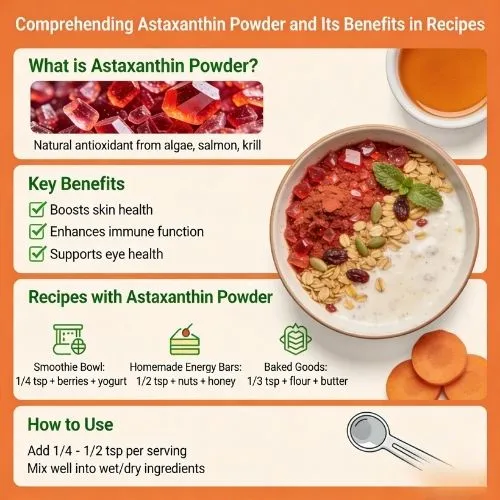
Comprehending Astaxanthin Powder and Its Benefits in Recipes
Astaxanthin is known as one of nature's strongest pigment antioxidants because it can get rid of free radicals much more effectively than either vitamin C or vitamin E. It is made up of a special linked double-bond chain with polar hydroxyl and keto groups. This lets it cross cell membranes and stop oxidative stress in both water and lipid environments.
What Makes This Carotenoid Unique in Culinary Applications?
When we use high-quality astaxanthin from Haematococcus pluvialis, the dark red powder does more for recipes than just look good. When treated right, its molecular makeup makes it more stable than many other carotenoids. Because it comes in powder form, producers can avoid the messiness of oleoresins while still getting accurate doses during large-scale production. Formulation engineers care a lot about this trait because they need functional drinks, protein bars, and health shots to always have the same effects from batch to batch.
The 3S,3'S stereoisomer is mostly found in natural astaxanthin, which study shows is more bioavailable than manufactured versions. The amount of esterification in natural sources also affects how stable they are and how fast they are absorbed. We've seen that options made from microalgae keep their antioxidant activity better during processing, which makes them the best choice for high-end health food uses.
Health Properties That Drive Consumer Demand
There is strong scientific evidence that daily eating has a number of health benefits. Astaxanthin's ability to guard against UV-induced damage and help collagen production has been linked to changes in skin elasticity and moisture retention in clinical tests. Eye health studies have shown positive results in improving visual clarity and reducing eye fatigue, especially in people who spend a lot of time in front of a computer.
There is a lot of information about how cells can fight inflammation. The compound helps control inflammatory pathways, which is why people are interested in sports nutrition items that focus on healing. Cardiovascular support research show possible benefits for fat metabolism and arterial health, but results depend on the dose and quality of the formulation.
When purchasing managers look at investments in ingredients, these benefits based on facts directly relate to chances to place products in the market. Brands that use verified health ingredients can charge higher prices and meet the needs of health-conscious customers who carefully read labels and look into where ingredients come from.
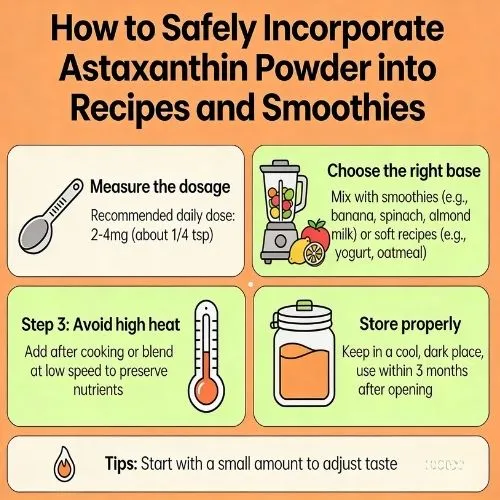
How to Safely Incorporate Astaxanthin Powder into Recipes and Smoothies?
In order to get the best results, you need to know both the technical qualities of the item and how it can be used in different ways. When added correctly, it makes sure that the product stays stable throughout its shelf life and has the highest solubility possible.
Dosage Guidelines for Different Product Formats
In consumer-facing goods, the recommended serving amounts are usually between 4 and 12 milligrams per piece. However, higher quantities may be used in functional foods based on the health claims they are trying to make. We've found that drink uses work well with 4 to 6 mg per serving, while 8 to 12 mg can fit in concentrated health shots with the right carrier ingredients.
The 10% concentration makes it easy to figure out how much powder is needed: 60 mg of 10% concentrated powder is needed for every 6 mg of pure astaxanthin. When you do batch estimates, you have to take into account processing losses, which can be anywhere from 5 to 10 percent based on how the ingredients are mixed and how hot they are during production. For accurate calculations and consistent results, astaxanthin powder is a key ingredient to consider in formulations.
Optimal Blending Techniques and Ingredient Synergies
Because astaxanthin is lipophilic, it needs to be carefully formulated. When added directly to water-based drinks, they don't mix well and clump together, which hurts both the look and bioavailability. Smoothie recipes that work well use emulsifying agents or fat sources that make the mixtures solid.
For example, you could mix the powder with avocado, nut butters, coconut milk, or medium-chain triglyceride oil before adding it to the liquid base. When fats are present in food, bile acid is released, which makes it much easier for the body to absorb carotenoids. Formulation engineers who make ready-to-drink drinks often use lecithin or acacia gum to make sure that the ingredients are evenly distributed in water-based mixtures.
It is important to keep an eye on the temperature during cooking. To keep the sensitive conjugated double-bond system from breaking down too quickly, we keep the mixing temperatures below 50°C (122°F). Compared to manufacturing methods that use a lot of heat, cold-processing methods keep more of the antioxidant action.
Processing Limitations and Quality Assurance Considerations
Light, air, and high temperatures speed up the breakdown processes, changing the bright red substance into forms that are less active. How you store things is very important. Keeping raw materials in packaging that blocks light and air keeps them potent and extends their shelf life. Yangge says to store them in metal foil bags that are tightly closed and out of the light. This is the best way for the industry to keep carotenoids fresh.
The best conditions for finished goods' stability are those with a pH between 5.5 and 7.5. Formulations with a pH level below 4.5 may need extra safety steps, like microencapsulation or antioxidant systems that combine vitamins E and C. We suggest doing rapid stability tests on the product while it is being developed to get an idea of how long it will last in different storage circumstances.
Safety profiles are still good according to all the study that has been done, with no major side effects being reported at normal supplement amounts. When you buy from pure microalgae farming systems, you don't have to worry about allergens as much, but we still keep our non-GMO and non-allergen certifications to meet all of our customers' needs.
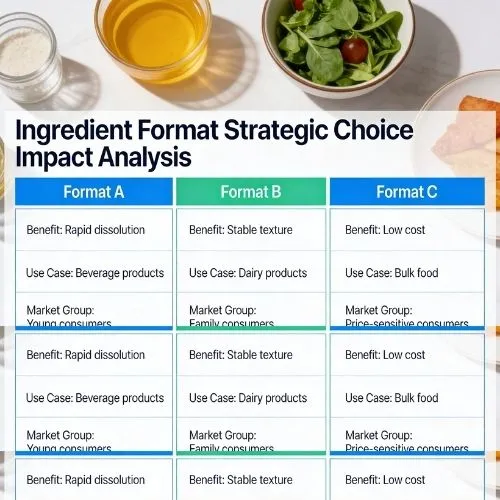
When product developers add this ingredient, they can do so in a number of different formats. Each has its own benefits for different uses and market groups. Strategic choice has a direct effect on how efficiently products are made, how well they work, and how much they cost.
Delivery Format Analysis: Powder Versus Encapsulated Options
Powder formulations give makers the most freedom when they're making their own blends or custom formulas. The dark red powder is easy to work with and goes well with dry premixes, protein powder blends, and tablet binders. This style works well for fast production lines that need precise technology for dosing.
Bioavailability problems can be solved with encapsulated forms, which have coatings that protect the chemical until it reaches the best places to be absorbed. Cold-water-soluble versions allow clear beverage uses where oil-based ingredients would create separation issues. But encapsulation costs more (15–30% more than regular powder) and makes it harder to make changes while the mix is being made.
We see that companies that make drinks like specialized grades that are easy to disperse, while companies that make supplements in the form of pills or tablets have great results with normal powder forms when mixed with the right excipients. The choice depends on the skills of the production tools, the format of the product you want to make, and your profit goals. For formulations that require high potency and efficiency, astaxanthin powder is often the preferred choice, offering versatility without compromising on the quality of the final product.
Natural Versus Synthetic: Quality Benchmarks and Certification Standards
Even though it costs more, natural astaxanthin from Haematococcus pluvialis has big benefits in the market. Natural sources are strongly preferred by consumers, especially in high-end wellness areas where the origin of ingredients affects buying choices. The natural version also has higher amounts of the desired 3S,3'S stereoisomer than the manufactured versions.
Different groups of people have different certification needs. For buyers who care about quality, GMP compliance, ISO 22000, and organic badges (if available) are the minimum standards. Yangge keeps a full set of certifications, such as ISO, HACCP, Kosher, and Halal credentials, to meet the needs of different faith and government groups around the world.
Synthetic copies are cheaper and sometimes more pure, but consumers don't like them in clean-label areas. No matter where the product comes from, it needs to be able to be tracked. So, buying teams should demand full chain-of-custody records from growing or synthesizing the product to packing it.
Positioning Against Other Antioxidant Ingredients
Beta-carotene is less expensive than astaxanthin, but it is not nearly as good of an antioxidant. Astaxanthin is naturally found in krill oil, but it raises worries about allergens, omega-3 oxidation, and sustainability, which makes it harder to follow regulations and communicate with customers.
The unique value offer comes from having more antioxidants and more than one health benefit that has been proven to work. This makes astaxanthin a special ingredient that should be priced higher because it increases performance and justifies the higher price. Product designers can use these differences to make marketing stories about next-generation antioxidant defense that are more interesting.
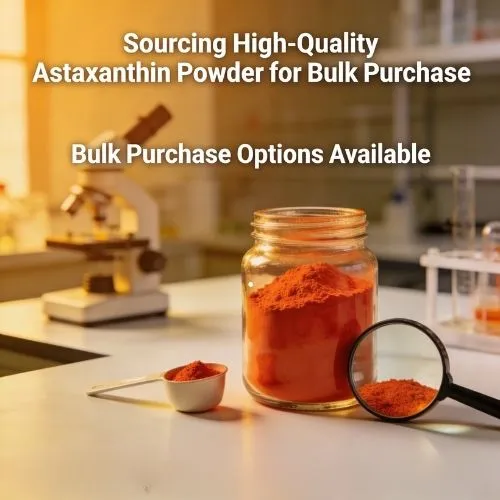
Sourcing High-Quality Astaxanthin Powder for Bulk Purchase
To build trusting supply relationships, you need to carefully evaluate suppliers in a number of areas that affect the stability of the product, compliance with regulations, and the long-term success of the partnership.
Supplier Qualification and Certification Verification
Suppliers with a good reputation show their commitment to quality through third-party approvals and open production practices. We give more weight to partners who follow GMP guidelines and have clear quality control systems that cover everything from receiving raw materials to releasing finished goods. If a company has ISO 22000 certification, it means they have complete food safety management that includes danger analysis and key control points all the way through production.
Verification of plant sources, extraction methods, and testing techniques used at different stages of production should all be recorded in audit files. Yangge works with well-known labs like Eurofins and SGS to do independent testing. This gives customers peace of mind that the specs match the real composition of the product. This confirmation by a third party is very important when dealing with legal questions or customer due diligence requests.
Heavy metal testing, microbial screening, and chemical residue analysis are all quality checks that can't be skipped. For every batch of production, we need certificates of analysis that show the products meet strict worldwide standards for food-grade ingredients. Managers of procurement should set clear criteria for accepting batches and clear rules for rejecting batches that don't meet the requirements. When dealing with high-quality ingredients like astaxanthin powder, these thorough quality checks are essential to ensure consistency and purity in every batch.
Commercial Terms and Logistics Considerations
For sample evaluations, the minimum order quantity is usually set at 1 kilogram. For business production, however, promises of 25 to 50 kilograms are usually needed to get good prices. When you buy more than 100 kilograms, you can get a deal because the prices are based on the cost of the raw materials, how hard they are to remove, and how the market is changing.
Once payment clears, lead times for stock items are usually one to three days. However, lead times for special standards or private-label packaging can go up to two to three weeks. When you ship things internationally, you have to carefully plan how to get the right paperwork, keep the goods at the right temperature, and clear customs. Working with experienced providers who handle export transportation cuts down on problems and makes sure that everything is handled correctly along the chain of distribution.
Strategies for managing inventory should weigh the costs of keeping items against the risks of losing access to supplies. Keeping a 60- to 90-day safety stock protects against interruptions in production and keeps capital from getting stuck in raw materials for too long. Yangge keeps 50–100 kilograms of stock on hand, which lets them quickly meet orders from regular customers and supports just-in-time manufacturing methods.
Private Label and Customization Capabilities
Brand owners who are making their own goods can benefit from suppliers who offer full customization services. In addition to making normal changes to the packaging, advanced partners can mix astaxanthin with ingredients that work well together, change the concentration requirements, and create branded packaging with names and marketing messages.
These value-added services shorten the time it takes to get new products on the market and make handling relationships with multiple suppliers easier. We help customers make unique products that fit with their brand's positioning by customizing specifications, giving them options for packing, and helping them with formulation.
The review of a partnership should look at the technical support skills, such as the ability to help with extraction, formulation, and regulation issues. Suppliers with specialized research teams can help with improving solubility, making the product more stable, and finding the best ways to use it in a certain situation. This lowers the risk of investing in product development.
Integrating Astaxanthin Powder into Your Product Line: Use Cases and Success Stories
Implementation examples from real life show how forward-thinking brands have used this ingredient to set themselves apart in the market and increase sales.
Market Success in Functional Beverage Categories
Sports nutrition companies were the first to use astaxanthin in recovery drinks, using claims that it reduces inflammation and boosts endurance. As a result of teaching people about how to lower oxidative stress during hard training, a well-known brand changed the formula of its line of post-workout drinks to include 6 mg per serve. After being reformulated, the product line grew by 23% year-over-year, and customers said they thought the recovery was better.
The people who make beauty-from-within drinks have come up with interesting stories about how the drinks are good for your skin. A collagen drink brand added astaxanthin powder along with hyaluronic acid and vitamin C, advertising the mix as being good for the skin in many ways. Supporting claims of effectiveness with clinical trials for individual ingredients allowed for higher prices that led to higher profits than standard collagen products.
Smoothie Bowl and Functional Food Applications
Astaxanthin-fortified freeze-dried fruit mixes have been added to ready-to-blend smoothie kits aimed at health-conscious customers. The bright red color makes things look better on social media, which increases the reach of organic marketing while also providing real health benefits. Putting these goods on the market as "superfood antioxidant blends" helps them get 40–50% higher prices than regular smoothies.
Protein bar makers have trouble making their recipes because the ingredients are sensitive to heat. However, some brands have been able to make the ingredients stable by carefully controlling the process and using safe ingredient systems. One brand used natural vitamin E and microencapsulated astaxanthin, and after 18 months of tests, it still had 85%+ of its effectiveness. The antioxidant stance set their bars apart in a crowded market and allowed them to sell to more high-end natural stores.
Strategic Marketing Approaches Leveraging Natural Ingredients
Brands that do well stress clean sources, often focusing on ways to grow microalgae and use sustainable production methods. People are more likely to believe promises about the quality and purity of ingredients if the methods used to extract them and the tests done by a third party are clear. Having pictures that show off the bright natural color makes the product stand out on shelves and gets people to interact with it on social media.
Teaching people "why astaxanthin" helps them understand value ideas that go beyond simple antioxidant messages. Brands that connect specific benefits to living needs, like physical performance, digital eye pain, and skin aging, make their products more relevant, which encourages people to try them and buy them again. With these strategic methods, adding an ingredient goes from being an easy way to improve the formula to being a key way to differentiate the brand.
Conclusion
Business-to-business clients who want to make unique health and fitness products can do a lot of good by adding astaxanthin powder to recipes and drinks. This guide went over the technical things you need to know about safe and effective use, comparing different product forms, and smart sources that you need to do to keep quality high and follow the rules. Success stories from real life show that useful drinks, health supplements, and new food uses can be successful in the market. With this information, procurement managers can easily evaluate suppliers, make formulations better, and come up with appealing product ideas that meet the growing demand from customers for natural antioxidant ingredients backed by science.
Partner with Yangge for Premium Astaxanthin Powder Supply
Yangge Biotech sells certified-grade astaxanthin powder that is specially made for companies that make useful foods and supplements and want to work with trusted suppliers. Our 10% grade dark red powder comes from Haematococcus pluvialis and is removed using HPLC. It meets strict GMP, ISO 22000, Kosher, and Halal standards and is also non-GMO and non-irradiated. As a well-known company that makes astaxanthin powder and has full third-party testing methods through Eurofins and SGS, we give procurement managers the quality assurance paperwork and technical support they need to make confident choices about formulations.
Our customization services include changing specifications, private-label packing, and mixing ingredients to help you get your product to market faster. We can help with both testing and large-scale production. Our minimum order size is only 1 kilogram, and stock items can be delivered within 1 to 3 days. Contact us or you can email our technical team at info@yanggebiotech.com to ask for samples, talk about bulk prices, or look into OEM partnership options that fit your brand's quality standards and market goals.
FAQ
Q: Can we get some samples to test before purchasing?
A: Of course, we can provide free samples of 20 to 100 grams, but the shipping cost is at the customer's expense. The shipping cost can be deducted from the next order, or the samples can be sent through your courier account.
Q: Do your products have relevant certifications?
A: Yes, our products are certified for HALAL, ISO, HACCP, Kosher, and other certifications.
Q: What is the minimum order quantity (MOQ)?
A: Small batches of samples can be customized according to your requirements.
Q: Do you offer OEM and ODM services? Can the formula be customized based on our own?
A: Of course, we provide ODM and OEM services to many customers. Our product range includes softgels, capsules, tablets, sachets, granules, and private label services. Simply contact us and let us know your requirements. Our experienced R&D team can also develop new products with specific formulas.
Please contact us to design your own branded products.
Q: How do you handle quality complaints?
A: First, we have a comprehensive quality control SOP. We provide authoritative third-party inspection reports for almost all products before shipment to minimize the possibility of quality issues. Second, we have a comprehensive return and exchange procedure. If there is a genuine quality dispute, we will strictly follow the SOP.
Q: How do you ship? How long does delivery take?
A: For small orders, we typically use DHL, UPS, EMS, FedEx, or TNT. Delivery typically takes 3-7 days. We also offer air and sea freight services. We have a strong freight forwarding team and can provide you with a one-stop service, including DDP and DDU.
Q: What are your payment terms?
A: 100% prepayment, payable by T/T, Western Union, MoneyGram, or PayPal.
Q: What is the shelf life of your products?
A: 2 years with proper storage.
References
1. Ambati, R.R., Phang, S.M., Ravi, S., & Aswathanarayana, R.G. (2014). Astaxanthin: Sources, Extraction, Stability, Biological Activities and Its Commercial Applications—A Review. Marine Drugs, 12(1), 128-152.
2. Fassett, R.G., & Coombes, J.S. (2011). Astaxanthin: A Potential Therapeutic Agent in Cardiovascular Disease. Marine Drugs, 9(3), 447-465.
3. Davinelli, S., Nielsen, M.E., & Scapagnini, G. (2018). Astaxanthin in Skin Health, Repair, and Disease: A Comprehensive Review. Nutrients, 10(4), 522.
4. Nishida, Y., Yamashita, E., & Miki, W. (2007). Quenching Activities of Common Hydrophilic and Lipophilic Antioxidants against Singlet Oxygen Using Chemiluminescence Detection System. Carotenoid Science, 11, 16-20.
5. Tominaga, K., Hongo, N., Karato, M., & Yamashita, E. (2012). Cosmetic Benefits of Astaxanthin on Humans Subjects. Acta Biochimica Polonica, 59(1), 43-47.
6. Yuan, J.P., Peng, J., Yin, K., & Wang, J.H. (2011). Potential Health-Promoting Effects of Astaxanthin: A High-Value Carotenoid Mostly from Microalgae. Molecular Nutrition & Food Research, 55(1), 150-165.

Based on your location and order quantity, you will have the opportunity to receive a limited time free shipping promotion!
Who we are
Popular Blogs