How to Choose High-Quality Blue Spirulina E18 for Your Business Needs
To choose high-quality blue spirulina E18, first confirm how your supplier defines E18. It is a color-value grade, not a universal standard. Next, review the written specification, batch COA, phycocyanin content, water solubility, and certifications such as Kosher and USP grade. Then test a sample in your real formula, because heat, light, and pH can fade the blue. Finally, compare cost per finished batch instead of price per kilogram, and confirm MOQ, OEM packaging, and stock. I wrote this guide to walk you through each step.
What Is Blue Spirulina E18?
E18 Is a Color-Value Grade
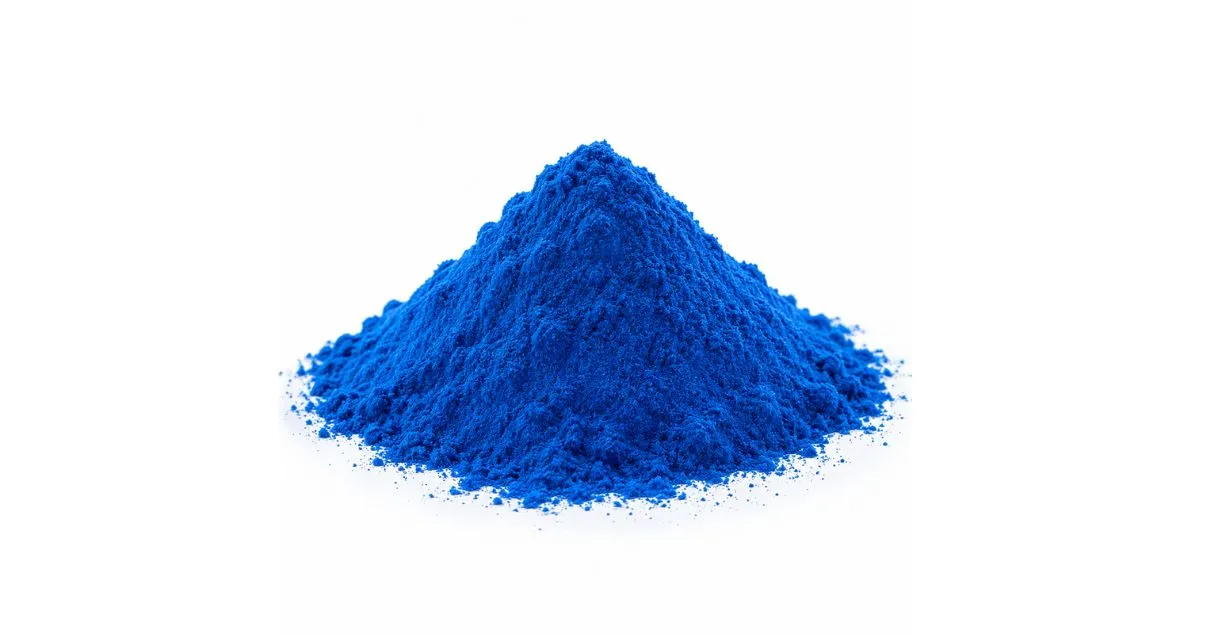
Blue Spirulina E18 comes from the spirulina species—an Arthrospira platensis that has a lot of phycocyanin. As a general rule, the color value is written as E1% at 618 nm on the "E18" label. Usually, a reading of 180 or more is thought to be good. That number is a business grade that the service provider sets. Because it's not a law that all companies have to follow, test methods and boundaries may be different. When you ask for something, I always think you should get it put down and be told how it works. The FDA says that spirulina extract is made from dried Arthrospira platensis biomass that has been filtered and mixed with water. This ingredient is also in the same family.
Blue Versus Green Spirulina Powder
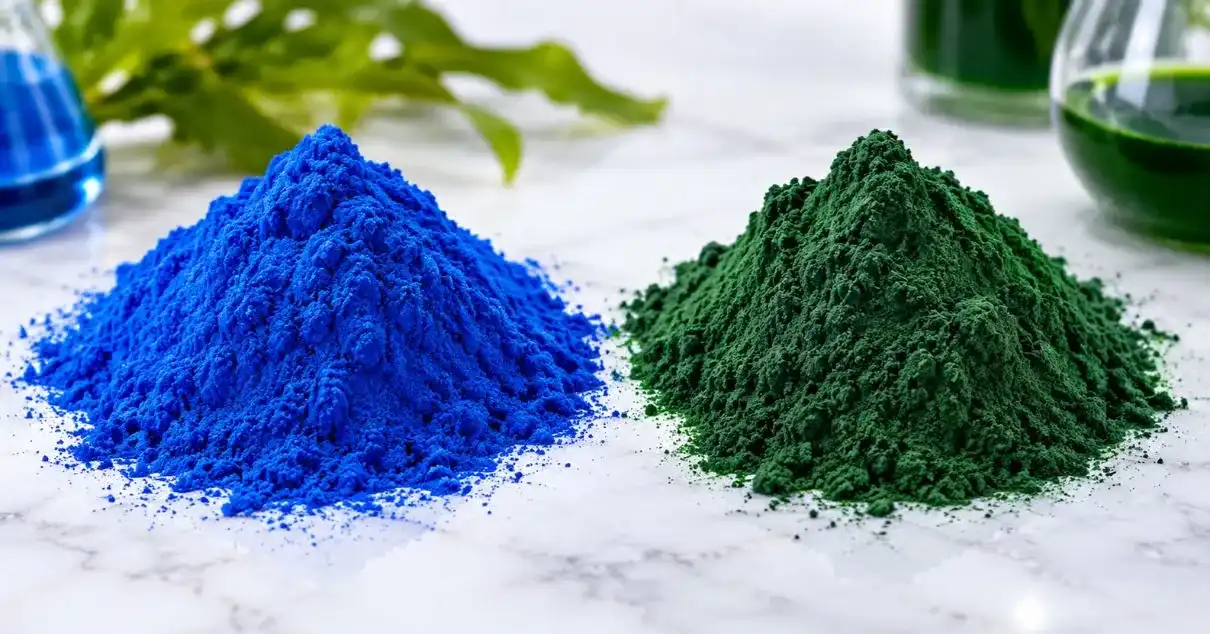
Normal spirulina powder is made by drying out whole algae. It turns it green and makes the taste of algae stronger. You can get a better blue color with less Blue Spirulina E18 extract because it divides the phycocyanin pigment and protein, which mixes with water. It's important to know what that means for a blue latte or gummy because green powder would cloud the color. There are also times when color-grade and nutrition-grade things are bought together. Read the spec sheet to be sure you know what it's for. The use on our list is "food colorants," and the protein content is given as 60% to 70%.
Yangge Product Snapshot
Today, our product sheet talks about the three color values we offer in this way:
| Item | Yangge listing |
|---|---|
| Color values | E10, E18 (common specification), E25 |
| E18 phycocyanin | 25% |
| Protein content | 60%–70% |
| Solubility | 100% water soluble; insoluble in ethanol and fat |
| Grade and stock | Kosher/USP grade, 1 ton in stock |
| MOQ | 25KG |
| OEM bags | 60g, 100g, 8oz |
| Forms | Fine blue powder or phycocyanin tablet |
They will be able to use these details as a single point of reference before they start sampling.
Core Quality Criteria for High-Quality Blue Spirulina E18
Color Value and Phycocyanin Content
It tells you how much blue each gram gives you. As long as the test method stays the same, a higher value usually means that there is less powder in each batch. For each batch of COA, you should ask for E1% at 618 nm and the phycocyanin percentage. 25% of our sheet for E18 is made up of phycocyanin. You can see batch-to-batch drift in the color changes on the shelf when you put two lots next to each other. Also, I believe you should mix two groups of the same strength in water and then look at them side by side in the same light.
Solubility, Flavor, and Dispersion
Our Blue Spirulina E18 can only be broken down with water. Because it doesn't mix with ethanol or fat, it works best in systems that use water. To color the water phase for fat or oil layers and coats, you need to use a different method. Also, taste needs a real test. Some people who buy it say that milk or water tastes a little like algae. Instead of guessing, try small amounts of your total amount. To see how well the powder is spread out, mix it with cold water and look for clumps or sediment. Drinks that don't spread out well will have spots in them.
Safety Testing, COA, and Certifications
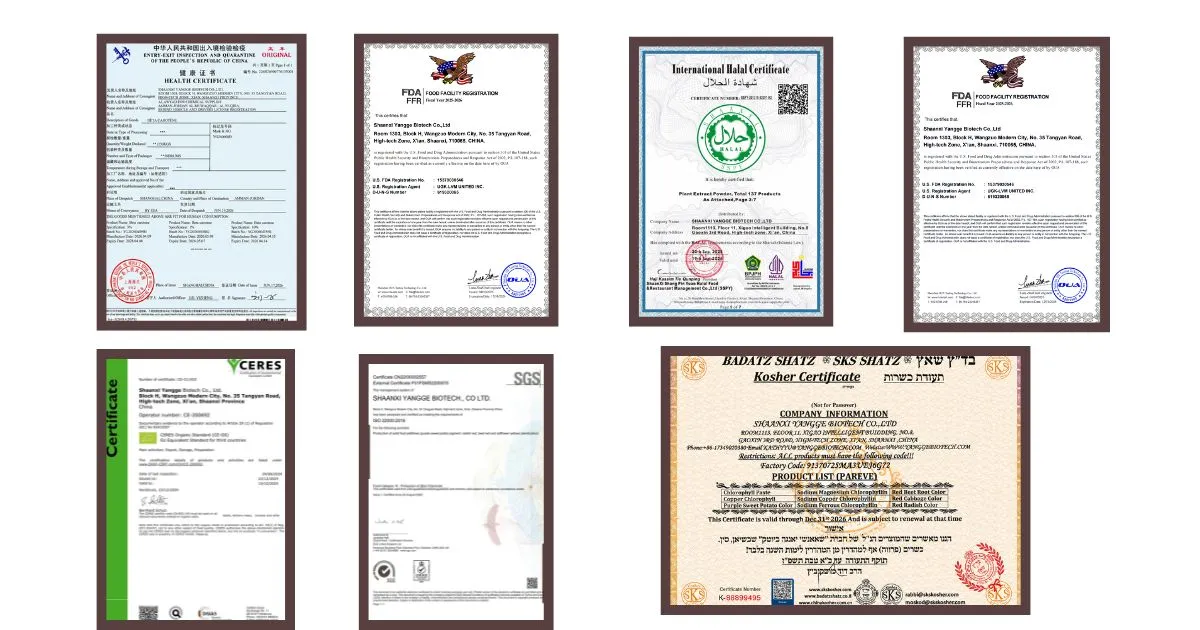
A good COA has the lot number, the dates it was made and when it goes bad, the color value, the moisture level, the microbiological results, the heavy metals, and the test method written on it. Do not just ask for one new lot; ask for a few. Then, check to see if the plant and grade of the product on the approval papers match. You can buy Kosher/USP grade Blue Spirulina E18 from Yangge Biotech. The company is also ISO, HACCP, Kosher, and Halal approved. For the U.S. market, remember that spirulina extract is an FDA-approved color supplement for certain uses (21 CFR 73.530), so make sure you're working with the right type of food before you begin.
Blue Spirulina E18 Comparison: Which Option Fits Your Product?
E10, E18, and E25 Side by Side
This is how you should choose the grade: your income, the amount you want to use, and the color you want. This is how I explain the three options:
| Grade | Color strength | Best fit | What to watch |
|---|---|---|---|
| E10 | Lowest of the three | Light pastel shades, early trials | Needs a higher dose for deep blue |
| E18 | Common specification | Beverages, gummies, dairy, powders | Test stability in your formula |
| E25 | Highest of the three | Deep shades, low-dose formulas | Judge by cost per batch, not per kg |
To get a better score, it's not always better. A soft yogurt might only need E10 or E18, but a bright blue candy might need E25.
Against Green Spirulina and Synthetic Blue
Green spirulina powder is better for you than for color because it can't make a clean blue. While Synthetic FD&C Blue No. 1 is certified as a very steady color, it doesn't live up to claims that it is plant-based or 100% clean. That's not true; Blue Spirulina E18 does counter those claims, but your formulator needs to do more. Phycocyanin has been studied and it has been found that heat, light, and acidity can make the color less stable. That's why I think of safety measures like adding light- and heat-blocking packs as part of the decision to buy.
Cost per Finished Batch
It can be hard to understand the price per kilogram. If one grade costs more but needs less powder to get the color you want, the whole batch might cost the same or less. It's simple math: price per kg times the amount of powder used in a batch. Test on a bench with two or three doses of each grade. Make a note of the lowest dose that will get you the color you want, and then multiply that dose. You will make less each year once you add in the 25KG MOQ, freight, and packing costs. Smaller brands can handle risk better if they ask for a sample first and then place their 25KG order.
How to Use Blue Spirulina E18 in Food, Beverage, and Supplement Products
Beverages and Instant Drink Mixes
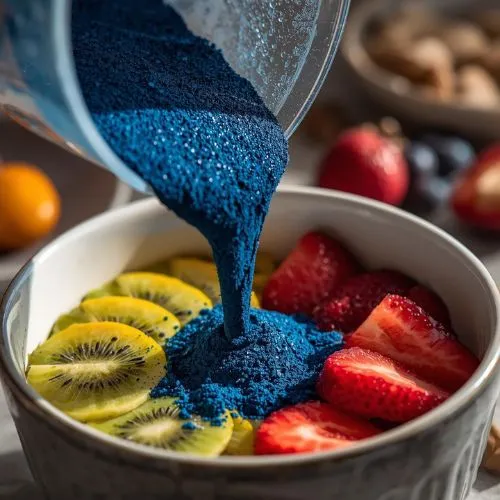
Powder that mixes with water can be used in smoothies, quick drink mixes, and healthy drinks. Mix it with some cool water first, then add it to the batch. When it gets above 45°C to 60°C, color starts to fade quickly. To keep things cool, use packaging that blocks light when you can. Also, check the pH of your drink. Because it is mildly acidic to neutral, phycocyanin tends to keep its color the best. It might fade or form crystals in drinks that are very acidic. Test how well it stores for a few weeks before letting the pilot go.
Gummies, Candies, Dairy, and Bars
On our product sheet, we list some common ways that it is used, like in nutrition bars, gummies, candies, ice cream, and yogurt. Adding the powder late to ice cream or yogurt is a good way to keep the color. Do not let it stay on high heat for too long when making candies and gummies. Add it after the cooking stage. Because there is acid, protein, and sugar in the matrix, the end color can change. For this reason, compare small test runs. On the first day and again after fast keeping, write down the color, taste, and texture.
Supplements and OEM Superfood Blends
You can order OEM superfood mix powder, pills, tablets, and chews from us, including blue spirulina E18. A big plus is that it is healthy. Phycocyanin is a color protein, and our E18 says it has between 60% and 70% protein. But be careful what you say, and make sure that your regulatory team reads any health statement that you put on the label first. Our OEM bags come in 60g, 100g, and 8oz sizes for shop tests. Let us know what you think about the recipe after you send us your mix.
How to Evaluate a Supplier and Make the Final Decision
Manufacturer, Capacity, and Export Support
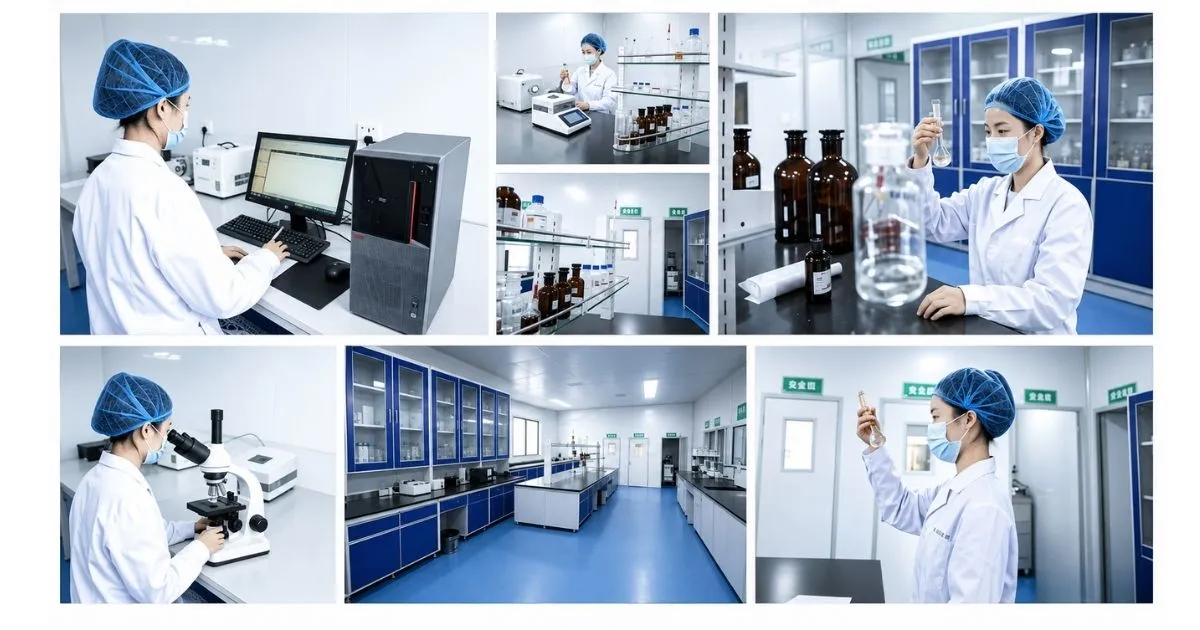
First, you should find out if the company makes things, trades them, or just puts them in new boxes. Find out where the goods were made, how long it takes to make them, how much stock there is, and look at the records to see how they were made. A company called Yangge Biotech makes and sells natural plant extracts that meet GMP standards. These extracts are sent all over the world. We have one ton in stock and can ship by air, sea, DHL, FedEx, or EMS. Also, make sure that the private-label bags have all the necessary paperwork for exporting, label support, batch coding, and artwork approval. People from all over the world can reach our team at any time, seven days a week.
Storage, Shelf Life, and Retained Samples
It is not good for phycocyanin powder to be wet, hot, oxygenated, or lit up. Keep bags that are closed in a cool, dry, dark place that doesn't have strong smells. Make sure the bag is closed all the way before you open it. Talk to the seller about how to store it and what the spec sheet says about how long it will last. Also, make sure you keep a sample from each lot. Lay a sample that was saved and a new batch of it next to each other and melt them again. Then, check the color and clarity of both. This habit finds drift quickly and keeps track of it in case a customer asks for a color change.
A Weighted Scorecard and Red Flags
How would you rate each seller on the following items, from 1 to 5? The weights can be changed to fit your item. 30% of the weight should go to color value and batch cost, 20% to phycocyanin and protein data, 15% to solubility and taste, 15% to stability, 10% to certifications and COA, and 10% to MOQ, OEM choices, and stock.
Do not go through with the deal if you do not understand what E18 means, if the papers are not up to date, or if the sample is different from the production lots. Your founder, formulator, and buyer will all be able to agree on one choice if the score is clear.
Conclusion
Choosing high-quality Blue Spirulina E18 starts with a clear definition. The specification, test method, and phycocyanin content are more important than how the powder looks because the supplier sets the E18 color-value grade. When they do core checks, they check each batch's color, how well it melts, how it tastes after the dose, and whether the COA and certification records match the grade and plant.
What a better way to compare E10, E18, and E25 than by how much they cost per kilogram? How much they cost per full batch. Because heat, light, and pH can fade the blue, bench tests must be done in the real drink, gummy, dairy, or supplement mix. As long as samples are kept and the items are stored properly, these points can be used to make a buying decision that can be used over and over.
FAQ
What does E18 mean?
E18 is a color value score. E18 has 25% phycocyanin and 60% to 70% protein, as shown on our sheet. There may be more than one way to test, so make sure you get the written specification and test method.
Is it suitable for beverages?
Yes. It tastes great in smoothies, instant drink mixes, and functional drinks because it mixes well with water. Since color can fade, check the pH, heat, and light first.
What are the MOQ and pack sizes?
OEM bags come in 60g, 100g, and 8oz sizes, and the minimum order size is 25KG. We can ship by DHL, FedEx, EMS, sea, or air.
Which documents should I request?
Get the Kosher papers, batch COA, and specification sheet and ask for them. You can also get information about our ISO, HACCP, and Halal certificates by email.
Request a Blue Spirulina E18 Sample from Yangge
Want to find a business that makes Blue Spirulina E18? Yangge Biotech has a ton of Kosher/USP grade E10, E18, and E25 in stock. The least amount you can buy is 25 kg, and OEM bags come in 60g, 100g, and 8oz sizes. To apply, email info@yanggebiotech.com with your goal color and yearly amount. We'll get back to you with a plan and a list of requirements.
References
1. U.S. Food and Drug Administration, Code of Federal Regulations Title 21, Section 73.530: Spirulina Extract, 2023.
2. Chaiklahan, R., et al., "Stability of Phycocyanin Extracted from Spirulina sp.: Influence of Temperature, pH and Preservatives," Process Biochemistry, 2012.
3. Martelli, G., et al., "Thermal Stability Improvement of Blue Colorant C-Phycocyanin from Spirulina platensis for Food Industry Applications," Process Biochemistry, 2014.
4. Jespersen, L., et al., "Heat and Light Stability of Three Natural Blue Colorants for Use in Confectionery and Beverages," European Food Research and Technology, 2005.
5. Sigurdson, G. T., Tang, P., and Giusti, M. M., "Natural Colorants: Food Colorants from Natural Sources," Annual Review of Food Science and Technology, 2017.
6. Eriksen, N. T., "Production of Phycocyanin—A Pigment with Applications in Biology, Biotechnology, Foods and Medicine," Applied Microbiology and Biotechnology, 2008.

Based on your location and order quantity, you will have the opportunity to receive a limited time free shipping promotion!
Who we are
Popular Blogs