How stable is Blue Spirulina color in beverages?
Yangge Biotech supplies high-quality Blue Spirulina Powder, a vibrant natural blue ingredient derived from Arthrospira platensis and standardized for phycocyanin content. With its brilliant blue appearance and excellent water solubility, Blue Spirulina Powder is an ideal clean-label alternative to synthetic blue colorants. It is widely used in food and beverages, dietary supplements, gummies, confectionery, dairy products, bakery products, sports nutrition, superfood blends, and cosmetic formulations. Yangge Biotech offers different specifications, including E10, E18, and E25, as well as bulk supply and customized OEM/ODM solutions to meet different formulation and manufacturing requirements.
For manufacturers and brands looking for a reliable source of premium Blue Spirulina Powder, Yangge Biotech provides consistent product quality, technical documentation, customized packaging, and professional support for commercial applications. Contact us or email at info@yanggebiotech.com.
What is Blue Spirulina Powder?
Blue Spirulina color stability in beverages depends heavily on environmental conditions such as pH, temperature, and light exposure. The phycocyanin pigment extracted from Arthrospira platensis maintains excellent vibrancy in neutral to slightly alkaline beverages when stored properly, but degrades rapidly under acidic conditions (pH below 4.0) or excessive heat. Procurement managers should prioritize suppliers offering stabilized formulations and clear technical specifications, particularly E-value grades (E10, E18, E25), to ensure consistent color performance across production batches and extended shelf life.
Understanding Blue Spirulina and Its Color Characteristics
What Makes Phycocyanin Unique
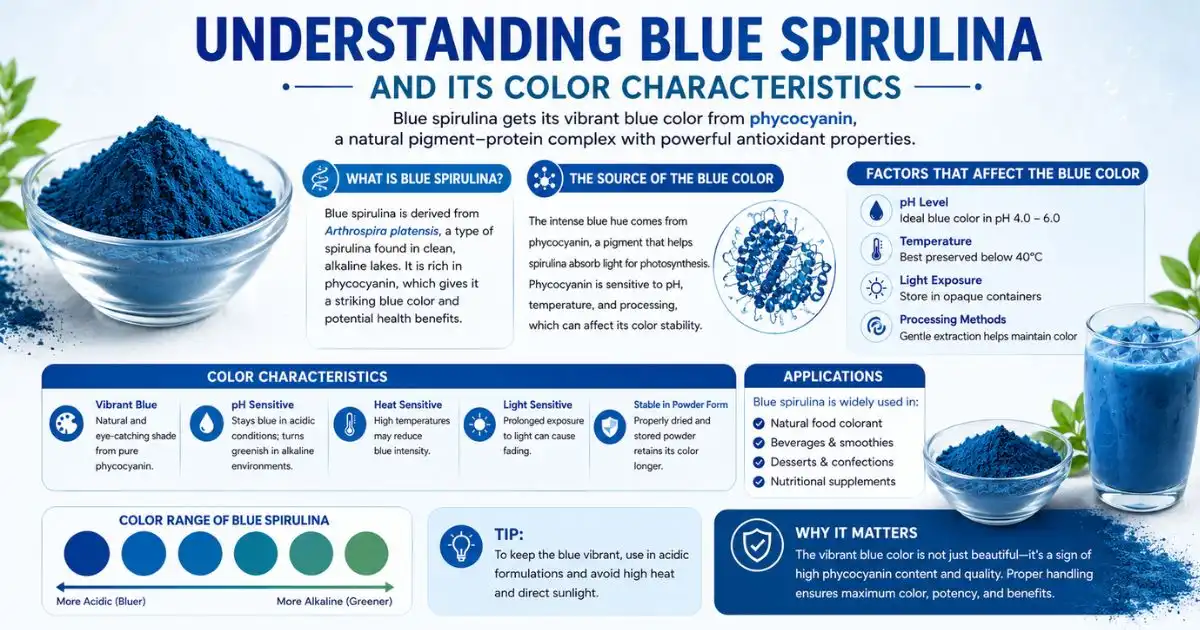
Blue Spirulina is a natural color made from phycocyanin, which is taken from the cyanobacterium Arthrospira platensis. Cyanophyll and phycocyanin are both found in whole green spirulina powder. The method used to extract the blue protein complex gets rid of the smell of fish and the greener color. The end result is a brightly colored, water-soluble powder that has a lot of health benefits, such as a high antioxidant content and extra protein, which will appeal to people who are concerned about their health. You can use Yangge Biotech's phycocyanin to color things or eat it because it keeps between 60 and 70% of its protein nutrients.
Molecular Sensitivity of Phycocyanin
Phycocyanin is a pigment that gives things a bright blue color. At the molecular level, though, it reacts very badly to changes in pH and temperature. Because it is a protein-based colorant, phycocyanin changes shape when it is under stress, which makes the color fade or disappear completely. Manufacturers need to know about these properties if they want to keep their products looking good and meet the high standards of quality in the beverage industry. E-values tell you how bright a color is. E18 is the standard for food and drink applications because it has a good balance of color vibrancy and low cost.
Factors Affecting Blue Spirulina Color Stability in Beverages
pH Levels and Acidity
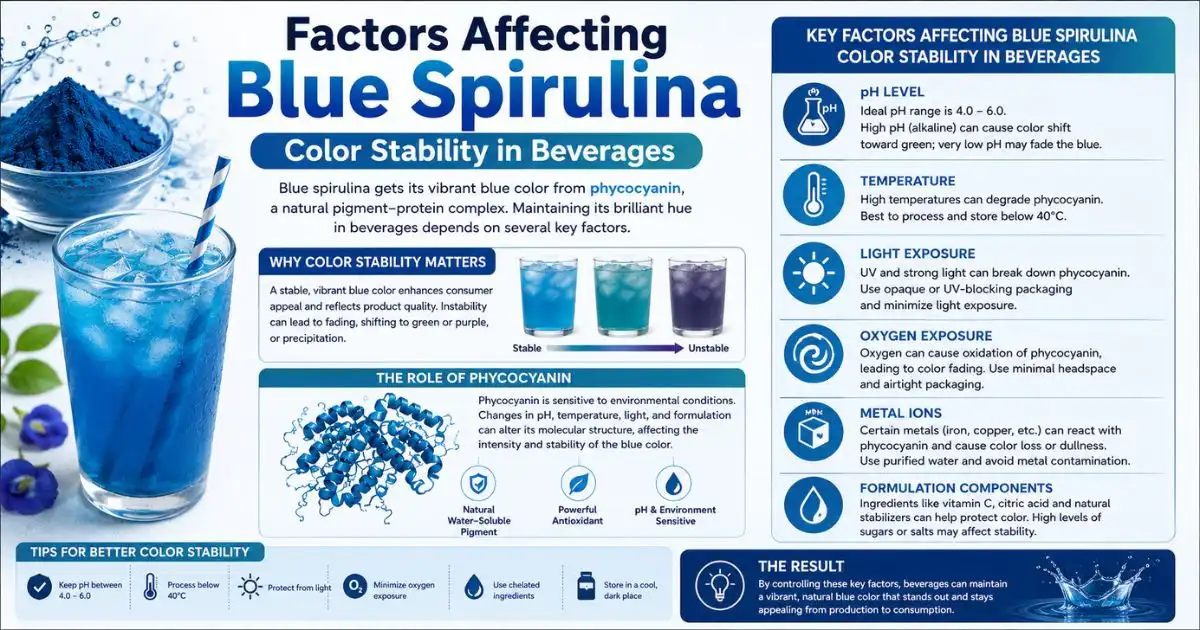
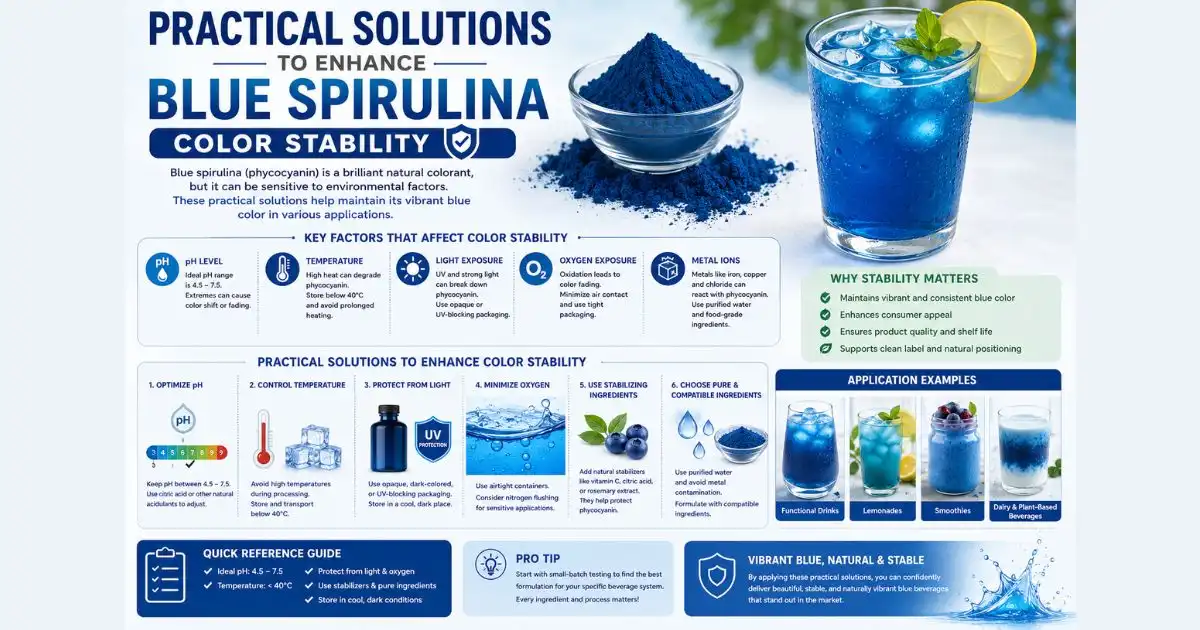
There are several important things that affect the color of drinks with phycocyanin. The first is pH. If the pH is too low, the pigment-protein complex can break down quickly. The color of standard phycocyanin fades and crystals form when the pH falls below 4.0. It can't be used in many carbonated drinks, citrus juices, or kombucha without being changed.
A pH range of 6.5 to 8.0 helps phycocyanin stay stable. This is why plant-based milks, coconut water, and alkaline sports drinks are great for it. When making drinks with acidic profiles, people who work with phycocyanin need to find formulas that are safe in acid or change their base recipes so that customers don't worry about color problems.
Temperature and Thermal Processing
Some heat treatments, like pasteurization, make color loss happen faster, so they need to be made better with heat treatments. Blue Spirulina is particularly sensitive to thermal degradation, as phycocyanin changes form above 60°C, and the color changes a lot when food is heated to 72°C for a short time as part of HTST pasteurization.
Most of the time, low-heat pasteurization or cold-fill methods should be used by beverage makers to keep the color pure, and this is especially critical when using Blue Spirulina in formulations. Shelf-stable RTD drinks that need to be cleaned in a retort are the hardest to make, and for Blue Spirulina, they often need higher dosing rates to make up for the loss of quality caused by heat during processing.
Light Exposure and Packaging Considerations
Photodegradation, which happens when colors are exposed to light, can break down. This shows how important safe packing is. The chromophore structure in phycocyanin molecules is less stable because UV and visible light speed up the oxidation process. The colors stay true longer in amber glass bottles, opaque metal cans, or multi-layer PET bottles with UV-blocking coatings while they are being kept and shown in shops. Partners in distribution who deal with big liquid solutions should store them in dark places so that the quality doesn't go down before they are packed.
Interactions with Formula Components
Adding sugars, preservatives, or other ingredients can also change how well the color stays in the food. When there are a lot of reducing sugars in food, they may react with the protein part of phycocyanin in a way that is similar to how Maillard processes turn food brown over time. In acidic places, some preservatives, such as benzoates and sorbates, can speed up the breakdown process. Manufacturers have to carefully balance these factors to make sure that the products have a long shelf life and keep their bright colors until the best-by date, which is usually between 12 and 18 months for properly made drinks.
Comparing Blue Spirulina to Other Natural Blue Colorants in Beverages
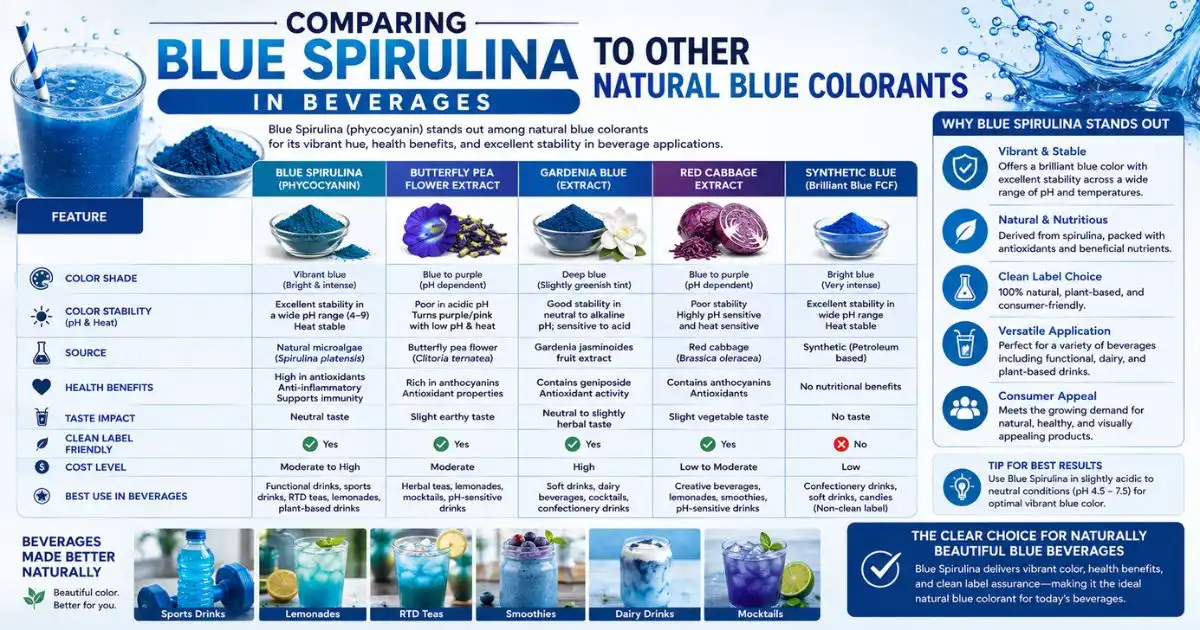
Phycocyanin stands out among natural blue colorants because it has a unique pigment makeup and can be used as both a colorant and a food ingredient. Compared to green spirulina, the refined extract has a more stable and eye-catching color for drinks without the grassy taste that limits the use of whole-cell algae. Compared to chlorella and other algae-based powders, it has more bright colors but needs to be treated carefully to keep its stability. Butterfly pea flower extract is another natural blue option. It works better with acids but doesn't have the protein and vitamin makeup that makes it a top choice in functional beverage categories.
Organic certified phycocyanin is better quality and builds trust with customers than regular grades. For B2B buyers, certification and seller openness are important factors in the buying process. Distributors of high-end natural food brands should give preference to sellers who are USDA-certified as Organic, Kosher, or Halal in order to take advantage of possibilities in the downstream market. Yangge Biotech keeps up with all the necessary certifications and follows the rules for ISO and HACCP. This makes sure that all the rules are followed in the European, North American, and Middle Eastern markets where natural color demand is highest.
Practical Solutions to Enhance Blue Spirulina Color Stability
It's important to make changes to the recipe so that phycocyanin keeps its color for as long as possible. For example, keep the pH level right and add preservatives that work well with phycocyanin. The pH level stays between 6.5 and 7.5 when citrate or phosphate salts are used in buffering systems.
This is true even when other acidic ingredients are present. Naturally occurring inhibitors, such as gum arabic or modified starches, can form protective colloids around phycocyanin molecules, making them less vulnerable to factors that break them down. Ascorbic acid (when pH is controlled) or rosemary extract are examples of antioxidant systems that help protect against color loss due to oxidation during storage.
Pigments don't break down too much when they are processed today using low-heat washing and careful cleaning. Cold-pressure processing (HPP) technology is becoming more popular among high-end beverage brands as a way to kill microbes without damaging heat-sensitive colorants.
The pigment is even safer while it is being stored and shipped in new types of packaging that block UV light and keep air out. Blue Spirulina fits seamlessly into this approach, as its natural color stability benefits greatly from such protective measures. Real-life examples of successful drink products show how these strategies can be used together to make bright blue drinks that consumers and people in the industry can trust. By following strict stability rules, the best natural sports drinks have been able to stay fresh on store shelves for 18 months with less than 15% color loss.
Procurement Insights for Blue Spirulina Powder and Color Stabilizers
Evaluating Supplier Quality and Specifications
Be sure to check the product's quality, approval status, and how regular it is from batch to batch before you buy phycocyanin from a certain company. The E-value standard changes both the cost and the intensity of the color, so buying managers need to know the pros and cons of each. It helps to know the differences between popular grades when you are formulating to get the most for your money:
| E-Value Grade | Phycocyanin Content | Typical Application | Price Point | Color Intensity |
|---|---|---|---|---|
| E10 | 15% | Products that care about price and a lot of use | Starting | Moderate |
| E18 | ~25% | A standard for the drinking business | Mid-range | Strong |
| E25 | ~35% | Very good or medical grade | High-end | The most |
Yangge Biotech keeps all three standards in stock, which lets buying teams try out different grades and find the best formulation prices based on the desired color strength and the economics of dosage. People get big savings when they buy 1 ton or more, which helps their distribution profits. It is very important for wholesalers to know this because price wars make it hard for them to make money.
Supply Chain and Inventory Management
People who buy things for businesses should figure out which parts of the supply chain work best in each area to get the best deals on prices and shipping. For instance, the USA, Europe, India, and China all have important places where things are made. When competitors run out of stock, distributors often talk about how to keep supplies going. Yangge Biotech's 1-ton standing inventory solves this problem. We offer a minimum order quantity (MOQ) of 25 kg, which gives you options for your first tests. Our OEM bag options (60g, 100g, and 8oz) help brands and co-packers who serve niche markets with their private label programs.
You can make a better budget if you know how market prices change and what your options are for buying in bulk or under your own brand. Phycocyanin E18 costs around $180 to $280 a kilogram at the moment, based on how much is bought and what licenses are needed. Things that are certified as organic cost 20 to 30 percent more.
To get ingredients that meet the needs of the beverage industry and build long-term partnerships with suppliers, it's important to stress quality assurance. This includes testing carefully for authenticity and color stability. Every package should come with a Certificate of Analysis (COA) and a Material Safety Data Sheet (MSDS) to make sure it meets laws and the quality standards.
Technical Support and Application Development
What makes premium suppliers different from commodity vendors is that they offer technical support in addition to raw materials. Yangge Biotech's research and development (R&D) team helps with creating tough goods like acid-stable systems, high-protein drinks, and shelf-stable RTD formats. They can get quick answers when formulas are being made and problems are being fixed because our online service is open 24 hours a day, seven days a week.
This speeds up the process of putting new goods on the market. This way of working together technically has been especially helpful for medium-sized beverage businesses (50 to 500 workers) that need source knowledge but don't have a lot of colorant expertise in-house. Blue Spirulina plays a key role in this collaborative model, as its handling and formulation require specialized insight that external partners can reliably provide, bridging the gap between innovation and practical application.
Real-World Application Guidelines
Beverage formulators implementing phycocyanin should follow dosage guidelines based on desired color intensity and beverage matrix characteristics. The usual amount used is between 0.01% and 0.05% for light blue tints in clear drinks and between 0.01% and 0.3% for deep cyan tints in thick smoothies or protein shakes. The water-soluble nature of phycocyanin simplifies incorporation through standard liquid dosing methods, though high-shear mixing improves color consistency in viscous materials. Quality control methods should include spectrophotometric measurement at 620nm to verify color consistency between production runs, with acceptance criteria set during initial stability studies.
Testing the shelf-life of food under accelerated conditions (40°C for 4 weeks) gives brands accurate information about real-time stability, which helps them set reasonable "best-by" dates and keep track of their inventory. Samples should be evaluated for both color retention and potential off-flavor development, as protein degradation can occasionally produce subtle taste changes even when color remains acceptable. packing trials comparing different container types help find optimal main packing that combines cost, sustainability goals, and color protection needs specific to each delivery channel.
Conclusion
If the recipe and processing factors are just right, phycocyanin from Blue Spirulina can be used by beverage makers as a natural blue colorant that is safe for the label and stays stable for a long time. Knowing the requirements for pH sensitivity, thermal limits, and light protection helps buying teams choose the right types and put in place protection plans that keep colors bright for as long as the product is in stock.
The availability of multiple E-value specifications allows cost optimization based on application requirements, while comprehensive certifications from trusted suppliers like Yangge Biotech facilitate market access across diverse regulatory environments. As people continue to prefer natural colorants over synthetic ones, it becomes important for beverage brands and distributors that want to stay ahead in the premium natural products market to build reliable supply partnerships with phycocyanin manufacturers who are good at what they do.
FAQ
How long does phycocyanin color remain stable in refrigerated beverages?
When stored at 4°C, properly made drinks usually keep 85–95% of their original color intensity for 90–120 days. This time frame is greatly affected by things like pH, oxygen exposure, and light protection. When it comes to preservation, neutral pH drinks in dark containers do better than clear acidic ones.
Can Blue Spirulina be used in carbonated beverages?
Even though carbonation doesn't break down phycocyanin directly, most carbonated drinks have an acidic pH (3.0-4.0) that quickly makes standard formulations less stable. Acid-stable phycocyanin forms or pH changes above 4.5 are needed for fizzy drinks that need to last longer.
What certifications should procurement managers verify when sourcing phycocyanin?
Some of the most important certificates are ISO/HACCP for food safety systems, Kosher and Halal for religious dietary compliance, and USDA Organic for organic claims. To make sure the quality is always the same, check the batch tests for heavy metals, microbial contamination, and color value specifications. When suppliers include full COA paperwork with every package, it's easier for foreign markets to follow the rules.
Partner with Yangge Biotech for Premium Blue Spirulina Supply
Yangge Biotech is a reliable company that makes phycocyanin and offers full solutions for beverage makers, marketers, and contract manufacturers who are looking for natural blue colorants they can trust. Our wide range of products includes specs for E10, E18, and E25, and we keep a 1-ton stock on hand to make sure you always have what you need, which keeps your production plans safe. As a recognized Blue Spirulina provider with Kosher, Halal, ISO, and HACCP credentials, we meet the strict paperwork needs of quality managers and regulatory teams in North America and Europe.
With flexible packaging options ranging from 25 kg bulk to custom retail formats, our OEM/ODM services support private label programs. Our technical team provides application guidance that lowers formulation risks and speeds up product development timelines. Contact us or you can email our procurement experts at info@yanggebiotech.com to get detailed data sheets, samples, or bulk prices that will help you compete. Visit blog.yanggebiotech.com for additional resources on natural ingredient innovation.
References
1. Eriksen, N.T. (2008). Production of phycocyanin—a pigment with applications in biology, biotechnology, foods and medicine. Applied Microbiology and Biotechnology, 80(1), 1-14.
2. Jespersen, L., Stromdahl, L.D., Olsen, K., & Skibsted, L.H. (2005). Heat and light stability of three natural blue colorants for use in confectionery and beverages. European Food Research and Technology, 220(3-4), 261-266.
3. Martelli, G., Folli, C., Visai, L., Daglia, M., & Ferrari, D. (2014). Thermal stability improvement of blue colorant C-Phycocyanin from Spirulina platensis for food industry applications. Process Biochemistry, 49(1), 154-159.
4. Newsome, A.G., Culver, C.A., & van Breemen, R.B. (2014). Nature's palette: The search for natural blue colorants. Journal of Agricultural and Food Chemistry, 62(28), 6498-6511.
5. Sarada, R., Pillai, M.G., & Ravishankar, G.A. (1999). Phycocyanin from Spirulina sp: influence of processing of biomass on phycocyanin yield, analysis of efficacy of extraction methods and stability studies on phycocyanin. Process Biochemistry, 34(8), 795-801.
6. Sigurdson, G.T., Tang, P., & Giusti, M.M. (2017). Natural colorants: Food colorants from natural sources. Annual Review of Food Science and Technology, 8, 261-280.

Based on your location and order quantity, you will have the opportunity to receive a limited time free shipping promotion!
Who we are
Popular Blogs