How does UV light affect the color fade of blue spirulina E18
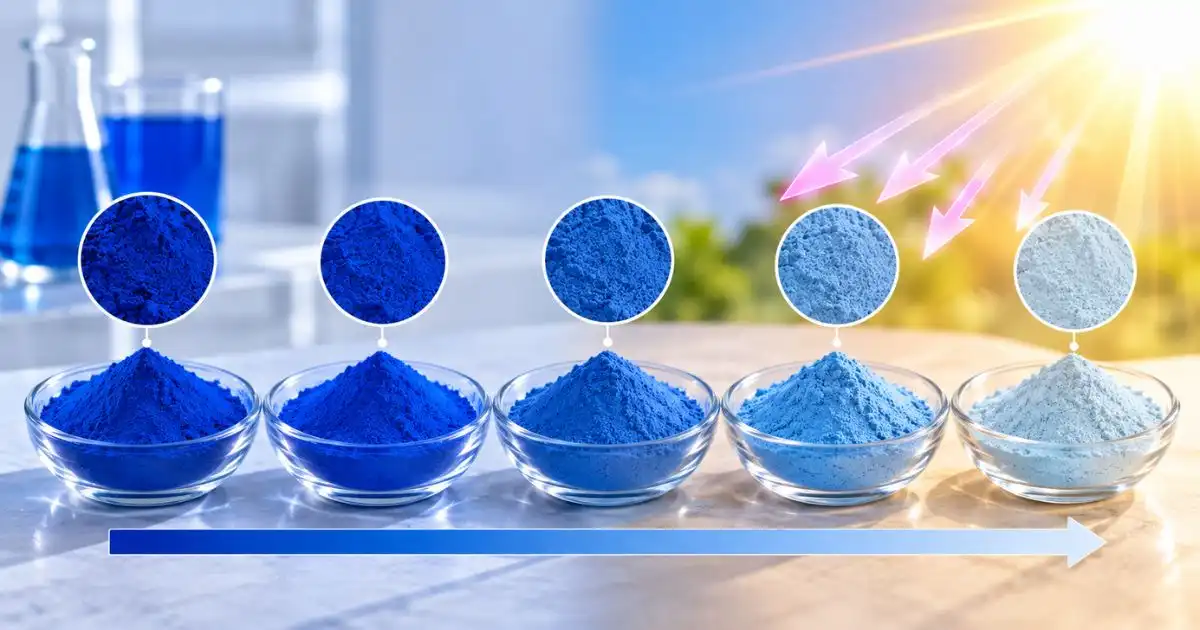
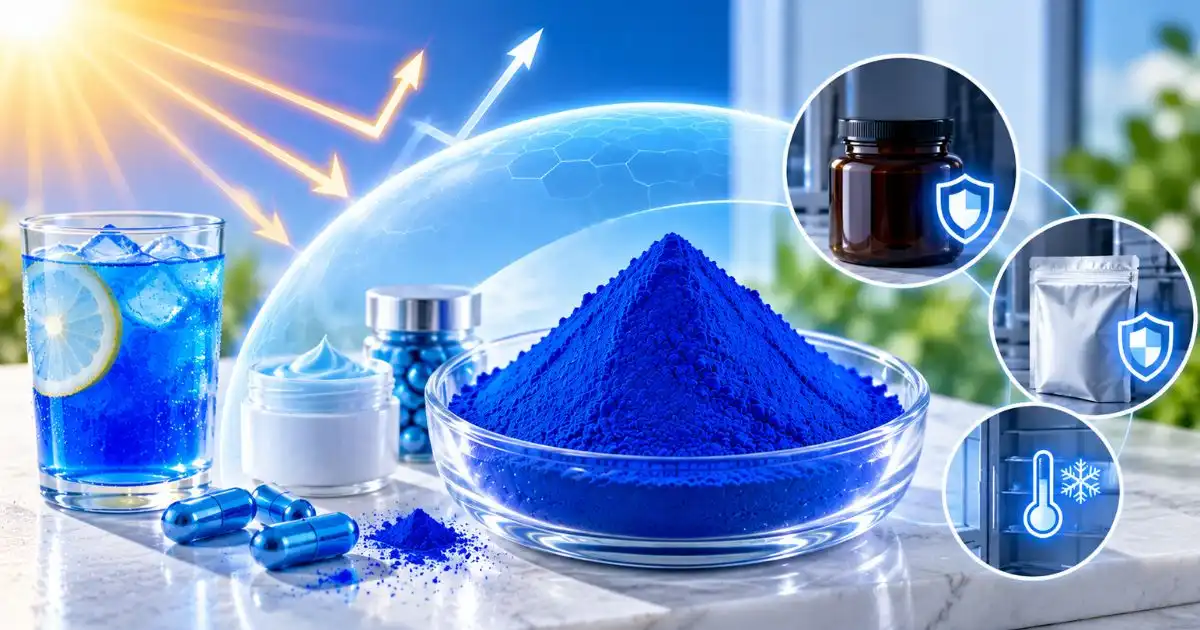
UV light is one of the most significant environmental factors that accelerates color degradation in blue spirulina E18. Phycocyanin, the protein-pigment complex responsible for that brilliant blue hue, absorbs UV radiation directly, which triggers photo-oxidation at the chromophore level. This reaction breaks down the tetrapyrrole chromophore structure, causing a visible shift from vivid blue toward pale green or gray. Research shows that unprotected phycocyanin solutions can lose over 50% of their color value within 48 hours of direct light exposure. For food and supplement manufacturers, this makes UV protection a non-negotiable part of formulation and packaging strategy.
Understanding Blue Spirulina E18 and Its Color Properties
What Is Phycocyanin and Why Does It Matter?
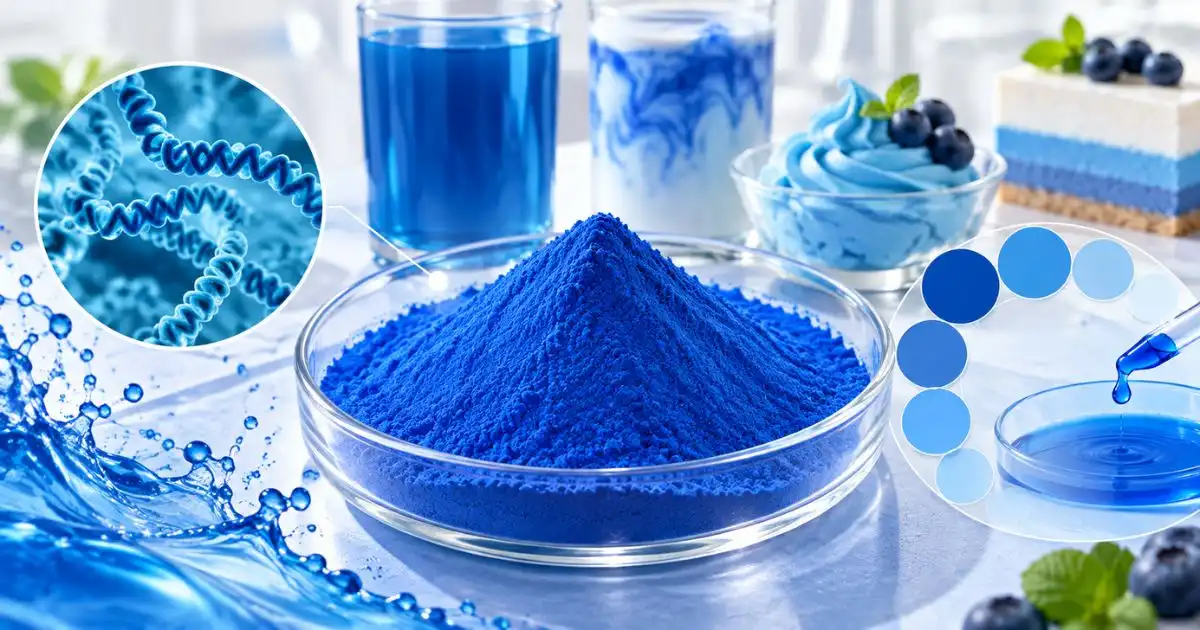
Phycocyanin is a protein with two parts that comes from spirulina, or Arthrospira platensis. It is made up of protein parts that are strongly linked to phycocyanobilins, which are chromophores with an open chain. These chromophores take in light at around 618 nm, which gives the color a cyan-blue tint. The chromophore is directly exposed inside the protein matrix, which makes it easy for it to join with UV light-generated reactive oxygen species. On its own, this makes the color light-sensitive.
What Does "E18" Actually Mean?
A certain color value is represented by the number E18: E1% at 618 nm = 180. There is no wrong way to figure out how much color is in a certain amount of mass. The price of color changes directly with its E value. A higher E value means that more color is used per gram. When it comes to different uses, Yangge Biotech has three different color value ranges:
| Specification | Color Value (E1% 618nm) | Typical Application | Phycocyanin Content |
|---|---|---|---|
| E10 | ≥ 100 | Superfood mixes and nutritional powders | ~15% |
| E18 | ≥ 180 | Functional drinks, gummies, and dairy | 25% |
| E25 | ≥ 250 | High-color-demand goods, makeup | ~35% |
To meet standard blue spirulina E18, Yangge Biotech keeps one ton of Kosher/USP-grade goods in stock. With this, it's a good choice for brands that want to get the best of both price and color performance.
Why Color Stability Directly Affects Brand Value
Uniform color isn't just a matter of taste; it also shows how good a product is. People don't trust a treat right away if it ships bright blue but tastes dull green. Color must be the same from batch to batch for brands that want to build a clean-label reputation around natural colorants. If phycocyanin is exposed to UV light for a short time while being shipped or displayed in a store, it can change how the product looks before it gets to the customer.
How UV Light Impacts the Color Stability of Blue Spirulina E18
The Photodegradation Mechanism
The tetrapyrrole chromophore is broken down by reactive oxygen species that are made when UV light hits phycocyanin molecules. The conjugated double-bond system that soaks up blue light is broken by this oxidation. This drops the E number and changes the absorption point for good. Studies in the field of food chemistry have shown that phycocyanin breaks down in the presence of UV light using first-order kinetics. This means that the amount of light and the time it is exposed to either make color loss faster or slower.
Key Variables That Determine Fading Rate
There are three outside factors that affect how quickly UV light breaks down the color of blue spirulina E18:
- UV wavelength: The UVB wavelengths (280–315 nm) break down things faster than the UVA wavelengths (315–400 nm). UVA rays are always hitting things that are kept in shops with artificial lighting.
- Exposure duration: If the packing doesn't protect the colors, even low-intensity UV light from storage lighting can fade them over time.
- Oxygen availability: This process needs oxygen, which is easy to find in big amounts. Chromatin breaks down much more slowly in packing that has been nitrogen-flushed or vacuum-sealed, even when the light is the same.
They can choose which safety measure to use first based on how their product is sold and distributed if they know these things.
pH and Temperature as Compounding Factors
UV sensitivity doesn't work by itself. The pH level should be between 5.0 and 7.0 for it to be stable. When the temperature is not in this range, oxidative stress is more likely to hurt the chromophore. Heat above 45°C speeds up the same rusting process that UV does. This means that a product kept in a clear box at a high temperature can go bad in more than one way at the same time. When testing for shelf life, this is a risk that needs to be thought about.
Comparing Blue Spirulina E18 with Alternatives Regarding UV Stability
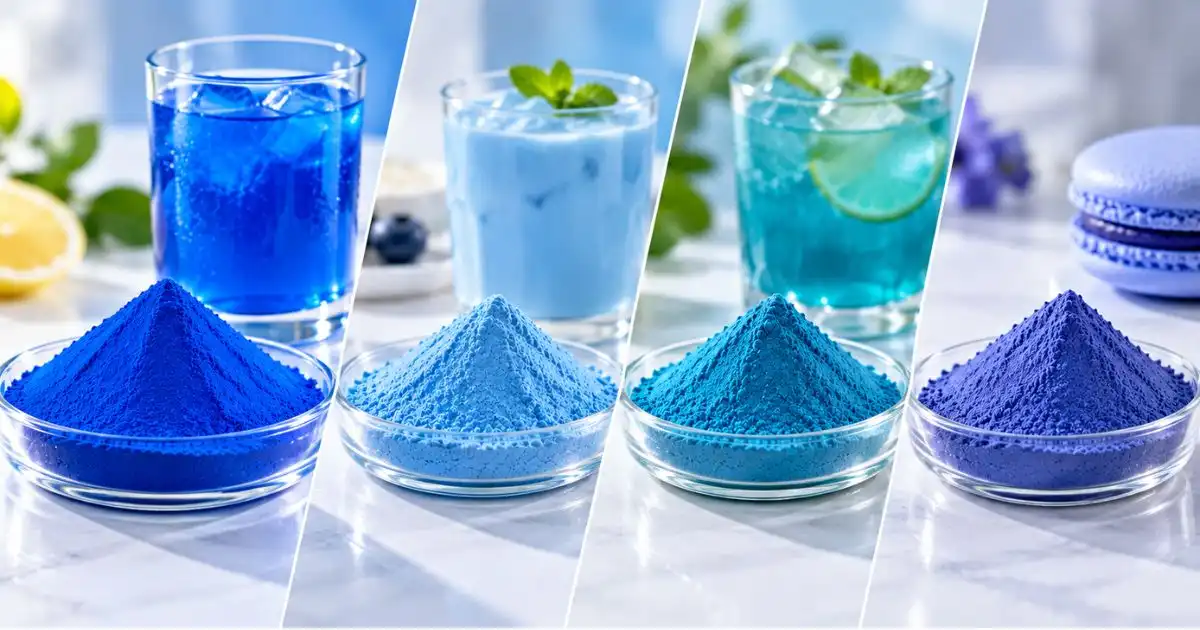
It's useful to know how phycocyanin reacts to UV light compared to other plant-based colors like indigo. It is very sensitive to UV light, stays stable at pH levels 5.0 to 7.0 and below 45°C, and fully dissolves in water. There is some UV light damage to butterfly pea flowers, but they stay stable at pH levels 3.5 to 7.0 and can be dissolved in water.
| Colorant | UV Sensitivity | pH Stability Range | Heat Resistance | Water Solubility |
|---|---|---|---|---|
| Phycocyanin (E18) | High | pH 5.0–7.0 | < 45°C | 100% |
| Butterfly pea flower | Moderate | pH 3.5–7.0 | Moderate | High |
| Indigo (plant-based) | Low | Broad | Good | Limited |
| Synthetic Blue #1 | Very low | Broad | Good | 100% |
An interesting thing about phycocyanin is that it is both a useful protein and an antioxidant. The E18 standard from Yangge Biotech has 60% to 70% total protein and 25% phycocyanin. This means that companies can use the same label to market both the color and the health benefits.
A man-made color or another plant-based material can't match that placement's two functions. Photodegradation is also less likely if you choose a high-quality blue spirulina E18 over ones that aren't as pure. When exposed to UV light, lower-quality spirulina powders have more dead cells, which speeds up the oxidation process.
Best Practices for Protecting Blue Spirulina E18 from UV-Induced Color Fade
Phycocyanin needs to be packed, stored, and prepared in a way that protects it from UV damage. Companies that make supplements and food should protect their goods in these main ways:
- Choose UV-blocking packaging: Amber glass, opaque metal foil bags, and multi-layer polymer films with UV inhibitors are all things that photons can't pass through. You can get OEM bags from Yangge Biotech in 60g, 100g, and 8oz sizes. The barrier materials are UV light-resistant.
- Store below 25°C in dark conditions: The lighting in buildings makes the UV rays stronger over time. Keeping products or bulk ingredients that contain phycocyanin in cool, light-controlled areas makes the color last a lot longer.
- Add post-heat: Phycocyanin breaks down above 45°C, so add it after any step that involves heat. Flash pasteurization (HTST) is best when you can't stay away from heat.
- Use nitrogen flushing or vacuum sealing: Removing oxygen from the packaging's air gets rid of the reactant that photo-oxidation needs. The color won't fade as quickly, even if some UV light gets to the package.
- Adjust formulation pH to the 5.5–7.0 range: Proteins are less likely to become denaturated when the matrix stays in this range, which makes UV-induced chromophore exposure worse.
These plans go together. Even if you use packaging that blocks UV light, if you store the blue spirulina E18 in a warm, oxygen-filled space, it will still fade, just more slowly. All factors must be taken care of at the same time to fully protect.
Procurement Insights: Securing High-Quality Blue Spirulina E18 with Optimal UV Resistance
It's just as important to choose the right phycocyanin provider as it is to choose the right formulation method. A supplier's quality checks will show you exactly how much UV damage blue spirulina E18 has already gotten before it gets to your location.
What to Verify in a COA
Ask for an analysis certificate that shows the E1% color value at 618 nm, the A618/A280 purity ratio (which must be higher than 2.0 for food-grade purposes), and the heavy metals profile (with lead and arsenic levels below 2 ppm). Because of these numbers, the quantity of the pigment has not already been reduced by being stored badly or being exposed to light for a long time.
Sample Testing Before Bulk Commitment
Before you place a 25 kg order, ask for a sample and do your own quick photostability test. The E number that is still there after 24 hours of being under a normal UV lamp (UVA, 40W) at 25°C should be found. As long as you handle an E18 ingredient correctly, it should keep more than 80% of its original color in a lab setting.
Yangge Biotech's Supply Assurance
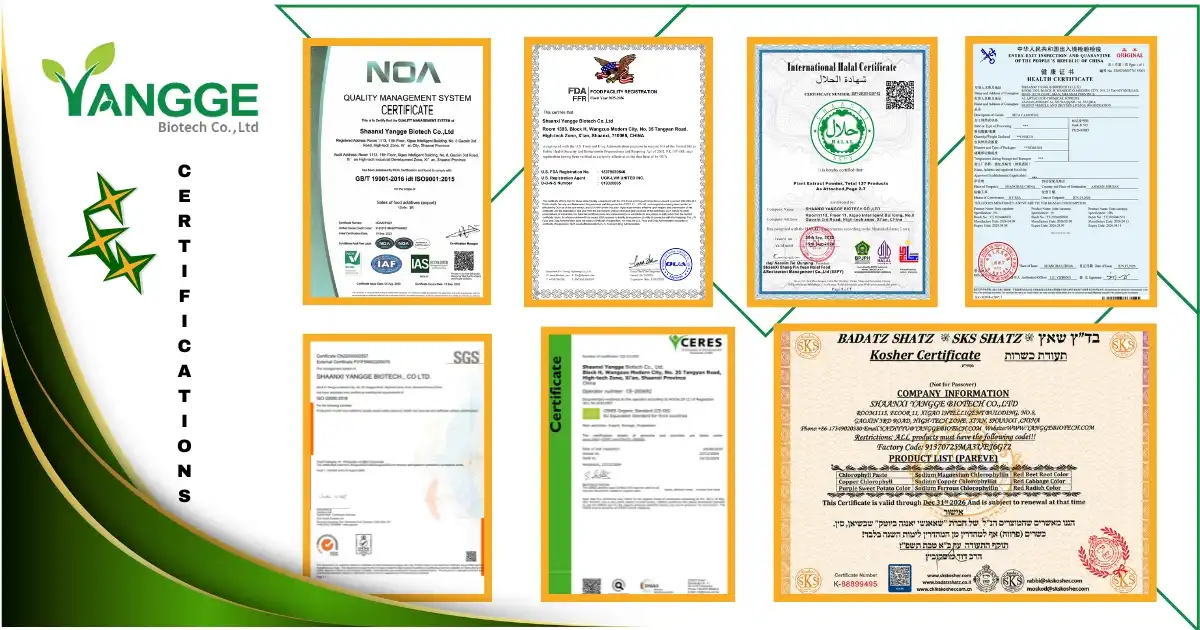
Yangge Biotech always has one ton of E18 on hand. It is Kosher and USP-grade, and HPLC was used to separate it to make sure it dissolves totally in water. You can send the thing by air, sea, DHL, or FedEx. Brands can get UV-protected packaging that is ready to sell from the supplier level. The OEM bag sizes are 60g, 100g, and 8oz.
Conclusion
When UV light hits phycocyanin, it breaks down. This lowers the E value and color brightness of blue spirulina E18 for good. The rate of breakdown depends on the air level, temperature, pH, shape of the UV light, and the length of time it is in touch with the substance. Brands can keep the color true and still make money if they store and package their products in a way that blocks UV light and choose the right specification. Working with a certified, well-stocked supplier removes the upstream risk of receiving already-degraded pigment.
FAQ
Does UV-induced color fading in phycocyanin affect its nutritional value?
Yes. Antioxidants work less well when the reaction process that breaks down the chromophore is going on. Phycocyanin can get rid of free radicals in part because it has a full chromophore structure. In other words, missing color makes something less useful.
Can faded phycocyanin color be restored?
After being exposed to light, the tetrapyrrole chromophore can't be turned back on. As soon as the conjugated double-bond system is broken, there is no way to bring back the blue absorption at 618 nm.
What is the recommended shelf life for properly stored E18?
Yangge Biotech's blue spirulina E18 will stay the same color for 24 months after it was made as long as it is kept below 25°C in sealed, UV-blocking containers that are not in direct sunlight.
Is E18 safe to use in products even after some light exposure?
A small amount of contact does not make the ingredient dangerous; it may just make the color work less well than what is required by E18. In methods that depend on color, you should always check the current E number first.
Does Yangge's E18 carry regulatory clearance in the US?
Yes, the FDA agrees that 21 CFR 73.530 does not say that spirulina extract needs to be approved as a color element. The E18 from Yangge Biotech is also Kosher and USP-grade.
Partner with Yangge Your Trusted Blue Spirulina E18 Supplier
With proven E1% 180, 25% phycocyanin, and 100% water absorption, Yangge Biotech's blue spirulina E18 is Kosher and USP-graded. They also have one ton of ready-to-ship stock. Our team can help you with your recipe from the first sample to the large scale, whether you need OEM bags (60g, 100g, or 8oz) or a lot of sales.Contact us or you can email us at info@yanggebiotech.com or visit our blog at blog.yanggebiotech.com right away to get a sample, a technical datasheet, or bulk pricing.
References
1. Chaiklahan, R., et al. "Stability of Phycocyanin Extracted from Spirulina sp." Process Biochemistry, 2012.
2. Jespersen, L., et al. "Photodegradation of Phycocyanin from Cyanobacteria." Food Chemistry, 2005.
3. Mishra, S. K., et al. "Antioxidant Potential of C-Phycocyanin and Its Photostability." Journal of Agricultural and Food Chemistry, 2008.
4. Martínez, J. M., et al. "Effect of Light and Temperature on the Stability of Phycocyanin." LWT – Food Science and Technology, 2020.
5. Romay, Ch., et al. "C-Phycocyanin: A Biliprotein with Antioxidant, Anti-inflammatory and Neuroprotective Effects." Current Protein & Peptide Science, 2003.
6. Eriksen, N. T. "Production of Phycocyanin — A Pigment with Applications in Biology, Biotechnology, Foods and Medicine." Applied Microbiology and Biotechnology, 2008.

Based on your location and order quantity, you will have the opportunity to receive a limited time free shipping promotion!
Who we are
Popular Blogs