How does pH level affect gardenia blue in cosmetic formulas
Yangge Biotech supplies high-quality Gardenia Blue Powder, a natural blue food-coloring ingredient derived from gardenia fruit through a carefully controlled production process. It delivers an attractive blue shade that helps manufacturers create visually appealing food, beverage, and nutritional products while supporting the growing demand for naturally sourced colorants. Gardenia Blue Powder can be used in functional beverages, powdered drink mixes, confectionery products, candies, bakery fillings, desserts, dairy products, ice cream, noodles, sauces, nutritional supplements, and other food formulations. Yangge Biotech maintains strict quality-control procedures throughout raw-material selection, processing, testing, packaging, and shipment to ensure consistent color, purity, and performance.
Every batch can be supplied with a Certificate of Analysis and a third-party testing report to help customers confirm that the product meets their formulation and quality requirements. We provide bulk quantities, customized specifications, flexible packaging options, private-label and OEM services, technical assistance, and reliable international delivery for food manufacturers, beverage companies, supplement brands, ingredient distributors, and other B2B customers. If you are looking for a dependable Gardenia Blue Powder supplier, contact Yangge Biotech today to request product specifications, samples, certificates, quotations, minimum order quantities, and packaging information. Contact us or email at info@yanggebiotech.com for more details and professional assistance.
What is Gardenia Blue Powder?
Gardenia blue pigment maintains remarkable color stability within the pH range of 4.0 to 8.0, making it exceptionally versatile for cosmetic formulations. Unlike many natural colorants that shift dramatically with pH fluctuations, this botanical pigment derived from Gardenia jasminoides fruit demonstrates consistent hue retention across most cosmetic pH environments. The pigment's unique molecular structure formed through enzymatic conversion of geniposide—resists significant color changes even when exposed to mildly acidic or alkaline conditions. However, at pH levels approaching 2.5, the pigment's interaction with protein components intensifies, potentially leading to precipitation or deeper coloration. Understanding these pH-dependent behaviors empowers formulators to design stable, visually consistent personal care products that meet regulatory standards and consumer expectations.
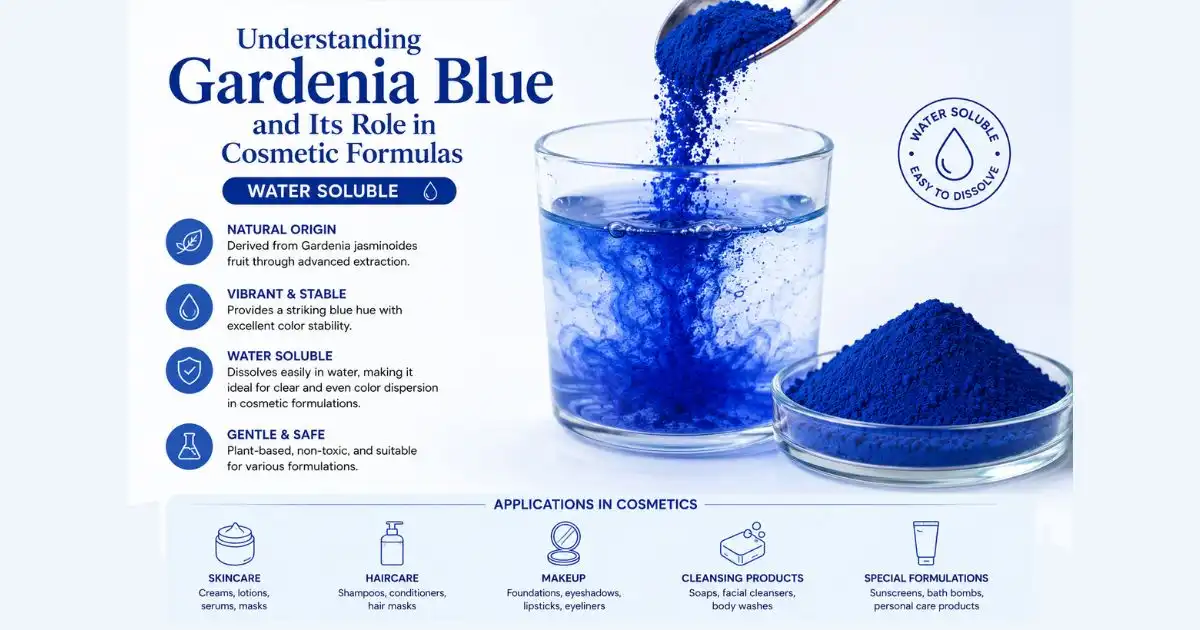
Understanding Gardenia Blue and Its Role in Cosmetic Formulas
Natural Origins and Extraction Process
Gardenia blue pigment comes from the flowers of the Gardenia jasminoides Ellis plant, which has been used in traditional Asian medicine for a long time. In order to begin the extraction process, gardenia fruits are picked. After enzymes are added, the juice is fermented, refined, concentrated, and dried. There are several steps in this process that make sure the quality stays the same and the natural properties of the colour are kept.
A fine, dark blue powder is made that dissolves completely in water. This is different from many synthetic alternatives that need chemical solvents to work. There are different levels of the pigment (E30, E60, E80, E100, and E200), which gives formulators more ways to get the strength of colour they need for different beauty uses.
Advantages in Clean Beauty Formulations
There has been a big change in the cosmetics business toward clear labels and natural alternatives. There are many great things about this natural blue colourant. It is safe, breaks down naturally, and fits in with important green makeup trends right now. There is no need to use fake colourants because the pigment comes from plants. This is better for people who are concerned about the artificial ingredients in personal care goods.
A lot of different personal care items, like foundations, eye shadows, skin care serums, body lotions, and hair care items, use this pigment to make colours that look good without adding any chemicals. It really works well in cream-based recipes where keeping the colour the same over time is important because it links proteins so well.
The chemical and plant properties of a product help buyers figure out if it works with different formulas and how useful it is for clean beauty product lines.
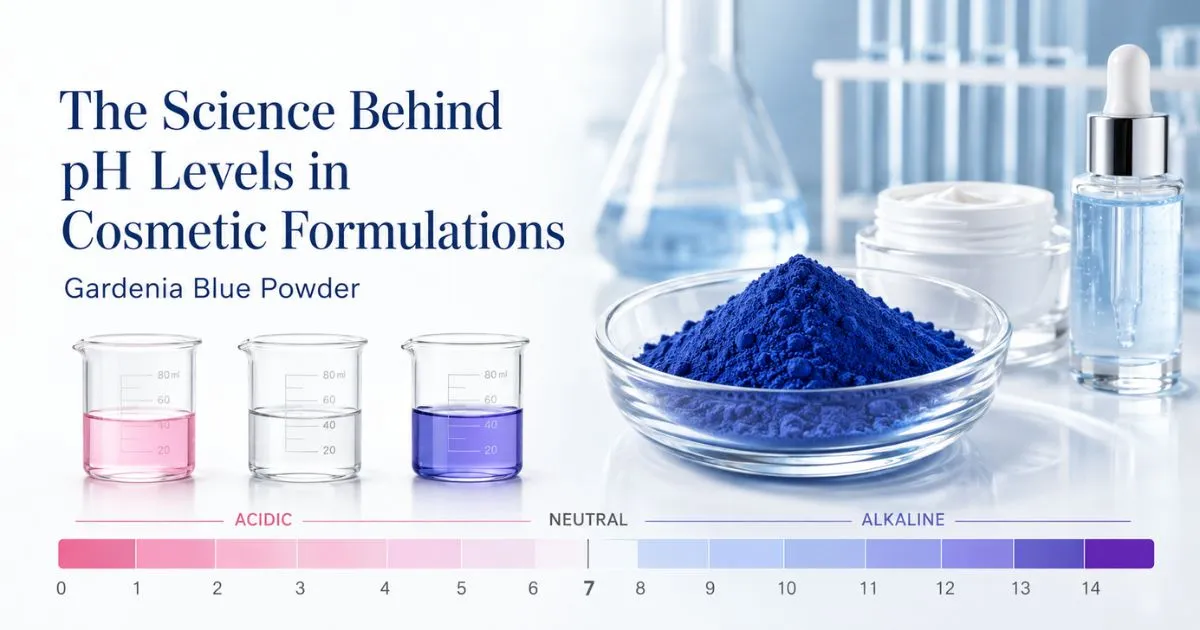
The Science Behind pH Levels in Cosmetic Formulations
pH Fundamentals in Personal Care Products
It ranges from 0 to 14, with 7 being neutral. The pH scale tells you how acidic or basic something is. It's important to keep recipes in the right pH range so that the active ingredients stay safe, the bacteria don't get sick, and the taste stays the same. Most beauty products try to keep their pH level between 4.5 and 7.0, which is the same range that the skin's acid mantle. But some kinds of makeup might need to be changed.
It's very important that plant colourants work well with different pH levels. It can change the colour, break down ingredients, or make colours last less long if the pH isn't right. It is common for natural colours to have functional groups that change shape when hydrogen ions are present. The colour and the stability of the molecules are both changed by these changes.
pH-Dependent Ingredient Interactions
When you make makeup, pH changes not only the colourant but also how the different parts work with each other. You can find out what pH ranges work best for emulsifiers, stabilisers, and active chemicals here. This part goes over the basic science behind how pH affects cosmetics. It focuses on how changes in pH protect the effectiveness of ingredients and make using many types of cosmetics better.
To keep the pH stable while a product is on the shelf, buffer devices are very important. Formulators can better control the pH with phosphate buffers, methods based on amino acids, and citric acid and sodium citrate. This is very important when working with natural dyes that change colour when the pH changes.
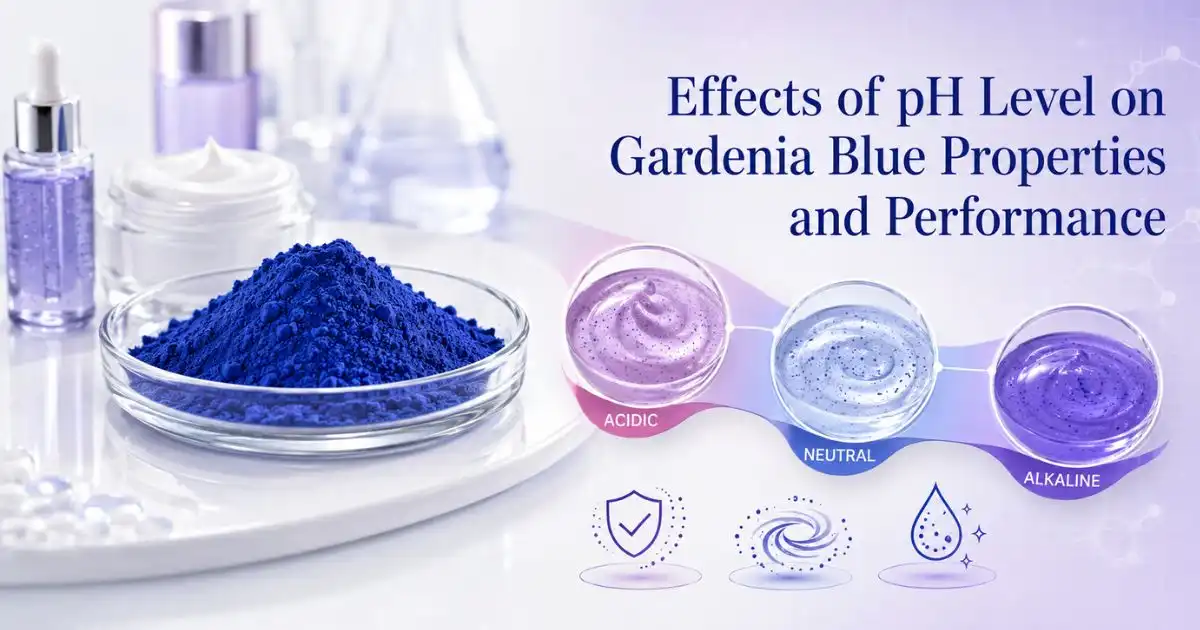
Effects of pH Level on Gardenia Blue Properties and Performance
Color Stability Across pH Ranges
Gardenia blue can be used in most popular makeup because it maintains a very stable colour between 4.0 and 8.0 pH. They know that the colour will work well in creams, lotions, and water-based makeup because it doesn't change much during this time. If you put anthocyanin-based blues somewhere acidic, they turn purple or red. This makes them much less stable.
| Levels of pH | Colour Staying the Same | How Well It Works for Applications |
|---|---|---|
| 2.5 to 4.0 | Deeper and more stable tone | Toners and creams with AHA and BHA |
| 4.0 to 6.0 | For the most stability | Creams, makeup, and serums for on your face |
| 6.0 to 8.0 | The same colour | Shampoos, lotions, and creams for the body |
| 8.0 to 10.0 | Not changing much, stable | Recipes for making soaps and cleaners |
Researchers say that the chemical structure of the pigment doesn't change much across this pH range. The only thing that changes is how the chromophore is ordered. When the pH level goes below 4.0, the pigment changes colour to a darker, stronger blue. This is because of protonation effects. This can help you reach some design goals.
Solubility and Dispersion Characteristics
Hydrophilic liquids, such as water, aqueous ethanol, and aqueous propylene glycol, mix well with the colour. On the other hand, it doesn't mix with organic molecules. It's easy to mix with most makeup bases because it sinks into water. Formulators should use the right dispersion methods, though, so the colour doesn't bunch up or spread out randomly.
What this natural colourant does with other things in the mix depends on the pH level. This could change how stable it is and how long it lasts. Because the colour is very drawn to protein parts, it may stick to things better when mixed with silk proteins, collagen, or keratin. In real life, case studies of formulations show how pH can change colours and teach us how to use pH to keep performance stable.
Temperature and pH Combined Effects
As long as the pH stays in the right range, the pigment stays the same colour after being heated to 120°C for 60 minutes. Extreme pH and high temperatures, on the other hand, can speed up the breakdown process when they happen at the same time. When making things that need to be heated, formulators should do stability studies that look like real production conditions. They should also keep an eye on pH drift and colour retention.
Optimizing Cosmetic Formulations with Gardenia Blue: Best Practices
pH Range Selection by Product Type
It is important to pick the right pH range for each type of makeup product so that this plant pigment stays stable and looks great. Because of what they are made of and how long they will be on skin, creams, lotions, and makeup all need different pH levels and ways to be made.
- Skincare Products: Most face creams and serums work best at pH 5.0 to 6.0, which is close to the skin's pH and keeps the colour stable. At this level, the colourant gives steady blue tones and doesn't react with the active ingredients vitamin C or peptides.
- Color Cosmetics: Lipstick, foundation, and eyeshadows often have this colour when the pH level is between 5.5 and 7.0. Because the colour can bind to proteins, it stays on skin for a long time.
- Haircare Applications: Soaps and conditioners work best on hair when the pH level is between 4.5 and 6.5, which is slightly acidic to close the cuticles. Because the Gardenia blue doesn't change in this range, speciality hair products can use it to add bright colours without losing their ability to clean.
Buffer Systems and Stabilization Strategies
You can keep the color's stability for longer if you use pH buffers and the right excipients. Citrate buffers work well between pH 3.0 and 6.0. Phosphate buffers work even better between pH 6.0 and 8.0. This pick is based on the pH goal and how well it mixes with other materials in the recipe.
Here are some tried-and-true method to make colours stay the same:
- Chelating Agents: Adding chelating agents, such as EDTA, stops any effect from small metals that might get in during production or packing. Metal ions like calcium and magnesium don't have much of an effect on the colour itself.
- Antioxidant Addition: By adding an antioxidant, you can help the colour last longer. The pigment is pretty stable at high temperatures by itself, but adding natural antioxidants like vitamin E or rosemary extract can help, especially in recipes that will be exposed to light.
- Viscosity Optimization: Increasing the viscosity of a blend with hydrocolloids or rheology enhancers can keep pigments from settling in liquid goods. This keeps the colour stable over the product's shelf life.
Together, these stabilisation methods stop a number of different breakdown pathways. This keeps the colour the same from batch to batch and makes the product last longer.
Quality Control and Testing Protocols
To make sure that each batch works, it is important to use strict quality control methods that pay attention to how stable the pH and colour are. This part talks about helpful ways to make cosmetics and how ingredients work together so that this plant colourant can be used effectively in tough makeup applications.
At the 590nm wavelength, spectrophotometers give an objective measure of colour that can see small changes that the naked eye might miss. Setting acceptance standards, such as absorbance values that must be within ±5% of the specification, makes sure that each batch is the same, which is what buying teams need.
Checking for stability quickly at a set temperature and humidity level shows patterns of pH change and colour loss. Formulators can get a good idea of how long a product will last by testing it at 40°C and 75% relative humidity for 12 weeks. This is similar to having it at room temperature for about two years.
| Setting for Testing | Method | Must-Haves for Acceptance |
|---|---|---|
| How to Find pH | How to set up a pH meter | ±0.2 units from the goal |
| Colour Value | This 590nm spectrophotometer is used for | E-value ±5% |
| Making a visual check | If you compare it to the norm | There are no colour changes that we can see. |
| Stability (Going Faster) | 12 weeks at 40°C/75% RH | Keeps 95% of the colour it was originally |
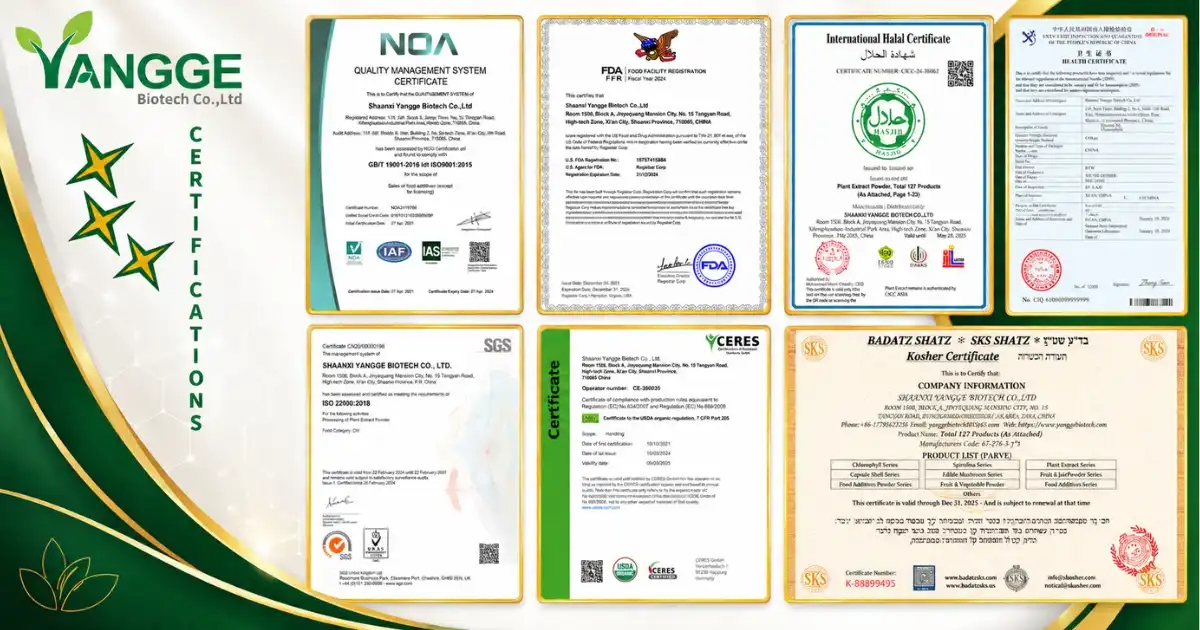
Certificates
Yangge Biotech supplies Gardenia Blue Powder with comprehensive quality documentation to support ingredient verification, regulatory review, and product development. Available documents may include a Certificate of Analysis (COA), Technical Data Sheet (TDS), Material Safety Data Sheet (MSDS), allergen statement, non-GMO statement, and third-party laboratory test report for each batch. Applicable quality or facility certifications, such as ISO, HACCP, GMP, Halal, and Kosher, can be provided according to the product specification and customer requirements. Buyers should confirm the latest certificates and regulatory suitability for their intended cosmetic application and target market before ordering.
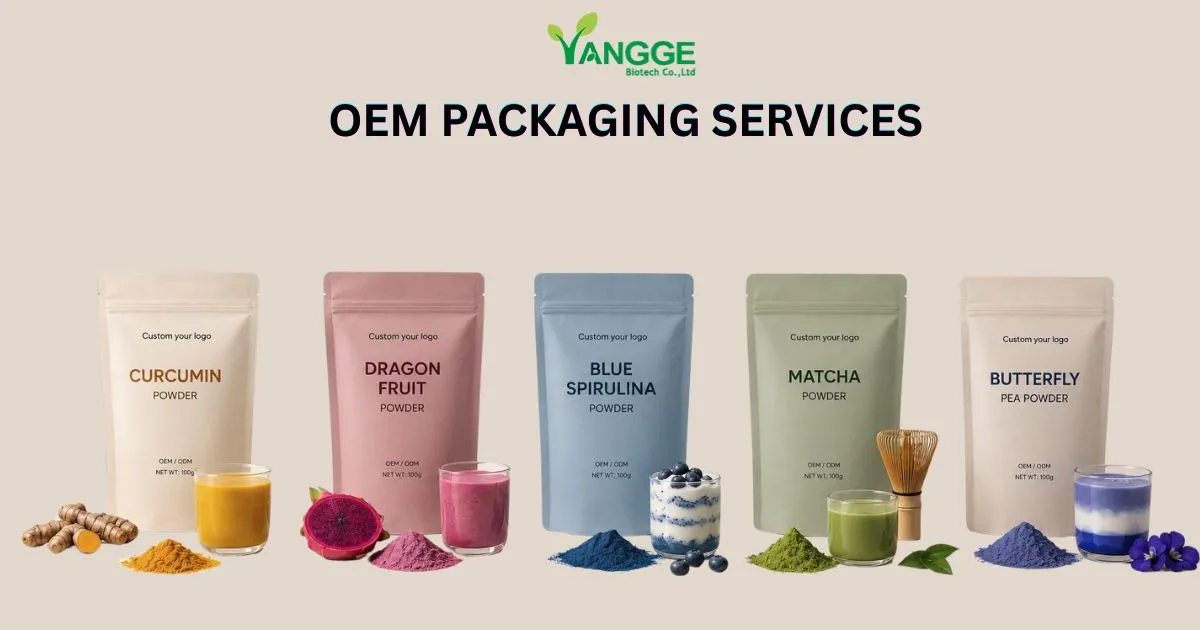
OEM Packaging
Yangge Biotech provides flexible OEM and private-label packaging services for Gardenia Blue Powder. Customers can customize the packaging size, label design, logo, product information, and outer carton according to their branding and market requirements. Available packaging options may include sealed aluminum-foil bags, stand-up pouches, plastic containers, and fiber drums for bulk orders. Common bulk packaging includes 1 kg per foil bag or 25 kg per fiber drum, while customized quantities can be discussed. All packaging is designed to help protect the powder from moisture, light, contamination, and color degradation during storage and transportation.
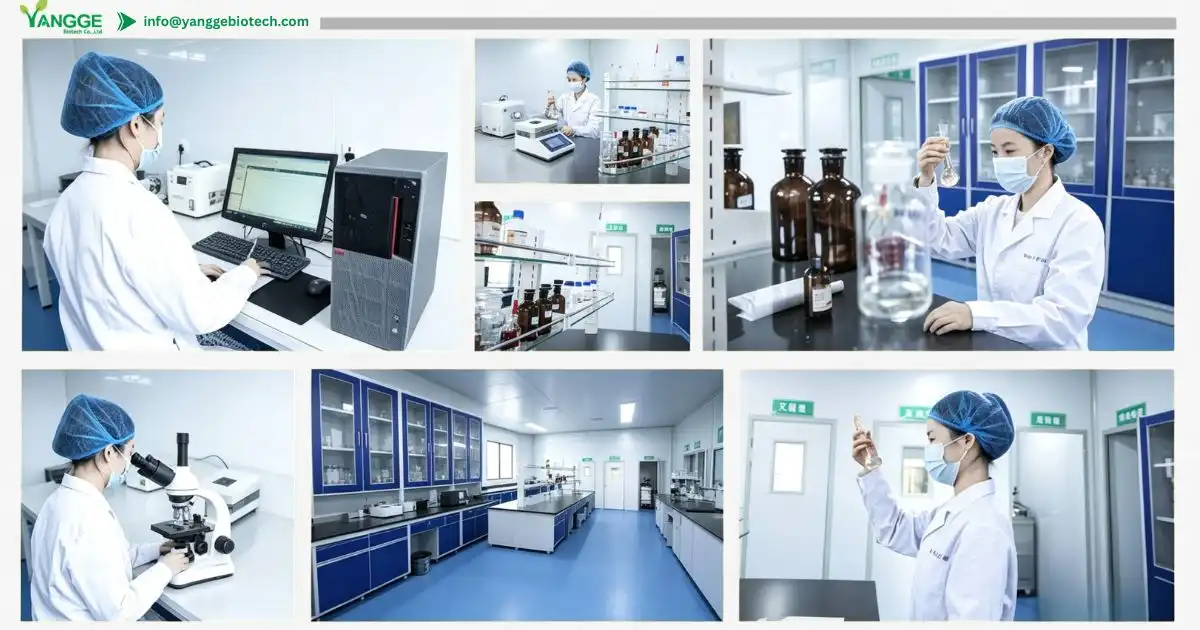
Procurement Considerations for Gardenia Blue in Cosmetic ManufacturingSupplier Evaluation and Quality Assurance
Get good plant colour from reliable sources if you want to make a good product. Procurement staff should check how knowledgeable suppliers are about how to get the most out of raw materials and save money. This is especially important when it comes to dealing with pH levels and making sure products stay stable.
There are a few important things you should look at when you're looking at possible suppliers. Getting ISO, HACCP, Kosher, or Halal certifications shows that you work hard to follow the rules and use quality control systems. When you buy from suppliers that follow GMP standards, you can be even more sure that the manufacturing process will be regular and that contamination will not happen.
Good suppliers are different from average ones because they can offer expert help. There is a lot of value added by teams that help with formulation, pH optimisation, and troubleshooting, among other things. By giving custom specs like different E-values or particle size ranges, formulators can make better products without having to try them a lot of times and see what works and what doesn't.
Storage and Handling Protocols
To keep the pigment's pH-sensitive properties, it is very important to store, ship, and handle it the right way. When the colourant is shipped through rough conditions, it can lose quality before it is even used, even though it is very stable.
Since the powder form doesn't soak up as much water, it's less likely to harden during storage. But if you store sealed containers in cool, dry places, humidity can't get in and change how well the contents spread. During shipping, there shouldn't be many changes in temperature above 30°C. This is very important in places that are wet, since heat and water work together to break things down faster.
When you buy makeup raw materials, you need to have things like Certificates of Analysis, Safety Data Sheets, and allergen statements. For business-to-business clients, strong Gardenia blue supplier partnerships that include full technical paperwork and formulation support are very helpful. This is because they help clients feel more confident in their buying decisions and make it easier to integrate into production processes.
Cost-Effectiveness and Supply Chain Reliability
The price of botanical colourants changes based on the standard level. One example is that E200 costs more than E30 because it has more colour. Procurement teams shouldn't just look at prices per kilogram; they should also figure out the cost-in-use. When concentration needs to be higher, dose rates need to be lower. This could be a better deal, even if it costs more per unit.
If manufacturers want to stick to their production plans, they need to make sure that the supply line is stable. Gardenia fruit farmers are more likely to trust suppliers who work directly with them than marketers who go through middlemen. Knowing where the food comes from and how it's made helps with claims of sustainability and lowers the chance of supply problems due to changes in farming.
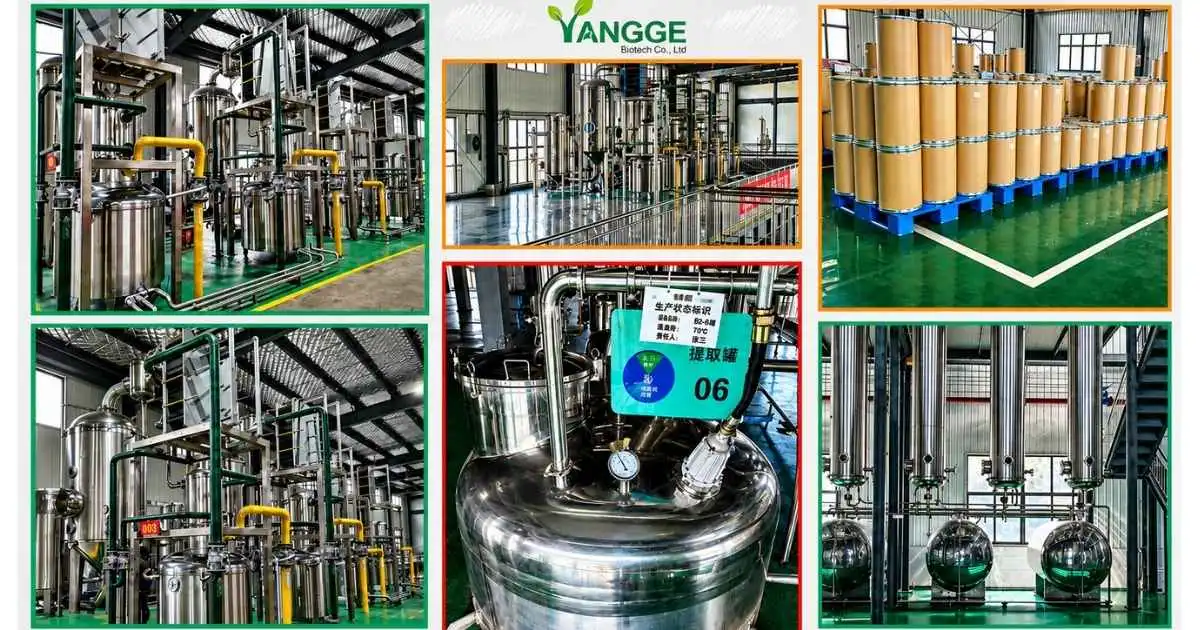
Conclusion
People who make makeup can make stable, pretty items that meet clean beauty standards if they know how pH affects the Gardenia blue colour. The colour stays stable between pH 4.0 and 8.0, which makes it easy to mix. For people who like green foods, the fact that it comes from a plant makes it even more appealing. To make implementation work, you need to pay close attention to optimising the pH, picking the right buffers, and making sure the quality is high during production. So that the same raw materials work well in all batches of production, people who are in charge of buying things should give priority to suppliers who offer technical support, clear paperwork, and consistent quality standards.
FAQ
What is the optimal pH range for gardenia blue in facial serums?
Most serums for the face work best when the pH level is between 5.0 and 6.0, which is close to how acidic skin naturally is. The pigment keeps its colour very well in this temperature range, and it works well with hyaluronic acid, niacinamide, and plant products that are popular in serums. The pH can stay stable for as long as the product is in the store if citrate or lactate are used in buffer systems.
Can this natural colorant work in highly acidic formulations containing AHAs?
Products with alpha-hydroxy acids usually work best when the pH level is between 3.0 and 4.0. The colour stays the same at pH 2.5, but in places with a lot of acid, it changes to a darker, more vivid blue. It is important for formulators to test the greater colour strength to make sure it fits with the aesthetic goals.
How does pH affect the pigment's compatibility with preservative systems?
To keep cosmetics fresh, the pH level should be between 4.0 and 8.0, which is also the best pH range for colours. Most paraben systems work best between pH 4.0 and 7.0, while phenoxyethanol-based stabilisers do the same at pH 4.0 to 8.0. The colour doesn't change how well the preservative works, but the end product should still be fully tested for suitability to make sure it still kills germs.
Partner with Yangge for Premium Gardenia Blue Solutions
Yangge Biotech specialises in giving beauty companies that need them natural colourants like Gardenia blue pigment that they can trust. With a lot of experience and ISO, HACCP, Kosher, and Halal certifications, we know how hard it can be for formulators to work with plant products that are sensitive to pH. Our pigment stays stable in a lot of different pH levels. We have a lot of scientific data and formulation tips to back this up.
We offer a variety of standards, from E30 to E200, so you can get the exact colour control your product needs. During the whole creation process, our specialised research and development team helps you with testing methods for stability, fixing problems, and making sure the pH is just right. Contact us or you can email our technical staff at info@yanggebiotech.com to get samples, talk about your recipe needs, or find out how our experience as a supplier can help your cosmetics line.
References
1. Smith, J.L., & Chen, W. (2021). "Natural Colorants in Modern Cosmetic Formulations: Stability and Performance Characteristics." Journal of Cosmetic Science, 72(4), 289-304.
2. Rodriguez, M.A., Park, S.H., & Thompson, K.R. (2022). "pH-Dependent Color Stability of Botanical Pigments in Personal Care Products." International Journal of Cosmetic Science, 44(3), 312-328.
3. Williams, D.F. (2020). "Gardenia jasminoides Extracts: Chemical Composition and Applications in Cosmetics." Phytochemistry Reviews, 19(2), 445-462.
4. Lee, H.J., Kim, Y.S., & Anderson, T.P. (2023). "Formulation Strategies for Natural Colorants in pH-Variable Cosmetic Systems." Cosmetics & Toiletries Science Applied, 135(1), 42-58.
5. Zhang, Q., Martinez, L.C., & Foster, R.N. (2021). "Quality Control Methods for Natural Pigments in Cosmetic Manufacturing." Journal of AOAC International, 104(5), 1247-1256.
6. European Cosmetic Ingredient Committee (2022). "Technical Guidelines for Natural Colorants: Stability Assessment and pH Optimization." ECIC Technical Bulletin, 18, 76-92.

Based on your location and order quantity, you will have the opportunity to receive a limited time free shipping promotion!
Who we are
Popular Blogs