How does gardenia blue compare to spirulina extract in food coloring
When choosing between natural blue colorants, procurement managers often weigh gardenia blue against spirulina extract based on stability, processing tolerance, and regulatory compliance. Gardenia blue demonstrates superior heat resistance—maintaining vibrant coloration even after heating at 120°C for 60 minutes while spirulina extract typically degrades above 60°C, limiting its application in thermally processed foods. This fundamental difference positions gardenia-derived pigments as the preferred choice for baked goods, confectioneries, and sterilized beverages where consistent color performance through manufacturing is non-negotiable.
What Is Gardenia Blue Powder?
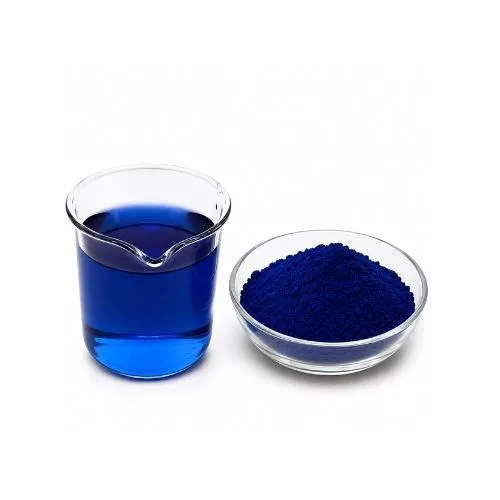
Yangge Biotech supplies high-quality Gardenia Blue Powder, a natural blue food color derived from gardenia fruit (Gardenia jasminoides). It is commonly produced by processing gardenia-derived pigments and is valued for its attractive blue shade and application versatility. Gardenia blue is widely used to color beverages, confectionery, dairy products, bakery foods, desserts, and other food products.
Gardenia Blue is often considered by food manufacturers looking for a plant-derived blue coloring solution. Compared with spirulina extract, gardenia blue may offer different shade characteristics, stability profiles, and application performance depending on the formulation and processing conditions.
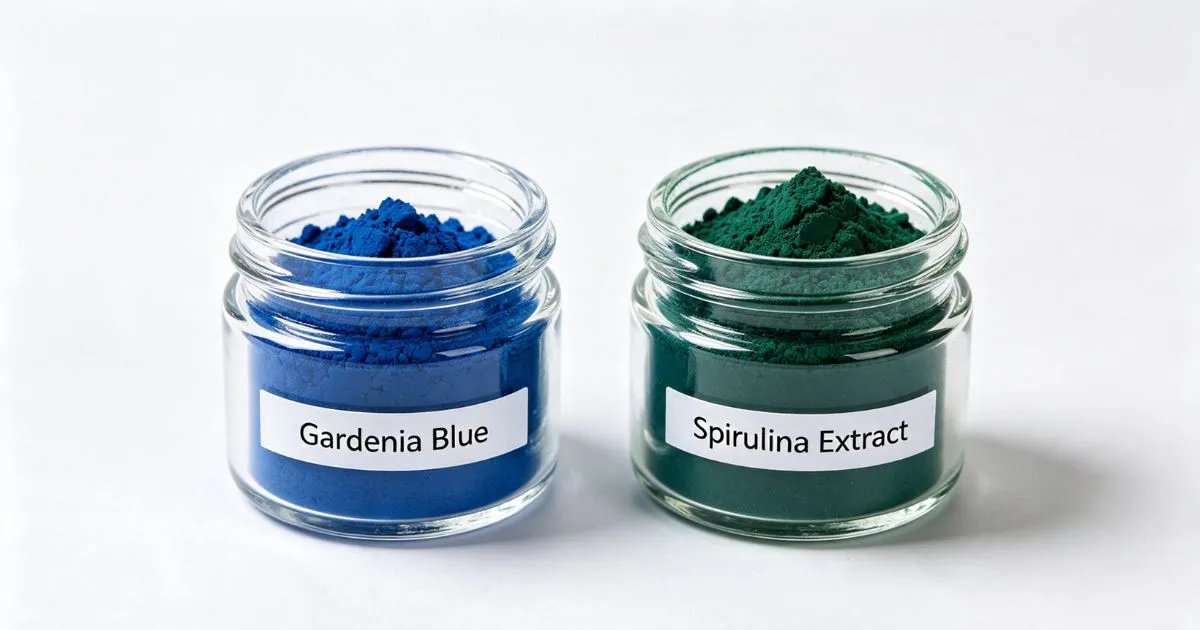
Gardenia Blue vs. Spirulina Extract for Food Coloring
| Feature | Gardenia Blue | Spirulina Extract |
|---|---|---|
| Source | Gardenia fruit | Spirulina algae |
| Color | Blue to blue-violet shades | Blue shades |
| Natural Origin | Plant-derived | Algae-derived |
| Vegan-Friendly | Generally yes | Generally yes |
| Water Solubility | Available in water-soluble forms | Available in water-dispersible or water-soluble forms |
| Common Applications | Beverages, confectionery, bakery, desserts, dairy products | Beverages, confectionery, dairy alternatives, desserts, functional foods |
| Key Consideration | Suitable for applications requiring gardenia-derived blue coloring | Popular for clean-label and natural blue coloring applications |
| Formulation Factors | pH, heat, light, and processing conditions should be evaluated | Stability can depend strongly on pH, heat, and processing conditions |
1. Gardenia Blue
Gardenia Blue is a natural blue color ingredient derived from gardenia. It can be used in a variety of food and beverage formulations where a blue or blue-violet appearance is desired. Its performance depends on the product's pH, temperature, storage conditions, and other ingredients.
2. Spirulina Extract
Spirulina extract is an algae-derived natural blue coloring ingredient. It is commonly used in food and beverage applications where manufacturers want to achieve a vibrant blue appearance from a natural source. It is often considered for applications such as beverages, confectionery, ice cream, and other food products.
Which One Should You Choose?
The choice between gardenia blue and spirulina extract depends on the target color, product formulation, processing conditions, regulatory requirements, and desired stability.
- Choose Gardenia Blue when you are looking for a gardenia-derived natural blue coloring ingredient.
- Choose Spirulina Extract when you prefer an algae-derived blue coloring solution.
- For products exposed to heat, light, or different pH conditions, application testing is recommended before commercial production.
Because natural colors can behave differently depending on the food matrix, manufacturers should conduct stability and compatibility testing during product development.
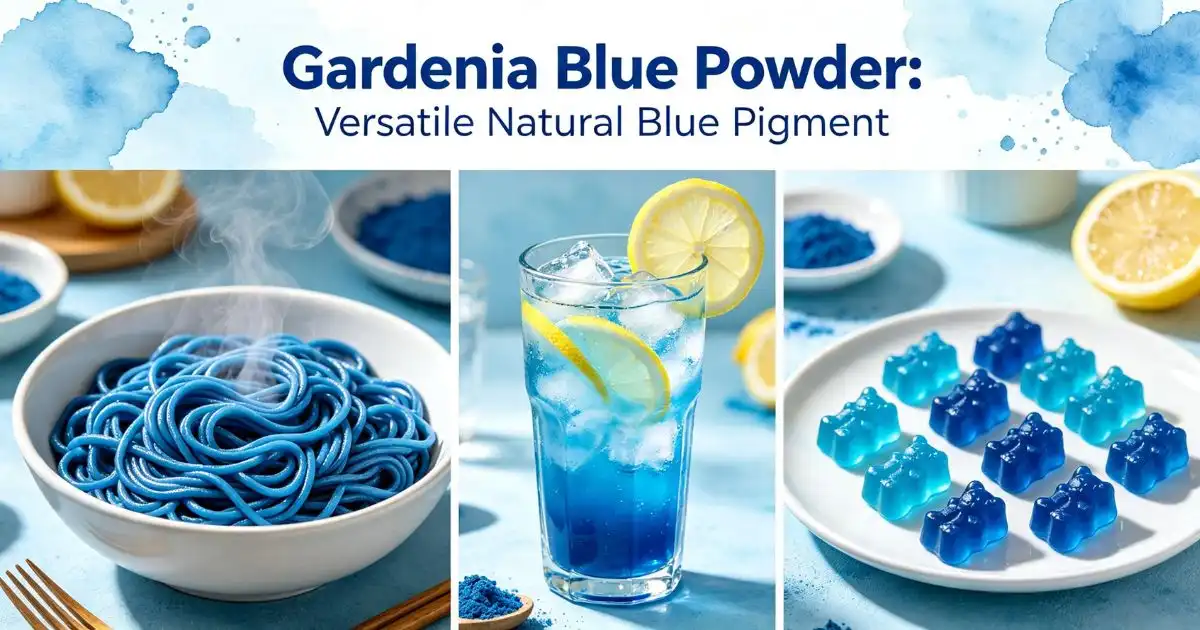
Applications of Gardenia Blue Powder
Gardenia Blue Powder can be considered for various food and beverage applications, including:
- Beverages and drink powders
- Confectionery and candy
- Jelly and desserts
- Bakery products
- Ice cream and frozen desserts
- Dairy and dairy-alternative products
- Food premixes
- Decorative food applications
The appropriate dosage depends on the desired shade, product formulation, and local regulatory requirements.
COA – Certificate of Analysis
The following is a sample specification table for Gardenia Blue Powder. Actual values should be confirmed according to the specific production batch and agreed product specification.
| Item | Specification |
|---|---|
| Product Name | Gardenia Blue Powder |
| Source | Gardenia Fruit |
| Appearance | Fine, uniform powder |
| Color | Blue to blue-violet |
| Odor | Characteristic |
| Solubility | Soluble or dispersible in water, depending on grade |
| Moisture | ≤ 8.0% |
| Ash | ≤ 10.0% |
| pH | According to product specification |
| Total Plate Count | Complies with applicable standards |
| Yeast & Mold | Complies with applicable standards |
| E. coli | Negative |
| Salmonella | Negative |
| Storage | Store in a cool, dry place away from direct sunlight |
| Shelf Life | Typically 24 months when properly stored |
Note: COA parameters and specifications may vary according to product grade, customer requirements, and applicable regulations. The official COA should be provided for the actual batch supplied.
Yangge Biotech Third-Party Test Report for Every Batch
At Yangge Biotech, quality control is an important part of our natural color ingredient supply process. Third-party testing can be arranged for every batch according to customer requirements and applicable product specifications.
Third-party testing may cover relevant quality and safety parameters, which can include microbiological testing, heavy metals, pesticide residues, and other analytical requirements depending on the intended application and destination market.
Providing batch-related quality documentation and testing support helps customers evaluate product consistency and maintain quality control throughout their manufacturing process.
R&D Capacity
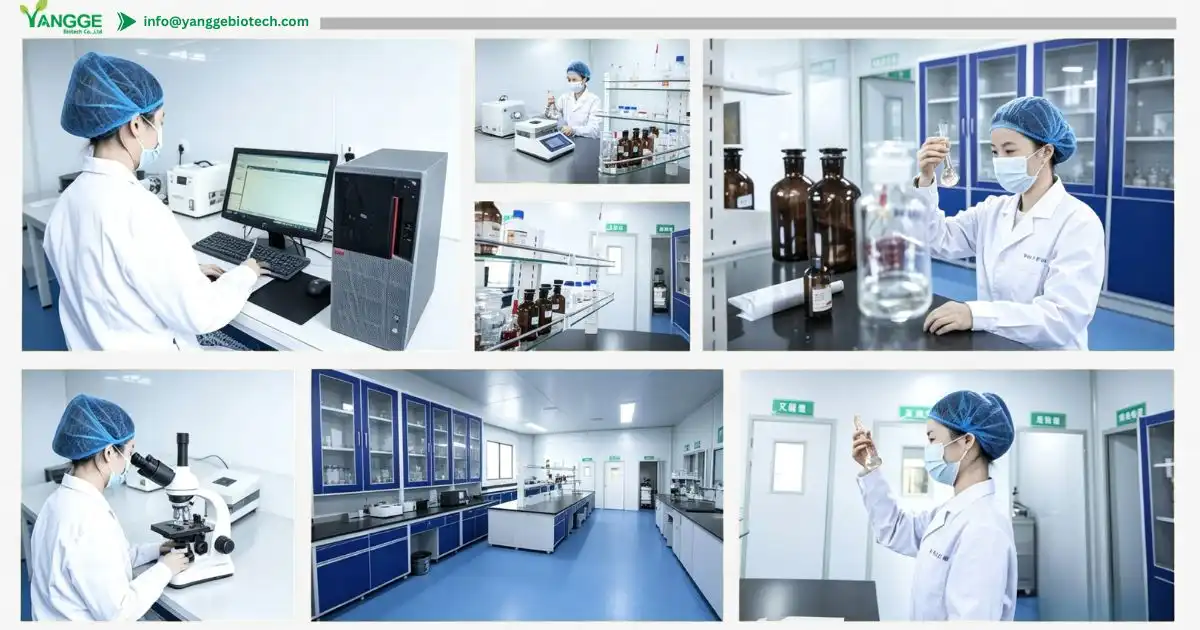
Yangge Biotech provides R&D and application support for natural food colors and functional ingredients. Our team can assist customers with product selection, color matching, formulation optimization, and application testing.
For Gardenia Blue Powder, R&D support can focus on evaluating color performance in different food matrices, including beverages, confectionery, desserts, and other formulations. Factors such as pH, heat processing, light exposure, storage conditions, and ingredient interactions can be considered during product development.
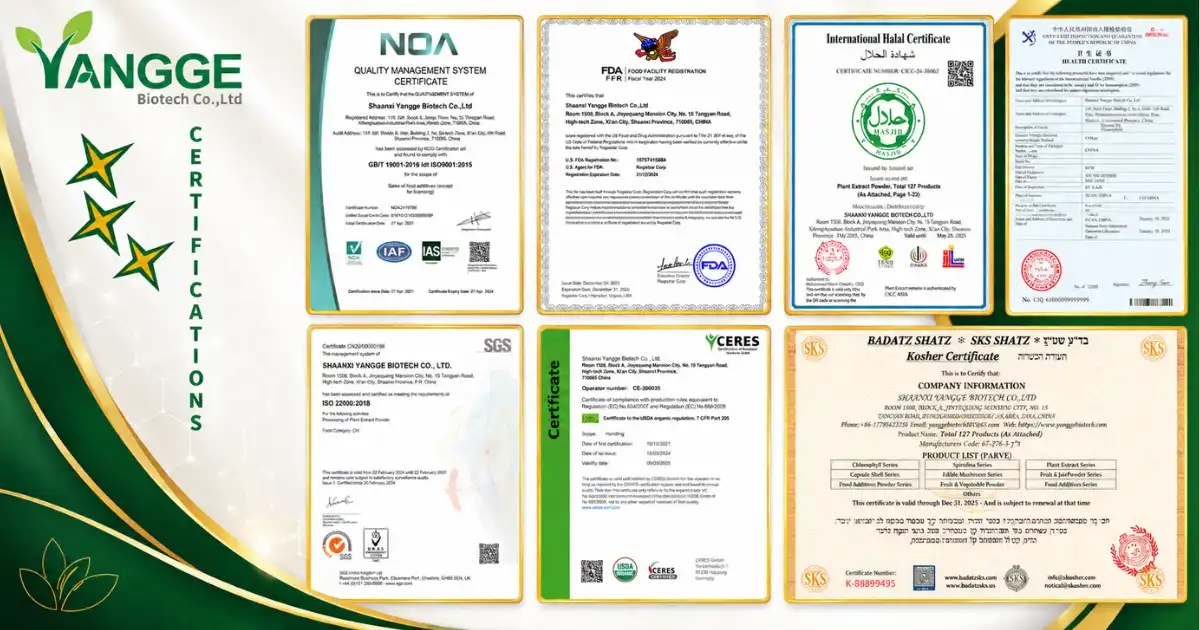
Certificates
Yangge Biotech can provide relevant quality and compliance documentation according to product requirements and customer needs. Depending on the product and market, documentation may include:
- Certificate of Analysis (COA)
- Product Specification Sheet
- Third-Party Testing Report
- Microbiological Test Report
- Heavy Metal Testing
- Pesticide Residue Testing
- Other applicable quality documentation
The availability of specific certificates and testing documents should be confirmed based on the selected Gardenia Blue specification and target market.
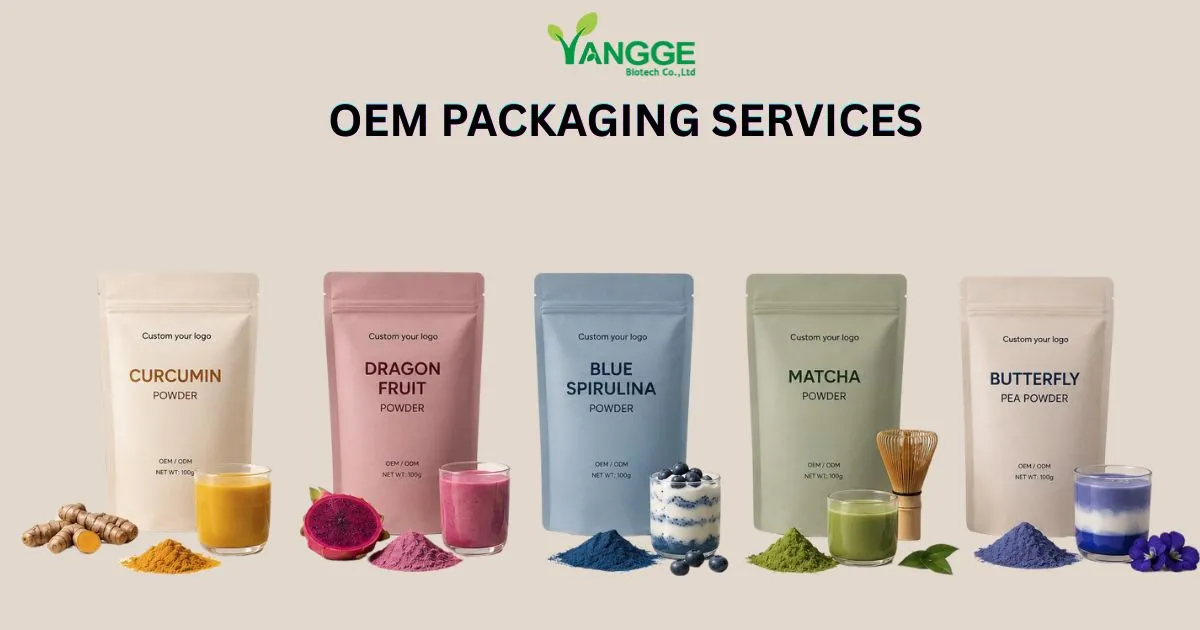
OEM Packing
Yangge Biotech offers OEM and customized packaging services for Gardenia Blue Powder. Packaging can be customized according to customer requirements, order quantities, branding needs, and target markets.
Available solutions may include customized labels, private-label packaging, different package sizes, and product information based on the customer's specifications.
OEM services are suitable for food manufacturers, distributors, wholesalers, ingredient suppliers, and brands developing their own natural food color products.
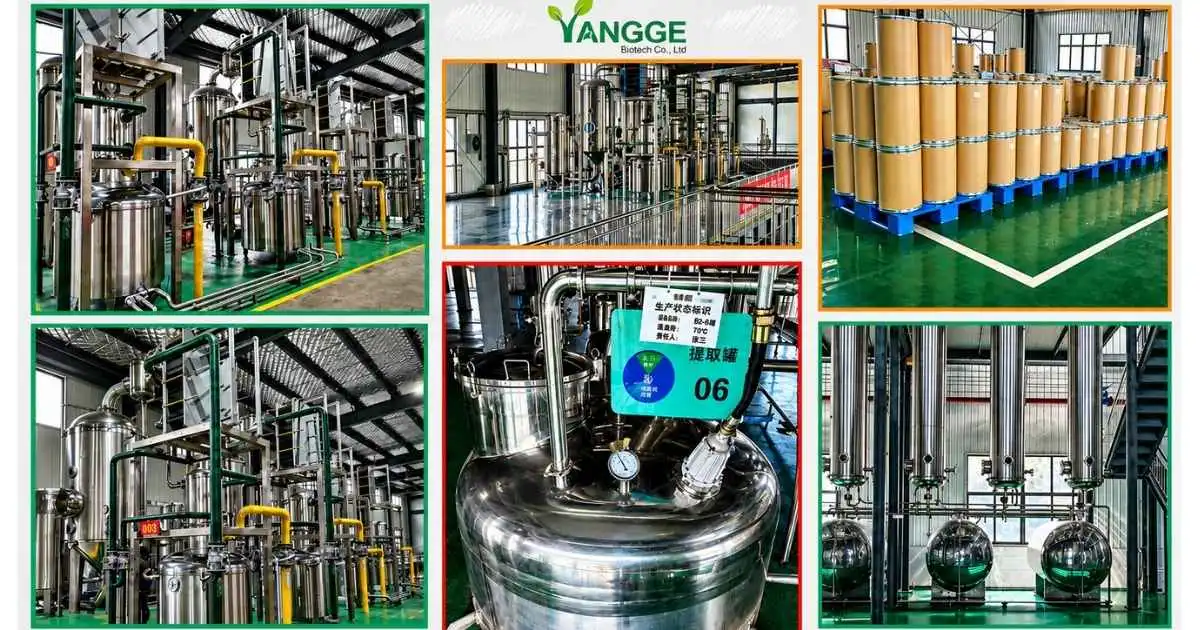
Why Choose Yangge Biotech?
High-Quality Gardenia Blue Powder
Yangge Biotech focuses on supplying high-quality natural color ingredients suitable for a range of food and beverage applications.
Professional Quality Control
We provide product specifications and quality documentation to help customers evaluate product consistency and suitability.
Third-Party Testing Support
Third-party testing can be arranged for every batch according to customer requirements, helping support quality verification and supply chain confidence.
R&D and Application Support
Our team can assist with product selection, formulation development, color application, and optimization for different food and beverage products.
OEM and Customized Packaging
We support private-label and customized packaging solutions for businesses seeking to develop their own branded products.
Flexible Supply Solutions
We work with customers to discuss specifications, packaging, documentation, and application requirements for different markets.
Conclusion
Gardenia Blue Powder and Spirulina Extract are both natural-origin options for developing blue-colored food and beverage products, but they come from different sources and may perform differently depending on the formulation. Gardenia Blue is derived from gardenia fruit, while Spirulina Extract is obtained from spirulina algae. The best choice depends on factors such as the desired color shade, product type, processing conditions, pH, stability requirements, regulatory considerations, and labeling preferences.
For manufacturers looking for a natural blue food coloring ingredient, Gardenia Blue Powder can be a valuable option for applications ranging from beverages and confectionery to desserts and other food products. With high-quality ingredient supply, batch testing support, R&D assistance, quality documentation, and OEM packaging services, Yangge Biotech aims to provide reliable natural color solutions for customers worldwide.
Contact Yangge Biotech to request Gardenia Blue Powder specifications, COA, third-party testing reports, samples, pricing, and OEM packaging options.
Partner with Yangge Biotech for Premium Gardenia Blue Solutions
Yangge Biotech can help you find natural colourants by putting together strong supply chain infrastructure and technical know-how. Our company is a recognised Gardenia blue producer that follows ISO, HACCP, Kosher, and Halal rules. We offer consistent, high-purity pigments in specs ranging from E30 to E200. Because our production is vertically merged, we can promise that all of our products can be tracked and that each batch will be the same, which is important for your quality needs. We start with getting fruit in a way that doesn't harm the environment and end with extracting and refining it in a way that follows good manufacturing practices. Technical support teams help you make your products by giving you recipe advice, making sure your products are stable, and helping you with paperwork. Contact us or email at info@yanggebiotech.com to talk about bulk prices, get sample specs, or set up tours of our facility to see how dedicated we are to quality and new ideas in natural plant extracts.
References
1. Chen, L., Zhang, Y., & Wang, Q. (2021). Stability and Application of Natural Blue Pigments in Food Systems: A Comprehensive Review. Food Chemistry, 342, 128-145.
2. Rodriguez-Amaya, D. B. (2019). Natural Food Colorants: Chemistry, Functional Properties, and Technological Applications. Journal of Food Science and Technology, 56(7), 3289-3304.
3. Martins, N., Roriz, C. L., Morales, P., Barros, L., & Ferreira, I. C. (2018). Food Colorants: Challenges, Opportunities and Current Desires of Agro-Industries to Ensure Consumer Expectations and Regulatory Practices. Trends in Food Science & Technology, 78, 162-178.
4. Newsome, A. G., Culver, C. A., & van Breemen, R. B. (2014). Nature's Palette: The Search for Natural Blue Colorants. Journal of Agricultural and Food Chemistry, 62(28), 6498-6511.
5. Sigurdson, G. T., Tang, P., & Giusti, M. M. (2017). Natural Colorants: Food Colorants from Natural Sources. Annual Review of Food Science and Technology, 8, 261-280.
6. Zhou, M., Jin, W., & Chen, K. (2020). Comparative Analysis of Thermal Stability and pH Tolerance in Plant-Derived and Algae-Based Natural Blue Pigments for Industrial Food Applications. International Journal of Food Science & Technology, 55(4), 1847-1859.

Based on your location and order quantity, you will have the opportunity to receive a limited time free shipping promotion!
Who we are
Popular Blogs