How Do You Choose Gardenia Blue Powder for Food, Drinks, and Smoothies?
Choosing the right gardenia blue powder starts with understanding your application's specific demands. This natural colorant, derived from Gardenia jasminoides fruit through enzymatic biotransformation of geniposide, delivers a stable blue hue across a broad pH range and withstands temperatures exceeding 100°C something most natural blue pigments cannot. For food manufacturers, beverage formulators, and cosmetic producers, the decision hinges on color value (E value), batch consistency, solubility, and regulatory compliance in your target market. Selecting the correct specification, from E30 to E200, directly determines your dosage efficiency and final product color performance.
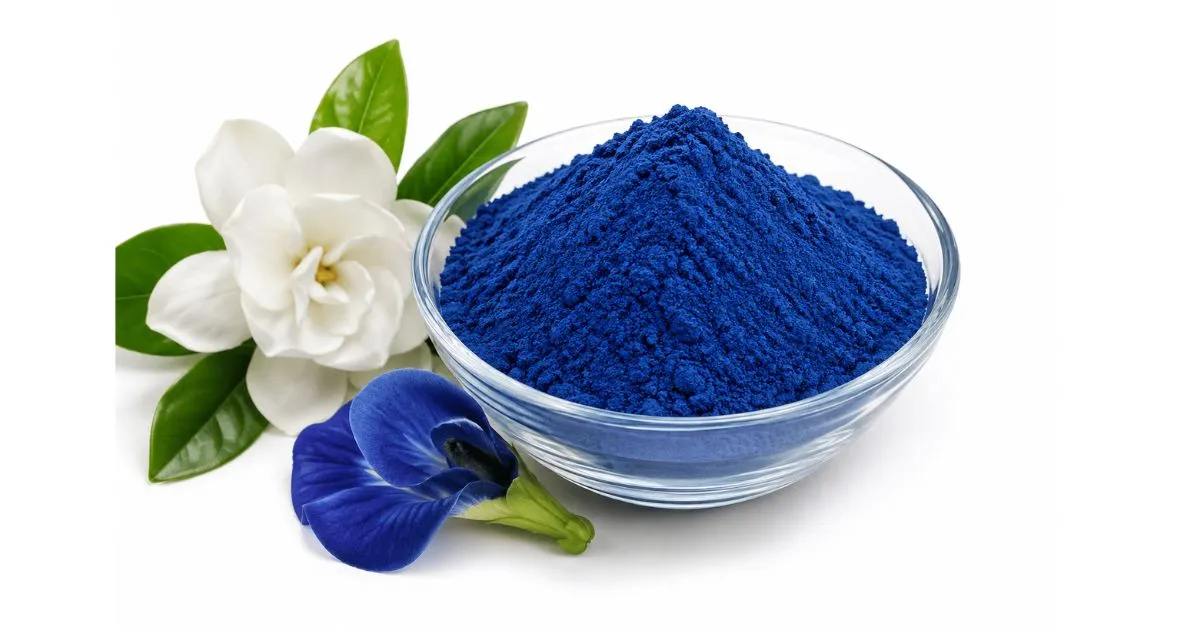
Understanding Gardenia Blue Powder: Key Properties and Benefits
Origin and Extraction Process
An iridoid glycoside called geniposide is found in the fruit of the Gardenia jasminoides plant. Enzymes are used to break it down, and then amino acids are added to make a stable blue color. Yangge uses an HPLC-checked extraction method to get a fine blue powder that mixes easily with water and watery ethanol but not with organic solvents. There are no man-made carriers in it because it comes from fruit, so it is a real plant-based colorant.
pH and Heat Stability
If the temperature goes above 100°C, the gardenia blue pigment stays blue. But if the temperature goes above 60°C, the spirulina blue pigment starts to break down. Because its color tone doesn't change much from pH 4.0 to 8.0, it's a good choice for hot baked goods, acidic drinks, and sweets. This steadiness makes it much less likely that the product will need to be reformulated or made again.
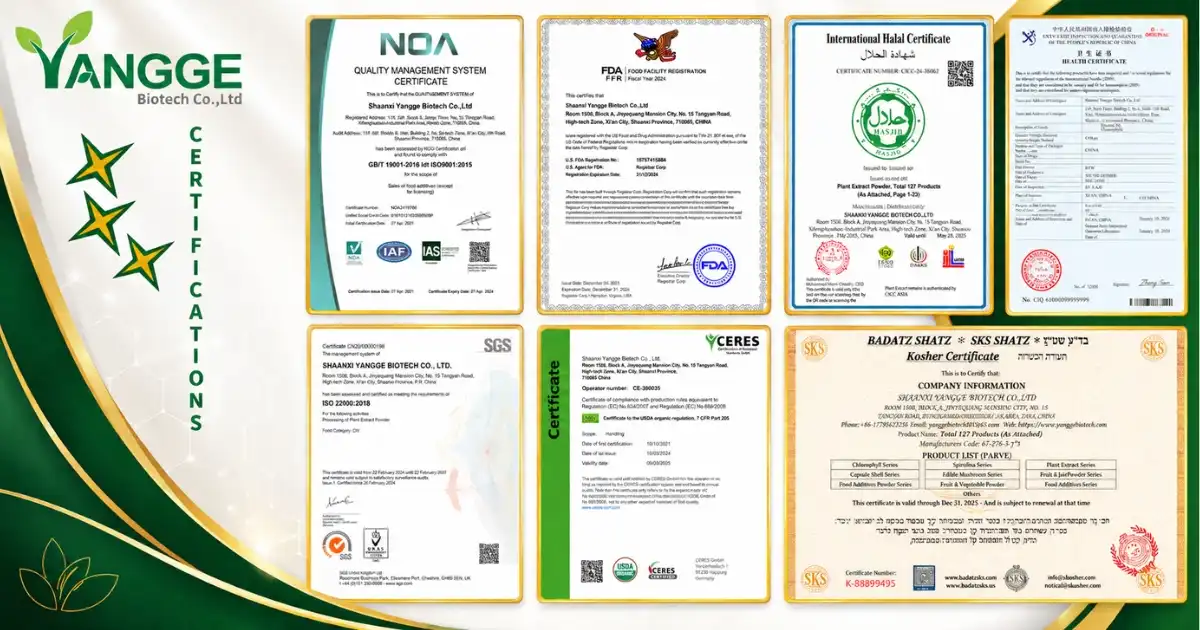
Certifications and Regulatory Standing
| Certification | Status |
|---|---|
| ISO | Certified |
| HACCP | Certified |
| Kosher | Certified |
| Halal | Certified |
| GMO-Free | Yes |
| Gluten-Free | Yes |
These things show that Yangge's gardenia blue extract is safe. Acceptance by authorities is different in each area. A lot of people in East Asia and some parts of Southeast Asia agree with it. Check the rules in your area about food coloring before you go live.
Storage and Shelf Life
Keep gardenia blue powder in a cool, dry, dark place in a package that keeps air out. A drop of water on the powder will make it stick together because it can soak up the water. Things that are stored in the right way keep their colors fresh and can be used for longer along your supply chain.
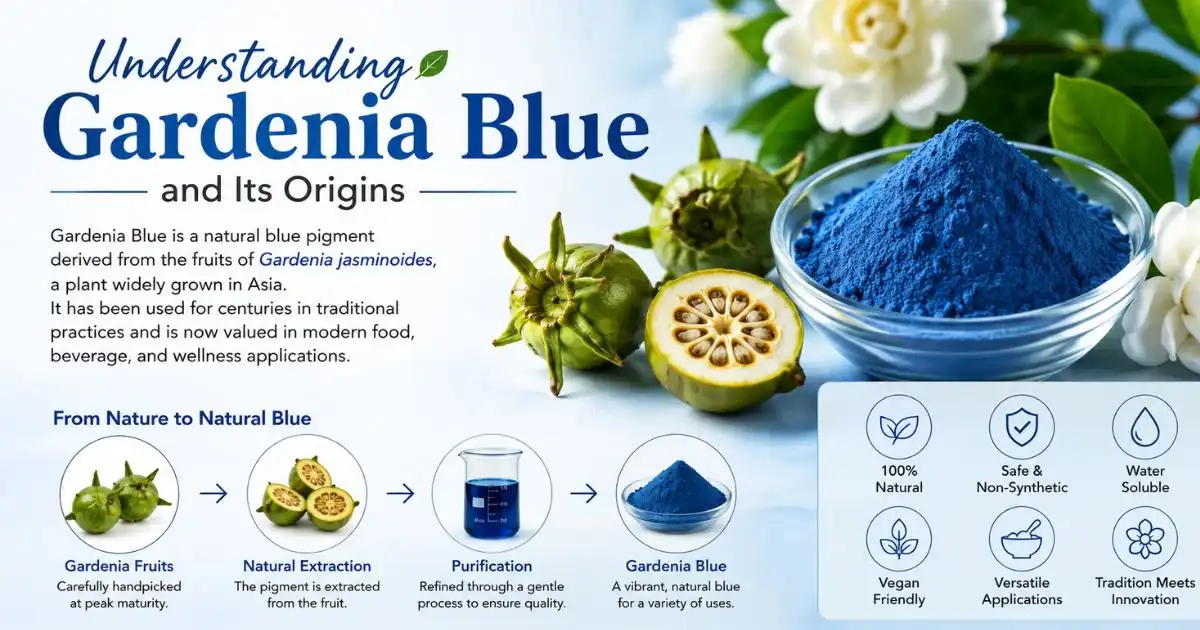
Criteria for Choosing the Right Gardenia Blue Powder
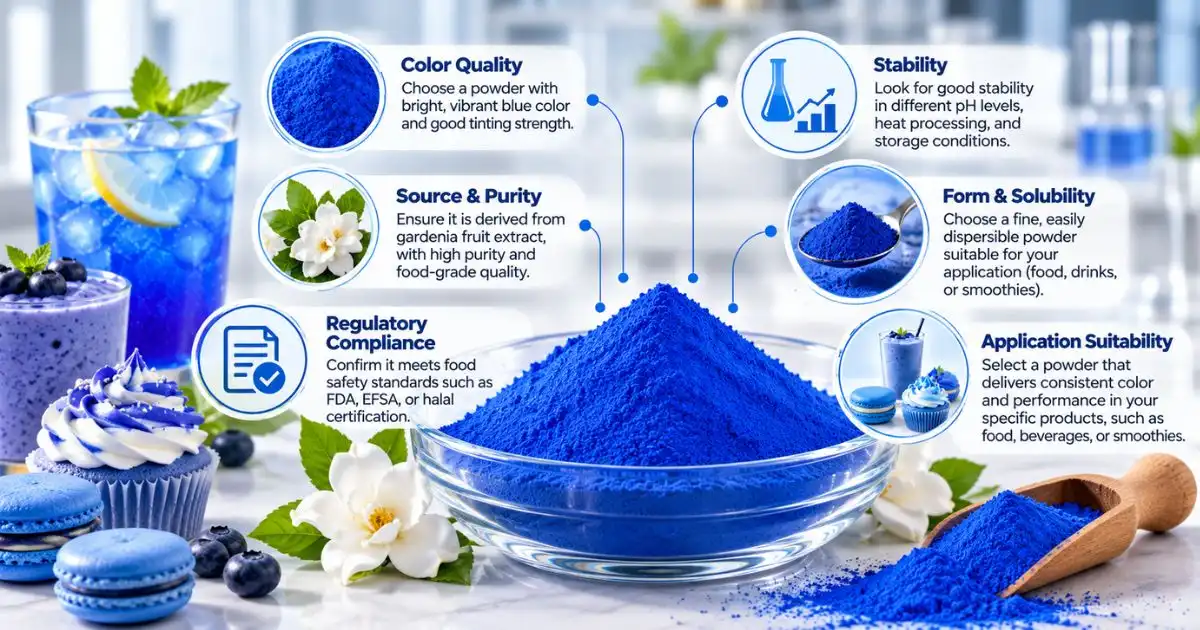
E Value: Color Strength Classification
This number, called the "E value," tells you how concentrated the pigment is. It also tells you how much to use and how much it costs per unit of color. Here is a list of Yangge's possible features, one after the other:
| Specification | Color Value (E) | Typical Use Case |
|---|---|---|
| E30 | 30 | Light pastel applications |
| E60 | 60 | Standard food and beverage coloring |
| E80 | 80 | Confectionery, desserts |
| E100 | 100 | Concentrated beverage systems |
| E200 | 200 | High-efficiency, low-dosage formulations |
Dosage rates can be lowered when E values are high. This can lower the cost per batch and keep the final products as unaltered as possible in terms of taste. If you work with high-end candies or liquors, the E100 and E200 will give you the best color results.
Grade and Application Compatibility
These specs are good for sweets, drinks, jams, and desserts because they are food-grade. Certain safety rules must be met before cosmetic-grade versions can be used on the skin. If you're looking for materials to use in medicine, make sure you get proof of the ash level and heavy metal limits. To follow the rules, you should always make sure that the grade criteria fit the group of end use.
Solubility and Mixing Behavior
Due to its rapid absorption in water, gardenia blue powder is simple to mix with beverages like milkshakes, sports drinks, and fruit drinks. When mixing things that have a lot of fat or oil, adding a little water first keeps the spread from being uneven. Before you go big, find out if proteins will affect the pH you want for smoothies and cheese.
Comparing Gardenia Blue Powder with Other Natural Blue Colorants
Gardenia Blue vs. Spirulina Blue
It is good for you and has a bright cyan color called spirulina blue (phycocyanin). However, its protein-based structure breaks down at temperatures above 60°C. So, it can't be used for baked goods, pasteurized drinks, or things that are hot inside. When it is processed at temperatures well above that level, gardenia blue pigment keeps its color. That way, formulators can get an edge at high temperatures without giving up the claim that the colorant is natural.
Gardenia Blue vs. Butterfly Pea Flower
Butterfly pea flower juice turns purple when the pH level drops. It's an interesting surprise because of this. This is a problem, though, when different kinds of things need to be the same shade of blue. Gardenia blue makes the color of your recipe more stable over a wider pH range. This is very important for commercial production where color consistency from batch to batch is important.
Gardenia Blue vs. Synthetic FD&C Blue No. 1
It's very stable and cheap, but people are moving away from synthetic brilliant blue (FD&C Blue No. 1) in clean-label product lines. Another study from 2023 SPINS found that in the US, sales of items that said "no artificial colors" went up by more than 10% in the natural channel. This need is met by gardenia blue, which is stable enough to be used instead of man-made colors and has a clean label that buyers today expect.
How to Procure Gardenia Blue Powder: Suppliers, Pricing, and Logistics
Evaluating Supplier Credentials
The company that sells gardenia blue powder should be reputable and have at least ISO and HACCP certifications. They should also give batch certificates that have been tested using HPLC and be honest about the heavy metal compliance and amount of ash in the powder. You should ask for a technical data sheet (TDS) before you order samples. Yangge has TDS-Gardenia Blue E80.pdf files and other files that are similar for all needs. Documentation that stays the same from one batch to the next is a strong sign of rigid production.
Pricing Factors and Bulk Purchasing
The price per kilogram changes based on the market state, the E value, and the size of the order. Higher E value types, like E200, cost more per unit, but they cost less per color unit used. Many times, bulk sales have different prices for different items. You can save a lot of money by getting both gardenia blue and gardenia yellow from the same fruit. This is especially true when you mix them to make drinks or sweets look green on their own.
Logistics and Packaging Considerations
Since the powder soaks up water, it is usually sent internationally in packaging that is double-sealed and can't hold water. To ship things over long distances, ask for inner bags that are vacuum-packed inside outer boxes. Yangge sends all over the world and keeps all E30–E200 specifications in stock. This shortens the wait time for urgent test orders or larger production runs.
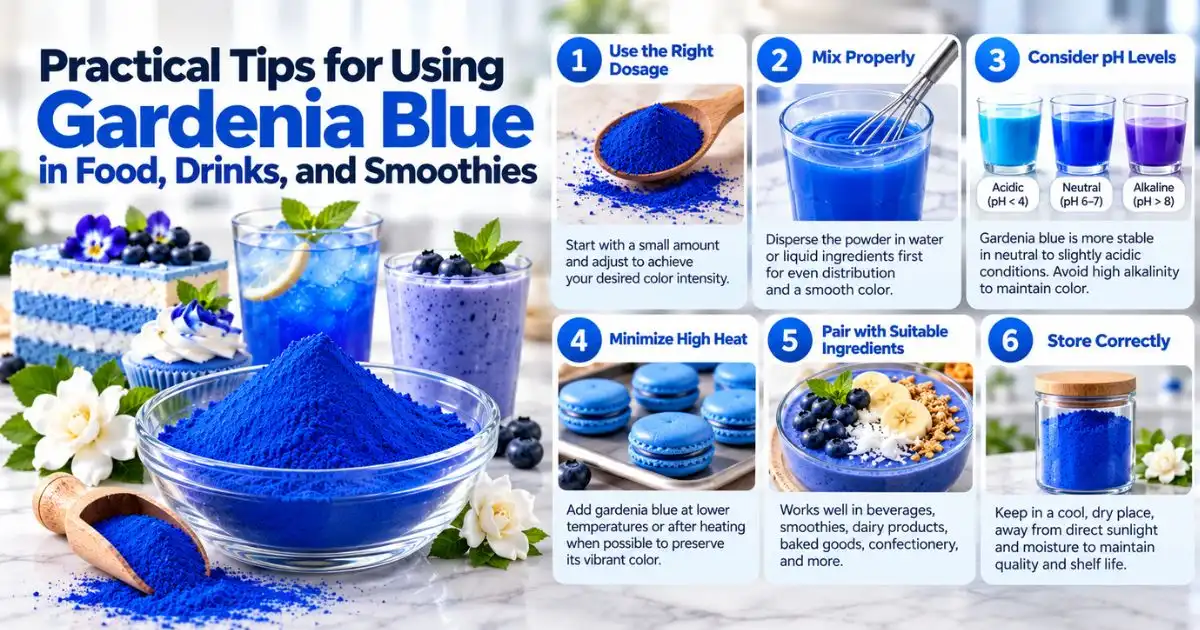
Practical Tips for Using Gardenia Blue in Food, Drinks, and Smoothies
Dosage and Dissolution Guidelines
Start with 0.01% to 0.05% by weight for drinks and work your way up depending on how dark you want the color to be. Always mix the powder in a small amount of warm water (below 80°C) before adding it to the rest of the mixture. This makes sure the color doesn't run and is spread out evenly. For shakes, put the liquid base into the blender first, then add the solids.
Blending with Gardenia Yellow for Green Tones
Gardenia blue and yellow can be mixed to make natural green shades. This is useful to know when working with gardenia colorants. A popular place to start is 1:1 by weight, but you can change it to get the color you want. You won't need as many seller ties for lines with more than one color if you use this method. It also makes your natural color palette easier to use.
Troubleshooting Color Fading and Clumping
UV light that lasts for a long time or a pH level below 3.0 are the main reasons why final goods lose their color. Use packaging that blocks UV light for things that come in clear containers. What does it mean when powder gets lumpy while being stored? It means it has taken water from the air. After using a bag, always seal it back up right away and store it somewhere where the humidity stays below 60% RH. One thing you could try before you try precipitation in complex matrices if you're having trouble with it.
Conclusion
The right natural blue colorant is picked based on technology and business needs. Gardenia blue powder is distinctive because it can withstand high temperatures, maintains a fixed pH level, requires no labeling, and is less expensive when combined with gardenia yellow. The five E-value ranges in Yangge's product line are E30 to E200. For formulators, this means they can match color strength to application needs without having to waste any. This food coloring is a safe way to get a natural blue color that works for both production and market needs. It can be used to make candy, alcoholic drinks, jams, or smoothies.
FAQ
Is gardenia blue powder safe for food use?
Yes. Gardenia blue is a non-toxic, plant-based colorant widely used in food, beverages, and cosmetics. Yangge's product is GMO-free, gluten-free, and certified Kosher and Halal, with no artificial additives or preservatives.
How does it compare in cost to synthetic blue dyes?
The unit cost of gardenia blue is generally higher than synthetic alternatives, but the gap narrows at higher E values (E100, E200) where lower dosage rates are needed. The clean-label positioning also supports premium product pricing.
What is the recommended storage method?
Store in a cool, dry, dark location in airtight, moisture-resistant packaging. Keep humidity below 60% RH to prevent caking. When stored correctly, the product maintains color stability throughout its shelf life.
Can it be used in acidic beverages?
Yes, though best performance occurs at pH 4.0 and above. Below pH 3.0, a slight hue shift toward greenish-blue may occur. Run a stability test at your target pH before launching.
What is the minimum order quantity for sampling?
Contact Yangge directly at info@yanggebiotech.com to discuss sample availability and trial order quantities for your specific specification.
Source Gardenia Blue Powder from Yangge Request Your Sample Today
Companies all over the world that make food, drinks, cosmetics, and medicines can get all of Yangge Biotech's gardenia blue powder specs (E30–E200). We make gardenia blue powder and are approved by ISO, HACCP, Kosher, and Halal. We also have dedicated R&D support and things in stock, so we can help you with your recipe from the trial stage all the way through production.Contact us or send us an email at info@yanggebiotech.com or visit blog.yanggebiotech.com to get a sample or talk about your needs in more detail.
References
1. Downham, A., & Collins, P. Colouring our foods in the last and next millennium. International Journal of Food Science & Technology, 2000.
2. Hendry, G. A. F., & Houghton, J. D. Natural Food Colorants (2nd ed.). Blackie Academic & Professional, 1996.
3. Shi, Z., et al. Stability of natural pigments extracted from Gardenia jasminoides. Food Chemistry, 2012.
4. Rymbai, H., Sharma, R. R., & Srivastav, M. Biocolorants and its implications in health and food industry — A review. International Journal of PharmTech Research, 2011.
5. SPINS. Natural Channel Sales Report: Clean Label Trends in the U.S. Food Market. SPINS Market Research, 2023.
6. Carocho, M., Morales, P., & Ferreira, I. C. F. R. Natural food additives: Quo vadis? Trends in Food Science & Technology, 2015.

Based on your location and order quantity, you will have the opportunity to receive a limited time free shipping promotion!
Who we are
Popular Blogs