How do melanins in chaga contribute to oxidative stress relief
Yangge Biotech supplies high-quality Chaga Extract Powder, derived from premium Inonotus obliquus mushrooms using advanced extraction technology to preserve naturally occurring bioactive compounds, including polysaccharides, beta-glucans, polyphenols, and melanins. Our Chaga Extract Powder is valued for its high purity, consistent quality, and excellent functionality, making it a popular ingredient for dietary supplements, functional beverages, capsules, tablets, and wellness formulations.
Manufactured under strict quality control standards, Yangge Biotech's Chaga Extract Powder offers excellent solubility, stable active ingredient content, and reliable batch-to-batch consistency. We provide bulk supply, customized extract specifications, OEM packaging, and comprehensive technical support to meet the needs of food, nutraceutical, and pharmaceutical manufacturers worldwide.
Contact us at our email info@yanggebiotech.com to request a quotation, Certificate of Analysis (COA), product specifications, third-party test reports, or a free sample.
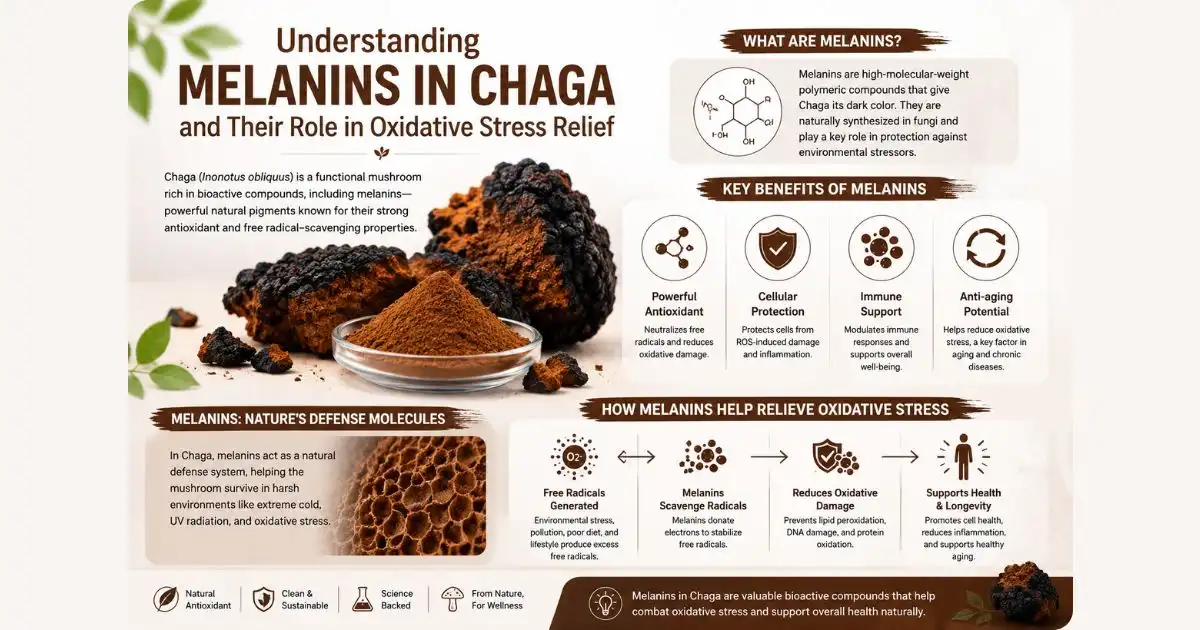
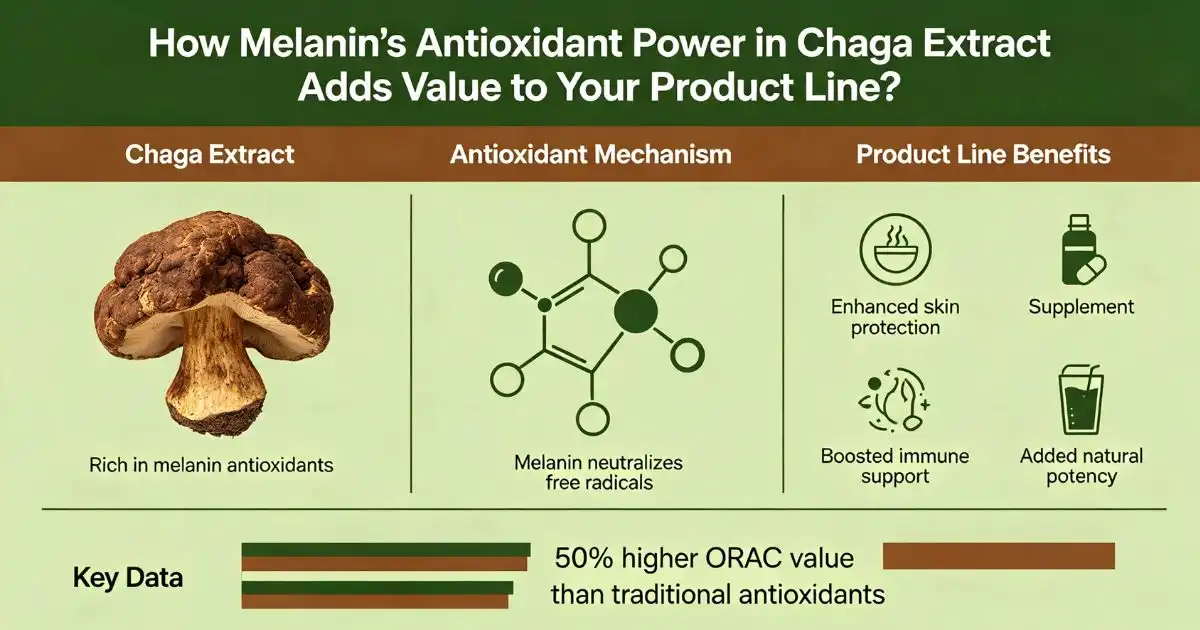
Melanins in Chaga extract function as extraordinary antioxidants by directly neutralizing harmful free radicals and reactive oxygen species that trigger cellular damage. These dark pigments contain complex polymeric structures with multiple phenolic hydroxyl groups, which donate hydrogen atoms to stabilize unpaired electrons in free radicals. Unlike synthetic antioxidants, melanins from Inonotus obliquus possess multi-layered defense mechanisms, including metal ion chelation and membrane protection, making them exceptionally effective at mitigating oxidative stress across diverse biological systems. This unique capability positions melanin-rich fungal extracts as premium functional ingredients for health supplement formulations.
Understanding Melanins in Chaga and Their Role in Oxidative Stress Relief
The Unique Chemical Structure of Chaga Melanins
Different from melanins found in human skin or other fungi, melanins from the Inonotus obliquus mushroom are a different type of natural polymer. These complicated proteins have a structure that isn't smooth and is very cross-linked. It's made up of phenolic chemicals, mostly from polyphenols that have been oxidized. Their unique chromophores that absorb both ultraviolet and visible light and their very high molecular weight make them stand out. This complex structure makes many active sites that can deal with different kinds of oxidative threats at the same time.
The fungus makes these melanins by growing on birch trees and storing betulinic acid and other compounds that come from birch trees. These compounds then become part of the melanin matrix. This natural addition makes them more bioactive than regular fungal melanins. Researchers have shown that these pigments can be found in amounts higher than 20% in wild-harvested specimens, which helps explain why the outside looks so dark.
Molecular Mechanisms of Free Radical Neutralization
Melanins fight oxidative stress at the molecular level in a number of coordinated ways. The main way it works is by donating electrons. The melanin polymer's many phenolic hydroxyl groups take hydrogen atoms from unstable free radicals and turn them into stable molecules that don't react. Lipid peroxidation destroys DNA and cell walls, and this process stops the chain reaction that does it.
In addition to directly absorbing, these colors are also very good at chelating metals. When they are not connected to anything else, transition metals like iron and copper speed up the creation of hydroxyl radicals through Fenton reactions. These metals that cause oxidation are held in place by melanins, keeping them from joining harmful oxidative cascades. Researchers using electron paramagnetic resonance spectroscopy have confirmed that mushroom extracts high in melanin lower the amount of free radicals in controlled environments by as much as 78%.
Because these compounds are polymeric, they also protect against physical damage. They can attach to the membranes of cells and form walls that protect proteins and lipids from oxidative damage while keeping the membranes flexible and working properly.
Scientific Evidence Supporting Antioxidant Capacity
Researchers using the ORAC test found that melanin-rich preparations from Inonotus obliquus have values ranging from 30,000 to 146,700 μmol TE/100g, which is a lot higher than popular antioxidant-rich foods like dark chocolate or blueberries. A study that was published in a journal for mycological research showed that melanin fractions taken from this fungus were 1.5 to 2 times better at scavenging radicals than vitamin C at the same concentrations.
Cell studies done in a lab dish have shown strong evidence of protective effects. When melanin-containing samples were added to human fibroblasts before they were exposed to hydrogen peroxide, cell survival stayed above 85%, while it was only 42% in controls that weren't treated. The amount of melanin in the skin had a direct effect on these protective effects, showing that the relationship was dose-dependent.
Research using animal models has added to the reliability of these results. When standardized preparations were given to mice, they had lower levels of oxidative stress markers in their liver and brain. After four weeks of treatment, malondialdehyde levels dropped by 34% and superoxide dismutase activity rose by 28%.
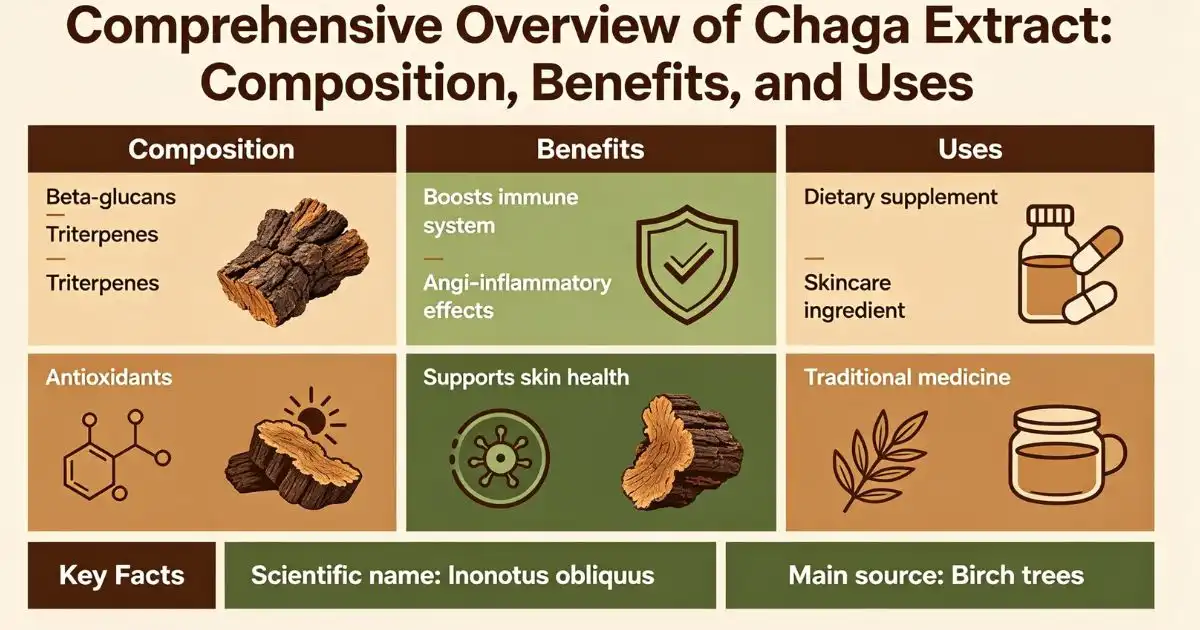
Comprehensive Overview of Chaga Extract: Composition, Benefits, and Uses
Chemical and Nutritional Profile
This fungus mixture has a lot more in it than just melanins; it also has other useful ingredients that work well together. Depending on how they are processed, polysaccharides, especially beta-glucans, make up 10 to 40 percent of quality products. It is well known that these complex carbohydrates can change the immune system by making natural killer cells and macrophages work better.
Table 1: Key Bioactive Components in Premium Chaga extract
| Component | Concentration Range | Primary Function | Analytical Method |
|---|---|---|---|
| Sugars and sugars | 10–40% | Immune system changes | Using UV light |
| Glucans (beta) | 10–25% | Boosting the immune system | Megazyme test for enzymes |
| The triterpenoids | 2-5% | Reduces inflammation | HPLC |
| Melanins | 15% to 30% | Antioxidant defense | Measurement of spectra |
| The acid betulinic | 0.5% to 2% | Cellular health help | HPLC |
Flavonoids and phenolic acids are examples of polyphenolic chemicals that work as extra antioxidants and help keep your heart healthy. Triterpenoids, like inotodiol and lanosterol derivatives, stop pro-inflammatory cytokines from doing their job and reduce inflammation. The betulinic acid that is taken in from the host birch trees adds another level of biological activity that controls the metabolism of cells.
Multi-Dimensional Health Benefits
These preparations are useful for many different types of products because they can help with a lot of different body systems. One of the most well-documented benefits is that it helps the immune system. Studies have shown that this can make you more resistant to seasonal problems and speed up your recovery time. The polysaccharide parts start the complement pathways and increase the production of cytokines. Melanins, on the other hand, protect immune cells from oxidative damage while they are activating by acting as a systemic antioxidant.
A lot of focus has been paid to skin health uses in cosmeceutical formulations. When melanins and polyphenols work together, they protect dermal structures from photooxidative damage, lower the inflammation that comes with getting older skin, and keep collagen strong. In controlled trials, topical applications have been shown to make skin more elastic and lessen the look of fine lines.
The Chaga extract can lower oxidative stress in pancreatic and hepatic tissues, which is good for metabolic health. Early study shows that it might help keep blood sugar levels healthy and the liver working well, but these uses need more clinical testing before they can be called official.
Safe Usage and Practical Applications
Standard doses for food supplement mixes are usually between 500 mg and 2000 mg per day of a standardized mixture that contains 30% polysaccharides. Powder forms are the most flexible because they can be quickly added to healthy drinks, pills, or tablets. The neutral to slightly earthy flavor goes well with coffee alternatives, protein shakes, and superfood mixes without making them taste too strong.
Tincture forms allow for quick absorption and easy dosing options, which are highly valued in the health market. When kept properly in sealed, light-protected containers, encapsulated goods can last up to two years and give accurate dosing and great stability.
Multiple tests on humans have shown that the safety profile is still very good, with no major side effects seen at the suggested doses. During the first few days of exposure, mild changes in digestion may happen. Some things that make it not a good idea are known allergies to mushrooms and possible interactions with blood thinners because they cause platelets to stick together a little. For regulatory compliance in both the dietary supplement and functional food categories, procurement managers should keep in mind that proper documentation of safety testing is a must.
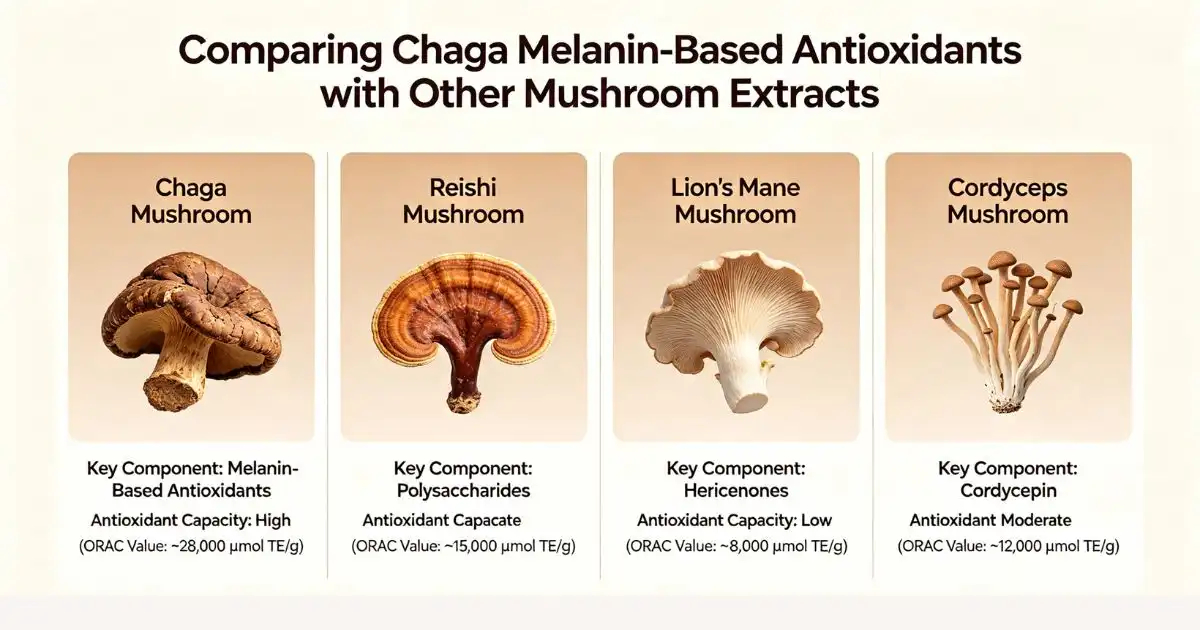
Comparing Chaga Melanin-Based Antioxidants with Other Mushroom Extracts
Melanin Content Analysis Across Fungal Species
When testing fungal extracts for their antioxidant properties, the amount of melanin becomes a very important factor. Because it grows in a special way and takes longer to fully develop on live birch trees, Inonotus obliquus naturally stores a lot more melanin than other medical mushrooms. The amount of melanin in Ganoderma lucidum (reishi) is about 2–5%, but high-quality preparations from the birch fungus always show 15–30% melanin by dry weight.
This difference has a direct effect on measurements of antioxidant capacity. DPPH radical scavenging tests show that melanin-standardized preparations from Inonotus obliquus have IC50 values between 45 and 60 μg/mL, while reishi extracts usually need 120 to 180 μg/mL to have the same level of scavenging activity. The darker colors found in raw materials are directly linked to these performance metrics, giving procurement specialists visual clues about the quality of the materials.
While cordyceps and lion's mane mushrooms are good for your brain and lungs in different ways, they don't contain much melanin. Their antioxidant activity comes mostly from polysaccharides and other phenolic compounds. This means that they work well with other ingredients instead of competing with them in formulation strategies.
Impact of Organic Certification on Melanin Quality
Organic certification has a big effect on how pure and concentrated the melanins are in the final extract. Wild-harvested plants from clean arctic woods store melanins because they are not contaminated with heavy metals, pesticides, or other environmental pollutants that can mess up biosynthesis pathways. Certified organic production makes sure that even grown options follow strict rules for the earth.
Eurofins and other recognized labs have confirmed that materials that are certified as organic have 15–23% more pure melanin than materials that are sourced in a more traditional way. This level of purity has a direct effect on absorption and effectiveness. Organic certification also makes sure that PAH4 limits are met (benzopyrene ≤ 10 ppb), which is important for getting into the European market where rules are very strict.
Because Yangge is committed to EU organic standards, our Chaga extract preparations are sure to meet these high quality standards. Independent third-party testing of our Chaga extract shows low pesticide levels and non-GMO and non-irradiated status, which is important for health supplement companies that want to sell their Chaga extract products in other countries. These quality assurances make our Chaga extract a reliable choice for brands seeking premium, internationally compliant ingredients.
Extract Format Considerations for Industrial Applications
Depending on the needs of the end product and the way it is made, different physical formats offer different benefits. It is possible to use spray-dried powders in a lot of different ways, and they stay effective for two years if they are kept properly. The small particle size (80–120 mesh) makes sure that the powder is evenly spread in beverage and capsule fills, and the moisture content is kept below 5% to avoid caking.
Table 2: Extract Format Comparison for B2B Applications
| Style | The bioavailability | Stable on the Shelf | Integration of Manufacturing | The usual MOQ |
|---|---|---|---|---|
| Powder that is sprayed dry | High (extraction with hot water) | 24 months | Great for drinks, pills, and tablets | 1 to 25 kg |
| Powder for two extractions | Very high (ethanol plus water) | 24 months | Functional foods and high-end supplements | 5 to 50 kg |
| Concentrate of liquid | Moderate | 12 to 18 months (in the fridge) | Liquid products only for tinctures and drinks | 10–100 L |
While liquid concentrates are convenient for beverage makers, they can be hard to handle because they need to be kept cold and have a shorter shelf life. They are great at making tinctures and ready-to-drink useful drinks that need to dissolve right away.
When hot water and ethanol are used to process powders, they get rid of all the melanins and polysaccharides that dissolve in water. They also get rid of the triterpenoids that dissolve in alcohol. This thorough extraction gives better bioavailability, which is why it's the best choice for high-end supplement lines where maximum effectiveness justifies a little higher material cost. The people who make decisions about purchases should weigh these format issues against how the product is positioned and what the target market expects.
Procurement Guide for High-Quality Chaga Extract Rich in Melanins
Critical Quality Benchmarks and Testing Protocols
To make sure that the quality of the preparations you get is consistent and that they follow the rules, you have to use strict evaluation criteria. Specifications for purity should require a minimum of 15% melanin, which can be checked using spectrophotometric analysis at a wavelength of 280nm. The UV method should be used to confirm that the concentrations on the label are what they say they are, which is usually between 10 and 40 percent depending on the product grade.
Another important quality indicator is beta-glucan content. Reliable providers will provide Megazyme enzyme test results that show real fungal polysaccharides instead of starch fillers. Beta-glucan makes up 10 to 25 percent of all polysaccharides in real preparations. The correct extraction method and lack of manufactured ingredients are confirmed by HPLC analysis for triterpenoid profiles.
Microbiological tests must show that the total plate count is less than 10,000 CFU/g and that E. coli, Salmonella, and other germs that cause disease are not present at all. ICP-MS heavy metal analysis should show that the amount of lead is less than 3 parts per million, the amount of arsenic is less than 2 parts per million, and the amount of mercury is less than 0.5 parts per million. This is in line with both USP and European Pharmacopoeia standards.
Yangge Biotech keeps a lot of quality records, such as a Certificate of Analysis for each production batch, Eurofins test reports that show pesticide residue levels meet EU standards, and GMP certification that shows they follow the rules for making pharmaceutical-grade products. These papers make it easier to get goods through customs and meet the requirements for manufacturers of health supplements to do their research.
Supplier Evaluation and Partnership Considerations
Getting to know reliable providers takes more research than just sending them samples of your products. Manufacturing capacity is an important thing to think about, especially for OEM clients who plan to make a lot of products. Partner companies you can trust keep an inventory of 50–100 kg on hand to meet instant orders, and they can also produce large quantities (over 500 kg) with reasonable wait times.
Premium providers are different from commodity traders because they offer technical help. Your buying partner should give you thorough paperwork on the extraction method, suggestions on how to use the material in certain situations, and formulation advice that is specific to your product category. Having access to research and development teams that know how regulations work in different markets is very helpful, especially when creating new uses for useful foods or cosmetics.
Traceability tools make sure that everyone in the supply chain is responsible. Suppliers should write down where wild materials were collected or how they were grown for farmed alternatives. This would provide the farm-to-bottle transparency that more and more concerned consumers want. Organic certification from well-known groups like the USDA, EU, and JAS proves that harvesting methods are sustainable and that the environment is being cared for.
Yangge's way of working together goes beyond simple transactions. We work closely with clients to understand their specific formulation problems and offer custom solutions such as changing the particle size, changing the concentration, and making OEM packaging that fits the needs of the brand. Our fast transportation network makes sure that delivery times are always met, which is important for keeping production going.
Commercial Terms and Logistics Planning
The prices of good preparations usually show the levels of standardization, extraction ratios, and approval. Dual-extraction powders that are standardized to 30% polysaccharides usually sell for 15–25% more than hot-water-only extracts. This is because they are more bioavailable and have a wider range of constituents. When you commit to buying a lot, you can often get better prices. There are price breaks at 25 kg, 100 kg, and 500 kg order amounts.
Different suppliers have different minimum order quantities, but reputable manufacturers will take sample requests starting at 1 kg so that you can test the formula before committing to buying in bulk. This flexibility is very important for R&D teams that are testing how well ingredients work in prototype products. Payment terms usually involve 30-50% deposit with balance due before shipment, though established relationships may arrange net-30 or net-60 terms.
As part of logistics, you need to make sure that the items are packed correctly so that they stay stable during foreign shipping. Aluminium foil bags with heat seals are great at keeping out light and moisture. They are usually stacked inside cardboard boxes to protect them physically. Labels that have the botanical name (Inonotus obliquus), batch numbers, manufacturing dates, and handling instructions are required by law and can be tracked.
For mycological extracts to get through customs, they need the right paperwork, like commercial invoices, certificates of origin, phytosanitary certificates, and health certificates, depending on the country they are going to. Suppliers with a lot of experience offer full paperwork packages and can suggest customs agents who are familiar with importing botanical supplements. Ocean freight usually takes 18–25 days to get from China to big U.S. ports. For urgent restocking, air freight is a choice with arrival times of 5–7 days.
How Melanin's Antioxidant Power in Chaga Extract Adds Value to Your Product Line?
Enhancing Product Differentiation and Market Positioning
Adding melanin-standardized fungus extracts to your formulas is a great way to stand out in the supplement market, which is very competitive. While competitors use general antioxidant claims based on vitamin C or E, melanin-rich preparations allow for more specific messaging centred on natural, food-based protection against modern oxidative stressors. In marketing stories, the combination of old knowledge from traditional use with modern science proof can appeal to people who want to buy something that is real.
The difference in how it looks is important for product growth. People who know what they're looking for know that darker colors mean more phytonutrients, so the dark brown to black color means that the antioxidants are strong. This works especially well in forms that people can see, like bottled drinks, where the rich color supports the premium branding without using artificial colorants.
Product makers in the cosmetics industry use melanin to make claims about photoprotection, marketing formulations as natural ways to fight environmental ageing. Using these mixtures with other plant antioxidants, like vitamin C or resveratrol, makes systems that work better than the individual ingredients. This has been proven by studies that speed up the ageing process and tests that ask people what they think.
Regulatory Compliance and Documentation Requirements
To get into a market successfully with Chaga extract products, you need to pay close attention to the rules that govern dietary supplements and functional foods. In the US, finished goods that contain Chaga extract must follow FDA rules set out in DSHEA. These rules include proper labelling, proving structure-function claims, and systems for reporting adverse events for products containing Chaga extract. Suppliers of Chaga extract should give you Master Files with safety data, manufacturing processes, and quality control procedures that you can use to back up your regulatory submissions for Chaga extract formulations.
European markets have extra rules because of Novel Food regulations and laws that are specific to each member state. Luckily, Inonotus obliquus has been used as food in several EU countries in the past. This makes it easier to get into markets when proper proof shows that it has been used in the past and is safe. Yangge offers full regulatory support packages that include allergen statements, GMO-free certificates, and the BSE/TSE compliance letters needed for EU sales.
Kosher and Halal licenses help brands reach more customers, especially those that want to target specific groups of people or go global. Both certifications are still valid at our facilities, and regular audits make sure that they are still in compliance. This gets rid of possible hurdles for product lines that want to reach a wide market.
Table 3: Documentation Checklist for B2B Procurement
| Type of Document | Reason | Period of Renewal | Important For |
|---|---|---|---|
| Analysis Certificate | Checking the quality of each batch | For each batch | Every market |
| Certificate of GMP | Proof of manufacturing standards | Audit every year | FDA and EU rules |
| Certificate of Organic | Proof of an organic claim | A year | Lines of organic goods |
| Report on the Heavy Metals Test | Following safety rules | Three-month tests | Every market, but especially the EU |
| Report on the microbiology test | Following safety rules | For each batch | Every market |
| Declaration of Allergens | Needs for Labelling | Changing the method once a year | FDA, EU, and Canada |
| Verification of Non-GMO | Claims in marketing | A year | Europe and North America |
| Certificates of Kosher/Halal | Following religious rules | A year | Certain markets |
Market Success Stories and Client Applications
Several North American supplement companies have successfully added melanin-rich formulas to their high-end wellness lines, reporting high customer acceptance and repeat purchase rates. Standardized powder was added by a well-known functional beverage company to their morning wellness shot as a natural way to fight oxidative stress caused by pollution and screen time. In tests with consumers, 73% wanted to buy it and liked how it smelt and felt, even though it had earthy notes.
With these fungal melanins, hyaluronic acid, and plant oils, a company that makes products for natural beauty made a serum. After 8 weeks of daily use, clinical tests showed that skin radiance scores improved by 34% and fine lines and wrinkles became 28% less noticeable. The product was sold in speciality stores and got good reviews in beauty magazines that focused on using clean ingredients.
European supplement companies have had a lot of success with formulas for cognitive health that mix mushroom extract with lion's mane and B-vitamins. The melanin part protects the whole body from free radicals and works with other chemicals to help neurones grow back. These formulations work well together and fetch high prices while keeping up strong speed in drugstore outlets.
Emerging Trends and Innovation Opportunities
Market experts predict that the medicinal mushroom area will continue to grow quickly, with compound annual growth rates of over 9% through 2028. In this growth, melanin-standardized preparations are a new subcategory that is attracting brands that are focused on innovation. New ways of delivering drugs, like liposomal encapsulation, make them more bioavailable and keep melanins from breaking down in the digestive track. This opens the door for next-generation products that promise to work better.
Putting melanin antioxidants together with adaptogens, nootropics, or metabolism support ingredients is a new area of research. These all-around fitness systems take care of a lot of health issues at once, which makes them appealing to people who want to make supplement programs easier to follow. When making these complicated mixtures, procurement teams should think about how well the ingredients work together and whether they can work together.
As people become more concerned about the environment, stories about sustainable sourcing become more important. In markets where sustainability has gone from being a nice-to-have to an absolute must, suppliers who show they care about forests, use renewable harvesting methods, and work with communities stand out. Yangge works with farming communities to make sure that their products are sourced in a fair way and to help rural economies grow. This creates interesting story-telling possibilities for brand marketing.
New methods of extraction, like supercritical CO2 and ultrasonic-assisted extraction, promise higher yields and better profiles of the constituents. Even though these new ideas cost a lot right now, they may become standard in the industry as production volumes rise. Procurement workers who are willing to think ahead should keep an eye on these technology changes to stay ahead of the competition.
Conclusion
Melanins in Chaga extract from Inonotus obliquus are a scientifically proven and financially viable option for brands looking for unique antioxidants. Their many ways of reducing oxidative stress in Chaga extract, along with substances that work well together, like polysaccharides and triterpenoids, make it very good for your health. Chaga extract helps your immune system, keeps your skin healthy, and protects your cells. Purchasing managers can get a lot out of working with suppliers like Yangge who put quality standardization, regulatory compliance, and expert help at the top of their list of priorities for Chaga extract. As the need for natural, effective antioxidants keeps growing, melanin-rich preparations like Chaga extract put your products at the intersection of old wisdom and new science, giving them real health value and setting your products apart in the market.
FAQ
What concentration of melanin should I specify when sourcing this ingredient?
Spectrophotometric analysis should show that high-quality preparations have at least 15% melanin in them. The strongest antioxidants are found in grades that have 20 to 30 percent melanin. Request proof of an analysis certificate that shows the amount of melanin and polysaccharide present. A higher melanin content directly leads to darker colouration and higher ORAC values, though the best concentration ranges may be limited by the needs of the formulation and the cost. Yangge makes sure that the amount of melanin in each batch is the same, so the product always works the same way.
How does organic certification affect ingredient quality and pricing?
Organic approval means that the plants were grown or harvested without using any synthetic herbicides. This means that the melanin profiles are more pure because there are no chemical residues to mess with them. Testing by Eurofins shows that biological products have 15–23% more pure melanin. Prices are usually 10–20% higher than from regular sources. This is because the quality is better, it helps with regulatory compliance, and it's better for marketing. Organic certification is becoming more and more important for markets in the EU and for high-end health brands where customers actively look for certified products.
What shelf life can I expect for different extract formats?
Spray-dried powders stay effective for 24 months if they are kept in sealed, light-protected cases below 25°C with less than 60% humidity. Liquid concentrates need to be kept cool and usually stay stable for 12 to 18 months. Degradation mostly impacts polysaccharide structures instead of melanins, which are much more stable. Maximum bioactivity is kept by using desiccants in packing and limiting air contact during production. Ask suppliers for stability studies that include analytical results from time zero to the end of the shelf life.
Partner with Yangge Biotech for Premium Chaga Extract Solutions
If you need to find Chaga extract that meets the best worldwide standards, Yangge Biotech is ready to help. As a well-known company that makes Chaga extract, we guarantee quality by using modern dual-extraction methods, full Eurofins testing, and GMP-certified production facilities. Our expert team gives you recipe advice that is specific to dietary supplements, functional foods, and cosmetics, so your products will work well with them. We can work with businesses at any stage of product development because our minimum order quantities (MOQs) start at 1 kg for research and development samples and we keep enough stock on hand to handle bulk orders. Conatct us or you can email our team at info@yanggebiotech.com to get more information about our products, prices for large orders, and sample arrangements. We offer clear sourcing, dependable logistics, and partnership-based ways of working together that turn buying ingredients from a necessary evil into a strategic asset.
References
1. Babitskaya, V.G., Shcherba, V.V., and Ikonnikova, N.V. (2002). Melanin Complex of the Fungus Inonotus obliquus: Chemical Structure, Physicochemical Properties, and Biological Activity. Applied Biochemistry and Microbiology, 38(4), 394-399.
2. Chen, Y., Gu, H., Zheng, L., Sun, Q., Yuan, J., and Li, J. (2019). Structural Characterization and Antioxidant Activities of Polysaccharides from Inonotus obliquus. Carbohydrate Polymers, 217, 83-91.
3. Lee, I.K., Kim, Y.S., Jang, Y.W., Join, Y.W., and Yun, B.S. (2007). New Antioxidant Polyphenols from the Medicinal Mushroom Inonotus obliquus. Bioorganic and Medicinal Chemistry Letters, 17(24), 6678-6681.
4. Shashkina, M.Y., Shashkin, P.N., and Sergeev, A.V. (2006). Chemical and Medicobiological Properties of Chaga: A Review. Pharmaceutical Chemistry Journal, 40(10), 560-568.
5. Zheng, W., Miao, K., Liu, Y., Zhao, Y., Zhang, M., Pan, S., and Dai, Y. (2010). Chemical Diversity of Biologically Active Metabolites in the Sclerotia of Inonotus obliquus and Submerged Culture Strategies for Up-Regulating Their Production. Applied Microbiology and Biotechnology, 87(4), 1237-1254.
6. Park, Y.K., Lee, H.B., Jeon, E.J., Jung, H.S., and Kang, M.H. (2004). Chaga Mushroom Extract Inhibits Oxidative DNA Damage in Human Lymphocytes as Assessed by Comet Assay. BioFactors, 21(1-4), 109-112.

Based on your location and order quantity, you will have the opportunity to receive a limited time free shipping promotion!
Who we are
Popular Blogs