Gardenia Yellow Pigment: Uses, Benefits, and Buying Guide for Buyers
If you are sourcing a clean-label yellow colorant for food or beverage production, gardenia yellow pigment deserves serious attention. Extracted from the fruit of Gardenia jasminoides, this natural pigment delivers a bright orange-yellow tone powered by crocin the same compound found in saffron. It dissolves easily in water, resists heat well, and meets regulatory standards across the EU and US markets. This guide covers its composition, industrial applications, selection criteria, and how to find a trustworthy supplier for your formulation needs.Contact us or email us at info@yanggebiotech.com to get a sample, download our COA, or talk to us about your product needs.
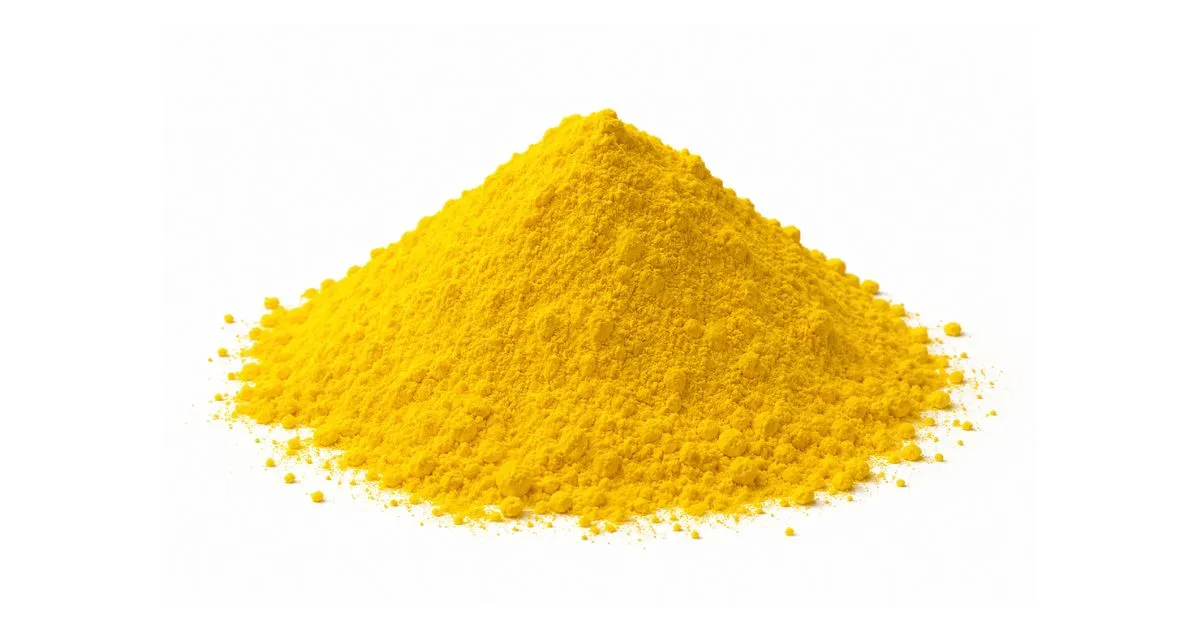
Understanding Gardenia Yellow Pigment: Composition, Properties, and Extraction
What It Is Made Of?
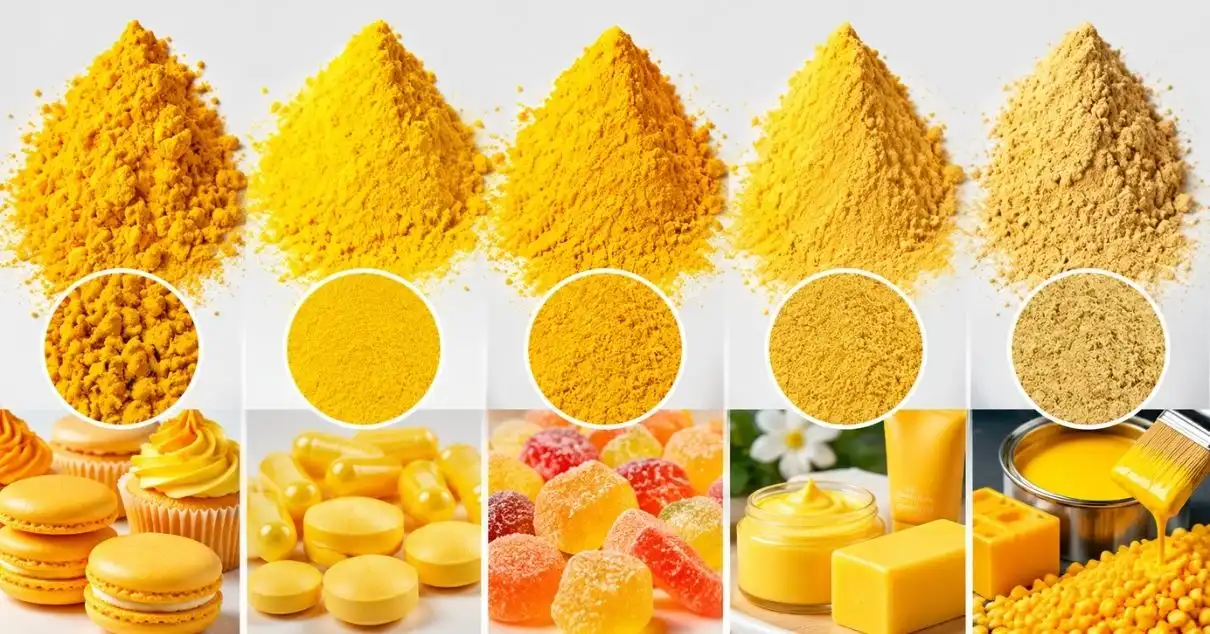
The yellow color of Gardenia comes from crocin, a carotenoid that breaks down in water and makes the flower bright yellow to orange. Giniposide is another part of it, and amino acids and it can sometimes mix. It is best to use types with low glycosyl groups in food since they don't turn blue-green, which is not what you want. With HPLC-checked methods, Yangge's Gardenia Yellow Powder E60 is made from gardenia fruit that has been carefully picked and then extracted and sprayed dry. All of the powder is the same color, which is orange-yellow.
Color and Stability Profile
At 440 nm, the tint's main absorption peak can be found. This number goes up when there is less geniposide and more clear color between 440 nm and 328 nm. β-carotene isn't as stable as this one, and it stays mostly the same for 120 minutes at 80°C. It might harden if the pH is less than 3. Water and ethanol break it down, but oil doesn't. It needs to be mixed. At 80°C, it stays stable for 120 minutes, but water makes it break down faster. Only 3.0 to 10.0 is in the pH range, which is not very wide. From 440 nm to 450–460 nm is the main range of absorption. gardenia yellow pigment is the natural colorant these stability and absorption characteristics describe.
| Property | Gardenia Yellow E60 | β-Carotene |
|---|---|---|
| Solubility | Water / ethanol-soluble | Oil-soluble; needs emulsification |
| Heat Stability | Stable at 80°C / 120 min | Degrades more readily in water phase |
| pH Range | 3.0–10.0 | Narrower effective range |
| Primary Absorption | 440 nm | 450–460 nm |
Extraction and Sustainability
To make sure the crocin stays useful, Yangge uses cutting edge aqueous extraction and spray-drying technology. Each batch is checked by HPLC to make sure it is the same as the last one. They work closely with farming groups and use a farm-to-table method that can be seen. This helps with both the quality of the product and getting it from a good source.
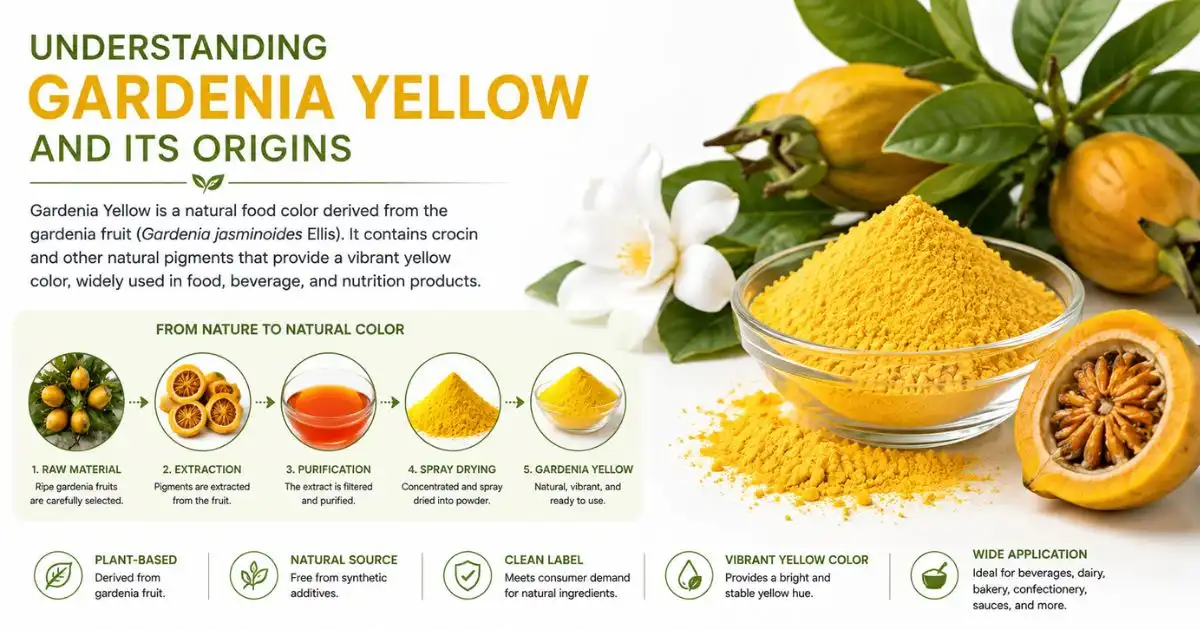
Uses and Benefits of Gardenia Yellow Pigment in Industry
Food and Beverage Applications
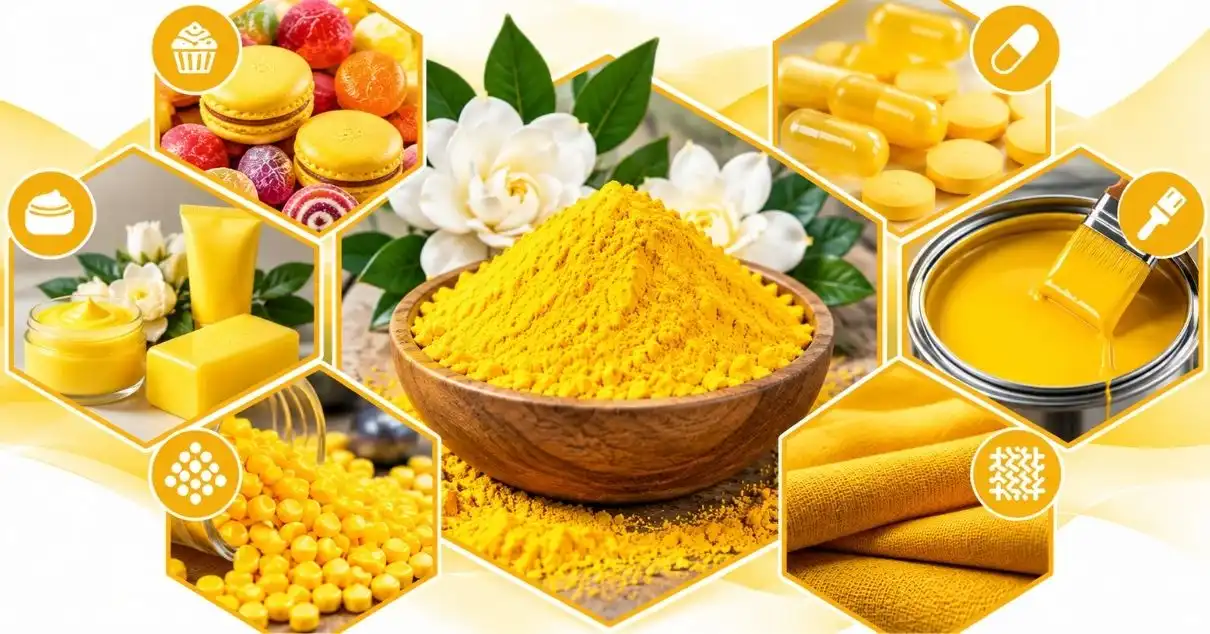
This natural colorant performs across a wide range of product categories. In acidic beverages, it maintains color clarity without sedimentation—a known issue with oil-soluble pigments. In confectionery and hard candies, it tolerates the high temperatures of the boiling phase. In frozen dairy and ice cream, it disperses evenly through high-fat, high-protein matrices and survives repeated freeze-thaw cycles without color migration.
Here are the primary application categories where this pigment adds measurable value:
- Beverages and fruit drinks: Maintains color transparency in complex acidic environments (pH 3.0–5.0), avoiding the ring effect common with emulsified pigments. Suitable for pasteurized and UHT processes.
- Confectionery and jellies: High heat tolerance during the cooking stage makes it suitable for hard candy, gummies, and pectin jellies. Delivers a bright, appealing yellow that meets consumer demand for natural ingredients.
- Dairy and frozen desserts: Binds uniformly in protein-rich matrices, producing a streak-free yellow appearance that remains stable through cold-chain distribution.
These application strengths make gardenia yellow a practical choice for manufacturers replacing synthetic colorants such as tartrazine (Yellow 5) across multiple product lines.
Health and Functional Benefits
Beyond color, crocin carries antioxidant activity. Published research in the Journal of Agricultural and Food Chemistry has documented its free radical scavenging capacity. This adds functional relevance for manufacturers in the dietary supplement and functional food space who want ingredients that contribute both aesthetics and nutritional positioning. Gardenia yellow pigment is the natural colorant where this dual function coloring and antioxidant activity is most directly applicable.
How to Choose Gardenia Yellow Pigment: A B2B Buyer's Guide
Match the Grade to Your Application
Yangge has three set of specs: the E60, the E300, and the E500. The color value is shown by the number (absorbance at 440 nm per 1% solution). More E value means the color is stronger per unit weight. This changes the amount of medicine given and how well the money is spent. People who make drinks usually use E60 or E300, but E500 may be needed if the alcohol is very strong.
| Grade | Color Value (E 1%,1cm, 440nm) | Typical Application |
|---|---|---|
| E60 | ~60 | Standard beverages, dairy, bakery |
| E300 | ~300 | Concentrated beverages, confectionery |
| E500 | ~500 | High-intensity coloring, supplements |
Key Quality Metrics to Verify
When you choose a gardenia yellow provider, you should pay attention to five basic things. We can tell how strong it is and how much it costs by the color number at 440 nm. Geniposide levels need to be low for protein-based sauces not to turn blue-green. A heavy metal should have no more than 2 mg/kg of lead (Pb) and no more than 1 mg/kg of arsenic (As). Food safety rules say that the amount of liquid that is still there must be safe. It's been proven by yeast, mold, and total plate count tests that the color doesn't make your goods dirty.
Certifications and Compliance
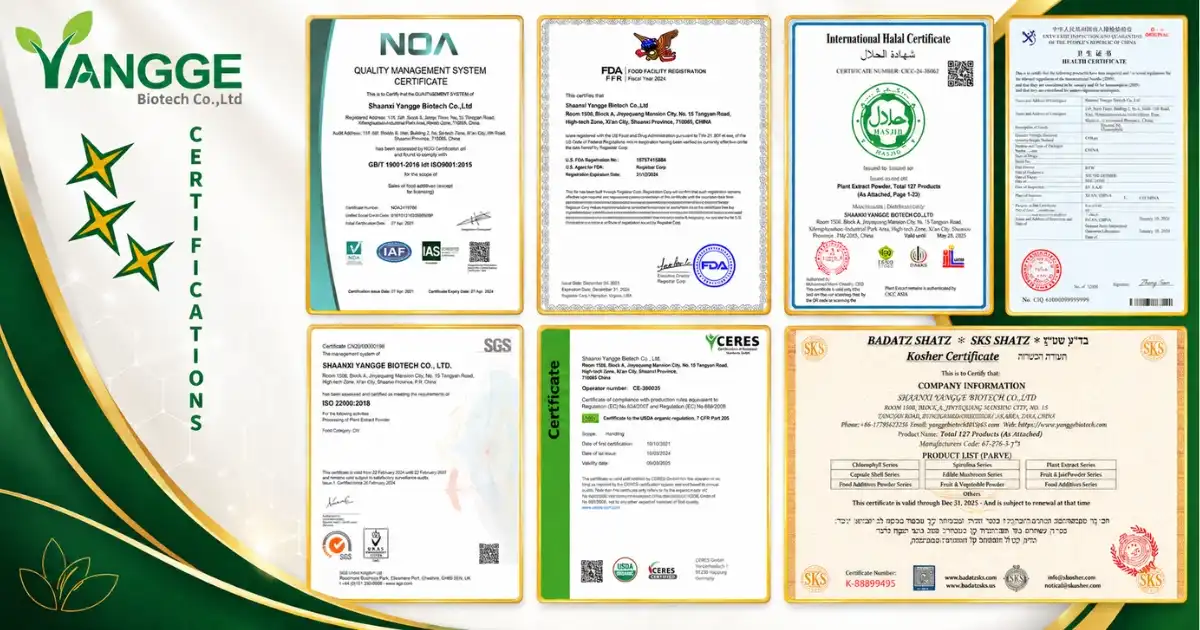
The company Yangge Biotech is certified by ISO, HACCP, Kosher, and Halal. The things are made according to GMP guidelines. Follow the rules that GB 7912 and JECFA give you to get good work. People who want to buy in the EU, US, or Middle East should check to see if their type of product has been approved in those places before finishing formulas.
Comparing Gardenia Yellow Pigment with Other Yellow Pigments
How It Stacks Up Against Common Alternatives
Curcumin, which is found in turmeric, is used by many. But it tastes strong and doesn't work well when the pH level is neutral to high. It's hard to get rid of the orange-red tones in annatto when you need a clean yellow. Tartrazine made in a lab gives strong, even color, but it has to deal with EU labeling rules and a US market that is becoming more and more angry. Gardenia yellow pigment doesn't need to be warned about in the main markets it serves because it has no flavor and dissolves in water without emulsifying.
| Colorant | Water Soluble | Flavor Impact | EU/US Labeling Restriction | Heat Stability |
|---|---|---|---|---|
| Gardenia Yellow | Yes | Minimal | No warning required | High |
| Turmeric | Limited | Noticeable | No | Moderate |
| Annatto | Depends on form | Mild | No | Moderate |
| Tartrazine (FD&C Yellow 5) | Yes | None | EU warning required | High |
Why Buyers Are Making the Switch?
When companies change synthetic yellows, it can be hard to match colors while the new formulas are being made. With a peak at 440 nm, gardenia yellow is easier to switch to than annatto or turmeric yellow. This is because it's close to tartrazine's visible range. There is one plant that gives us both gardenia yellow and gardenia blue. Since they are already green, you don't need to add any other pigments when you mix them.
Finding Trusted Suppliers and Making Inquiries
What to Look for in a Supplier
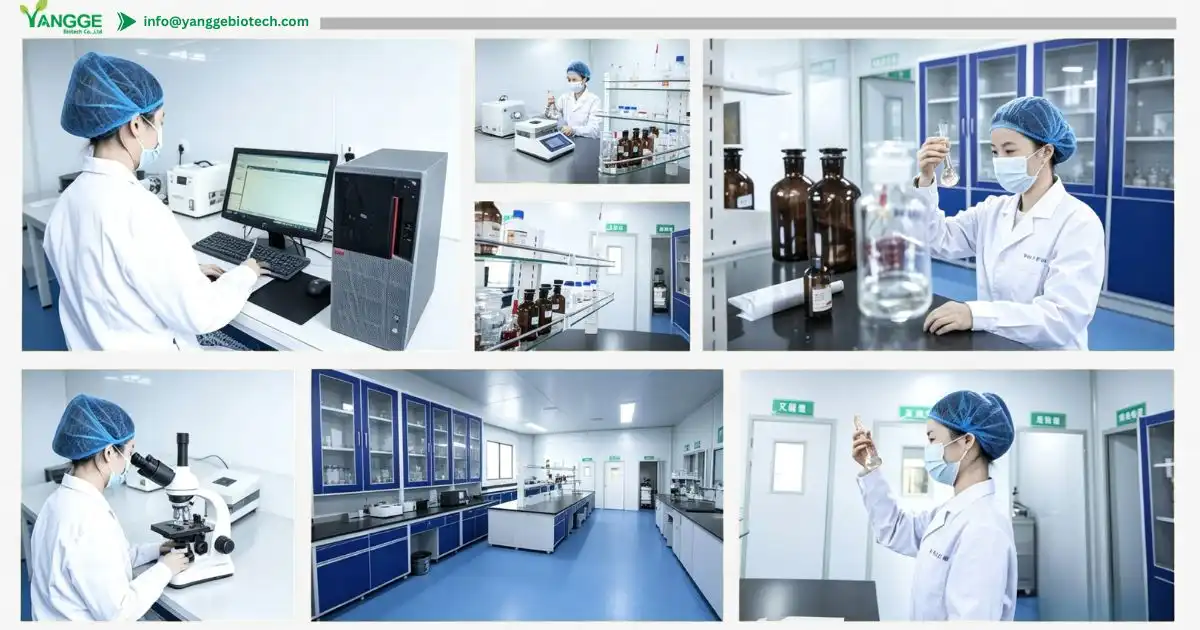
If a company you can trust makes gardenia yellow pigment, they should send HPLC-verified records of analysis with each batch. Aside from that, they should have worldwide food safety certifications and let customers try out small amounts of the pigment to see how stable it is before they buy the whole thing. It's very important that every run is the same. For the same look in the end, there shouldn't be a difference of more than 5% in the color values of the different lots.
Procurement Process and Timeline
Usually, when a company buys something from another company, they first talk about their needs, get a sample, make the product and test it to make sure it's stable, make a few units, and then make a lot of them. People who want to buy something should make sure they have stable data at the pH level, temperature, and packing type they want before they buy it.
Conclusion
Gardenia yellow pigment gives food and beverage manufacturers a technically sound, regulatory-compatible path away from synthetic colorants. With strong water solubility, heat stability up to 120°C, and a broad pH working range, it fits beverage, dairy, confectionery, and bakery applications without requiring emulsification or flavor masking. Choosing the right grade E60, E300, or E500 and verifying quality parameters like geniposide content and heavy metal limits protects both your formulation and your brand. Working with a certified supplier with documented batch consistency reduces procurement risk significantly.
FAQ
Why does my product turn green after adding gardenia yellow?
High residual geniposide content reacts with primary amino groups in proteins and amino acids, producing a blue-green shift. Using a low-geniposide refined grade prevents this reaction entirely.
How should I store gardenia yellow powder?
Store in a sealed container away from direct light and moisture, at room temperature or below. UV-shielding packaging is advisable for clear beverage applications where light exposure is ongoing.
Is gardenia yellow approved for use in the US and EU?
It is permitted in several food categories under EU and JECFA frameworks. Buyers should verify specific category approval for their target market before scaling production.
How does it differ from saffron?
Both contain crocin as the active colorant. Gardenia yellow pigment is a cost-effective, high-volume industrial alternative to saffron, which is impractical for food manufacturing due to supply limitations and cost.
Can I use it in oil-based formulations?
It is naturally water-soluble. Oil-dispersible versions are achievable through specialized emulsification, but standard grades are designed for aqueous and ethanol-water systems.
Request a Sample of Yangge's Gardenia Yellow Pigment Today
There is a blue-green change when proteins and amino acids that still have a lot of geniposide join with key amino groups. If you use a better type with less geniposide, you won't have this reaction.Contact us or email us at info@yanggebiotech.com to get a sample, download our COA, or talk to us about your product needs.
References
1. Buchecker, R., & Eugster, C. H. (1973). "Crocin and related carotenoid glucosides." Helvetica Chimica Acta, 56(3).
2. Mortensen, A. (2006). "Carotenoids and other pigments as natural colorants." Pure and Applied Chemistry, 78(8), 1477–1491.
3. Tsuda, T., et al. (1995). "Antioxidative activity of gardenia yellow pigment." Journal of Agricultural and Food Chemistry, 43(9), 2407–2410.
4. JECFA (2006). "Gardenia Yellow: Monograph on Food Additive." FAO/WHO Joint Expert Committee on Food Additives, 67th Report.
5. Li, X., et al. (2012). "Stability of crocin in aqueous solution under various pH and temperature conditions." Food Chemistry, 134(2), 1128–1133.
6. Downham, A., & Collins, P. (2000). "Colouring our foods in the last and next millennium." International Journal of Food Science & Technology, 35(1), 5–22.

Based on your location and order quantity, you will have the opportunity to receive a limited time free shipping promotion!
Who we are
Popular Blogs