Ganoderma lucidum extract dosage recommendations
Figuring out the right amount of ganoderma lucidum extract to use in health supplements, makeup, or functional drinks is very important for making sure that the products are safe for consumers and that they work as intended. Standardized reishi mushroom extract contains 30–50% polysaccharides, triterpenoids, and ganoderic acids. For immune support, daily doses of 1,500 mg to 3,000 mg are usually recommended, but these amounts can change a lot depending on the extract concentration, bioactive profile, and product format. It is up to procurement managers and research and development teams to make sure that dose methods are in line with accepted clinical standards and the rules that apply to the markets they are trying to reach.
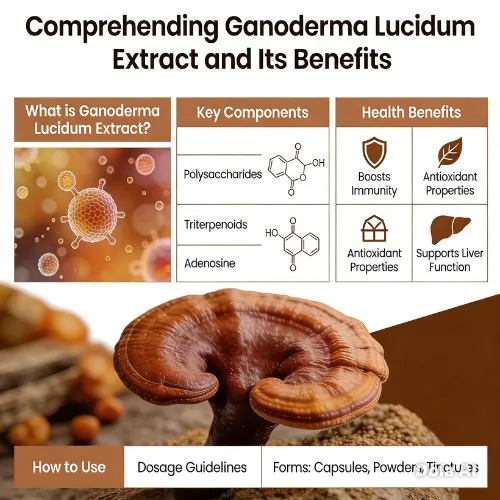
Comprehending Ganoderma Lucidum Extract and Its Benefits
Reishi fungus extract is one of the plant ingredients that has been studied the most in the history of nutraceuticals and cosmetics. This concentrated ingredient is made from the fruiting body and mycelium of ganoderma lucidum using two different methods involving water and ethanol. It separates bioactive chemicals that raw mushroom powders can't offer consistently well. The controlled extract solves one of the biggest problems formulation engineers have to deal with: whole mushroom materials are unpredictable and not very bioavailable.
Key Bioactive Compounds Driving Efficacy
Premium-grade extracts mostly contain polysaccharides, especially beta-glucans, which are immunomodulatory substances. These complex carbohydrates work with natural killer cells and macrophages to improve the body's adaptable immune reaction. Studies that have been published in reputable immunology journals show that polysaccharide amounts between 30 and 50% activate the immune system just right without causing too much inflammation. Ganoderic acids, which are a type of triterpene, have strong antioxidant and liver-protecting qualities. These chemicals help cells grow back and fight free radicals, which makes them useful in anti-aging skin care products and liver health supplements.
Yangge's ganoderma lucidum extract is strictly standardized to have between 30 and 50 percent polysaccharide content, which has been confirmed by Eurofins' testing methods. This uniformity lets research and development teams guess how the product will work across different runs of production. It gets rid of the formulation variability that comes with using poor plant ingredients. The brown powder form of the extract works well in pills, tablets, drinks, and topical treatments without changing their security or how they feel.
Industry Applications Across Multiple Sectors
Nutraceutical companies use Reishi extract in immune-supporting supplements, stress-response formulas, and life goods that are aimed at people who care about their health. The adaptogenic nature of the extract helps keep homeostasis when the body is under stress, which makes it a key ingredient in many modern health products.
Cosmetic companies use ganoderic acids' antioxidant power in anti-aging serums and skin care items that protect against damage. The extract is stable against oxidation and UV breakdown in complex emulsion media, so it stays effective for a long time. Beverage makers use Reishi extracts that dissolve easily in water to make useful coffees, teas, and ready-to-drink elixirs. This is because the better solubility in water keeps the product clear for longer periods of time.
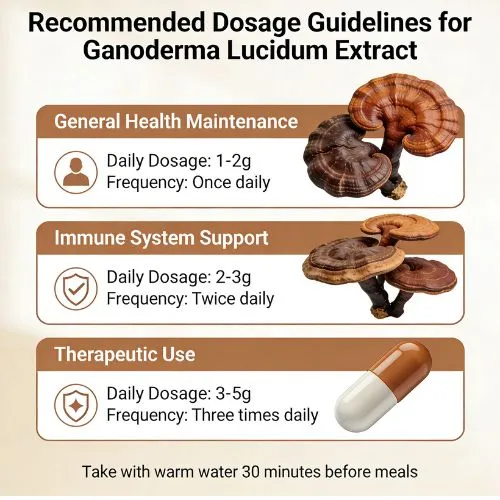
Recommended Dosage Guidelines for Ganoderma Lucidum Extract
To set the right dosage settings, you need to think carefully about how to standardize the ganoderma lucidum extract, the format of the product, and the health results you want to achieve. Instead of needing multiple-gram serves of raw mushroom powder, concentrated extracts give therapeutic ingredients in exact, manageable amounts.
Standard Dosage Ranges by Application
Immune-support formulas usually use 1,500 to 3,000 mg of 30% polysaccharide extract every day, split into two or three doses to keep blood levels of active chemicals steady. This range matches what clinical studies have shown about higher levels of natural killer cells and better immunity marker profiles. Antioxidant and life products often use 1,000 to 2,000 mg per day, with a focus on the triterpenoid content to protect cells and help mitochondria work better. Dosing should be changed by formulation engineers based on how much ganoderic acid is in their particular batch of extract.
Topical serums with 0.5 to 2% extract by weight are used for cosmetic purposes, which require much smaller amounts. These amounts provide enough antioxidant protection without changing the texture or taste of the food. Functional drinks usually have 300 to 500 mg in each dose, which is a good balance between bioactive release, taste, and production costs. Water-soluble extracts stay stable in acidic drinking settings for the length of their shelf lives.
Dosage Calibration Based on Extract Concentration
The amount of polysaccharides directly affects how much of a food to serve. When compared to a 30% extract, a 50% polysaccharide extract needs about 40% less material to give the same amount of bioactives. Before recommending a final dose, procurement managers must make sure that the standardization is accurate by looking at the Certificate of Analysis paperwork. Yangge gives full COA reports for each production batch, which include HPLC chromatograms that show the polysaccharide amount and ganoderic acid profiles.
The solubility and absorption rates are affected by how pure the extract is. Higher polysaccharide amounts in pharmaceutical-grade materials have been shown to improve gastric tolerance, which means they cause less digestive pain than lower-quality products sometimes do. When making goods for sensitive groups or long-term daily use routines, this is especially important to keep in mind.
Safety Thresholds and Regulatory Considerations
Clinical safety data shows that healthy people can take up to 5,000 mg of pure Reishi extract every day without getting sick. However, safe dose ranges between 1,500 mg and 3,000 mg are in line with FDA guidelines for food supplement formulation and offer enough safety gaps. According to European rules, new food applications need to have full safety dossiers. This means that recorded safety profiles are necessary to get into foreign markets.
Manufacturers need to set up strong quality control methods that make sure stability from batch to batch. Changes in carbohydrate content of more than ±10% can have a big effect on how well a product works and how the customer feels about it. Yangge keeps its ISO, HACCP, GMP, and Kosher licenses, which shows that it is dedicated to producing high-quality goods and following all rules in all global markets.
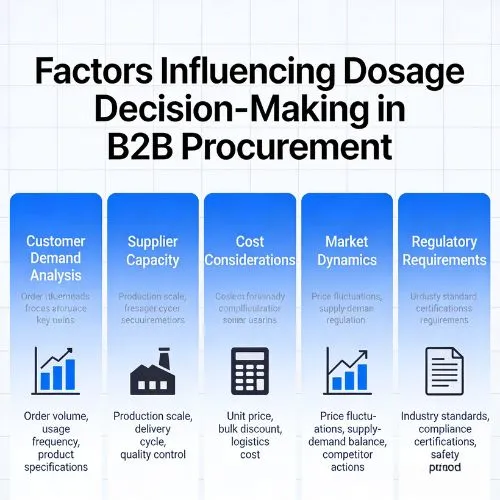
Factors Influencing Dosage Decision-Making in B2B Procurement
When making sourcing choices, people don't just compare prices; they also look at quality factors that directly affect the success of formulations and how well they do in the market. When purchasing managers look at providers of ganoderma lucidum extract, they have to look at a lot of technical and practical factors.
Quality and Purity Standards
Verification by a third-party lab is the best way to make sure that plant ingredients are real. The testing methods used by Eurofins and SGS look for heavy metals, herbicide traces, microbial contamination, and other things that could make the product less safe. Yangge's extracts meet European PAH4 standards by keeping benzopyrene levels below 10 ppb. This is important for goods going to EU markets where polycyclic aromatic hydrocarbons are being closely watched by regulators.
Profiles of pesticide residues need extra care. Agrochemicals that build up in growing bodies are often used in conventional mushroom farming. Premium providers use organic farming methods or strict residue testing to make sure they meet the stricter import rules that are being put in place. Materials with low pesticide residue help clean-label marketing tactics and keep brands from breaking the law or hurting their image.
Traceability documentation allows for openness from farm to formulation, which is something that regulators and health-conscious customers are asking for more and more. Full tracking systems keep track of raw materials from the time they are grown until they are sold. They do this by keeping track of their entire chain of custody. This skill comes in very handy during exams or when answering quality questions from buyers further down the line.
Extract Standardization and Batch Consistency
Formulation engineers need to know how well ingredients will work in different production runs. Changes in biological content mean that formulas have to be changed all the time, which raises the cost of research and the work of quality control. Suppliers with a good reputation use standard extraction methods and analytical tests to keep strict standards. They usually promise polysaccharide content within ±5% of what the label says it is.
Yangge's method for extracting substances blends old knowledge with current process control, which makes extracts that are very consistent from batch to batch. Our production capacity allows for both small-scale samples (minimum order 1 kg) and commercial-scale production, and the quality standards stay the same no matter how much is ordered. Our current inventory levels of 50 to 100 kg allow for quick delivery for product launches that need to happen quickly, and our scalable production infrastructure can handle growing demand without lowering standards.
Packaging and Storage Considerations
Using the right wrapping keeps the biological integrity while it is being shipped and stored. Standard plastic packing doesn't protect against wetness and light as well as aluminum foil bags do. This keeps polysaccharides from breaking down and sensitive triterpenoids from oxidizing. Oxygen-scavenging bags and nitrogen flushing make the shelf life even longer. This is especially important for things that are shipped to wet places or kept for a long time.
The best way to store extracts is in cases that are tightly sealed and out of the light. If you follow these instructions, the extract will stay effective for 24 months. This stable profile makes it easier to keep track of goods and cuts down on waste from old items. There are different kinds of custom packaging to meet the needs of each customer, ranging from large drums for makers who make a lot of products to smaller units for research and product development.
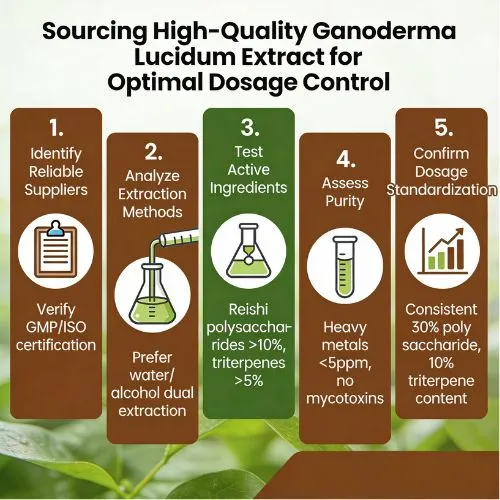
How to Source High-Quality Ganoderma Lucidum Extract for Optimal Dosage Control?
To find good suppliers, you need to carefully check their professional skills, quality control methods, and how reliable their operations are. Because getting plant extracts is so complicated, strict rules are needed to make sure that suppliers are qualified to provide ganoderma lucidum extract.
Evaluating Supplier Credentials and Certifications
Quality certifications provide objective evidence of manufacturing competence and regulatory compliance. ISO 9001 certification shows that quality management is done in a planned way, and HACCP certification shows that danger analysis procedures are in place to keep products safe. GMP approval, especially when checked by outside groups, makes sure that pharmaceutical-grade factories are set up in a way that is safe for delicate plant extracts.
Religious food licenses, like Kosher, open up new markets and let products be sold to specific groups of people. These certificates need to be checked for compliance on a regular basis, which shows that the provider is committed to upholding high standards. Yangge keeps up-to-date certification packages that meet the needs of a wide range of markets in North America, Europe, and the Asia-Pacific area.
Assessment of production capacity stops supply problems that could harm product launches or current production plans. Suppliers should show that they have enough ability to meet present needs plus extra space for growth that is expected. When they are possible, site audits give very useful information about real production capabilities, quality control infrastructure, and operating practices that can't be found in paperwork alone.
Leveraging Bulk Purchasing and Custom Formulation
Volume agreements usually let you get better prices and make sure that you get supplies first when the market isn't available. Long-term supply deals are good for both buyers and sellers. Buyers get stable prices and know that their needs will be met, and sellers can improve their production planning and warehouse management. The terms that are negotiated should include requirements for quality, delivery dates, ways to change prices, and ways to settle disagreements.
With private label services, brands can make their goods stand out by using custom extract blends, special standardizations, or different delivery forms. Experienced suppliers work with R&D teams to create new formulas and give technical advice on how to improve solubility, hide flavors, and make the formulas more stable. This partnership-based method cuts down on recipe risks and speeds up time to market.
OEMs can do more than just private labeling. They can also make whole products, from ideas to finished products that are packed. If a brand doesn't have its own production facilities, it can use the knowledge of its suppliers in areas like formulation science, regulatory compliance, and extraction technology. This plan works especially well for new brands that want to get a foothold in the market without having to spend a lot of money on production sites.
Technical Support and Analytical Services
Suppliers with a good reputation act as professional partners instead of just selling goods. Pre-shipment sample provision lets you test the formulation before committing to full production orders. This lowers the risk of looking for new sources or coming up with new goods. Full technical data sheets list extraction methods, liquid systems, concentration requirements, and suggested use levels, which helps formulators make smart choices.
Ongoing analysis support helps with fixing formulation problems, improving stability, and putting together regulatory paperwork. Having access to suppliers who know a lot about plant chemistry, extraction science, and application technology is worth a lot more than just the raw material itself. Yangge's expert team is available 24 hours a day to answer questions about formulation, compatibility, and application throughout the entire product creation process.
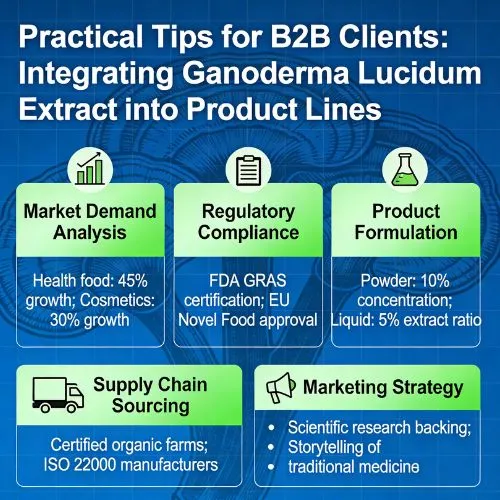
Practical Tips for B2B Clients: Integrating Ganoderma Lucidum Extract into Product Lines
To successfully bring a product to market, you need to pay attention to following the rules, educating customers, and always making the quality better. These operational factors set market leaders apart from rivals whose ganoderma lucidum extract profiles are similar.
Regulatory Compliance and Labeling Requirements
Dietary supplement laws in the US require correct ingredient lists, correct structure-function claims, and required caution statements. On the label of a ganoderma lucidum extract, it must say which part of the plant was used (fruiting body, mycelium, or spores), the percentage or extraction ratio, and the amount that should be taken each day. Manufacturers must back up all claims about their products with good scientific proof, whether it's public study or internal company records.
European Novel Food rules say that ingredients that haven't been used in a lot of foods before 1997 need to be approved before they can be sold. Ganoderma lucidum has a history of traditional use, but based on the extraction method and amount of standardization, some extract preparations may be considered Novel Foods. Early regulatory input stops market delays and the need to re-formulate products, which are both expensive.
Different places have very different rules about health claims. The US allows qualified health claims and structure-function claims that meet certain proof standards. In Europe, claims can only be on lists that have been accepted after a lot of scientific testing. Understanding the legal systems that apply helps you make the right claims, which keeps you from breaking the rules and getting fined for it.
Consumer Education and Brand Differentiation
Clear information about where ingredients come from, quality standards, and benefits expected makes customers believe and stick with a brand. Premium goods are different from cheaper ones because they have more detailed information about them, like how they were extracted, how they were standardized, and if they were tested by a third party. Consumers can get the most out of a product while minimizing the risks of misusing it by reading educational material that explains dosage and usage suggestions.
More and more, environmentally and socially conscious customers who look at purchase choices through these lenses connect with sustainability stories. Suppliers who show responsible farming, fair labor standards, and care for the environment create engaging brand stories that go beyond the usefulness of the product. Yangge's dedication to environmentally friendly buying relationships and the use of green energy in manufacturing operations backs up claims that their products are truly environmentally friendly.
Quality Monitoring and Continuous Improvement
Post-launch surveillance systems record customer comments, reports of bad events, and information about how well the product works so that changes can be made over and over again. Communication with distribution partners is one of the best ways to get first-hand information about what customers want, how the competition is changing, and new quality issues. This feedback process lets formulas be improved before problems get worse and cause big quality issues or market share loses.
Monitoring a product's stability over its entire shelf life makes sure that the quality standards that were set at the start still hold true in real-world storage and distribution circumstances. Accelerated aging studies act like long-term storage, finding possible ways of breaking down substances and helping with changes to the recipe or package design. These investments in quality assurance protect the brand's image and make sure that customers always have the same experience.
Conclusion
How much ganoderma lucidum extract to take depends on how it is standardized, what it is being used for, and what health effects are wanted. Extracts that are standardized to 30–50% polysaccharides usually work best at 1,500–3,000 mg per day to support the immune system, though this can change depending on the product type and the people who will be using it. To make a good purchase, you need to carefully check the suppliers' quality certifications, analytical accuracy, and technical help skills. Pharmaceutical-grade extracts from Yangge, backed by thorough Eurofins testing and international certifications, give careful manufacturers making high-end health supplements, functional foods, and cosmetics for competitive global markets the consistency and dependability they need.
Partner with Yangge for Premium Ganoderma Lucidum Extract Supply
Yangge Biotech provides pharmaceutical-grade reishi mushroom extract that is standardized to 30–50% polysaccharides. This meets the exact needs of supplement makers, beauty formulators, and functional food creators in the European and North American markets. Our materials meet EU PAH4 guidelines and go through a strict Eurofins inspection process, which makes sure they have low levels of pesticide residues and full heavy metal screening. We are a reliable source of ganoderma lucidum extract and have ISO, HACCP, GMP, and Kosher certifications. Our minimum orders are very low, starting at just 1 kg, which makes us perfect for research and development (R&D) trials and small-batch production.
During the entire process of developing your product, our expert team will help you with all aspects of formulation, including improving solubility, adjusting dose, and making the product more stable. Get in touch with info@yanggebiotech.com right away to get samples, look over our most up-to-date COA paperwork, and learn how our traceable, sustainably sourced plant extracts can help your product line meet strict regulatory standards across global markets.
FAQ
Q: Can we get some samples to test before purchasing?
A: Of course, we can provide free samples of 20 to 100 grams, but the shipping cost is at the customer's expense. The shipping cost can be deducted from the next order, or the samples can be sent through your courier account.
Q: Do your products have relevant certifications?
A: Yes, our products are certified for HALAL, ISO, HACCP, Kosher, and other certifications.
Q: What is the minimum order quantity (MOQ)?
A: Small batches of samples can be customized according to your requirements.
Q: Do you offer OEM and ODM services? Can the formula be customized based on our own?
A: Of course, we provide ODM and OEM services to many customers. Our product range includes softgels, capsules, tablets, sachets, granules, and private label services. Simply contact us and let us know your requirements. Our experienced R&D team can also develop new products with specific formulas.
Please contact us to design your own branded products.
Q: How do you handle quality complaints?
A: First, we have a comprehensive quality control SOP. We provide authoritative third-party inspection reports for almost all products before shipment to minimize the possibility of quality issues. Second, we have a comprehensive return and exchange procedure. If there is a genuine quality dispute, we will strictly follow the SOP.
Q: How do you ship? How long does delivery take?
A: For small orders, we typically use DHL, UPS, EMS, FedEx, or TNT. Delivery typically takes 3-7 days. We also offer air and sea freight services. We have a strong freight forwarding team and can provide you with a one-stop service, including DDP and DDU.
Q: What are your payment terms?
A: 100% prepayment, payable by T/T, Western Union, MoneyGram, or PayPal.
Q: What is the shelf life of your products?
A: 2 years with proper storage.
References
1. Benzie, I.F. & Wachtel-Galor, S. (2011). "Ganoderma lucidum (Lingzhi or Reishi): A Medicinal Mushroom." In Herbal Medicine: Biomolecular and Clinical Aspects, 2nd edition. CRC Press/Taylor & Francis.
2. Wachtel-Galor, S., Yuen, J., Buswell, J.A., & Benzie, I.F. (2011). "Ganoderma lucidum (Lingzhi or Reishi): Standardization and Bioactive Compounds." In Herbal Medicine: Biomolecular and Clinical Aspects. CRC Press.
3. Sanodiya, B.S., Thakur, G.S., Baghel, R.K., Prasad, G.B., & Bisen, P.S. (2009). "Ganoderma lucidum: A Potent Pharmacological Macrofungus." Current Pharmaceutical Biotechnology, 10(8), 717-742.
4. Paterson, R.R. (2006). "Ganoderma – A Therapeutic Fungal Biofactory." Phytochemistry, 67(18), 1985-2001.
5. Bishop, K.S., Kao, C.H., Xu, Y., Glucina, M.P., Paterson, R.R., & Ferguson, L.R. (2015). "From 2000 Years of Ganoderma lucidum to Recent Developments in Nutraceuticals." Phytochemistry, 114, 56-65.
6. Ahmad, M.F. (2018). "Ganoderma lucidum: Persuasive Biologically Active Constituents and Their Health Endorsement." Biomedicine & Pharmacotherapy, 107, 507-519.

Based on your location and order quantity, you will have the opportunity to receive a limited time free shipping promotion!
Who we are
Popular Blogs