Best ceremonial grade matcha powders 2026
In the world food and drink market going into 2026, Matcha Powder is one of the most sought-after products. As a B2B buying professional, you need to know what truly ceremonial grade material is in order to launch successful products and avoid costly formulation mistakes. Ceremonial grade matcha is very different from culinary grade matcha because it is grown using strict shade-growing methods that cause chlorophyll overproduction. This gives it its signature emerald color and higher L-theanine content, which gives it smooth, umami-rich flavors without being bitter. The market in 2026 wants ingredient providers who can show consistency from batch to batch, proven origin traceability, and compliance with international safety standards. These are all things that have a direct effect on the performance of your finished product and the image of your brand in competitive markets.
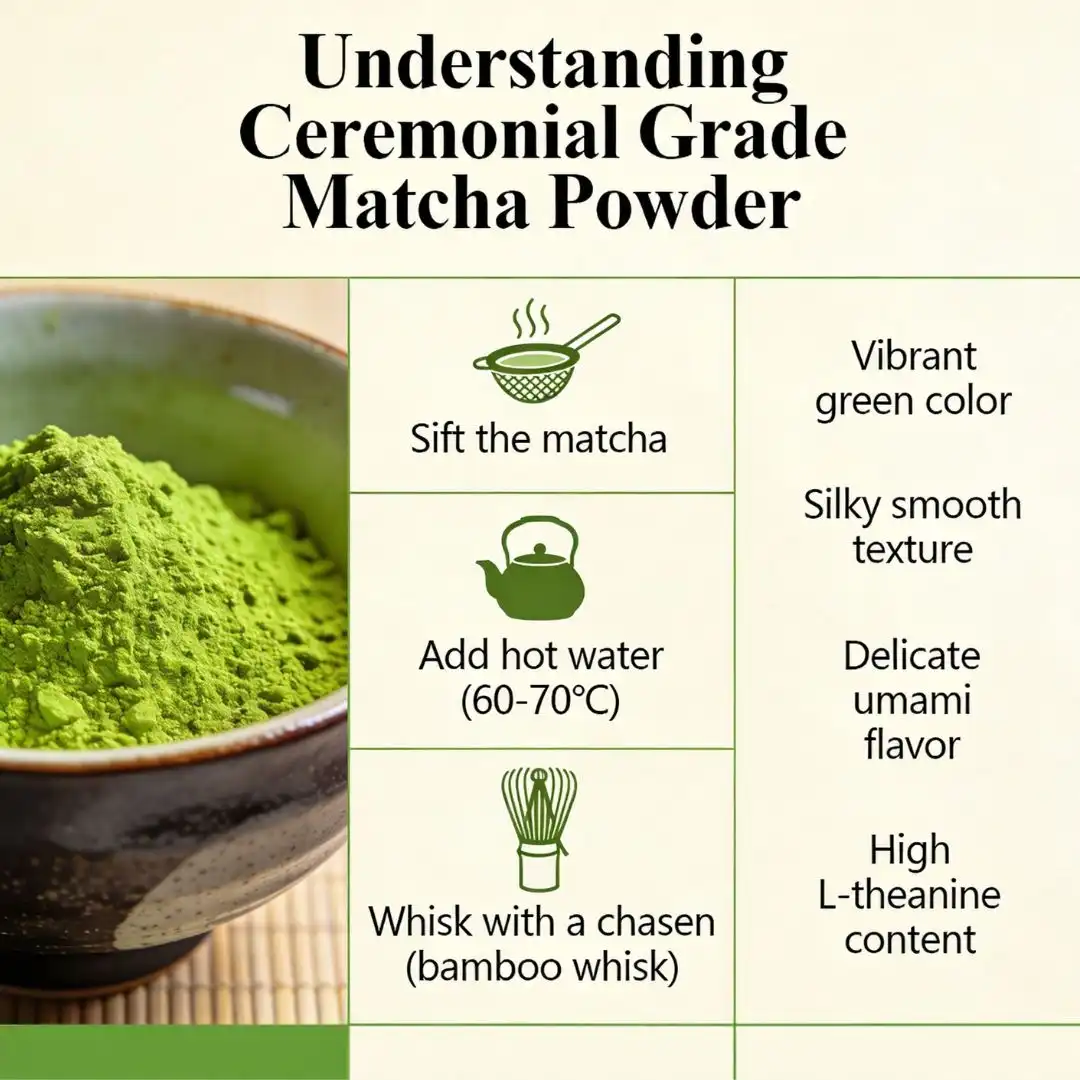
Understanding Ceremonial Grade Matcha Powder
Ceremonial grade Matcha Powder sets standards for quality by having measured physical and chemical properties that set it apart from lower-grade options. The bright green color comes from chlorophyll levels that are 300–500% higher than normal tea leaf levels. This is possible by covering the Camellia sinensis plants for 20–30 days before harvest, which causes specific metabolic reactions in the plants.
Phytochemical Profile and Nutritional Significance
The amino acid L-theanine is found in high amounts (above 18 mg/g) in top ceremonial grades. It gives coffee its unique umami flavor and controls the absorption of caffeine to avoid the energy crashes that come with drinking coffee. Total catechin content, especially epigallocatechin gallate (EGCG), is between 10 and 18% by weight. It provides antioxidant support for health claims in functional food uses. Tea polyphenols are the main active ingredients. They are stable across pH ranges as long as they are handled properly, which means they can be used in a wide range of formulations, from acidic drinks to neutral supplement powders.
Processing Methods That Preserve Quality
For ceremonial-grade output, traditional stone-grinding is still the best method because it produces less friction heat than industrial blade mills. Low-temperature processing keeps volatile taste molecules and other chemicals that are sensitive to heat intact. It also stops chlorophyll demetallation, which breaks down color. During production, suppliers who keep the temperatures in the grinding chamber below 60°C protect the molecular integrity that buying managers have to check using technical standards. This makes a distribution of very small particles (2000–3000 mesh) that are necessary for high-end beverage uses where clarity and texture are important to how people see the drink.
Brewing Parameters for Quality Preservation
The temperature of the water has a big effect on how well flavors are extracted and nutrients are kept. The best way to prepare it is between 70°C and 80°C (158°F and 176°F), which lets the microparticles mix completely and stops heat-sensitive catechins from breaking down. Higher temperatures remove too many tannins, which adds astringency that hides the delicate sweetness of special grades. When giving advice to customers further down the line or writing up technical documents for formulation teams, procurement pros should know about these factors.
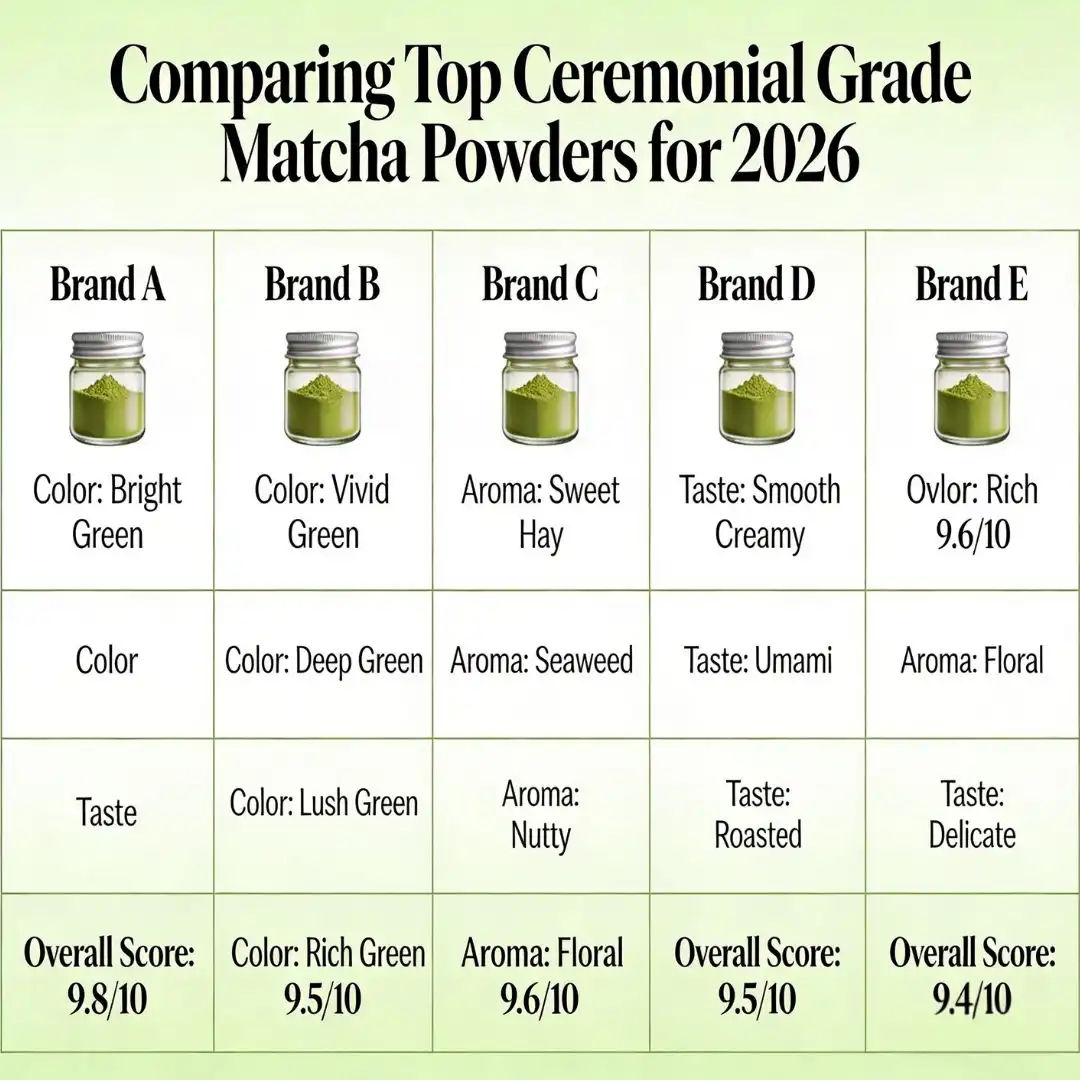
Comparing Top Ceremonial Grade Matcha Powders for 2026
Comparing prices isn't enough to evaluate suppliers of ceremonial Matcha Powder; you need to do a thorough evaluation of their performance across a number of performance factors. Leading sellers in the 2026 market set themselves apart by offering vertical integration, which includes partnerships for farming, certifications for processing facilities, and technical support services that make procurement relationships more valuable.
Origin Authentication and Cultivation Standards
Japanese-origin matcha still has the biggest share of the market, especially material from the Uji, Nishio, and Shizuoka regions, where farmers have been growing plants for hundreds of years and have perfected the process of making uniform phytochemical profiles. Although China has become a major producer and offers lower prices, the taste tends toward stronger vegetable notes compared to Japan's sweetness. Origin verification through isotope analysis or supplier checks keeps your business safe from mislabeling, which could lead to fines and damage to your image.
Certification Frameworks and Regulatory Compliance
Organic approval by the USDA, the EU, or JAS meets the growing demand for clean labels while charging 20–35% more. KOSHER and Halal approvals make it easier for goods that are aimed at certain groups of people to reach new customers. USP grade requirements make sure that pharmaceutical-level quality standards are met, which means that the supplement can be used in places where strict control is needed for heavy metal levels, pesticide leftovers, and microbial contamination. Suppliers with ISO 22000, HACCP, and GMP licenses show that they have quality management systems that lower the risk of purchasing and make it easier to file with regulators.
Supplier Differentiation and Value Propositions
Yangge Biotech stands out because it offers integrated services that cover the whole buying process. Our specs for Matcha Powder include choices with 800 mesh, 2000 mesh, and 3000 mesh, so formulation teams can choose particle sizes that work best for each application. The low-temperature baking and grinding method of extraction keeps all of the polyphenols in tea while keeping the bright green color that quality goods need.
What makes specialized suppliers different is that they offer expert help that goes beyond just selling ingredients. Blending services let customers make their own special mixes by putting matcha with useful ingredients that work well together. This makes the supply chain simpler and protects the formulation's intellectual property. Customization options, such as changing specifications, changing the way products are packaged, and private marking, help brands stand out without having to spend money on their own production infrastructure.
Grade Classification and Value Assessment
The market is split into three groups: formal, premium, and culinary. However, sellers don't always use the same terms. In bulk, ceremonial grades usually include first-harvest leaf tips that have been ground into the smallest particles. They sell for between $80 and $200/kg. At $30 to $60/kg, culinary grades use later crops and rougher grinding, and they can be used in baking and as the base for flavored drinks. By knowing these differences, you can avoid paying too much for premium grades in situations where cooking standards are enough. When you buy more than one ton, you can often get better prices. This makes supplier ties valuable assets that you should work to build by trying samples first and gradually increasing the amount.
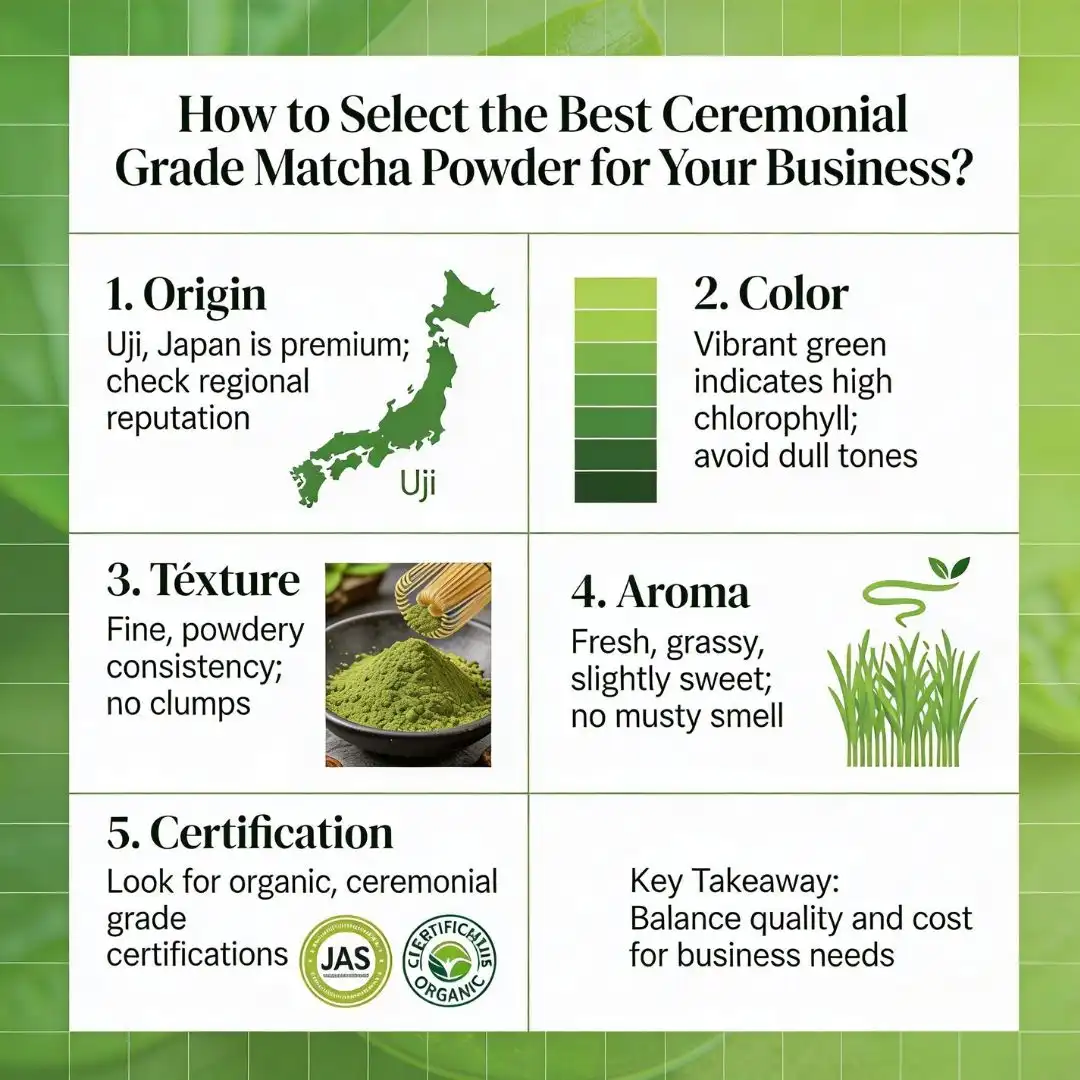
How to Select the Best Ceremonial Grade Matcha Powder for Your Business?
By matching the Matcha Powder specs to the needs of the application, costly formulation mistakes can be avoided and ingredient spending can be maximized. Systematic evaluation frameworks should be used to make purchasing choices. These frameworks should look at both technical performance standards and supplier relationship factors that affect the reliability of the supply chain in the long run.
Application-Specific Selection Criteria
Manufacturers of ready-to-drink drinks need ultra-fine particles (2000–3000 mesh) that stay in suspension during UHT pasteurization without becoming harshly astringent in complex liquid matrices. Standardized EGCG content is important to supplement makers, and batch reports of analysis show the active ingredient concentrations that back up label claims and regulatory compliance. For high-end tea shops to look good, they need ritual grades with better whisking qualities that make stable foam structures that define traditional preparation styles.
Evaluating Color Stability and Sensory Attributes
Degradation of color is the main quality issue in all marketing platforms. In lab color space research, negative "a" values show how intense the greenness is, while "L" values show how bright it is. Suppliers should show spectrophotometric data that shows the color stays the same after being tested for stability quickly, as if it were stored in a normal environment for six months. Sensory evaluation should use trained panels to measure umami strength, sweetness perception, and astringency levels. This way, flavor profiles can be made sure to match the tastes of the target consumers.
Certification Requirements and Documentation Standards
For different uses, you need different qualification portfolios. Dietary supplements sold in the US must come from sellers who are listed with the FDA and follow the current Good Manufacturing Practices set out in 21 CFR Part 111. Export markets might need extra approvals, like an EU Novel Foods authorization or an import pass specific to the country. When qualifying a seller, asking for full paperwork packages helps avoid shipment delays and legal problems that throw off production schedules.
Supplier Capability Assessment Framework
Along with the quality of the ingredients, you should also look at the supplier's operational skills, such as the minimum order amounts, the consistency of the wait time, and the inventory management systems. Can the provider increase production to keep up with changes in seasonal demand without lowering the quality? Do they keep a backup stock to protect against problems with the supply chain? What kinds of expert tools are there to help with formulating problems and making new applications? When suppliers give a wide range of services, they stop being transactional sellers and become strategic partners, providing value that goes beyond price.
Pricing Structure Analysis
The price of bulk Matcha Powder depends on many things, such as when it is harvested, how much it costs to prepare, how much it costs to be certified, and how hard it is to find origins. Ask for detailed quotes that break down the base price, savings for buying in bulk, and any extra costs for things like testing, packing, or shipping. A lot of sellers offer yearly or subscription-based plans that keep prices stable and make sure that supplies are distributed evenly during times when supplies are low. Instead of just looking at the unit price of the raw material when comparing bids, adjust prices to the supplied cost per kilogram of active ingredient.
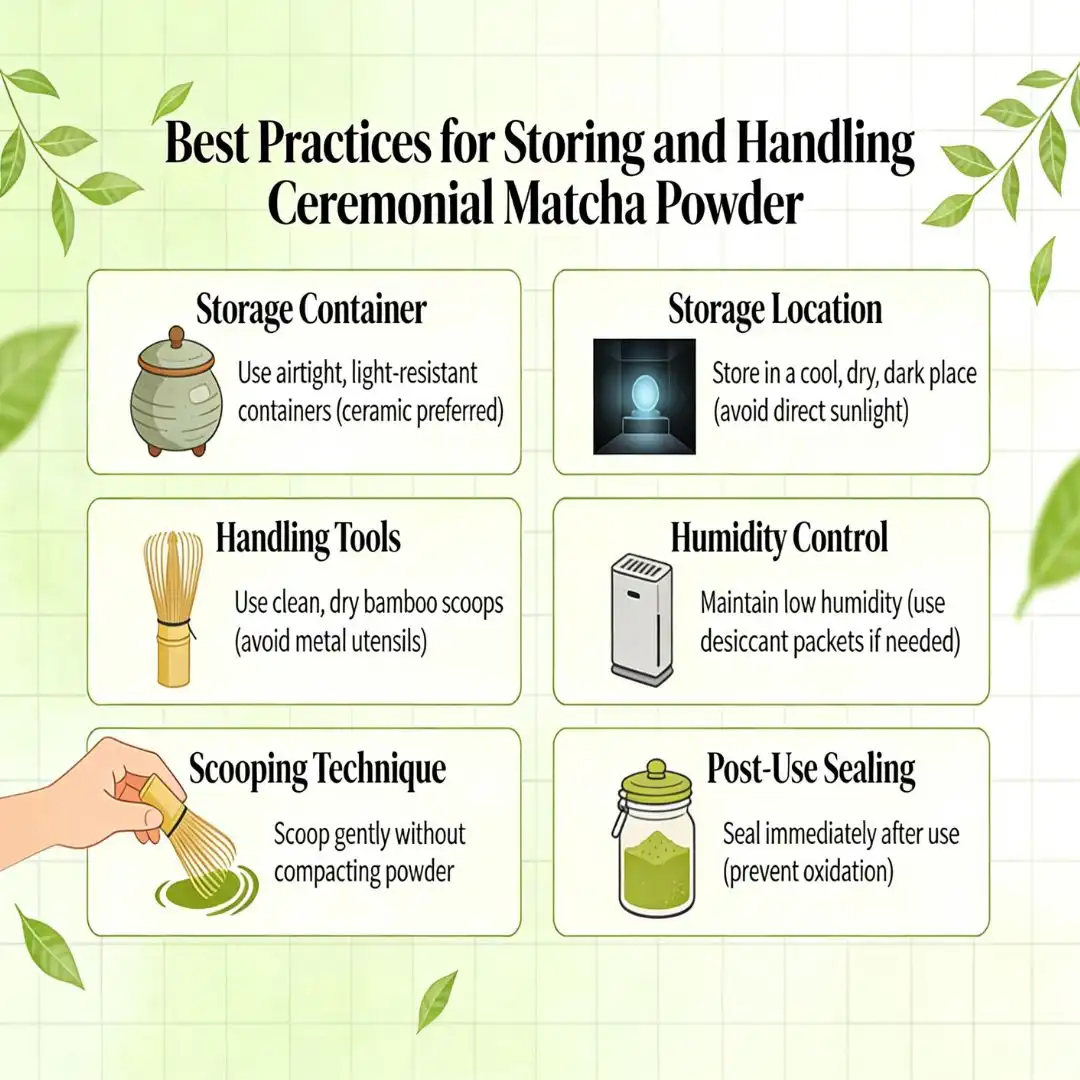
Best Practices for Storing and Handling Ceremonial Matcha Powder
Matcha Powder has a very high nutritional density, but it needs to be handled carefully so that the quality doesn't go down, which would take away from the special qualities that make it worth the high price for ritual use. Using the right storage methods all along your supply chain saves the money you spend on ingredients and makes sure that finished goods give customers the same experience every time.
Environmental Control Parameters
Controlling the temperature is the most important thing about keeping. Matcha should stay below 15°C while it is being stored and shipped. It can last longer than 18 months if it is frozen at -18°C. When the relative humidity is above 60%, it makes it easier for wetness to be absorbed, which causes clumps and makes conditions good for microbe growth. Light, especially UV bands, speeds up chlorophyll photodegradation through demetallation processes. Under fluorescent lighting in stores, the color changes from bright green to brownish-olive in just a few weeks.
Packaging Technologies and Material Selection
Multi-layer laminate bags with metal shields protect better against oxygen and moisture than regular flexible packing. During packing, nitrogen flushing pushes oxygen out of the way, which keeps volatile aromatic chemicals and catechins from going bad due to oxidation. Individual amount packing in single-serve sachets lowers oxidation exposure after opening, which is helpful for people who don't use a lot of the product. When bargaining with suppliers, make sure that the packing materials and gas flushing routines are listed as technical requirements that must be met, not as things that the supplier can choose to do.
Inventory Management and FIFO Protocols
Even in the best settings, matcha quality decreases over time when stored. Using first-in, first-out product rotation keeps stores from filling up with old stock. Using Julian date methods for date coding makes it easy to see how old something is, which helps with making decisions about how to dispose of it based on its quality. Testing typical samples every three months for color values, catechin content, and sensory attributes is part of quality checks that find degradation trends before they affect how well the finished product works.
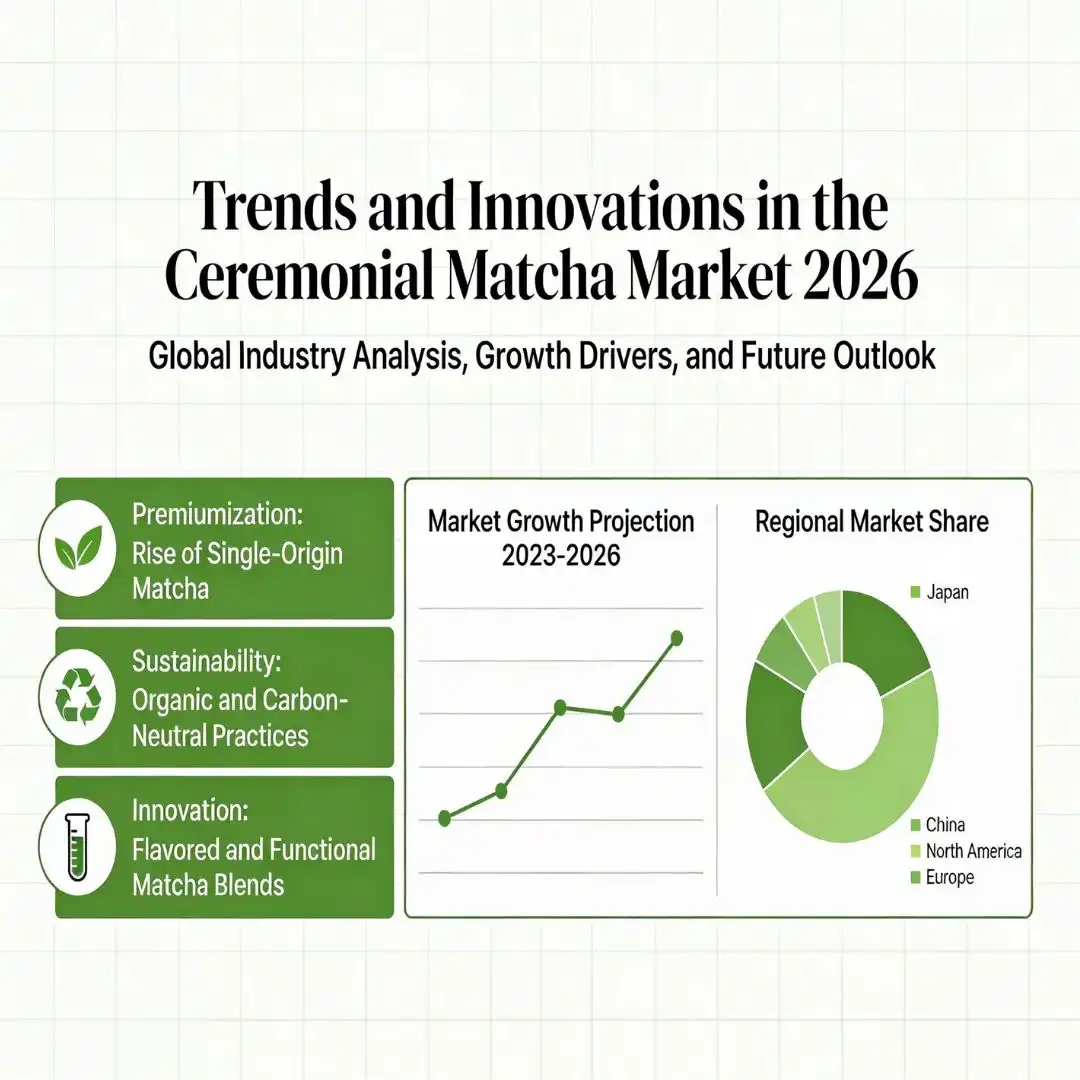
Trends and Innovations in the Ceremonial Matcha Market 2026
New technologies, changing customer tastes, and new types of applications are all changing the ceremonial Matcha Powder scene all the time. This creates new buying opportunities and competitive pressures for companies that are already in the market.
Sustainable Sourcing and Traceability Demands
As people become more aware of how their actions affect people and the environment, sustainability standards become more important in their buying choices. Blockchain-based tracking systems make it possible to check growing methods, harvest times, and who has control of the supply chain from the farm to the finished product. Regenerative agriculture certificates show that the earth is healthier and that carbon is stored, which is appealing to brands that care about the environment. Suppliers who have direct relationships with farming communities offer openness that can't be found in commodity trade networks. This helps companies with their social responsibility efforts and ensures safe long-term supply access.
Processing Technology Advancements
Precision grinding technologies that use computer-controlled temperature tracking and particle size distribution analysis make the specs more stable from batch to batch than older methods. Liquid nitrogen freezing during cryogenic grinding stops any thermal decay and creates very small particles. Near-infrared spectroscopy is used in advanced quality control systems that allow real-time chemical analysis during production. This finds problems before the material goes into packing. These technological advances set elite providers apart and make price increases reasonable by improving quality in a way that can be measured.
Emerging Application Categories
Matcha is being used more and more as an active ingredient in health supplements to improve brain function, digestive health, and antioxidant levels. Caffeine and L-theanine work together in sports nutrition items to give you long-lasting energy without the jitters. Antimicrobial catechin qualities and chlorophyll-based cleansing claims are used in cosmetics that are put on the skin. Each type of application has its own technical needs when it comes to particle size, purity, and certification. This creates opportunities for suppliers who can give specialized material grades and technical help for developing new products.
Conclusion
To find ceremonial-grade Matcha Powder for business-to-business uses in 2026, you'll need to use complicated global supply chains and sophisticated buying strategies to balance quality requirements, supplier capabilities, and total cost concerns. There are differences between ritual and cooking grades that go beyond marketing terms. These differences include measured phytochemical profiles and processing methods that have a direct effect on how well the finished product works.
Instead of just looking at unit prices, good buying managers use thorough frameworks that look at suppliers' certification portfolios, expert support skills, and operating dependability. As the market for drinks, supplements, and food items continues to grow, smart supplier relationships become competitive benefits that give access to new ideas, supply security, and consistent quality that allow premium product positioning.
Partner with Yangge Biotech as Your Trusted Matcha Powder Supplier
The Matcha Powder that Yangge Biotech sells is of the highest quality and is used in ceremonies. The company guarantees its quality and lets customers make changes that fit their needs. Our KOSHER and USP grade specs, which are offered in bulk amounts of up to one ton, meet the high standards of companies that make health supplements, drinks, and functional foods for the US market. Because our Matcha Powder comes in grain sizes of 800 mesh, 2000 mesh, and 3000 mesh, you can make it in a way that works best for your needs.
Our ISO, HACCP, KOSHER, and Halal standards show that our quality management systems protect the image of your brand and make it easier for you to follow the rules in foreign markets. The low-temperature extraction method keeps the polyphenol activity of the tea and keeps the bright green color that is needed for premium placement. Yangge not only provides raw materials, but also offers integrated blending services that make unique formulas, customizable package solutions, and private labeling support. These services shorten the time it takes to create a product and make the supply chain simpler.
Our farm-to-table traceability method makes sure that the full origin of the food is checked and that sustainable buying practices are used, which are in line with corporate responsibility efforts. Contact us or email our expert team at info@yanggebiotech.com to ask for samples, talk about your unique needs, and find out how our 24-hour support and dedicated research and development (R&D) can help you with your buying problems and open up new product development possibilities.
FAQ
Q: Can we get some samples to test before purchasing?
A: Of course, we can provide free samples of 20 to 100 grams, but the shipping cost is at the customer's expense. The shipping cost can be deducted from the next order, or the samples can be sent through your courier account.
Q: Do your products have relevant certifications?
A: Yes, our products are certified for HALAL, ISO, HACCP, Kosher, and other certifications.
Q: What is the minimum order quantity (MOQ)?
A: Small batches of samples can be customized according to your requirements.
Q: Do you offer OEM and ODM services? Can the formula be customized based on our own?
A: Of course, we provide ODM and OEM services to many customers. Our product range includes softgels, capsules, tablets, sachets, granules, and private label services. Simply contact us and let us know your requirements. Our experienced R&D team can also develop new products with specific formulas.
Please contact us to design your own branded products.
Q: How do you handle quality complaints?
A: First, we have a comprehensive quality control SOP. We provide authoritative third-party inspection reports for almost all products before shipment to minimize the possibility of quality issues. Second, we have a comprehensive return and exchange procedure. If there is a genuine quality dispute, we will strictly follow the SOP.
Q: How do you ship? How long does delivery take?
A: For small orders, we typically use DHL, UPS, EMS, FedEx, or TNT. Delivery typically takes 3-7 days. We also offer air and sea freight services. We have a strong freight forwarding team and can provide you with a one-stop service, including DDP and DDU.
Q: What are your payment terms?
A: 100% prepayment, payable by T/T, Western Union, MoneyGram, or PayPal.
Q: What is the shelf life of your products?
A: 2 years with proper storage.
References
1. Dietz, C., & Dekker, M. (2017). Effect of Green Tea Phytochemicals on Mood and Cognition. Current Pharmaceutical Design, 23(19), 2876-2905.
2. Jakubczyk, K., Drużga, A., Katarzyna, J., & Skonieczna-Żydecka, K. (2020). Antioxidant Potential of Curcumin—A Meta-Analysis of Randomized Clinical Trials. Antioxidants, 9(11), 1092.
3. Kochman, J., Jakubczyk, K., Antoniewicz, J., Mruk, H., & Janda, K. (2021). Health Benefits and Chemical Composition of Matcha Green Tea: A Review. Molecules, 26(1), 85.
4. Sarkar, A., & Bhaduri, A. (2019). Matcha Green Tea: An Assessment of the Current State of Knowledge. Journal of Food Science and Technology, 56(11), 4849-4856.
5. Willson, C. (2018). The Clinical Biochemistry of Green Tea Polyphenols: A Comprehensive Review. Journal of Clinical Biochemistry and Nutrition, 62(1), 18-25.
6. Zhang, L., Ho, C. T., Zhou, J., Santos, J. S., Armstrong, L., & Granato, D. (2019). Chemistry and Biological Activities of Processed Camellia sinensis Teas: A Comprehensive Review. Comprehensive Reviews in Food Science and Food Safety, 18(5), 1474-1495.

Based on your location and order quantity, you will have the opportunity to receive a limited time free shipping promotion!
Who we are
Popular Blogs