Benefits of Black Carrot Concentrate for Beverage and Juice Makers
Black carrot concentrate is a clean-label substitute for synthetic colours such as Allura Red for beverage and juice producers. This dark red to purple powder is derived from Daucus car L. roots and contains acylated anthocyanins that maintain colour after pasteurisation and UHT processing. It is freely soluble in water. It works best in acidic chemistry (pH 2.5–4.0) and passes the EU PAH4 test with a concentration of benzopyrene ≤10 ppb. It provides producers targeting health-conscious customers in North America and Europe with both regulatory certainty and enticing “berry-red” visual impact on shelf.

What Is Black Carrot Concentrate and Why Beverage Makers Should Care
Origin and Botanical Identity
About 1,100 years ago, the black carrot (Daucus carota L. ssp. sativus var. atrorubens) was first grown in Afghanistan. Back then, purple-fleshed carrots were popular. It wasn't until the 1600s that orange carrots came to Europe. Acid bonds in acylated cyanidin-3-glycosides give it its bright color. These anthocyanins have a "cage" structure made up of sinapic, ferulic, and coumaric acid bonds. This is the main reason why food sources that aren't acylated, like grape skin, lose their color more quickly in heat and light.
How It Differs From Beetroot and Regular Carrot
This natural red comes from beets and is used by most formulators. While betanin does not change color when heated above 60 °C, it does break down quickly and turns brown through the Maillard process when heated. Carrots that are orange have beta-carotene, but carrots that are red or purple don't. The need is met by black carrot concentrate, which is red after being pasteurized, doesn't fade under store fluorescent lights, and doesn't taste earthy like some beet-based colors do.
Product Snapshot: Yangge Black Carrot Extract
| Specification | Detail |
|---|---|
| Appearance | Dark red-purple powder |
| Solubility | Good water solubility |
| Test Method | HPLC |
| Part Used | Root |
| GMO / Allergen | Non-GMO, Non-Allergen, No Irradiation |
| EU Compliance | PAH4 compliant; Benzopyrene ≤10 ppb |
| Packaging | 1 kg aluminum foil bag or custom |
| Storage | Sealed, away from light |
| Brand | Yangge |

Core Benefits of Black Carrot Concentrate for Beverage and Juice Makers
A constant color, governmental approval, shelf stability, and a label that people can trust are some things that people who make drinks have to make sure are always there. This is what black carrot concentrate and black carrot anthocyanin extract does to help you with each of these needs:
- Clean-label replacement for synthetic dyes. FD&C Red 40 (Allura Red) carries EU warning labels that require "may have an adverse effect on activity and attention in children." Black carrot extract carries no such obligation. It reads as a simple fruit/vegetable extract on ingredient declarations, supporting clean-label positioning in the US, EU, and Australia/New Zealand simultaneously.
- Heat and process stability. Acylated anthocyanins withstand pasteurization (72 °C/15 sec) and standard UHT conditions without the brown-shift seen with beet juice. This means manufacturers can apply it in carbonated soft drinks, vitamin-enhanced waters, kombucha, and juice blends without formulation workarounds.
- Antioxidant and wellness appeal. Per 100 g of black carrot, the nutritional profile includes 334% of the RDI for Vitamin A and meaningful anthocyanin density. Published research links anthocyanins to free radical scavenging, eye health support, and hepatoprotective activity — all attributes that support functional beverage positioning.
- pH-responsive color range. At pH 3.0–4.0, the pigment delivers a brilliant ruby red. At pH 4.0–5.0, it shifts toward purple-violet. This gives formulators a natural tool for color differentiation across product lines without introducing additional pigment SKUs.
One hundred grams of black carrot has 334% of the RDI for vitamin A and a good amount of anthocyanins, which are good for your health. Free radicals can be neutralized by anthocyanins, which also helps keep the eyes healthy and keeps the liver safe. There are benefits to putting healthy drinks in these categories.

Comparing Black Carrot Concentrate With Alternatives
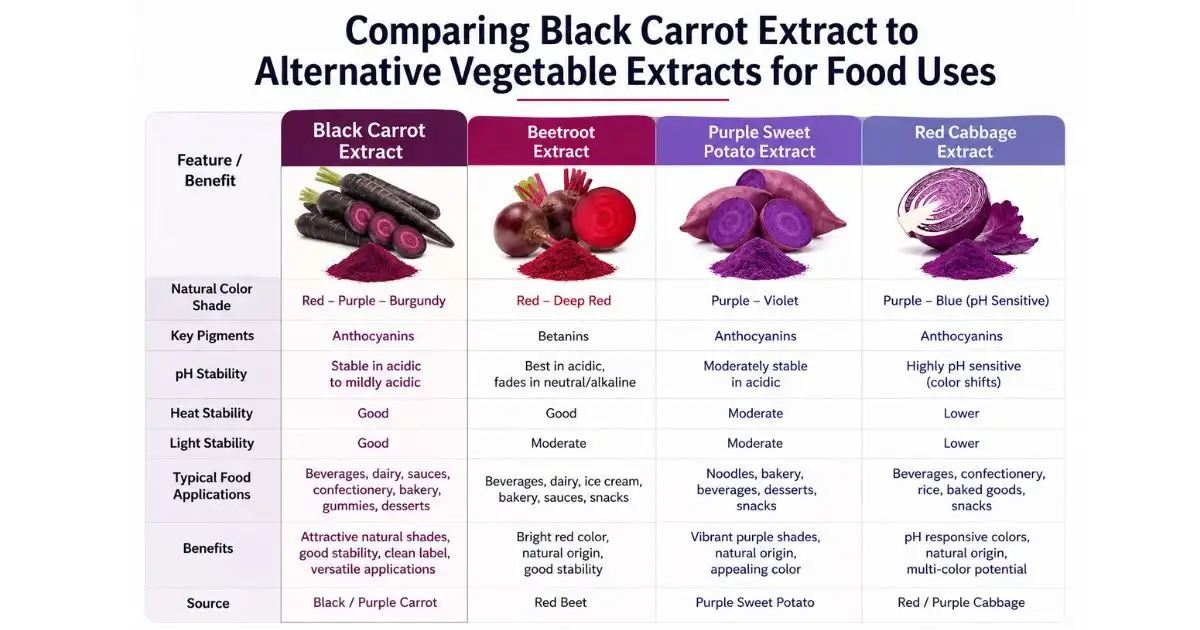
When you choose the right natural red coloring, it's not just about color. This decision is based on the color source, how stable it is at high temperatures, label requirements, and the risk of off-flavoring.
| Pigment Source | Heat Stability | pH Range (Red) | Label Status | Off-Flavor Risk |
|---|---|---|---|---|
| Black Carrot Extract | High (acylated) | 2.5–4.0 | Clean-label | Very low |
| Beetroot (Betanin) | Low (degrades >60 °C) | 3.5–5.0 | Clean-label | Earthy/geosmin |
| Grape Skin Extract | Moderate | 2.5–3.5 | Clean-label | Slight winey |
| Allura Red (FD&C 40) | High | Broad | Synthetic — EU warning | None |
Antioxidant Potency
The ORAC value of anthocyanins in black carrot concentrate, sourced from black carrots, is much higher than that of beta-carotene in regular carrots. And because they are acylated, they break down more slowly in clear packaging, which is good for functional water brands that use clear PET bottles.
Certification and Compliance Layers
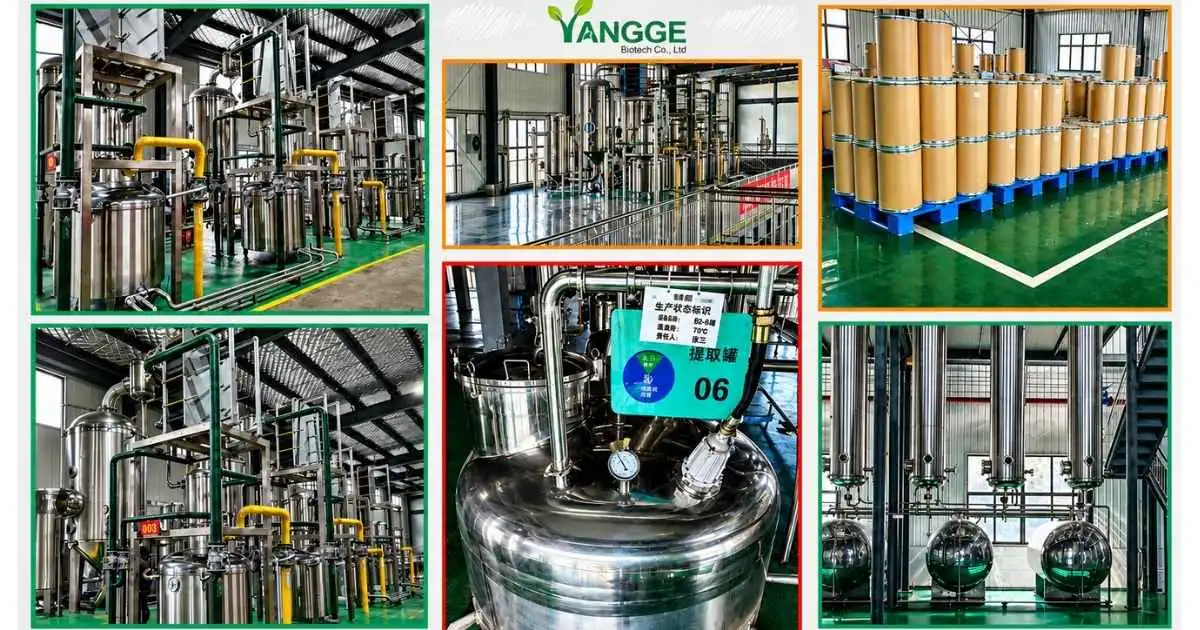
Yangge's black carrot extract is made in a way that is approved by ISO, HACCP, Kosher, and Halal. It is also Gluten-Free, GMO-Free, and Irradiated-Free. For food items to be sold in Europe, they have to pass EU PAH4 testing and benzopyrene levels of 10 parts per billion or less. This product does both. Third-party labs that have been accepted help with retesting. This gives QA teams proof that is ready for an audit.
Total Cost of Formulation
It costs more per kilogram to buy natural colors than man-made ones. Formulators have to pay more to make warning labels that follow EU rules, research how customers feel, and change the formula because synthetic dyes aren't allowed. This makes the net cost gap a lot smaller. It is important to use the right amount of black carrot extract when it is at its strong color value (E1%1cm), which can be between 4 and 120 units based on the strength. Somebody who has done this before can help you figure out how to do it best so you don't use too much.
Practical Procurement Insights for Beverage Industry Buyers
Verifying Supplier Compliance Documents
Before asking for samples, quality assurance and regulatory teams should check that the seller has the most recent EU PAH4 test records, benzopyrene results at ≤10 ppb, and heavy metal certificates from the past 12 months. Most purchases take between 6 and 12 weeks. Yangge speeds up the regulatory review process by sending full-chain testing documents ahead of time.
Storage and Inventory Management
Dark carrot extract powder, black carrot concentrate, should be kept in foil bags made of metal that are well sealed and out of the way of light, water, and heat. How long color values last between inventory runs is directly linked to how well the building is taken care of. People who want to buy a lot of things every three months should ask technical support how long it should be between retests for opened stock.
Sampling and Stability Testing Protocol
If someone contacts you for the first time, the standard process is to confirm the color value and matrix, look over EU compliance documents, ask for samples, do stability testing on a bench scale (using pH, heat, and light), make a pilot batch, and then make more of the product. The application team at Yangge helps formulators by checking for stability using stored data on pH and temperature decay. This cuts down on the number of times the test has to be done.

Addressing Common Concerns and Risk Management
Color Shift Across pH
Anthocyanin-based dyes often have trouble because the color changes when the pH level goes above 5.0. It turns blue-gray when the pH of the milk is normal or alkaline. At that pH, it can't be used directly in dairy proteins. Instead, the color is usually mixed with an acidic fruit mixture (pH 3.5) first, and then it is swirled into the dairy base. Sour cream with fruit on the bottom is often made this way.
Batch-to-Batch Color Consistency
The colors that come from plants are naturally different. Bought items should come with a certificate of analysis (CoA) that lists the minimum color value (E1%1cm) for each production lot. Yangge's main way of doing analysis is with HPLC tests. This tells us exact information about anthocyanin, not just eye color matching.
Interaction With Protein and Fat Matrices
While anthocyanins are present, they can bind to pea or soy protein surfaces in plant-based drinks, which can dull the color. To make sure they get the right protein concentration and pH, the formulators in charge of this interaction should test at different dose rates.
Conclusion
Black carrot extract and black carrot concentrate give beverage and juice manufacturers a technically solid, regulatory-compliant route to natural red-purple color. Its acylated anthocyanin structure provides heat and light stability beyond most competing natural pigments. It meets EU PAH4 and benzopyrene standards out of the box, supports clean-label declarations in every major market, and carries functional antioxidant attributes that resonate with health-oriented consumers. For procurement teams managing the transition from synthetic dyes, it offers a well-documented, certifiable ingredient with a clear path from sample to scale-up.
FAQ
Why does black carrot extract perform better than beetroot red in hot-fill beverages?
Beetroot red (betanin) degrades rapidly at temperatures above 60 °C and is prone to browning through Maillard-type reactions. Black carrot anthocyanins are acylated, which creates a protective molecular structure that holds color integrity through pasteurization and hot-fill processes without turning brown.
What pH range suits black carrot pigment best in beverages?
The pigment produces a bright ruby red at pH 3.0–4.0, making it ideal for carbonated soft drinks, functional waters, and kombucha. At pH 4.0–5.0, it shifts toward violet-purple. Above pH 6.0, the color moves into blue-grey territory, so acidic formulations are strongly recommended.
Does black carrot extract require any special storage handling?
Yes. The powder should be stored in its original sealed aluminum foil bag, away from light and moisture, at controlled temperature. Improper storage accelerates anthocyanin degradation and reduces color value over time.
Is Yangge's black carrot extract suitable for EU market entry?
Yes. It complies with EU PAH4 standards and meets benzopyrene ≤10 ppb limits. Yangge works with accredited third-party labs for retesting, and the product is Non-GMO, non-irradiated, and non-allergenic satisfying core EU import requirements.
What certifications does Yangge hold for this product?
Yangge holds ISO, HACCP, Kosher, and Halal certifications. The black carrot extract is also Non-GMO verified and tested by HPLC for anthocyanin quantification.
Partner With Yangge for Your Black Carrot Concentrate Supply
Betanin, which gives beets their color, breaks down quickly at temperatures above 60 °C and goes brown through Maillard-type processes. Acetate groups are added to the anthocyanins in black carrots. This creates a protective chemical structure that keeps the color even after being cooked and pasteurized many times without going brown. Email us at info@yanggebiotech.com.
References
1. Giusti, M. M., & Wrolstad, R. E. (2003). Acylated anthocyanins from edible sources and their applications in food systems. Biochemical Engineering Journal, 14(3), 217–225.
2. Stintzing, F. C., & Carle, R. (2004). Functional properties of anthocyanins and betalains in plants, food, and in human nutrition. Trends in Food Science & Technology, 15(1), 19–38.
3. Kammerer, D., Claus, A., Carle, R., & Schieber, A. (2004). Polyphenol screening of pomace from red and white grape varieties (Vitis vinifera L.) by HPLC-DAD-MS/MS. Journal of Agricultural and Food Chemistry, 52(14), 4360–4367.
4. Fernández-López, J. A., Angosto, J. M., Giménez, P. J., & León, G. (2013). Thermal stability of selected natural red extracts used as food colorants. Plant Foods for Human Nutrition, 68(1), 11–17.
5. Mortensen, A. (2006). Carotenoids and other pigments as natural colorants. Pure and Applied Chemistry, 78(8), 1477–1491.
6. European Food Safety Authority (EFSA). (2012). Scientific opinion on the re-evaluation of anthocyanins (E 163) as a food additive. EFSA Journal, 10(3), 2541.

Based on your location and order quantity, you will have the opportunity to receive a limited time free shipping promotion!
Who we are
Popular Blogs