Premium Phycocyanin Extract Powder Natural Blue Spirulina Antioxidant
If you've seen vibrant, "ocean-blue" smoothie bowls or neon-colored lattes taking over your social media feed, you’ve likely met Blue Spirulina. But beyond its stunning aesthetic, there is a scientific powerhouse at work Phycocyanin Extract Powder.
Unlike traditional green spirulina, which can have a strong "pond-like" taste, Premium Phycocyanin Extract offers a concentrated, flavorless way to flood your body with one of nature’s most potent antioxidants.
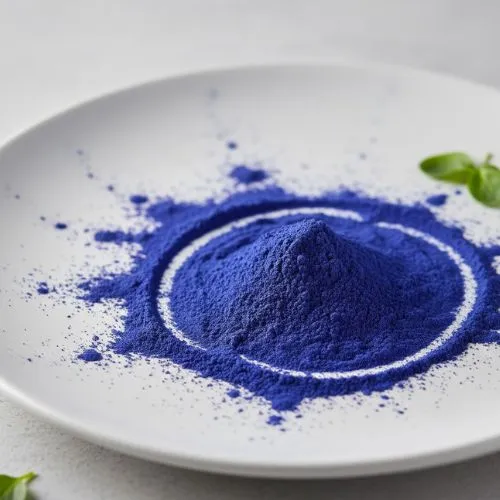
What Exactly is Phycocyanin?
Phycocyanin is the pigment-protein complex responsible for the unique blue color of cyanobacteria. In the world of supplements, it is extracted from green spirulina to create a high-potency "blue extract."
While green spirulina is a whole food containing chlorophyll and fiber, Premium Phycocyanin Powder is a refined extract. Think of it as the "active ingredient" of spirulina, isolated to maximize its therapeutic benefits.
4 Science-Backed Benefits of Blue Spirulina
First consumed by the Aztecs in the 14th century, Spirulina regained popularity when NASA proposed growing it in space for consumption by the astronauts.
This blue-green algae is rich in protein, vitamins, minerals and antioxidants.
One tablespoon of Spirulina packs a whopping 4g of protein, 2mg of Iron, 13.7mg of Magnesium, 95mg of Potassium, 0.4mg of Copper, Vitamin B1, B2 and B3. It also contains Omega 3 and 6 fatty acids, as well as traces of Zinc, Manganese, Selenium and Calcium.
What are the Spirulina Benefits
Apart from its nutrient-rich profile, Spirulina boasts quite a few health benefits that might just change your life.
From its anti-inflammatory benefits to its ability to fight anemia this blue-green algae is a powerhouse superfood.
1. Anti-Inflammatory
Whenever we sustain an injury or encounter allergies, our body releases a compound called histamine. It causes dilation of the capillaries, and contraction of the smooth muscles.
It's what’s responsible for the swelling associated with injuries. Once histamine is released into the affected area, it boosts blood flow and causes inflammation.
Spirulina contains C-phycocyanin (C-PC), a biliprotein that works to inhibit the release of histamine by mast cells thus preventing inflammation altogether.
In addition, a study conducted in 2009 by the Chia-Yi Christian Hospital suggests C-PC has anti-hyperalgesic effects meaning Spirulina may also help with the pain associated with inflammation.
2. Heart Healthy
One in every four Americans die of heart disease each year, making it the leading cause of death in the United States and costing about $291 billion dollars per annum.
Heart disease is caused by a variety of factors that can include diet, exercise, lifestyle and even genetics.
Multiple studies have shown Spirulina to be effective in helping lower blood pressure, LDL (bad cholesterol), and triglyceride levels.
During these studies, volunteers were given 4.2g of Spirulina per day for 8 weeks. In addition to the effects mentioned above, higher HDL (good cholesterol) levels were recorded as well as decreased atherosclerosis (hardening of the arteries).
3. Anemia Support
According to the World Health Organization (WHO), 24% of the population is affected by Anemia.
Marked by a deficiency of red blood cells or hemoglobin in the blood Anemia prevents oxygen from flowing efficiently to all the organs in the body.
This can lead to fatigue, shortness of breath, lightheadedness and even fast heartbeat.
A study conducted in 2011 at the University of California tested the effect of Spirulina on subjects older than 50 with a history of Anemia.
After 12 weeks of supplementing 3g of Spirulina per day, all participants reported steady increases in both red and white blood cell count, as well as higher hemoglobin levels.
They concluded that Spirulina may be effective in counteracting Anemia altogether.
4. Blood Sugar Support
A 2001 study conducted by the University of Baroda in India examined the effect of Spirulina on Type 2 diabetes patients. 25 subjects were given 2g of Spirulina per day for two months.
The results were astounding!
They recorded an appreciable decrease in both fasting blood glucose and postprandial blood glucose levels. In addition, a significant decrease in Hemoglobin A1c levels was noted, indicating an improvement in long-term glucose regulation.
Regular supplementation of Spirulina helps to support healthy blood sugar levels, as well as improve long-term glucose regulation.
There are quite a few other benefits of Spirulina that we won't touch on in this article, however, feel free to do your own research and leave some feedback in the comments below!
Also, stay tuned to our blog as I'll write more about emerging superfoods, and like always.back it up by science!
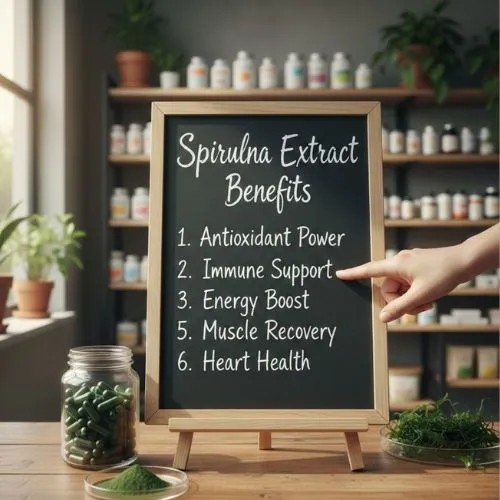
A potential bioresource for functional food product development
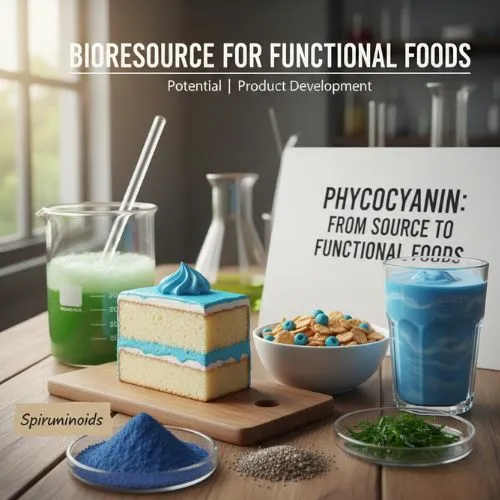
Natural pigments are desired for use in food products due to the long-term adverse effects of synthetic pigments on consumers, industry, and health. In the search for naturally sourced pigments, researchers explored cyanobacteria and its pigments as one of the potential bioresources. Blue-green algae produce phycobiliproteins such as Phycocyanin, Phycoerythrin, and Allophycocyanin, which can serve as natural pigments. The pigments synthesized and extracted from algal sources have vast commercial value in various industries, including cosmetics, nutraceuticals, pharmaceuticals, etc., apart from their numerous health benefits. Over the course of time, scientific research has led to multiple advancements in the production and extraction strategies of pigments from Spirulina platensis, which has led to the expansion of its applications in various sectors. This review outlines recent advances in the sources and manufacturing of Phycocyanin, with an emphasis on specific extraction and purification procedures, as well as possible applications in diagnostics, foods, cosmetics, and pharmaceutical industries.
Where to Buy High-Quality Blue Spirulina
Yangge Biotech is a manufacturer and supplier based in China that produces phycocyanin extract powder (a natural blue pigment from spirulina) used for food coloring, supplements, and other applications.
1. Quality Standards & Certifications
Yangge Biotech lists that it holds multiple internationally recognized certifications including ISO, HACCP, Kosher, and Halal, which are common quality and safety standards for food ingredients and supplements.
2. Rigorous Testing and Safety
They state that products are inspected and tested by accredited laboratories before shipment, and they provide certificates like COA (Certificate of Analysis) and MSDS for transparency on product quality.
3. High Purity & Specifications
According to their product details, the phycocyanin powder is offered with high purity and consistent specifications, which is important for formulation and performance in foods or supplements.
4. Experience and Support
The company emphasizes 15+ years of experience, dedicated R&D and production teams, personalized customer service, and 24-hour support, which some buyers value for sourcing and technical assistance.
5. Global Reach and Logistics
Yangge notes it exports to many countries and offers flexible packaging and delivery options, making it easier for international customers to order.
Conclusion
Premium Phycocyanin Extract Powder is more than just a "pretty" ingredient. It is a concentrated source of cellular protection that supports everything from joint health to immune resilience. Whether you’re looking to reduce inflammation or simply want to turn your morning water into a nutritional powerhouse, this natural blue extract is a worthy addition to any wellness ritual. Contact our technical team at info@yanggebiotech.com to request samples, detailed specifications, and customized pricing for your specific formulation requirements. Our experienced professionals provide ongoing support throughout the development process, ensuring optimal integration and maximum product performance.
FAQ
Q: Can we get some samples to test before purchasing?
A: Of course, we can provide free samples of 20 to 100 grams, but the shipping cost is at the customer's expense. The shipping cost can be deducted from the next order, or the samples can be sent through your courier account.
Q: Do your products have relevant certifications?
A: Yes, our products are certified for HALAL, ISO, HACCP, Kosher, and other certifications.
Q: What is the minimum order quantity (MOQ)?
A: Small batches of samples can be customized according to your requirements.
Q: Do you offer OEM and ODM services? Can the formula be customized based on our own?
A: Of course, we provide ODM and OEM services to many customers. Our product range includes softgels, capsules, tablets, sachets, granules, and private label services. Simply contact us and let us know your requirements. Our experienced R&D team can also develop new products with specific formulas.
Please contact us to design your own branded products.
Q: How do you handle quality complaints?
A: First, we have a comprehensive quality control SOP. We provide authoritative third-party inspection reports for almost all products before shipment to minimize the possibility of quality issues. Second, we have a comprehensive return and exchange procedure. If there is a genuine quality dispute, we will strictly follow the SOP.
Q: How do you ship? How long does delivery take?
A: For small orders, we typically use DHL, UPS, EMS, FedEx, or TNT. Delivery typically takes 3-7 days. We also offer air and sea freight services. We have a strong freight forwarding team and can provide you with a one-stop service, including DDP and DDU.
Q: What are your payment terms?
A: 100% prepayment, payable by T/T, Western Union, MoneyGram, or PayPal.
Q: What is the shelf life of your products?
A: 2 years with proper storage.
Q: Is the packaging environmentally friendly?
A: We attach great importance to environmental protection and are constantly improving our product packaging. Some products are packaged in recyclable paper. Packaging materials are carefully selected to ensure product safety during transportation and storage, and to minimize environmental impact. We are committed to achieving a balance between environmental friendliness and practicality in our product packaging, and to contributing to sustainable development.
References
1. Martelli, G., Folli, C., Visai, L., Daglia, M., & Ferrari, D. (2014). Thermal stability improvement of blue colorant C-Phycocyanin from Spirulina platensis for food industry applications. Process Biochemistry, 49(1), 154-159.
2. Sekar, S., & Chandramohan, M. (2008). Phycobiliproteins as a commodity: trends in applied research, patents and commercialization. Journal of Applied Phycology, 20(2), 113-136.
3. Romay, Ch., González, R., Ledón, N., Remirez, D., & Rimbau, V. (2003). C-phycocyanin: a biliprotein with antioxidant, anti-inflammatory and neuroprotective effects. Current Protein and Peptide Science, 4(3), 207-216.
4. Bhat, V. B., & Madyastha, K. M. (2001). Scavenging of peroxynitrite by phycocyanin and phycocyanobilin from Spirulina platensis: protection against oxidative damage to DNA. Biochemical and Biophysical Research Communications, 285(2), 262-266.
5. Li, B., Gao, M. H., Zhang, X. C., & Sun, Y. M. (2005). Phycobiliproteins: molecular structure, production, applications, and prospects. Biotechnology Advances, 24(2), 133-155.
6. Kuddus, M., Singh, P., Thomas, G., & Al-Hazimi, A. (2013). Recent developments in production and biotechnological applications of C-phycocyanin. BioMed Research International, 2013, 742859.

Based on your location and order quantity, you will have the opportunity to receive a limited time free shipping promotion!
Who we are
Popular Blogs