Which is better, green or blue spirulina?
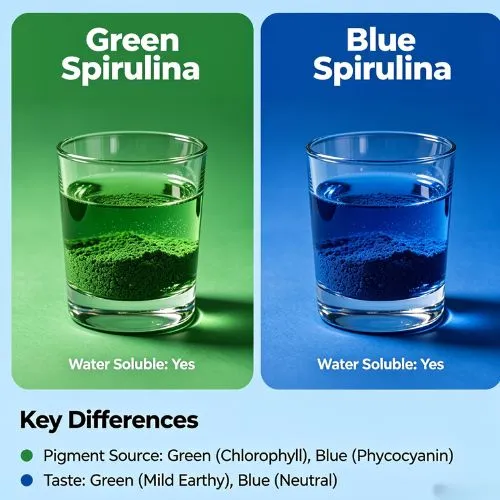
The answer depends on the goals of your design and the end use you want to achieve. Blue Spirulina Powder, which is made up of phycocyanin that has been separated, is a bright blue powder with a strong antioxidant profile. It is great for use in functional drinks, makeup, and food coloring that doesn't have added chemicals. Green spirulina has all the nutrients your body needs: protein, vitamins, and minerals. Supplements and items that help the immune system are the best places to use it. Which one you choose relies on how important it is to you: making your products look different and making specific health claims; or adding a wide range of nutrients to your goods.
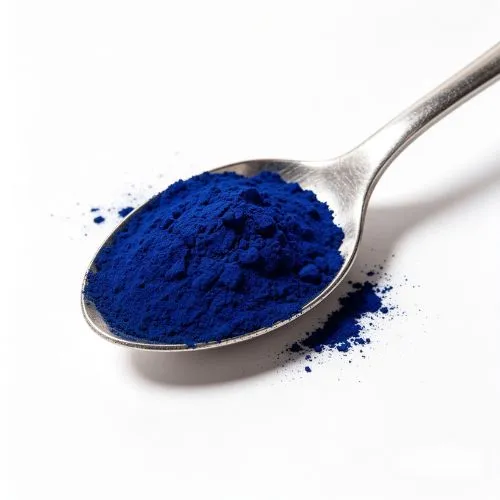
Understanding Spirulina: Green vs Blue
Origins and Production Differences
It is possible to grow Arthrospira platensis biomass in controlled photobioreactors or open race ponds. To make green spirulina, the biomass is collected directly and dried with a spray. During the production process, the proteins, fats, sugars, chlorophyll, phycocyanin, vitamins, and small amounts of minerals are all kept in their original forms. The nutrients stay the same with this whole-food method, but the color concentration, taste strength, and other sense qualities change, which can make some recipes harder to make.
There are more steps that need to be taken to handle Blue Spirulina Powder. Once the algae cells have grown enough, manufacturers use water extraction ways to separate the phycocyanin from them. The chlorophyll, fats, and sea smell that are usually in whole spirulina are taken out during this process. In the end, a clean protein color that dissolves in water is made. It can be bought in normal amounts, as shown by E-values between E6 and E40. A company called Yangge Biotech is one of the few that can make approved types like E10, E18, and E25. Each grade is tested to make sure it works well in a certain situation and has the right amount of color.
Compositional and Functional Profiles
The tasks these types can do are based on the different parts that make them up. Most of the time, green spirulina has between 60 and 70% protein by dry weight. Along with gamma-linolenic acid and other important fatty acids, it also has iron, calcium, and minerals such as beta-carotene and zeaxanthin. Its green color comes from chlorophyll, and the phycocyanin that is still there gives it extra antioxidant power. So, green spirulina is very healthy, but because it's so complicated, it can't be used in recipes that need exact or neutral color patterns.
Blue spirulina is mostly made up of phycocyanin, a protein complex that glows and is made up of alpha and beta subunits connected to phycocyanobilin chromophores. Free radical scavenging processes in this molecular structure make it a powerful antioxidant, with ORAC values that are much higher than those of typical antioxidants. It's easy for the color to mix with water and spread out widely in drinks, mixes, and emulsions. A big plus is that the lack of chlorophyll and lipids gets rid of the green, seaweed-like taste. This makes the product more appealing to a wider range of customer types and groups.
Industrial Processing and Quality Control
It's easy to see changes in quality during treatment and standards. What makes green algae good or bad depends on how it is grown, such as how much light it gets, what nutrients it has, how the temperature is managed, and how well it is kept from getting dirty. These changes affect the amounts of colors, the quality of the proteins, and the buildup of heavy metals. This is why each batch needs to be tested very carefully. In order to follow GMP and HACCP rules, companies must always make sure that the nutrient values are the same, that the bacteria limits are met, and that microcystin contamination is not present.
Making phycocyanin adds more ways to check the grade. To find out how pure a product is, you can look at how well it is removed, how well the temperature is controlled, how well the pH stays stable during processing, and how well it is cleaned. For phycocyanin used in medicine, the levels need to be higher than 4.0. For phycocyanin used in food, they usually need to be higher than 0.7. Leading providers keep ISO-certified quality systems with international laboratory testing before shipping, ensuring standard accuracy important for formulation repeatability. Yangge Biotech uses "green farming" methods to keep track of food from the farm to the table. This meets the standards for sustainability that are being pushed by governments and buyers around the world.
Health and Nutritional Benefits Comparison
Macronutrient and Micronutrient Analysis
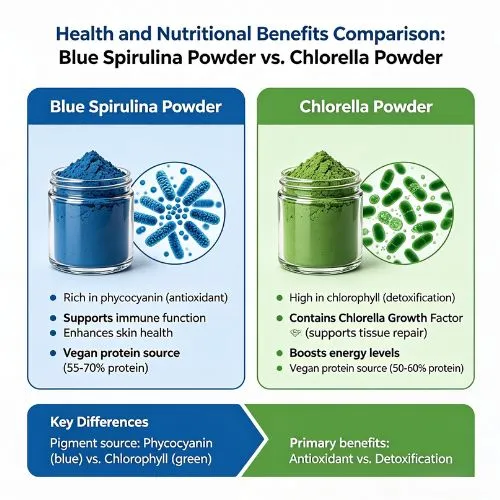
Green spirulina is mostly used as a superfood because it has all the amino acids your body needs in the same amounts as protein from animals. It keeps muscles healthy, keeps metabolisms running smoothly, and makes people feel full when taken as a vitamin or as food replacement. Because it has vitamin B12, green spirulina is one of a kind in the market for plant-based nutrition, though it's not clear how well it is absorbed. The amount of iron is high enough to be clinically important. This helps a lot when making formulas for people with special needs, like pregnant women and sports. There are some essential fatty acids, which backs up claims about brain and heart health, but the numbers are still small compared to omega-3 sources.
Based on the quality grade, phycocyanin extracts don't add many macronutrients. Their protein amount is between 15% and 30% by weight. Not adding minerals is what gives it its main value; it's what it does biologically. Researchers have found that phycocyanin stops COX-2 only. This changes the processes that cause inflammation without the stomach issues that most NSAIDs cause. Manufacturers of functional foods can back up what they say about how their foods can help with joint health, workout healing, and controlling chronic inflammation. It has more antioxidant power per gram than vitamins C and E. It gets rid of reactive oxygen species that cause oxidative stress and the aging of cells.
Clinical Evidence and Health Claims
Researchers have looked into how whole green spirulina can change the immune system by making natural killer cells work harder, lower LDL cholesterol and fats, and get rid of heavy metals like arsenic from the body. With these results, vitamin markets that focus on cleaning, immunity support, and heart health are back on track. People in the mass market who want nutritional insurance that covers everything like nutrient density because it lets them make general health claims within the right legal settings.
The study of Blue Spirulina Powder (phycocyanin) is mostly about how it can help your health. Oxidative stress factors have been shown to go down a lot when nutrients are taken. They also keep nerves safe by lowering neuroinflammation and keep the skin safe from UV damage. The pigment has been used in health studies because it glows in the dark. But these days it's mostly used in food and beauty products. Given that these benefits are specific, they allow higher prices for skin care, brain health, and sports nutrition items that make claims based on particular mechanisms.
Safety Profiles and Regulatory Considerations
Both forms demonstrate excellent safety profiles when sourced from controlled growth conditions. While most people won't be allergic to green spirulina, some people who are allergic to fish say they are. The biggest safety concern is microcystin pollution from co-harvested cyanobacteria species. This is why confirmation needs to come from a third party. Every day, you should take between 1 and 10 grams, and higher amounts have not been shown to hurt people in clinical tests.
Even more safety is added to pure phycocyanin when possible allergens and impurities are taken out during extraction. The recommended daily dose is generally between 200 mg and 1000 mg, but this can change based on the reason for use. There were no bad effects when up to 2000 mg was used in clinical tests. There are different rules about this color in different places. It can be used as a food flavoring in the EU, but not yet as a color agent in the US. Instead, it has to be used as an ingredient. Labels and marketing plans will need to be changed because of this small change in the rules. This is especially true for foreign product launches that need to have formulations that work with other countries' goods.
Application and Usage Scenarios in B2B Markets
Functional Beverage and Food Integration
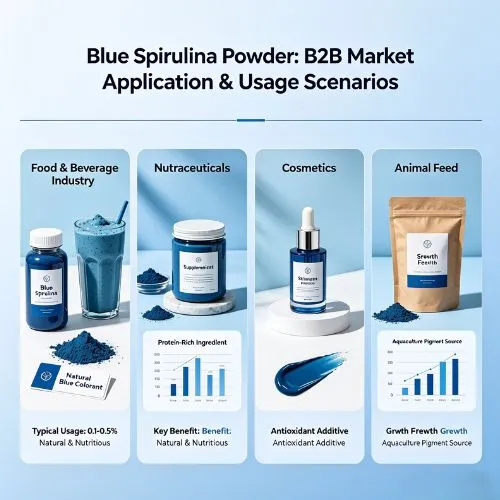
Blue algae have taken the place of artificial dyes like Brilliant Blue FCF. This has changed how natural colors are used in drinks that are useful. The color blue is used to show that a product is new and natural, and it also has anti-aging properties. It makes sure that the product is spread out evenly and doesn't settle because it dissolves in water. This is important for ready-to-drink forms that can be kept on the shelf. There is a pH range that you should keep in mind when making a formula. For the best stability, the pH should be between 4.5 and 8.0. If it goes below 3.5, you may need to use buffering methods or capsule technologies.
Every day, more and more candy apps use clean labels even though the rules are getting tighter. As a natural way to make things look sky-blue, phycocyanin is used in chewy vitamins, hard candies, and healthy snacks. Because it changes easily with temperature, it needs to be added carefully when the temperature drops below 60°C to keep the color strong and the living things inside. To make the temperature range bigger, top OEM manufacturers now use heat-stable phycocyanin grades or spray-dried microencapsulation. This lets the goods be used in more baking and extrusion processes.
Cosmetic and Personal Care Applications
Phycocyanin, derived from Blue Spirulina Powder, is being used more and more in color cosmetics, anti-aging serums, and lip balms that want to add natural blue tones. The antioxidants fight oxidative stress, which is linked to skin age, and the anti-inflammatory properties make products for sensitive skin less red and itchy. Proteins help hair care products make films that protect and shine hair because of how they are packed together. In order to keep formulation stability from breaking down, it needs systems that control pH and antioxidants. Normal usage rates are between 0.1 and 2%, depending on the color power and the claims of how well it works.
Green spirulina is still the most popular ingredient in nutritional supplement pills, tablets, and powders. People buy these products because they want to improve their health in general, not because they do certain things. The whole-food idea works well for people who want raw or slightly processed foods. There is a new market for animal nutrition, and adding spirulina to feed can help with coloring, immune response, and feed conversion rates in chicken and fish farms. When this happens, regular nutritional value and low cost are more important than how something looks.
Formulation Stability and Technical Considerations
You need to know how to keep spirulina stable while cooking and storing it in order to add it. The breakdown of phycocyanin is sped up by changes in pH, temperature, and light contact. Sodium citrate and trehalose, which act as binders, and packing that stops light are some ways to keep things safe. Oxidation happens when food comes into contact with air. Adding nitrogen during packing greatly extends the shelf life of the food. When companies try their products quickly at 40°C/75% RH, they usually see 10–20% color loss over six months in systems that aren't closed. But when the formulation is optimized properly, they see less than 5% loss.
The main problems with green spirulina are that its fatty parts go bad and its chlorophyll breaks down. The item lasts longer when natural vitamins like mixed tocopherols or rosemary powder are added. For the powdered form to work, it needs to be stored in a way that keeps the humidity low and packed in a moisture cover. Items for sale usually have fruit flavors, cocoa flavors, or mint flavors to cover up the strong taste. The total cost of making something and the needs of the supply chain are affected by these technical factors. These are important things to think about when making purchases and figuring out margins.
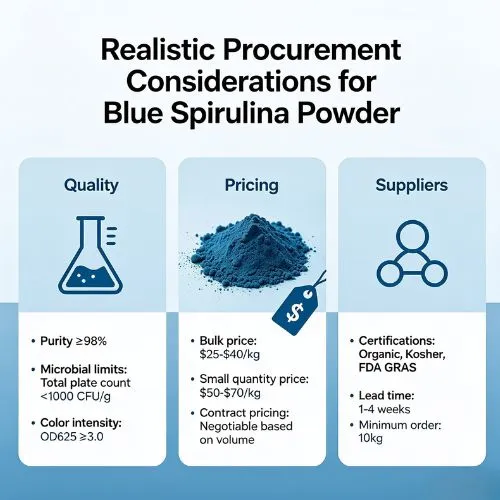
Procurement Considerations: Quality, Pricing, and Suppliers
Certification and Compliance Requirements
If they want to buy spirulina from another company, they need to show proof that their products are approved for the uses and markets they want to serve. Getting organic approval from the USDA, the EU, or similar groups costs more, but it lets you get into clean-label markets that are growing. These licenses help businesses get new customers from certain groups without adding a lot to the cost. Legal guarantees for getting into the US market are FDA facility registration and GRAS confirmation. Based on the concentration and use, Novel Food compliance may apply to some uses of phycocyanin in the EU.
Getting a certificate is not the only part of quality control. It also checks for microbes, heavy metals, chemical residues, and fakes. Leading companies offer Certificates of Analysis that have been checked by ISO 17025-accredited labs and show the safety parameters, amounts of active compounds, and purity ratios. Sports nutrition apps that are being looked at by anti-doping officials need proof from a third party, like NSF International or Informed-Sport. SOPs for cultivation, extraction, testing, and documentation should be looked at by procurement staff to get a sense of how reliable and low-risk a supplier's quality management system is to use in the long term.
Pricing Structures and Market Dynamics
The price of green spirulina changes based on where it comes from, how much is grown, and how well it is approved. As the specs and number of kilograms ordered change, conventional grades from large Asian producers range in price from $15 to $30 per kilogram FOB. On the other hand, organically approved material costs between $40 and $80 per kilogram. There are changes in prices that are caused by changes in farming seasons, the cost of energy for managed farming systems, and rules that make it harder to get to markets. Prices stay the same and discounts of 10 to 15 percent are common in long-term supply deals that include promises of volume. This is important for keeping formulation costs low in markets that are competitive.
How pure the phycocyanin is and how well it is extracted have a lot to do with how much it costs. Material that is safe for food and meets standards E10–E18 costs around $200 to $400 per kilogram. Standard E25–E40 material that is pharmaceutical-grade costs between $500 and $1,000 per kilogram because it needs to be cleaned up more and has lower returns. Phycocyanin costs more than 50–100 times as much as synthetic blue dyes. Because of this, it is a unique ingredient that needs to be recognized through claims of clean labels, claims of usefulness, or government rules. A market study shows that every year the need for phycocyanin grows by 15 to 20 percent. There are laws that ban man-made dyes and a trend toward natural products that are to blame. The price is going up because of this, but it is being balanced by better ways to make more and get the oil out of the ground.
Supplier Evaluation and Partnership Criteria
There are more things to consider than just price and meeting requirements when picking Blue Spirulina Powder providers. Providers can grow with the business as long as quality and delivery times don't suffer during a production capacity review. Yangge Biotech maintains ton-scale inventory of multiple phycocyanin grades, providing supply security for rapid commercialization and seasonal demand fluctuations. The main difference between strategic partners and transactional providers is that strategic partners offer expert help. Applications experts, formulation advice, and stability testing are all things that can help speed up product creation and solve formulation problems.
Governments and customers who want more exposure can get what they want from farms to finished goods with traceability systems that meet standards. Blockchain makes it possible to keep track of growth sites, record them, and do group genealogy. These features create audit trails that support claims of sustainability and help find the source of contamination. Total landed prices and product control are both affected by logistics skills. Suppliers who give different ways to pack, combined shipping, and temperature-controlled operations make it easier to handle and lower the chance of damage. Businesses can get ahead of the competition by changing materials and making their own mixes when they work together to share information about the market, come up with new ideas, and work on projects.
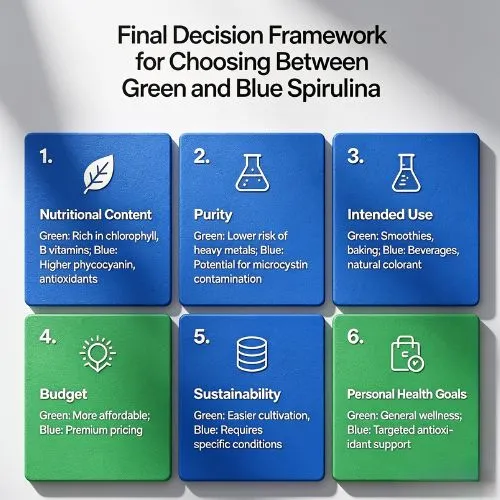
Final Decision Framework for Choosing Between Green and Blue Spirulina
Defining Strategic Procurement Objectives
If you want to choose spirulina, you should know how it should be positioned and what it's supposed to do. Green spirulina is cheap and has a lot of nutrients, which can help formulas that focus on giving full nutrition, adding protein, or selling whole foods. The higher cost of phycocyanin can be made up for by the chance to stand out and make money in goods like expensive functional drinks, clean-label coloring, or specialty antioxidant placement. The decision grid should show how much the ingredients cost compared to the sale price. It should also be checked to see if the improvements in how it works or looks are significant enough to make buyers willing to pay more.
The laws in the places you want to reach have a big effect on the items you choose. There is an instant need for natural options like phycocyanin in places where man-made dyes aren't allowed or where clean labels are desired. This could even out gaps in cost by giving them access to more markets. Places where rules don't count, on the other hand, need customers who really want natural goods to make up for the higher costs of making them. A look at the other products in the same category shows if having spirulina makes the product stand out or if it meets the standards for the category. This helps you decide if you want to spend money and make a plan for marketing.
Quality Assessment and Trial Protocols
To get rid of risks, business deals need to be carefully tested before they are signed. Providers you can trust will give you free samples to try in the lab and on recipes. Ten to thirty grams is usually enough for chemistry proof and small-scale tests. There should be an outside review to make sure that the testing procedures fit the requirements. The steps should also test the product's stability under fast conditions that are like how it would last on the shelf. When you compare products from different sources, you can see how the quality varies and find the ones that work best for your needs.
At the pilot-scale level, problems with process fit that can't be seen at the bench scale level make going to market less risky. It's not clear until the product is made how temperature profiles change during mixing, how well emulsification works, what effects homogenization has, or how packages relate to each other. Working with providers during trials lets you use what they know about the apps to find changes to the way they're processed that keep quality from going down. When tests go well, they set the basic rules for deals between businesses that offer goods. These include rules for what is acceptable and how to settle disagreements.
Building Sustainable Supplier Relationships
To ensure a steady supply over the long term, you need to do more than just negotiate prices. You need to find a way to work together that meets everyone's needs. When providers know how many plants they want to grow, they can split up the room they need to grow plants and make the best plans for production. Producers get better prices and can plan ahead with multi-year contracts that set minimum output standards. This makes it easier for them to spend in capacity. Collaboration in planning before the launch of a new product keeps supplies from running out in the early stages of sales, when no one knows how well the product will do.
Performance tracking tools that keep track of how well people deliver, follow rules, fill out paperwork correctly, and respond make them accountable and push them to keep improving. People can work together better and find ways to grow when they look at the business on a regular basis to talk about new ideas, changes in the law, and market trends. When you use dual-sourcing for important things, you need to make sure that supply security and relationship depth are both taken into account. You should keep working with your main source, but you shouldn't rely on them too much.
Conclusion
You should make sure that the supplier's skills and quality control methods match your product goals, recipe needs, and market setting before choosing between green spirulina and Blue Spirulina Powder. Functional foods and dietary products that focus on whole-food benefits can get all the nutrients they need from green spirulina without spending a lot of money. Phycocyanin powder, on the other hand, is a natural source of color and vitamins that make it worth the extra cost in makeup, drinks, and sweets. To be good at procurement, you need to carefully check out providers, put their products through strict tests, and work with them to make sure they meet high standards, follow rules, and provide reliable supplies. In markets that are always changing, this is important to stay ahead of the competition.
Partner with Yangge for Premium Blue Spirulina Solutions
Since it makes Blue Spirulina Powder and works with tough R&D teams and buyers from all over the world, Yangge Biotech is a trustworthy business. Our E10, E18, and E25 KOSHER-certified types have great purity rates and batch stability that have been checked by labs all over the world. This helps you reach your goals for maintaining the recipe and following the rules. We always have a lot of food, drinks, and makeup on hand so that we can quickly fill orders without lowering the quality.
We not only offer high-quality phycocyanin, but we also provide full technical support, which includes formulation advice, custom mixing services, and a range of flexible packing choices that can be used depending on your production needs. The strictest audit standards are met by our GMP-certified sites and farm-to-table tracking. You can keep your profits safe with our FOB/CIF pricing methods that don't lower the standard. Check out our specs today and get a free 10- to 30-gram sample. Contact us or email our team at info@yanggebiotech.com to talk about your buying needs and find out how our blue spirulina powder seller can help your product stand out and do well in the market.
FAQ
Q: Can we get some samples to test before purchasing?
A: Of course, we can provide free samples of 20 to 100 grams, but the shipping cost is at the customer's expense. The shipping cost can be deducted from the next order, or the samples can be sent through your courier account.
Q: Do your products have relevant certifications?
A: Yes, our products are certified for HALAL, ISO, HACCP, Kosher, and other certifications.
Q: What is the minimum order quantity (MOQ)?
A: Small batches of samples can be customized according to your requirements.
Q: Do you offer OEM and ODM services? Can the formula be customized based on our own?
A: Of course, we provide ODM and OEM services to many customers. Our product range includes softgels, capsules, tablets, sachets, granules, and private label services. Simply contact us and let us know your requirements. Our experienced R&D team can also develop new products with specific formulas.
Please contact us to design your own branded products.
Q: How do you handle quality complaints?
A: First, we have a comprehensive quality control SOP. We provide authoritative third-party inspection reports for almost all products before shipment to minimize the possibility of quality issues. Second, we have a comprehensive return and exchange procedure. If there is a genuine quality dispute, we will strictly follow the SOP.
Q: How do you ship? How long does delivery take?
A: For small orders, we typically use DHL, UPS, EMS, FedEx, or TNT. Delivery typically takes 3-7 days. We also offer air and sea freight services. We have a strong freight forwarding team and can provide you with a one-stop service, including DDP and DDU.
Q: What are your payment terms?
A: 100% prepayment, payable by T/T, Western Union, MoneyGram, or PayPal.
Q: What is the shelf life of your products?
A: 2 years with proper storage.
References
1. Eriksen, N.T. (2008). Production of phycocyanin—a pigment with applications in biology, biotechnology, foods and medicine. Applied Microbiology and Biotechnology, 80(1), 1-14.
2. Hemaiswarya, S., Raja, R., Kumar, R.R., Ganesan, V., & Anbazhagan, C. (2011). Microalgae: a sustainable feed source for aquaculture. World Journal of Microbiology and Biotechnology, 27(8), 1737-1746.
3. Benedetti, S., Rinalducci, S., Benvenuti, F., Francogli, S., Pagliarani, S., Giorgi, L., & Canestrari, F. (2006). Purification and characterization of phycocyanin from the blue-green alga Aphanizomenon flos-aquae. Journal of Chromatography B, 833(1), 12-18.
4. Furmaniak, M.A., Misztak, A.E., Franczuk, M.D., Wilmotte, A., Waleron, M., & Waleron, K.F. (2017). Edible cyanobacterial genus Arthrospira: actual state of the art in cultivation methods, genetics, and application in medicine. Frontiers in Microbiology, 8, 2541.
5. Mao, T.K., Van de Water, J., & Gershwin, M.E. (2005). Effects of a Spirulina-based dietary supplement on cytokine production from allergic rhinitis patients. Journal of Medicinal Food, 8(1), 27-30.
6. Chaiklahan, R., Chirasuwan, N., & Bunnag, B. (2012). Stability of phycocyanin extracted from Spirulina sp.: influence of temperature, pH and preservatives. Process Biochemistry, 47(4), 659-664.

Based on your location and order quantity, you will have the opportunity to receive a limited time free shipping promotion!
Who we are
Popular Blogs