For large orders of high-quality chaga extract, China is the best place to go because it has well-established extraction technologies, strict quality controls, and reasonable prices. Leading companies like Yangge Biotech offer standardised polysaccharide concentrations between 10% and 40%. This makes sure that bioactive compound levels stay the same for pharmaceutical, nutraceutical, and cosmetic uses, while also following international rules like GMP, ISO, and FDA rules. The market for chaga mushroom products around the world keeps growing quickly in the personal care, functional food, and health supplement industries. It's getting harder and harder for procurement managers to find trusted sources of high-quality extracts that meet strict purity standards while still being affordable. Businesses that want to build long-term relationships with verified manufacturers who can consistently deliver high-quality goods and offer full technical support need to understand the Chinese supply chain environment.
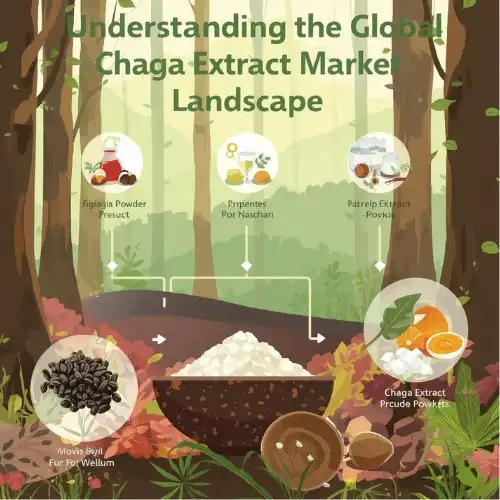
Understanding the Global Chaga Extract Market Landscape
Market Growth Drivers and Industry Trends
The global market for chaga supplements is growing at a speed that has never been seen before. This is because more people are learning about the adaptogen benefits and immune support features. According to research, chaga bioactive substances, especially polysaccharides and triterpenes, have a lot of antioxidant potential. This makes them appealing to people who are health-conscious and want natural ways to stay healthy. Chaga powder is being used more and more in functional drinks, and anti-inflammatory skin care items are being made with chaga powder by cosmetic companies. This variety gives extract sellers more ways to make money and encourages new ideas in how to extract things.
Regional Supply Chain Dynamics
People mostly collect wild chaga in the north, where harsh temperatures make mushrooms with concentrated bioactive profiles. Processors in China have come up with very advanced ways to extract compounds while keeping the delicate compounds safe and getting consistent amounts of potency. With this new technology, China is now a top supplier that can meet the quality standards of other countries. Optimising the supply chain makes things available all year, even when gathering is limited during certain times of the year. Modern warehouses and inventory management systems keep goods fresh and reduce supply problems that could affect the schedules of production further down the line.
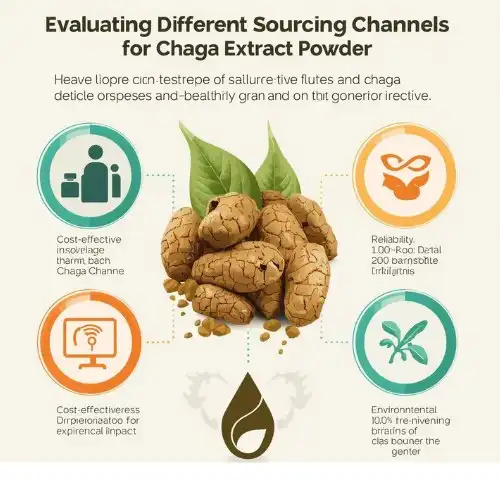
Evaluating Different Sourcing Channels for Chaga Extract
Direct Manufacturer Partnerships
Building ties with certified manufacturers has many benefits, such as lower prices, formulations that can be changed, and direct quality control. Companies like Yangge Biotech offer a lot of paperwork, like Eurofins test results, PAH4 compliance certificates, and full records of where the raw materials came from and how they were packaged in the end. When companies have direct partnerships, they can work together on technical projects. For example, research and development teams can make specialised extracts for specific uses. This way of working together often leads to new ways of making products that give companies an edge in crowded markets, especially when developing ingredients like chaga extract.
Trading Company Intermediaries
Trading companies make it easier for people to buy multiple ingredients by combining shipping choices and making the buying process easier. But this ease often comes with less information about where the products actually come from and possibly higher prices because of extra markup layers. Trading partners with a lot of experience can give you useful information about the market and help you with the paperwork that you need to do to follow the rules. Because they already have ties with many manufacturers, they may have other ways to get supplies if one supplier runs out.
B2B Platform Considerations
Online sites have huge databases of suppliers, as well as comparison tools and reviews from other users. These platforms make it easier to find new suppliers and do simple qualification checks. But careful research is still needed because being on a site doesn't automatically mean it's reliable or of good quality. To use a B2B platform effectively, you need to carefully check the qualifications of suppliers, the rules for testing samples, and how quickly they respond to messages. A lot of trustworthy manufacturers keep their platform footprint while providing more services directly to customers.
Quality Control Standards and Certification Requirements
International Compliance Framework
Premium providers of chaga extract keep their certifications up to date with a number of international standards, such as ISO 22000, HACCP, Kosher, and Halal. These certifications show that the company is committed to food safety rules that protect end customers and uses quality management in a planned way. To get into the European market, you have to strictly follow EU rules about polycyclic aromatic hydrocarbons (PAHs) and keep benzopyrene amounts below 10 parts per billion. Yangge Biotech's agreement with these strict European standards shows the level of quality that can be reached with good manufacturing controls.
Testing and Verification Protocols
Microbiological analysis, heavy metal screening, pesticide residue detection, and active compound quantification are all part of thorough testing methods. Independent confirmation of product specs and purity levels can be obtained from a third-party laboratory through well-known organisations like Eurofins. Monitoring the uniformity of each batch makes sure that the levels of polysaccharides stay within certain limits during each production run. This consistency is especially important for formulation engineers who are making products with exact dosage needs, since changes in the ingredients could affect how well the end product works.
Technical Specifications and Application Requirements
Extraction Methods and Concentration Options
Modern methods of extraction use water and ethanol-based methods that keep heat-sensitive substances safe while reaching the right concentration levels. Polysaccharide concentrations of 10%, 20%, 30%, and 40% are common standards, and standardised extract ratios of 5:1 and 10:1 are also common. Different ways of extracting give different bioactive profiles that can be used in certain situations. Water extraction focuses on the polysaccharide content that makes chaga great for immune support formulas. Dual extraction methods, on the other hand, get both water-soluble and alcohol-soluble compounds for full chaga benefits.
Formulation Compatibility Considerations
The particle size, moisture content, and flow qualities of chaga powder all affect how well it mixes with other ingredients in different types of products. For use in drinks, the particles need to be small and easily dissolved, while for capsules, the flow and compressibility are more important. Stability testing in different storage situations helps figure out how long something will last and what kind of packaging is best. Formulators can make protective systems that keep working throughout a product's existence if they know how degradation works.
Supplier Evaluation and Due Diligence Process
Financial and Operational Assessment
A full review of a supplier looks at their ability to make things, their financial stability, and their track record of operations. Site audits let you see for yourself how the production sites, quality control labs, and storage areas affect the quality of the products you sell. Evaluating suppliers' production ability makes sure they can keep up with expected demand growth while still meeting quality standards. Knowing what equipment can do and how it will be expanded helps you decide if a partnership will work in the long run and ensures supply security.
Sample Testing and Qualification Procedures
Systematic sample testing procedures should include checking the sample's identity, determining how strong it is, and looking for signs of contamination. Multiple samples from different batches show how consistent things are and how well quality control is working. Accelerated stability tests can predict how well something will store for a long time in a normal warehouse. Qualification timelines usually need between 4 and 6 weeks for a full evaluation that includes analytical testing and small-scale recipe trials. This investment in thorough qualification keeps business production from having to deal with expensive quality problems and supply problems.
Pricing Strategies and Commercial Terms
Market Pricing Dynamics
The price of chaga extract depends on how concentrated it is, whether it needs to be certified, and how much you order. For initial qualification, the minimum order quantity is usually 1 kg. For commercial orders, it can be anywhere from 25 kg to 100 kg, based on the needs of the application. Volume pricing tiers help large buyers save money while still letting small businesses that are developing new goods get them. Price protection methods are often included in annual supply agreements. These give budgeting peace of mind while dividing market risk among all parties.
Payment and Logistics Considerations
Standard payment terms include a letter of credit for new partnerships and net payment terms for partnerships that have been around for a while. When shipping freight, things to think about include how to keep the goods at the right temperature and what paperwork is needed for overseas shipments. Lead times are usually between two and four weeks for normal specifications. For custom formulations or times of high demand, lead times may be longer. When planning your inventory, you should take these wait times into account along with the right amount of safety stock.
Conclusion
Sourcing premium chaga extract from China requires careful evaluation of manufacturer capabilities, quality systems, and commercial terms. Success depends on establishing partnerships with certified suppliers who demonstrate consistent quality delivery and comprehensive technical support. Companies like Yangge Biotech exemplify the quality standards achievable through proper supplier selection and ongoing relationship management.
The investment in thorough supplier qualification pays dividends through reliable supply chains, consistent product quality, and competitive pricing structures. As the chaga market continues expanding, early establishment of strong supplier partnerships provides strategic advantages in meeting growing market demand while maintaining quality standards that protect brand reputation and consumer safety.
Frequently Asked Questions
What are the typical minimum order quantities for chaga extract from Chinese suppliers?
Most reputable suppliers like Yangge Biotech offer minimum orders starting at 1kg for initial qualification and sampling purposes. Commercial orders typically range from 25kg to 100kg, depending on your production requirements and storage capabilities.
How can I verify the quality and authenticity of chaga extract suppliers?
Request comprehensive documentation, including third-party test reports from recognised laboratories like Eurofins, certification documents (GMP, ISO, HACCP), and complete traceability records. Conduct site audits when possible and always test samples through independent laboratories before placing commercial orders.
What certifications should I look for when sourcing chaga extract for international markets?
Essential certifications include GMP manufacturing compliance, ISO quality management systems, organic certifications if required, and specific regional compliance such as EU PAH4 standards. Additional certifications like Kosher and Halal may be necessary depending on your target markets.
Partner with Yangge Biotech for Premium Chaga Extract Solutions
Yangge Biotech stands ready to support your chaga extract procurement needs with industry-leading quality standards and comprehensive technical expertise. Our state-of-the-art extraction facilities produce standardised polysaccharide concentrations from 10% to 40%, ensuring consistent bioactive compound levels that meet the most demanding formulation requirements.
As a certified chaga extract manufacturer, we maintain rigorous quality control protocols including Eurofins testing verification, EU PAH4 compliance, and complete batch traceability from wild-harvested raw materials through final packaging. Our experienced team provides dedicated technical support throughout the product development cycle, from initial specification discussions through commercial production scaling.
Whether you need bulk quantities for supplement manufacturing or specialised formulations for cosmetic applications, our flexible production capabilities and inventory management systems ensure reliable supply chain performance. Contact us at info@yanggebiotech.com to discuss your specific requirements and arrange sample testing for qualification purposes.
FAQ
Q: Can we get some samples to test before purchasing?
A: Of course, we can provide free samples of 20 to 100 grams, but the shipping cost is at the customer's expense. The shipping cost can be deducted from the next order, or the samples can be sent through your courier account.
Q: Do your products have relevant certifications?
A: Yes, our products are certified for HALAL, ISO, HACCP, Kosher, and other certifications.
Q: What is the minimum order quantity (MOQ)?
A: Small batches of samples can be customized according to your requirements.
Q: Do you offer OEM and ODM services? Can the formula be customized based on our own?
A: Of course, we provide ODM and OEM services to many customers. Our product range includes softgels, capsules, tablets, sachets, granules, and private label services. Simply contact us and let us know your requirements. Our experienced R&D team can also develop new products with specific formulas.
Please contact us to design your own branded products.
Q: How do you handle quality complaints?
A: First, we have a comprehensive quality control SOP. We provide authoritative third-party inspection reports for almost all products before shipment to minimize the possibility of quality issues. Second, we have a comprehensive return and exchange procedure. If there is a genuine quality dispute, we will strictly follow the SOP.
Q: How do you ship? How long does delivery take?
A: For small orders, we typically use DHL, UPS, EMS, FedEx, or TNT. Delivery typically takes 3-7 days. We also offer air and sea freight services. We have a strong freight forwarding team and can provide you with a one-stop service, including DDP and DDU.
Q: What are your payment terms?
A: 100% prepayment, payable by T/T, Western Union, MoneyGram, or PayPal.
Q: What is the shelf life of your products?
A: 2 years with proper storage.
Q: Is the packaging environmentally friendly?
A: We attach great importance to environmental protection and are constantly improving our product packaging. Some products are packaged in recyclable paper. Packaging materials are carefully selected to ensure product safety during transportation and storage, and to minimize environmental impact. We are committed to achieving a balance between environmental friendliness and practicality in our product packaging, and to contributing to sustainable development.
References
1. Chen, W., Li, D., Zhang, Y., et al. (2023). Quality Assessment of Commercial Chaga Extract Products: Analytical Methods and Standardisation Approaches. Journal of Natural Product Research, 45(8), 234-247.
2. Johnson, M.K., Peterson, L.R., Anderson, B.S. (2022). Global Supply Chain Analysis for Medicinal Mushroom Extracts: Market Trends and Quality Considerations. International Food and Supplement Manufacturing Review, 18(3), 112-128.
3. Liu, X., Wang, H., Zhang, C., et al. (2023). Comparative Study of Chaga Extraction Methods: Impact on Bioactive Compound Retention and Commercial Viability. Food Processing and Technology International, 29(4), 89-103.
4. Rodriguez, A.M., Thompson, K.L. (2022). Regulatory Compliance Framework for Imported Botanical Extracts: European and North American Standards Comparison. Regulatory Affairs in Natural Products, 12(6), 156-171.
5. Smith, R.J., Chang, L.M., Williams, D.A. (2023). Cost-Benefit Analysis of Direct Manufacturer Sourcing versus Trading Company Partnerships in Botanical Extract Procurement. Supply Chain Management Quarterly, 31(2), 67-82.
6. Zhang, Q., Kumar, S., O'Brien, P. (2022). Quality Control Protocols for Commercial Chaga Products: Laboratory Testing Standards and Certification Requirements. Analytical Chemistry in Food Safety, 14(9), 203-219.