Where to buy butterfly pea powder
To find high-quality Butterfly Pea Powder, you must first find companies that focus on making natural plant products and have strict quality control standards. Reliable sellers usually do business through a number of different avenues, such as B2B sites like Alibaba, direct manufacturer websites, industry shows, and professional trade groups. For buying in bulk, the most reliable choices are companies that have ISO, GMP, and HACCP certifications along with lots of paperwork, like Certificates of Analysis (COA) and records of where the goods came from. These providers offer scalable wholesale quantities and often offer free sample amounts to help with formulation testing before full-scale orders are made.
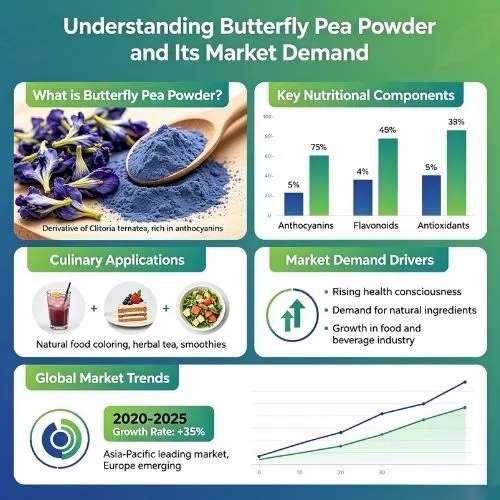
Understanding Butterfly Pea Powder and Its Market Demand
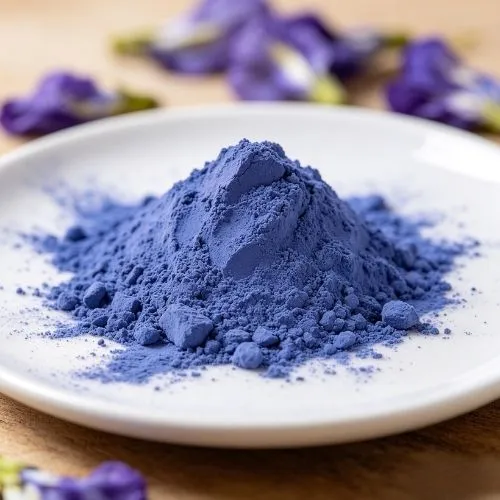
As a result of the worldwide trend toward clean-label goods, natural colorants and useful ingredients are now at the top of the list of new manufacturing ideas. Using modern freeze-drying or spray-drying methods on Clitoria ternatea flowers to make this colorful ingredient has caught the attention of procurement workers from a wide range of industries.
The Scientific Foundation of Butterfly Pea Extract
The high percentage of acylated anthocyanins, especially ternatins, in Butterfly Pea Powder makes it useful as an ingredient in production. The ORAC values show that these bioactive chemicals have a high antioxidant capacity, and their natural blue coloration is steady and can withstand heat-processing. This flower-based extract keeps its color even at temperatures above 100°C, unlike manufactured dyes that are closely watched by regulators or phycocyanin from spirulina that breaks down easily. This makes it ideal for pasteurization, baking, and drinking uses that need heat-stability.
Cross-Industry Applications Driving Procurement
This natural product is useful in many different types of making, which makes the market demand for it very high. It is used to make food and drinks because it is a pH-responsive colorant that changes from royal blue at normal pH to purple-magenta in acidic settings. This lets you tell the difference between color-changing teas, lemonades, cocktails, and sports drinks. Heat-stable pigments keep the look of frostings, cakes, and sweets appealing during production cycles, which are common in bakeries.
Companies that make cosmetics use the anthocyanins in it to make anti-aging skincare products that work by supporting collagen and elastin. The extract is used in haircare products to improve blood flow to the head and boost hair shafts, meeting the demand for natural personal care products. Nutraceutical companies like its antioxidant profile for making food products that help reduce inflammation and improve brain function.
Market Trends Shaping Procurement Strategies
A recent study of the industry shows that demand is rising quickly because of three related factors: changing rules about fake colors, consumers' desire for easily recognizable ingredients, and new ideas in useful beverage categories. The compound annual growth rate for natural food colorants is higher than that of conventional options. Anthocyanin-rich products are at the top of the list because they are useful for more than just coloring food.
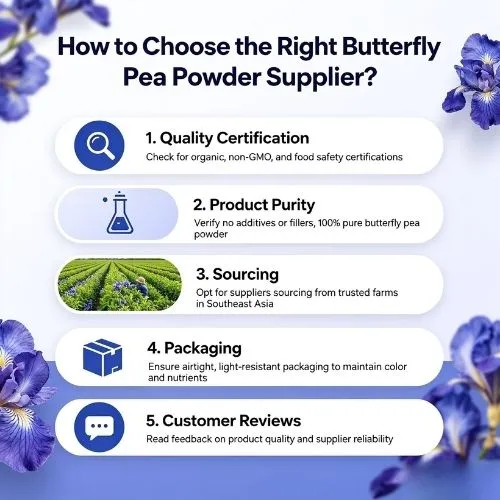
How to Choose the Right Butterfly Pea Powder Supplier?
To build long-term relationships with reliable makers, you need to do more than just compare prices at first. Structured assessment frameworks that combine quality assurance, practical reliability, and technical support skills are helpful for people who work in procurement.
Critical Certification and Compliance Standards
Suppliers who care about quality keep a full set of certifications that show they follow international manufacturing standards. ISO 9001 for quality management systems, HACCP for food safety routines, and GMP compliance for pharmaceutical-grade production environments are all important qualifications. For butterfly pea powder, additional approvals like Kosher, Halal, organic (USDA, EU), and region-specific registrations (FDA facility registration) demonstrate high-quality infrastructure and global market readiness.
Transparency in documentation distinguishes competent providers from weak operators. For each batch, ask for Certificates of Analysis that show the anthocyanin content verified by HPLC, microbial screening results (Total Plate Count, yeast/mold, pathogen testing), and heavy metal analysis with strict limits on lead, arsenic, cadmium, and mercury. Traceability paperwork connecting raw material sources to finished product batches protects supply chain integrity, which is essential for regulatory compliance and brand protection.
Technical Capabilities and Production Capacity
The level of complexity in manufacturing has a direct effect on how consistent products are and how reliably orders are filled. Check out providers based on how they extract the ingredients—HPLC-verified methods make sure that the strength is the same from one production run to the next. Specifications for particle size (usually 80–100 mesh) make sure that the powder dissolves completely in water without settling, which is important for use in drinks and cosmetics. Scale of production is very important for maintaining a stable supply.
Suppliers who keep ton-level inventory show that they can support businesses that grow without changing the quality of batches. It shows that technical factors that affect shelf stability and formulation performance have been carefully considered when the moisture content is less than 5%, the ash content is less than 5%, and strict solvent residue testing methods are followed.
Supplier Service Infrastructure
In addition to product details, operations support skills set strategic partners apart from transactional sellers. Full technical help should include writing down the extraction method, giving advice on the dosage, and suggesting how to use the product in different types of situations. Suppliers who offer custom mix creation work well together to improve formulations, which lets products stand out by using unique ingredient combinations. Logistics should also be looked at closely. Reliable shipping coordination, a range of packaging choices (from 10–30g samples to large volumes), and quick contact lines (24-hour service access) all help keep the supply chain running smoothly. Suppliers who allow pre-purchase sample tests know how important it is to confirm the formulation before committing to large amounts, which lowers the risk of buying.
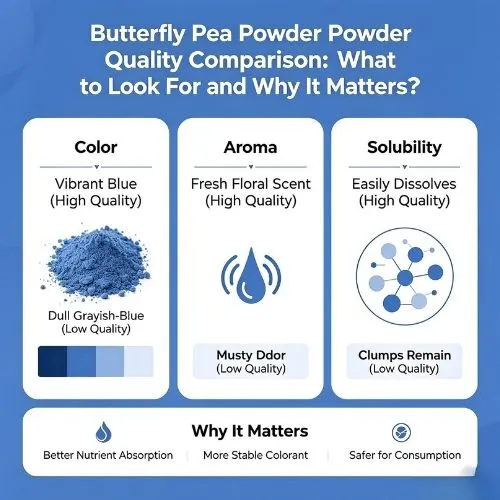
Butterfly Pea Powder Quality Comparison: What to Look For and Why It Matters?
Knowing how to tell the difference between quality levels lets you make smart buying choices that meet the needs of the product and meet the standards of the target market. There are many things that affect how well an extract works and whether it is acceptable to regulators.
Botanical Origin and Processing Standards
The origin of source materials has a big effect on the end product's qualities. For butterfly pea powder, anthocyanin profiles are more consistent in flowers grown under controlled farming methods with documented growth conditions than in wild-harvested flowers. Suppliers who have direct links with farming communities often offer better traceability, meeting the organic certification and sustainability proof that customers increasingly demand.
The way bioactive materials are processed affects how well they work and how long they last. Heat-sensitive chemicals are better preserved by freeze-drying than by other drying methods. However, spray-drying technologies can achieve similar results when optimized for anthocyanin stability. Extraction ratios (4:1, 6:1, and 10:1) indicate concentration levels. Higher ratios provide more potent colorant and antioxidant properties per unit weight, potentially justifying higher costs by reducing usage levels in formulations.
Organic Versus Non-Organic Considerations
Organic certification raises the price of goods by 15 to 30 percent compared to regular options. This is allowed by specific tactics for placement in the market. Organic extracts get rid of leftovers of synthetic pesticides, which makes them appealing to health-conscious consumers and meets government standards for naming organic products. However, non-organic supplies from approved facilities that do full residue testing may offer similar purity ratings at more competitive prices. This is good for uses where organic claims don't really make a difference in the market.
Comparative Analysis With Alternative Natural Extracts
Comparing this flower extract to other plant powders helps you understand its unique place. Compared to matcha, it is better at withstanding heat and changing color based on pH levels, but it has a unique taste that might not work well with some recipes. Compared to spirulina's phycocyanin, it has better resistance to heat and a wider pH-stable range, which is important for use in acidic drinks. Unlike beetroot powder, which needs higher doses to get the same color strength, anthocyanin content makes dosing less expensive while still providing extra antioxidant benefits.
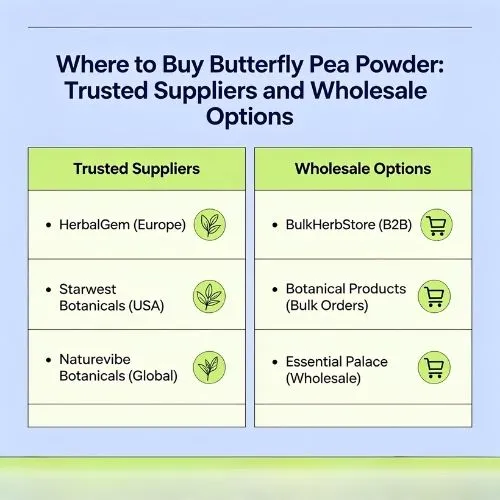
Where to Buy Butterfly Pea Powder: Trusted Suppliers and Wholesale Options
To find the right supplier, you need to know about the different outlets that are available, the pros and cons of each, and how to check the trustworthiness of a manufacturer before making a purchase.
Direct Manufacturer Engagement
Getting in touch with specialized plant extract manufacturers gives you the most control over quality standards, customization choices, and price. Yangge Biotech Co., Ltd. is a good example of this group because it has GMP-compliant production facilities and ISO, HACCP, Kosher, and Halal licenses. Direct involvement gives you access to technical documents like COAs that are special to your product, like COA-Butterfly Pea Flower Powder-YG-20210605.pdf. This makes it easier to submit regulatory documents and check the quality of your products.
Companies that have their own research and development departments help with joint recipe development by making the extraction method clear and the concentration specifications flexible. Their farm-to-table tracking systems meet the needs for sustainability and make sure that the quality of their raw materials stays the same. Stock available, like having tons of inventory and offering free 10–30g samples, shows that the production scale is good for helping clients in the growth phase meet their business needs as they move into the mature stage.
B2B Platform Procurement
Well-known business-to-business platforms bring together many sellers so that you can compare prices, minimum order quantities, and certification portfolios. For butterfly pea powder, platforms that focus on natural products usually have source verification processes in place, which lowers the risk of purchasing compared to general marketplaces. However, direct engagement with actual manufacturers remains essential to obtain detailed technical specifications, negotiate custom packaging requirements, and establish quality control standards that go beyond what the platform provides for transactions.
Industry Exhibition Sourcing
Plant extracts, health supplements, and cosmetic raw materials trade shows give you a focused way to find qualified sources and gather information about your competitors. Building relationships, getting samples, and having detailed conversations are all easier to do in person than through digital means. Major trade shows also show off new extraction technologies and creative uses for them, which helps buyers make smart choices that are in line with market innovation trends.
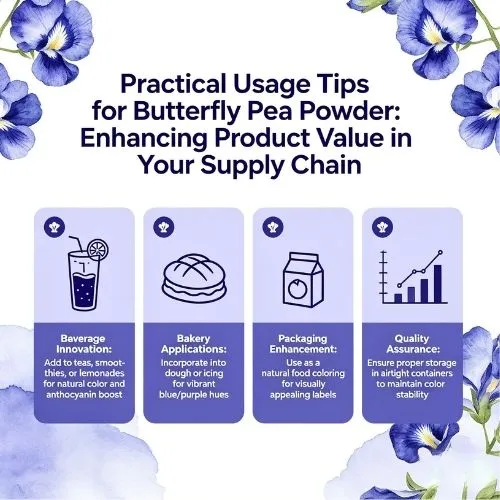
Practical Usage Tips for Butterfly Pea Powder: Enhancing Product Value in Your Supply Chain
For an ingredient to be as useful as possible, its full economic potential across a wide range of product categories must be unlocked by knowing application-specific techniques, dosage optimization, and formulation issues.
Beverage Innovation Applications
The powder's ability to dissolve completely in water and change its pH level opens up new possibilities for making drinks. For color effects in ready-to-drink formulas, the usual use rates are between 0.1% and 0.5%, which can be changed depending on the level of strength and acidity of the liquid. It can naturally show the pH level by changing colors when acid is added. This lets customers have engaging experiences in teas, lemonades, and drinks where citrus ingredients change the way things look.
Because it is heat-stable, it can be used in hot drinks like lattes and green teas without losing its flavor when it is brewed or heated. When mixed with other plant-based products, like matcha, it makes presentations that are more eye-catching and increase the perceived value. Its antioxidant benefits go beyond how it looks, which supports marketing claims of clean-labels for sports drinks and functional waters.
Food Formulation Strategies
When using leavening agents in baking, you need to think about how pH affects the colors. Neutral to slightly alkaline dough may have blue-green colors, while cakes that are acidic will turn purple. Depending on how saturated you want the color to be, the usual use rate is between 0.5 and 2% of the weight of the flour. Its ability to withstand heat during baking keeps the look of baked goods like cakes, cookies, and pies. Its stability during freeze-thaw processes is used by companies that make frozen desserts like ice cream, yogurt, and pudding. It is easy for the powder to mix with both dairy and non-dairy bases, which makes the color spread out evenly without changing the structure profiles. Its natural coloring features make it a good choice for rice meals and pasta, giving clean-label alternatives to manufactured dyes in savory food categories.
Cosmetic and Personal Care Integration
Skincare products usually have amounts of 0.5 to 3%, using the antioxidant qualities of anthocyanins to market anti-aging products. The powder's claims that it supports collagen and elastin are in line with marketing techniques for high-end skincare products aimed at older people. Face masks, lotions, and serums that use it can benefit from its natural color, and it also has skin-care benefits that go beyond how it looks. Because it has anthocyanins, haircare products focus on improving blood flow to the head and boosting hair follicles. Most shampoos and conditioners have amounts between 1% and 2%, but leave-in products may use higher levels to get stronger results. Bath items with natural blue colors make relaxed visual experiences, which appeals to health-conscious people looking for plant-based self-care options.
Conclusion
To strategically source high-quality plant extracts, you need to find a balance between technical requirements, the supplier's skills, and the performance needs of the application. Butterfly pea powder is a natural ingredient that can be used in a lot of different areas, like food, drinks, cosmetics, and nutraceuticals, making it a good choice for companies that want to differentiate their products with clean labels and give them more than just color.
Systematic review of suppliers that focuses on certification portfolios, production capacity, technical support infrastructure, and tracking systems leads to partnerships that work well. Directly working with the maker gives you the most control over quality standards and makes it easier to make changes that fit your market positioning strategies. To get the most out of ingredients during product creation, it's important to know how to remove them, how much to concentrate them, and how to use them. This will help your company compete in markets where consumers are becoming more concerned with quality.
Partner With a Certified Butterfly Pea Powder Supplier for Your Manufacturing Needs
Yangge Biotech Co., Ltd. is ready to help you reach your buying goals by providing you with high-quality plant products backed by a wide range of certifications and technical know-how. Our Butterfly Pea Powder meets high quality standards, and its anthocyanin content has been confirmed using HPLC. It comes in a range of strength ratios (4:1, 6:1, and 10:1) so you can find one that fits your needs. We keep a ton of goods on hand to make sure there is a steady supply for scaling operations, and we offer free 10–30g samples for trying before you buy.
Our GMP-compliant production and ISO, HACCP, Kosher, and Halal certifications show that we are committed to meeting world quality standards. Full documentation that can be tracked from relationships for sustainable farming all the way through to finished product batches meets the needs of legal compliance and brand integrity. For your bulk Butterfly Pea Powder supplier needs, Contact us or email info@yanggebiotech.com to get full specs, batch-specific COAs, and unique prices. Our specialized scientific team is available 24 hours a day to answer questions about extraction methods, give application advice, and make custom formulations.
FAQ
Q: Can we get some samples to test before purchasing?
A: Of course, we can provide free samples of 20 to 100 grams, but the shipping cost is at the customer's expense. The shipping cost can be deducted from the next order, or the samples can be sent through your courier account.
Q: Do your products have relevant certifications?
A: Yes, our products are certified for HALAL, ISO, HACCP, Kosher, and other certifications.
Q: What is the minimum order quantity (MOQ)?
A: Small batches of samples can be customized according to your requirements.
Q: Do you offer OEM and ODM services? Can the formula be customized based on our own?
A: Of course, we provide ODM and OEM services to many customers. Our product range includes softgels, capsules, tablets, sachets, granules, and private label services. Simply contact us and let us know your requirements. Our experienced R&D team can also develop new products with specific formulas.
Please contact us to design your own branded products.
Q: How do you handle quality complaints?
A: First, we have a comprehensive quality control SOP. We provide authoritative third-party inspection reports for almost all products before shipment to minimize the possibility of quality issues. Second, we have a comprehensive return and exchange procedure. If there is a genuine quality dispute, we will strictly follow the SOP.
Q: How do you ship? How long does delivery take?
A: For small orders, we typically use DHL, UPS, EMS, FedEx, or TNT. Delivery typically takes 3-7 days. We also offer air and sea freight services. We have a strong freight forwarding team and can provide you with a one-stop service, including DDP and DDU.
Q: What are your payment terms?
A: 100% prepayment, payable by T/T, Western Union, MoneyGram, or PayPal.
Q: What is the shelf life of your products?
A: 2 years with proper storage.
References
1. Chusak, C., Thilavech, T., & Adisakwattana, S. (2018). Acute effect of Clitoria ternatea flower beverage on glycemic response and antioxidant capacity in healthy subjects: a randomized crossover trial. BMC Complementary Medicine and Therapies, 18(1), 6-14.
2. Jeyaraj, E. J., Lim, Y. Y., & Choo, W. S. (2021). Extraction methods of butterfly pea (Clitoria ternatea) flower and biological activities of its phytochemicals. Journal of Food Science and Technology, 58(6), 2054-2067.
3. Nair, V., Bang, W. Y., Schreckinger, E., Andarwulan, N., & Cisneros-Zevallos, L. (2015). Protective role of ternatin anthocyanins and quercetin glycosides from butterfly pea (Clitoria ternatea Leguminosae) blue flower petals against lipopolysaccharide (LPS)-induced inflammation. Journal of Agricultural and Food Chemistry, 63(28), 6355-6365.
4. Salehi, B., Venditti, A., Sharifi-Rad, M., Kręgiel, D., Sharifi-Rad, J., Durazzo, A., & Martins, N. (2019). The therapeutic potential of anthocyanins: Current approaches based on their molecular mechanism of action. Frontiers in Pharmacology, 10, 1300-1318.
5. Tai, A., Sawano, T., Yazama, F., & Ito, H. (2011). Evaluation of antioxidant activity of vanillin by using multiple antioxidant assays. Biochimica et Biophysica Acta, 1810(2), 170-177.
6. Zakaria, N. A., Ibrahim, D., Sulaiman, S. F., & Supardy, A. (2018). Anthocyanin content and antioxidant activity of Clitoria ternatea flower extracts: Comparison between extraction methods. International Food Research Journal, 25(4), 1591-1597.

Based on your location and order quantity, you will have the opportunity to receive a limited time free shipping promotion!
Who we are
Popular Blogs