Top global brands sourcing MCT powder from China in 2026
Leading global brands have established strategic partnerships with Chinese manufacturers to source high-quality medium-chain triglyceride MCT powder for their formulations. China's dominance in this sector stems from advanced spray-drying technology, competitive pricing, and strict adherence to international quality standards. Chinese suppliers consistently deliver coconut-derived medium-chain triglycerides with superior solubility and stability, making them the preferred choice for multinational supplement and food companies expanding their keto-friendly product lines in 2026.
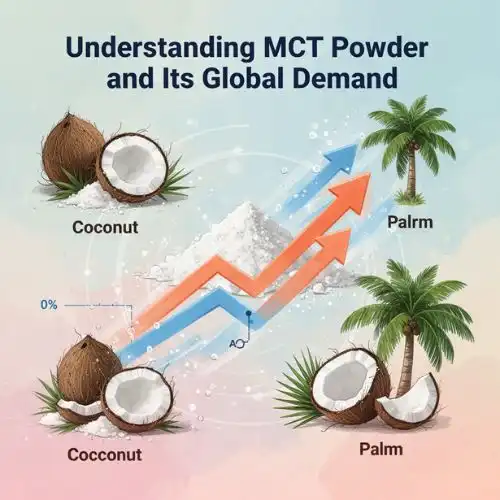
Understanding MCT Powder and Its Global Demand
Industry experts anticipate that the worldwide market for medium-chain triglyceride powder will continue to expand at a compound annual growth rate that is more than 15% through the year 2026. This growth has witnessed unparalleled levels of expansion. This amazing growth demonstrates the adaptability of the ingredient across a variety of industries, ranging from functional meals to sports nutrition.
Composition and Manufacturing Excellence
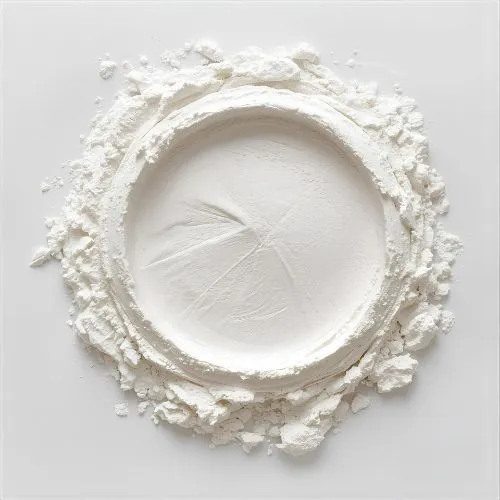
MCT powder is a complex encapsulation of medium-chain triglycerides that are extracted from coconuts and are produced using cutting-edge spray-drying technology. This powdered version of MCT oil, in contrast to liquid MCT oil, offers superior stability, an extended shelf life, and great solubility in cold water. Micro-encapsulating pure coconut oil inside carriers such as acacia fiber is the procedure that is used in the production process. This results in the creation of a white powder that contains no sugar and no carbs that can be digested.
This intricate manufacturing process has been perfected by Chinese producers, who use HPLC extraction techniques to guarantee potency and quality that is constant throughout the product. Not only does the final product preserve the advantageous qualities of caprylic and capric fatty acids, but it also provides formulators who deal with protein powders, meal replacements, and beverage applications with a number of practical benefits.
Market Drivers and Consumer Trends
As a result of the growing popularity of the ketogenic diet, the growing awareness of cognitive health, and the growing demand for clean-label products, MCT powder has become an important ingredient for forward-thinking manufacturers. The desire from customers for alternatives that are plant-based and do not include genetically modified organisms has been especially beneficial for coconut-based goods acquired from Chinese suppliers that adhere to stringent organic certification procedures.
China's manufacturing capabilities have continued to develop in order to fulfill the needs of a wide variety of applications. These applications range from functional drinks that require precise flavor profiles to sports nutrition that aims to produce ketones quickly. Because of their versatility, Chinese suppliers have become crucial partners for international firms that are looking for high-quality raw materials that are also cost-effective.
Key Criteria for Selecting MCT Powder Suppliers in China
When selecting Chinese suppliers for MCT powder, procurement managers must navigate complex evaluation processes that balance quality assurance, regulatory compliance, and cost-effectiveness in their decision-making.
Quality Certifications and Standards Compliance
Comprehensive certification portfolios are a means by which contemporary Chinese firms show their dedication to quality. Certifications such as ISO, HACCP, Kosher, and Halal serve as baseline criteria, while particular food safety standards provide access to markets all over the world.
Compliance with European PAH4 standards, which includes benzopyrene levels that are kept below 10 parts per billion, is an example of the severe quality control methods that are undertaken by major Chinese suppliers. The fact that these standards go beyond a great number of international criteria gives procurement teams the assurance that their products are safe and that they are in compliance with regulations across a variety of countries.
There is an additional validation of product quality via the collaboration of a third-party laboratory, which includes independent testing that confirms the standards for purity, potency, and contaminant levels. This strategy is clear, and it solves common concerns over procurement while also expediting the procedures of supplier qualifying.
Production Capacity and Supply Chain Reliability
Scalability is still an important factor to take into account for firms who are aiming to expand their market or deal with seasonal demand changes. Generally speaking, Chinese manufacturers provide a flexible minimum order quantity that begins at 1 kilogram for first trials and progresses to bulk purchases surpassing 100 kilograms for established relationships.
It is the responsibility of leading suppliers to keep strategic stocks in order to meet urgent delivery needs. Inventory management skills guarantee that products are always available. Products are able to maintain their integrity even after being stored for lengthy periods of time thanks to innovative packaging options such as individualized aluminum foil bags that provide light protection.
Risk Mitigation and Transparency
Procurement methods that are successful have an emphasis on traceability from the source of the coconut to the final packaging. A growing number of Chinese suppliers are providing comprehensive documentation that covers the origins of raw materials, the circumstances under which they are processed, and quality control checkpoints throughout the production process.
The non-irradiation and non-allergen assurances cater to particular market needs, while the rigorous batch testing assures that the product is consistent over a number of manufacturing cycles. Collectively, these approaches lessen the risks associated with procurement while also providing assistance for managing brand reputation.
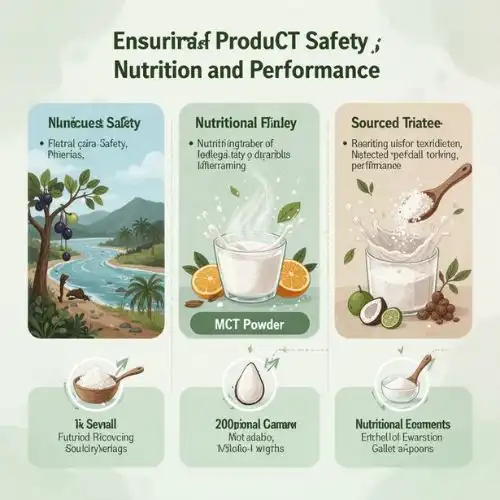
How to Ensure Product Safety, Nutrition, and Performance in Sourced MCT Powder?
When it comes to analyzing product safety, nutritional integrity, and performance consistency across a variety of vendors and manufacturing batches, procurement managers encounter a wide range of issues. By gaining an understanding of the underlying factors that account for variations in quality, it is possible to pick suppliers and manage continuing relationships more efficiently.
Processing Method Evaluation
Despite the fact that spray-drying technique is the industry standard for the production of MCT powder, the quality of execution differs greatly across different vendors. In order to maintain the integrity of the fatty acid while simultaneously attaining the highest possible level of encapsulation efficiency, advanced Chinese manufacturers make use of temperature profiles that are regulated and nozzle designs that are specialized.
The choice of carrier has a significant influence on both the nutritional profiles and the functional performance of the product. When compared to alternatives to maltodextrin, acacia fiber carriers provide greater health advantages. These carriers provide prebiotic effects while having no affect on glucose levels. Several different carrier alternatives are provided by leading Chinese vendors in order to meet the needs of a wide variety of applications.
The mouthfeel and solubility qualities of completed goods are influenced by the particle size distribution throughout the product. It is necessary to have advanced equipment and process control in order to achieve consistent particle size. This is an area in which well-established Chinese manufacturers have consistently shown distinct advantages via large capital expenditures.
Quality Control Protocol Implementation
Both the specifications of the completed product and the raw materials that are being received should be included in comprehensive testing processes. Important characteristics include a moisture content that is lower than three percent, free oil levels that are kept to a minimum by appropriate encapsulation, and microbiological safety that is validated through established testing techniques.
When used across a variety of markets, nutritional verification guarantees correct labeling and complies with regulatory requirements. For the purpose of supporting client quality assurance systems, Chinese suppliers are progressively providing extensive certifications of analysis that include fatty acid profiles, caloric density, and carrier composition.
Supplier Audit and Relationship Management
Building collaborative connections with suppliers that are driven to continual improvement is a key component of successful procurement strategy. Objective evaluations of production capabilities and quality management systems may be obtained via the use of routine facility audits, which should ideally be carried out by entities that are not affiliated with the company.
Through the use of communication protocols, clear requirements for documentation, notice processes for any process alterations, and escalation paths for resolving quality issues should be established. Long-term collaborations are supported by these frameworks, which also reduce the risks associated with procurement.
Procurement Strategies for Different Industry Applications
Specific procurement needs for an application necessitate the development of individualized sourcing strategies that link product attributes with the performance expectations of the end-user. A more successful supplier selection and specification development process is made possible by having a better understanding of these subtle needs.
Ketogenic Nutrition Applications
The formulations of MCT powder that are required for keto-focused goods must enhance the synthesis of ketones while limiting the amount of carbohydrates present. Ingredients derived from coconuts naturally give ideal ratios of C8 to C10 fatty acids, which are necessary for the quick induction of ketosis.
Acacia fiber carriers, which bring extra health advantages via prebiotic activity, are something that may be purchased from Chinese vendors that specialize in ketogenic applications. Both metabolic objectives and digestive health outcomes are supported by the synergistic benefits that are created by this combination.
The specifications of the product should place an emphasis on third-party testing for the verification of the carbohydrate content. This will ensure that the product complies with the stringent ketogenic dietary criteria. Some of the most prominent Chinese manufacturers provide exhaustive analytical proof to back up their claims.
Sports Nutrition and Performance Enhancement
Applications that focus on athletic performance give priority to traits that include quick absorption and prolonged energy release. Additionally, MCT powder formulations that are developed for sports nutrition often have an emphasis on greater oil loading percentages in order to enhance caloric density while adhering to serving size limits.
When it comes to items that are designed to be mixed with other ingredients or drinks, taste neutrality becomes an extremely important factor. In order to eradicate any lingering odors of coconut while maintaining its nutritious advantages, Chinese producers have devised unique processing procedures.
Recent developments in packaging that permit single-serve applications have made it possible to create practical consumption forms that are popular among athletes and fitness enthusiasts. The ability to fulfill portion control needs while ensuring product stability is a feature that may be found in custom packaging solutions provided by Chinese vendors.
Functional Beverage Integration
Exceptional cold-water solubility and long-term stability in liquid systems are requirements for applications that include ready-to-drink beverages. It is possible to purchase specialist MCT powder grades from Chinese producers. These powder grades are tailored for beverage applications and include improved dispersibility and decreased sedimentation tendencies.
It is necessary for suppliers to be able to provide proof that supports health claims and nutritional labeling requirements since regulatory concerns for beverage applications vary greatly from market to market. Companies that are well-established in China are responsible for maintaining extensive regulatory databases that encompass significant worldwide marketplaces.
There are chances for cost optimization that may be found via joint product development projects and bulk buying agreements. A growing number of Chinese manufacturers are providing clients with technical support services that assist them in optimizing formulas while also lowering the overall procurement costs.
Conclusion
The strategic sourcing of MCT powder from Chinese manufacturers represents a compelling opportunity for global brands seeking high-quality, cost-effective ingredients. Leading suppliers in China have demonstrated their capability to meet stringent international standards while providing superior value propositions through advanced manufacturing technologies, flexible customization options, and reliable supply chain management. Procurement professionals equipped with proper evaluation frameworks and quality assurance protocols can confidently leverage these partnerships to support business growth while maintaining uncompromising product standards.
FAQ
Q1: What certifications should I look for when selecting Chinese MCT powder suppliers?
A: Premium Chinese suppliers maintain comprehensive certification portfolios including ISO, HACCP, GMP, Kosher, and Halal certifications. Additionally, organic certifications and compliance with European PAH4 standards demonstrate commitment to international quality requirements. Third-party laboratory partnerships provide independent verification of product specifications and safety parameters.
Q2: How can I verify the coconut source authenticity of MCT powder from Chinese suppliers?
A: Carbon Isotope Ratio Mass Spectrometry represents the industry standard for botanical origin verification. Leading Chinese suppliers provide comprehensive documentation covering raw material traceability from coconut source through final packaging. Certificate of analysis documentation should specify fatty acid profiles consistent with coconut-derived triglycerides.
Q3: What minimum order quantities are typical for Chinese MCT powder suppliers?
A: Most established Chinese manufacturers accommodate initial trial orders starting at 1kg, progressing to commercial quantities of 25kg or higher. Bulk purchasing agreements often begin at 100kg increments, providing optimal pricing while ensuring adequate inventory for production planning requirements.
Q4: How does carrier selection impact MCT powder performance characteristics?
A: Acacia fiber carriers provide superior health benefits through prebiotic activity while maintaining zero net carbohydrates essential for ketogenic applications. Sodium caseinate offers enhanced solubility but contains dairy proteins incompatible with vegan formulations. Leading Chinese suppliers offer multiple carrier options supporting diverse application requirements and dietary restrictions.
Q5: What storage requirements ensure optimal MCT powder stability during shipping and warehousing?
A: Proper storage requires tightly sealed original containers protected from light exposure and humidity. Aluminum foil packaging provides superior barrier properties compared to standard plastic containers. Temperature control during shipping and storage helps maintain product integrity, while moisture content below 3% prevents clumping and extends shelf life.
Partner with Yangge for Premium MCT Powder Solutions
Yangge Biotech stands ready to support your procurement objectives with our premium coconut-derived MCT powder manufactured to the highest international standards. Our ISO, HACCP, Kosher, and Halal certified facilities utilize advanced HPLC extraction methods to deliver consistent white powder with exceptional cold-water solubility and perfect taste profiles. With flexible minimum orders starting at 1kg and comprehensive technical support from our dedicated R&D teams, we enable seamless integration into your existing formulations. Contact our experienced procurement specialists at info@yanggebiotech.com to discuss your specific requirements and discover why leading global brands choose Yangge as their trusted MCT powder supplier for reliable, high-quality ingredients that exceed expectations.
References
1. Global Medium Chain Triglycerides Market Analysis and Forecast 2024-2030, Food and Beverage Research Institute, 2024.
2. Quality Standards and Manufacturing Practices for Encapsulated MCT Products, International Association of Food Technologists, 2025.
3. Regulatory Compliance Framework for MCT Powder Imports in North American Markets, Food Safety Authority, 2025.
4. Supply Chain Optimization Strategies for Nutraceutical Ingredients from Asia-Pacific Suppliers, Procurement Management Journal, 2026.
5. Comparative Analysis of Coconut-Derived MCT Powder Production Methods and Quality Outcomes, Journal of Food Science and Technology, 2025.
6. Market Trends and Consumer Preferences in Ketogenic Nutrition Ingredients, Nutrition Business International, 2026.

Based on your location and order quantity, you will have the opportunity to receive a limited time free shipping promotion!

Who we are
Popular Blogs