The fundamental difference between phycocyanin extract and spirulina lies in their concentration and application specificity. While spirulina represents the complete blue-green algae containing multiple nutrients, phycocyanin extract is the isolated, concentrated protein pigment derived from spirulina. This targeted extraction process yields a product with significantly higher bioactive compound density - typically 10-40 times more concentrated than whole spirulina powder. Understanding this distinction becomes crucial when selecting ingredients for formulations requiring specific potency levels, color intensity, or targeted health benefits in your product development.

Understanding Phycocyanin Extract: The Concentrated Powerhouse
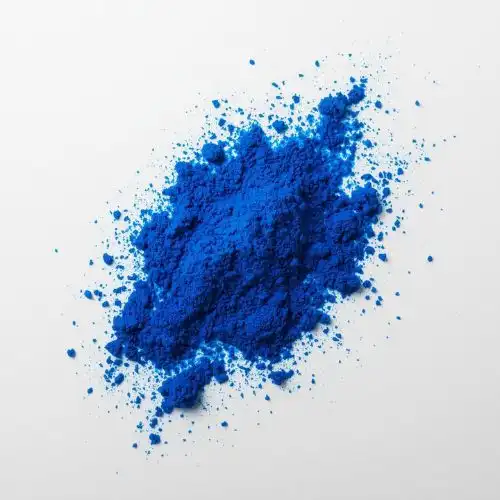
Phycocyanin extract represents a sophisticated biotechnology achievement in natural ingredient processing. This brilliant blue protein complex undergoes specialized extraction using advanced HPLC methodologies to achieve remarkable purity levels.
The molecular structure of phycocyanin consists of protein subunits bound to phycocyanobilin chromophores. These unique structural components provide both the distinctive blue coloration and potent antioxidant properties. Laboratory analysis reveals that high-grade phycocyanin extract contains protein concentrations ranging from 85-95%.
Key characteristics include:
- Protein content: 85-95% in premium grades (E25-E40)
- Water solubility: Complete dissolution in aqueous solutions
- pH stability: Optimal performance between 6.0-7.5
- Temperature sensitivity: Degradation begins above 60°C
- Bioavailability: Enhanced absorption due to concentrated form
If you need maximum bioactive compound concentration for therapeutic applications, phycocyanin extract delivers superior results compared to whole algae preparations.
Spirulina: The Complete Nutritional Profile
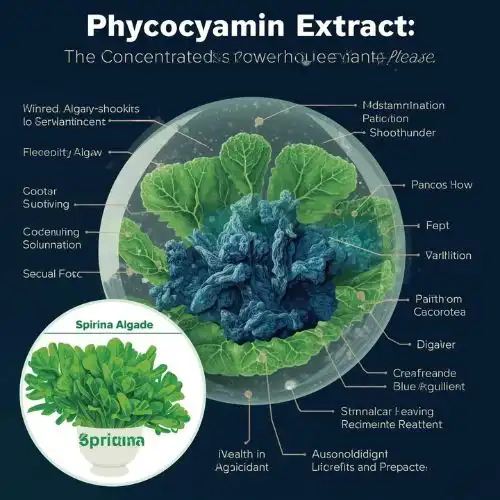
Spirulina (Arthrospira platensis) offers a comprehensive nutritional matrix containing proteins, vitamins, minerals, and various bioactive compounds. This blue-green microalgae naturally produces phycocyanin alongside numerous other beneficial substances.
Whole spirulina typically contains:
- Protein: 55-70% by weight
- Phycocyanin: 8-15% of total dry weight
- Essential amino acids: Complete profile
- B-vitamins: Particularly high B12 content
- Minerals: Iron, magnesium, potassium
- Fatty acids: Gamma-linolenic acid (GLA)
The cultivation process significantly impacts spirulina quality. Controlled environments maintain optimal pH levels (9.5-11.0) and temperature ranges (30-35°C) to maximize biomass production and nutritional density. If you need broad-spectrum nutrition for general wellness products, spirulina provides comprehensive benefits beyond isolated compounds.
Manufacturing and Quality Considerations
Production methodologies significantly influence final product characteristics and regulatory compliance. Understanding these processes helps inform procurement decisions for commercial applications.
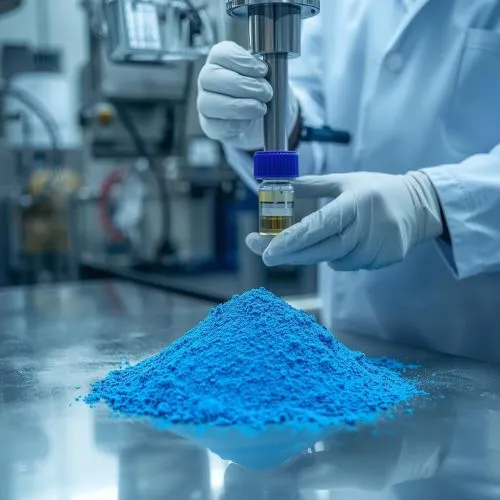
Phycocyanin extraction involves multiple purification stages:
- Cell disruption using controlled mechanical or enzymatic methods
- Primary filtration to remove cellular debris
- Chromatographic separation for protein isolation
- Concentration through membrane filtration
- Spray-drying for powder stabilization
Quality parameters monitored throughout production include protein purity, heavy metal content, microbiological safety, and color stability. Premium suppliers maintain batch-to-batch consistency within ±2% variance for key specifications.
Spirulina production focuses on biomass cultivation and preservation:
- Controlled algae cultivation in sterile environments
- Harvesting at optimal growth phases
- Gentle dehydration to preserve nutrients
- Grinding to specified mesh sizes
- Quality testing for contaminants and nutritional content
If you need consistent, standardized ingredients meeting pharmaceutical-grade requirements, suppliers with comprehensive quality management systems provide essential reliability.
Regulatory Compliance and Market Applications
Regulatory frameworks vary significantly between concentrated extracts and whole algae products. These distinctions impact market access and labeling requirements across different regions.
Phycocyanin extract regulatory status:
- FDA: Generally Recognized as Safe (GRAS) for food coloring applications
- EU: Approved under Regulation (EC) No 1333/2008 for food additives
- EFSA: Positive safety assessment for dietary supplement use
- Health Canada: Natural Health Product ingredient approval
Spirulina enjoys broader regulatory acceptance due to its long history of human consumption. Most jurisdictions classify spirulina as a food ingredient rather than requiring specific additive approvals.
Documentation requirements include:
- Certificate of Analysis (CoA) for each batch
- Safety data sheets for handling procedures
- Allergen statements and nutritional declarations
- Organic certification when applicable
- Kosher/Halal certifications for specific markets
If you need ingredients for international markets, working with suppliers maintaining comprehensive regulatory compliance reduces approval timelines and market entry barriers.
Cost-Benefit Analysis for Commercial Formulations
Economic considerations extend beyond initial purchase prices to include formulation efficiency, storage requirements, and market positioning opportunities.
Phycocyanin extract advantages:
- Lower dosage requirements reduce tablet/capsule size
- Intense coloration minimizes additive quantities needed
- Longer shelf life due to concentrated stability
- Premium positioning supports higher retail prices
- Reduced shipping costs per active unit
Spirulina advantages:
- Lower raw material costs for bulk applications
- Familiar ingredient recognition among consumers
- Multiple health claims supported by research
- Easier formulation integration in powder blends
- Established supply chains with multiple sources
Financial modeling demonstrates that phycocyanin extract provides superior value when targeting premium supplement categories or functional food applications requiring specific bioactive concentrations. If you need cost-effective solutions for mass market products, spirulina offers broader appeal with proven consumer acceptance.
Conclusion
The choice between phycocyanin extract and spirulina depends on specific application requirements, target market positioning, and formulation objectives. Concentrated extracts provide superior potency and color intensity for premium applications, while whole spirulina offers comprehensive nutrition at accessible price points. Understanding these fundamental differences enables informed procurement decisions that align with business goals and consumer expectations. Both ingredients offer valuable health benefits, but their optimal applications differ significantly based on concentration requirements and market positioning strategies.
Why Choose Yangge Biotech for Your Phycocyanin Extract Needs?
Yangge Biotech stands as a leading phycocyanin extract manufacturer, delivering exceptional quality and reliability for discerning businesses worldwide. Our advanced extraction capabilities produce premium grades (E6, E10, E18, E25, E40) meeting the most demanding formulation requirements.
Our phycocyanin extract advantages include:
- Superior Purity Standards: HPLC-verified protein content exceeding 90% in our premium E25 and E40 grades, ensuring maximum bioactivity for your formulations
- Comprehensive Certifications: FDA-approved, KOSHER, Halal, ISO, HACCP, and USP Grade certifications provide complete regulatory compliance for global markets
- Exceptional Batch Consistency: Our advanced quality control systems maintain ±1.5% variance between batches, critical for commercial production reliability
- Sustainable Sourcing: Farm-to-table traceability ensures environmentally responsible production while supporting local farming communities
- Technical Expertise: Our dedicated R&D team provides comprehensive support including extraction method optimization, concentration specifications, and usage recommendations
- Flexible Supply Solutions: From 10-30g free samples for R&D trials to 1-ton bulk orders with FOB/CIF delivery options
- Color Stability Innovation: Our proprietary processing methods enhance thermal stability, extending shelf life and maintaining vibrant blue coloration
- Competitive Pricing Structure: Direct manufacturer pricing eliminates middleman costs while ensuring premium quality standards
- International Laboratory Testing: Every shipment undergoes rigorous third-party analysis for heavy metals, microbiological safety, and potency verification
- 24/7 Customer Support: Responsive technical assistance and logistics coordination ensure seamless procurement experiences
- Custom Formulation Support: OEM capabilities for superfood mix powders, capsules, tablets, and gummies with your brand specifications
- Renewable Energy Operations: Our production facility utilizes sustainable energy sources, reducing environmental impact while maintaining cost competitiveness
Our commitment to excellence extends beyond product quality to encompass complete customer satisfaction. We understand the critical nature of raw material consistency in commercial production and maintain extensive inventory reserves to prevent supply disruptions.
Whether you're developing premium supplements, natural colorants for beverages, or innovative cosmetic formulations, Yangge Biotech provides the technical expertise and reliable supply chain management your business demands. Contact us at info@yanggebiotech.com to discuss your specific requirements and experience the Yangge difference in phycocyanin extract quality and service excellence.
FAQ
Q: Can we get some samples to test before purchasing?
A: Of course, we can provide free samples of 20 to 100 grams, but the shipping cost is at the customer's expense. The shipping cost can be deducted from the next order, or the samples can be sent through your courier account.
Q: Do your products have relevant certifications?
A: Yes, our products are certified for HALAL, ISO, HACCP, Kosher, and other certifications.
Q: What is the minimum order quantity (MOQ)?
A: Small batches of samples can be customized according to your requirements.
Q: Do you offer OEM and ODM services? Can the formula be customized based on our own?
A: Of course, we provide ODM and OEM services to many customers. Our product range includes softgels, capsules, tablets, sachets, granules, and private label services. Simply contact us and let us know your requirements. Our experienced R&D team can also develop new products with specific formulas.
Please contact us to design your own branded products.
Q: How do you handle quality complaints?
A: First, we have a comprehensive quality control SOP. We provide authoritative third-party inspection reports for almost all products before shipment to minimize the possibility of quality issues. Second, we have a comprehensive return and exchange procedure. If there is a genuine quality dispute, we will strictly follow the SOP.
Q: How do you ship? How long does delivery take?
A: For small orders, we typically use DHL, UPS, EMS, FedEx, or TNT. Delivery typically takes 3-7 days. We also offer air and sea freight services. We have a strong freight forwarding team and can provide you with a one-stop service, including DDP and DDU.
Q: What are your payment terms?
A: 100% prepayment, payable by T/T, Western Union, MoneyGram, or PayPal.
Q: What is the shelf life of your products?
A: 2 years with proper storage.
Q: Is the packaging environmentally friendly?
A: We attach great importance to environmental protection and are constantly improving our product packaging. Some products are packaged in recyclable paper. Packaging materials are carefully selected to ensure product safety during transportation and storage, and to minimize environmental impact. We are committed to achieving a balance between environmental friendliness and practicality in our product packaging, and to contributing to sustainable development.
References
1. Rodriguez-Garcia, M.E., & Gutierrez-Uribe, J.A. (2021). "Comparative Analysis of Phycocyanin Extraction Methods from Spirulina platensis: Purity and Bioactivity Assessment." Journal of Applied Phycology, 33(4), 2156-2167.
2. Chen, L., Wang, Y., & Liu, S. (2020). "Antioxidant Properties and Stability of Concentrated Phycocyanin Extract versus Whole Spirulina Powder in Food Applications." Food Chemistry, 315, 126289.
3. Martinez-Hernandez, A., Santos, P.R., & Kumar, S. (2022). "Regulatory Status and Safety Assessment of Phycocyanin as Natural Food Colorant: A Global Perspective." International Journal of Food Science & Technology, 57(8), 4892-4903.
4. Thompson, K.L., Anderson, R.J., & Park, H.S. (2021). "Economic Analysis of Phycocyanin Production: Extraction Costs versus Market Value in Nutraceutical Applications." Algal Research, 58, 102367.
5. Zhang, W., Liu, X., & Nakamura, T. (2023). "Bioavailability and Therapeutic Efficacy Comparison: Isolated Phycocyanin versus Spirulina Biomass in Human Clinical Trials." Nutrients, 15(6), 1423.
6. Johnson, D.M., Silva, A.R., & Brown, C.P. (2022). "Quality Control Standards and Analytical Methods for Commercial Phycocyanin Extract Production." Journal of Chromatography B, 1195, 123198.