Meso Zeaxanthin vs Lutein: Which Ingredient Should Buyers Choose?
When sourcing carotenoids for eye health formulations, meso zeaxanthin and lutein are the two ingredients buyers compare most often. Both protect the macula and filter blue light, but they serve different roles in retinal physiology. Meso zeaxanthin concentrates at the foveal center and accounts for up to 50% of macular pigment at that site, while lutein distributes more broadly across the peripheral macula. For manufacturers building complete macular nutrition products, understanding this distinction determines whether your formula delivers measurable visual outcomes or falls short of clinical benchmarks.
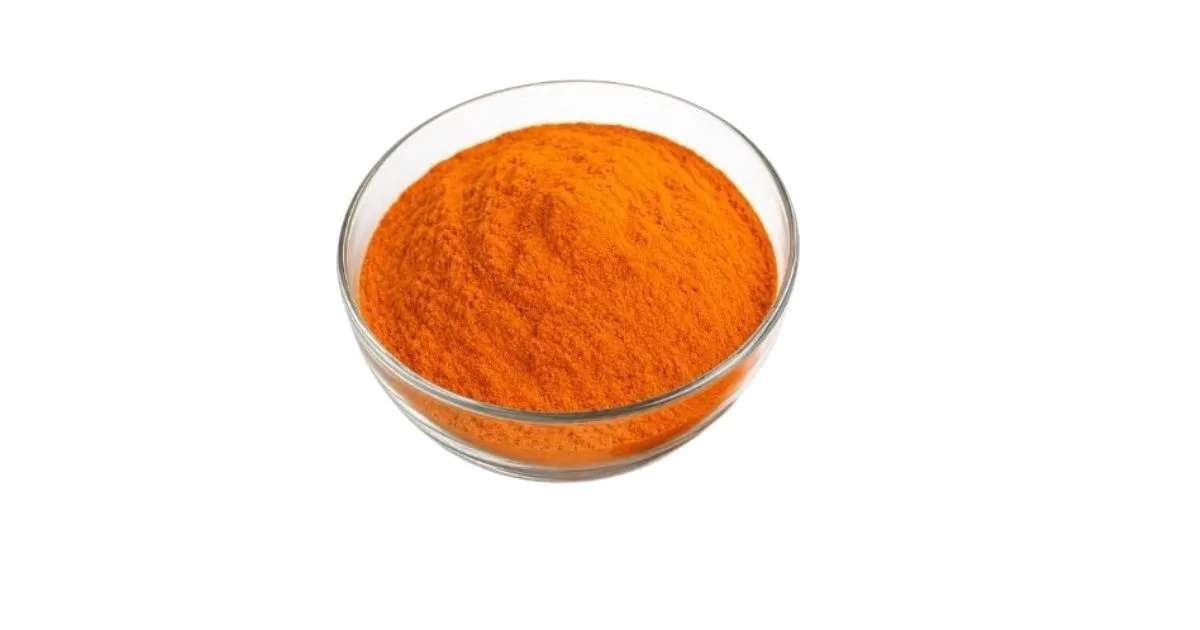
Understanding Meso Zeaxanthin and Lutein: Core Components for Eye Health
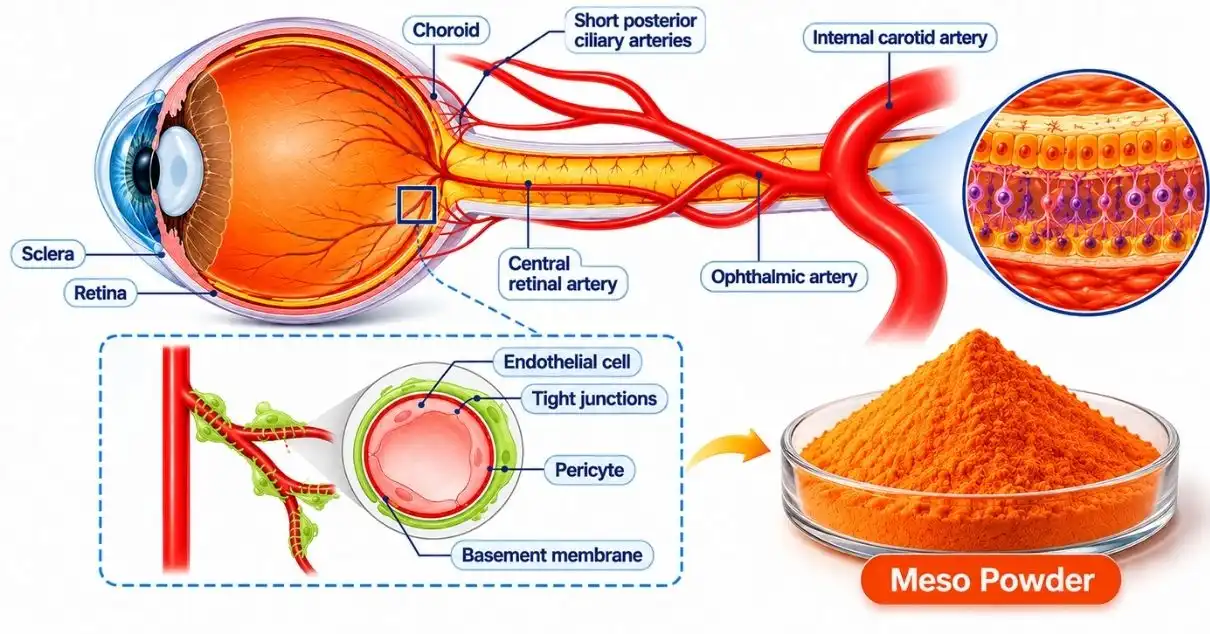
There is only one chiral structure for these two carotenoids (C₄₀H₅₆O₂), but they are not the same in terms of where they are found in tissues or how they work. When procurement teams know about the biology of the ingredients, they can better match them to the goals of the product.
Biological Role in the Retina
This part of the retina has three different types of carotenoids: zeaxanthin, lutein, and meso-zeaxanthin. Most of the carotenes in the macula are lutein and meso-zeaxanthin. Lutein is the main one in the mid-peripheral macula. Investigative Ophthalmology & Visual Science published a study that says a typical Western diet doesn't give you enough meso-zeaxanthin. To fill up this important area, you need to take extra supplements.
Natural Sources and Derivation
Lutein comes straight from Tagetes erecta flowers, which are marigolds. Meso-zeaxanthin is produced by carefully altering the form of lutein, which is derived from the same plant. When goods are made according to GMP standards, they can be traced back both ways to get items that are not GMO and don't have any synthetic leftovers. Yangge Biotech knows exactly where its marigolds come from, from the farm to the table.
Synergistic Antioxidant Activity
Both of these ingredients work better together than on their own. The CREST study found that the macular pigment optical density (MPOD) gets better when all three macular carotenoids are present: meso-zeaxanthin, lutein, and zeaxanthin. This is in contrast to recipes that only have lutein. A lot of the time, the 10:10:2 number is used because it makes things fit together better. Meso zeaxanthin is the carotenoid that distinguishes the 10:10:2 formulation from standard lutein-only supplements.
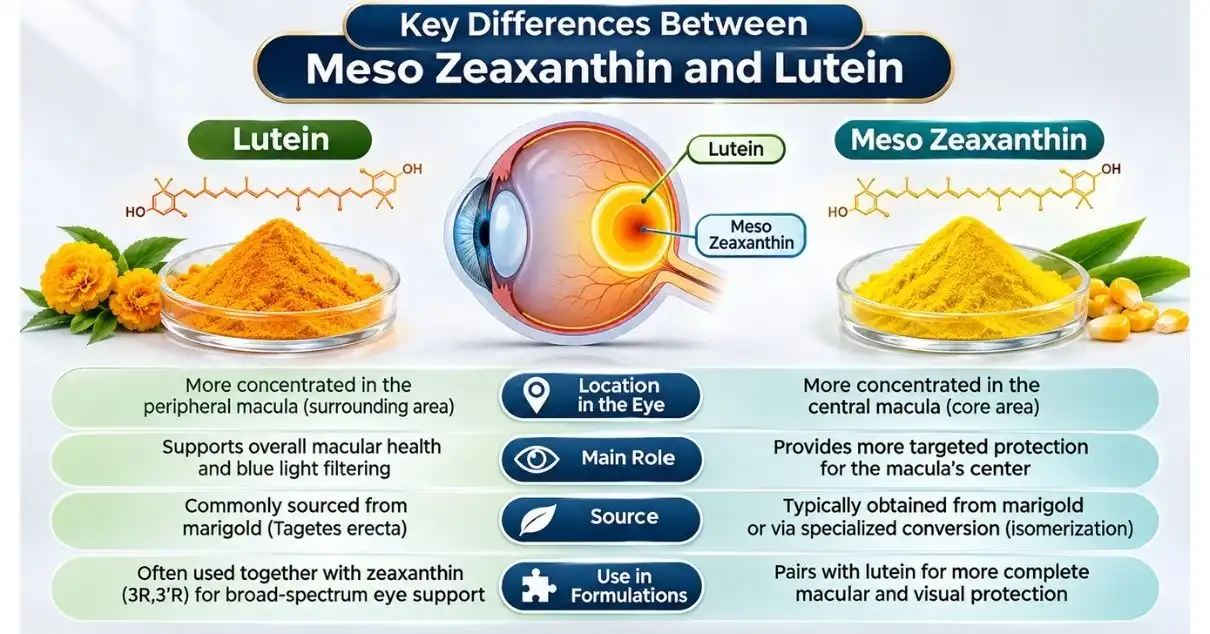
Key Differences Between Meso Zeaxanthin and Lutein
| Parameter | Meso-zeaxanthin | Lutein |
|---|---|---|
| Chiral isomer | (3R,3'S) | (3R,3'R) |
| Primary retinal location | Foveal center | Mid-peripheral macula |
| Dietary availability | Not in most diets | Found in leafy greens |
| Blue light absorbance | ~460 nm peak, 40% higher than synthetic forms | ~446 nm peak |
| Antioxidant capacity | 150% better than β-carotene | Strong, slightly lower |
Structural and Chemical Distinctions
The different form of zeaxanthin is known as meso-zeaxanthin (3R,3'S). Because of this chirality, membranes are easier to line up properly inside retinal cells, which makes it easier to get rid of singlet oxygen. In the retina, lutein is a type of xanthophyll that has a slightly different absorption peak and a more even spread.
Clinical Efficacy Against Macular Degeneration
The AREDS2 study from 2013 found that lutein and zeaxanthin slowed the progression of AMD. Meso-zeaxanthin was not part of the study. When meso-zeaxanthin was added to AMD protocols later, MPOD went up a lot, especially in the foveal center, where AREDS2 formulations did not protect well enough.
Safety Profile and Dosage Guidelines
Both elements have been safe for a long time. Meso-zeaxanthin has been studied in several clinical trials at amounts of up to 20 mg/day, and no adverse effects have been found. Every day, most people take 10–20 mg of lutein. The 10:10:2 mix of lutein, meso-zeaxanthin, and zeaxanthin has been shown to be the best for eye health vitamins.
Choosing the Right Ingredient: Buyer's Decision Framework
Pureness and certification can help you tell the difference between source risks and reliable bulk ingredients. These are the main things that help you decide what to buy.
Buying teams need to know what kind of goods they are making before they look at sources. For instance, are they making a functional drink, a formula just for AMD, or a daily supplement to help people avoid getting AMD? For each purpose, there are different needs.
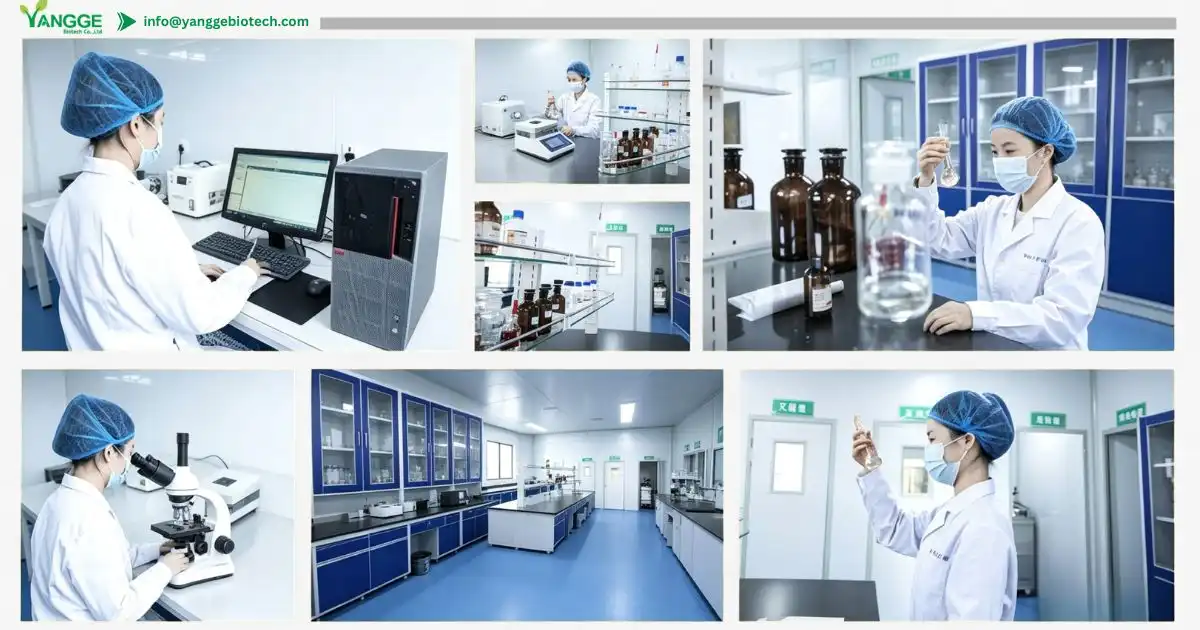
- Purity verification: We need to do chiral HPLC testing to confirm the ratio of the (3R,3'S) isomers in meso-zeaxanthin. UV tests can't tell the difference between it and zeaxanthin. Yangge Biotech works with other labs to make sure that each batch has an isomer proof from a separate lab.
- Water solubility format: For making softgels, grades that don't dissolve in oil work well. We need Cold Water Soluble (CWS) forms for drinks, cheese fortification, and fizzy pills. Yangge's meso-zeaxanthin CWS (99% pure, bright orange powder) goes right to work on this and stays stable during processing.
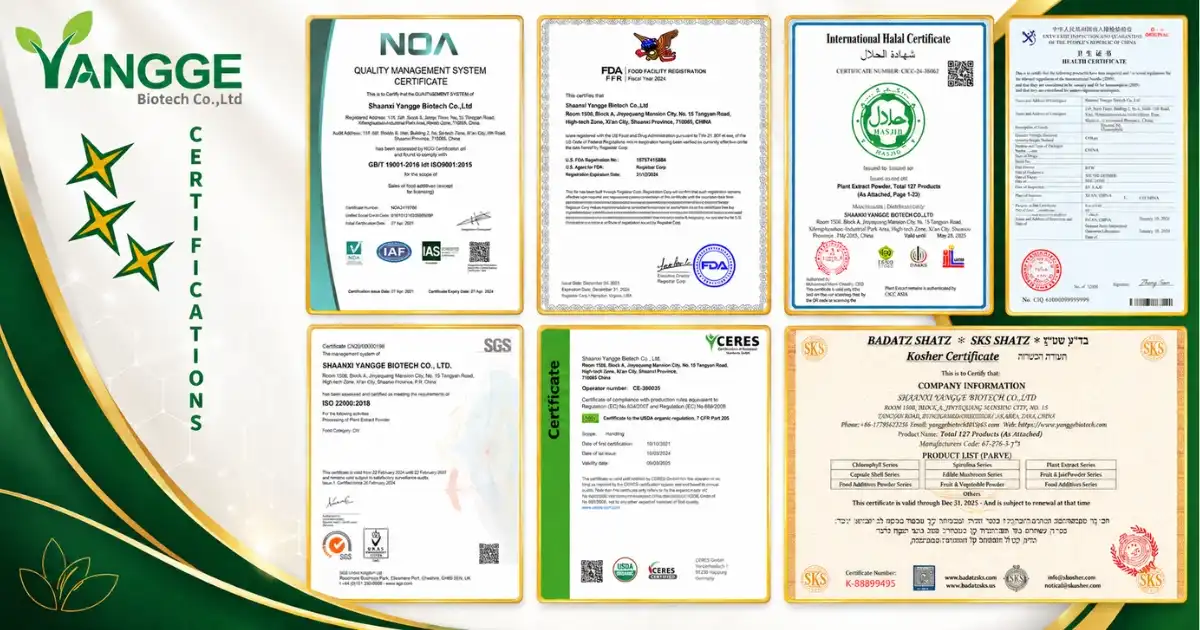
- Regulatory compliance: Suppliers must follow the rules and meet PAH4 and benzopyrene limits (≤10 ppb according to European standards). They must also be non-GMO and have the right ISO, Halal, and Kosher qualifications. There are three types of certifications for Yangge Biotech: ISO, Halal, and European PAH4.
Check to see if OEM is possible after you've made sure of the quality and rights. If you ask for a sample and the provider of meso zeaxanthin makes it for you, you can get it to market faster. Yangge Biotech lets you order OEM packing in a range of sizes, from 5% to 80%. The smallest order size is 1 kg.
Meso Zeaxanthin and Lutein: Comparative Market Analysis and Buyer Insights
| Product Form | Application | Solubility | Best For |
|---|---|---|---|
| Meso-zeaxanthin Powder (5%–80%) | Softgels, capsules, gummies | Oil-soluble | Dietary supplements |
| Meso-zeaxanthin CWS (99%) | Beverages, dairy, and RTD drinks | Water-soluble | Functional food |
| Lutein Powder (standard grades) | Wide range of supplement uses | Oil-soluble | Eye health in general |
Pricing and Value Positioning
Meso-zeaxanthin costs more than regular lutein because it needs an extra step of isomerization to be made. You have to pay the most for CWS-grade meso-zeaxanthin because it needs microencapsulation technology to dissolve in water. This is something buyers should think about, along with the fact that scientific difference lets the market price go up.
Real-World Procurement Patterns
Meso-zeaxanthin and lutein are usually sourced from a single reliable source by companies that make "Total Macular Nutrition" products. This way, they know the ratios of isomers will stay the same from one production run to the next. This makes it easy to follow the rules and lowers the differences between deals. It usually takes between 4 and 8 weeks from the first sample request to OEM trial production.
Formulation Trends Shaping Demand
More and more meso-zeaxanthin is being used in supplements for e-sports nutrition and blue-light protection. These are two categories that are growing quickly. For younger people who spend a lot of time in front of a screen, these goods are made. They sell macular carotenoids as performance ingredients instead of ways to slow down aging. Because of this trend, AMD can reach a bigger market than just the people who usually buy AMD products.
Expert Recommendations and Best Practices for Procurement Managers
Before you ask for samples, check your source list to make sure that the ingredient needs match the way you make things.
Align Specification to Application
Ask for oil-soluble powder for sealing lines and CWS powder for making drinks. For formulations to be stable, formats that don't match up cause launches to be pushed back. The way you store it should tell you how long it will last. If you keep Yangge's meso zeaxanthin CWS cool and dry, it will last for 24 months.
Require Third-Party Isomer Testing
For getting meso-zeaxanthin, you need chiral HPLC proof. Ask suppliers to give you certificates of analysis (CoA) that prove the isomer ratio was checked by a separate lab. This protects your formula claims and makes it easier to file with US, EU, and Japanese regulators.
Plan for Combination Formulas
If you get both meso-zeaxanthin and lutein from the same approved source, it is easier to match amounts and it costs less to be in compliance. People who buy eye health supplements are starting to think that the 10:10:2 combination formula is the standard. This is because it has been shown to work in clinical studies.
Conclusion
Lutein and meso zeaxanthin work on various parts of the macula and perform various tasks when combined to improve eye health. Meso-zeaxanthin fills in the foveal center, which is consistently underserved by lutein-only formulations, while lutein effectively covers the retina's outer edges. Products that are meant to help with macular nutrition should have both of these ingredients in their formula. The right question is not which one to pick, but whether the company that sells you meso-zeaxanthin can guaranty its purity, give you the right paperwork, and offer reliable OEM support as you make your product.
FAQ
Can meso zeaxanthin and lutein be used together in one formula?
Yes. The eye health goods with the most scientific backing all contain all three macular carotenoids. A mix of lutein, meso-zeaxanthin, and zeaxanthin in a 10:10:2 ratio has been shown to improve MPOD more than lutein alone or two-carotene combinations.
How do I verify meso zeaxanthin purity?
An HPLC method called chiral HPLC must be used. Standard UV spectrophotometry can't tell the difference between the (3R,3'S) isomer and regular zeaxanthin. Always get a COA with chiral HPLC data from a third-party lab before you accept a batch.
What certifications should a supplier hold?
To sell in North America and Europe, you should look for ISO, Halal, Kosher, and HACCP certifications at the very least. For European regulatory reports, make sure that the amounts of PAH4 and benzopyrene are less than 10 parts per billion. Products sold in most shops must have signs that say they are free of allergens and GMOs.
Is the CWS form significantly more expensive?
It costs more for CWS-grade meso-zeaxanthin because it needs to be put into tiny spheres. But it's the only shape that works for ready-to-drink drinks, dairy supplements, and pills that make you fizz. It's worth the money to show a product to useful food groups.
What is the typical minimum order quantity?
A sample of as little as 1 kg is what most qualified suppliers will take. Yangge Biotech always has 50–100 kg of stock on hand so that they can handle both test orders and regular production runs.
Partner with Yangge Biotech Trusted Meso Zeaxanthin Supplier for OEM Brands
Meso-zeaxanthin powder from Yangge Biotech is ISO and Halal-certified and comes in grades from 5% to 99% CWS. An outside chiral HPLC test showed that this powder meets all PAH4 conditions. We really know how to make meso-zeaxanthin, so we help OEMs make products from samples all the way through finished goods. Now is the time to get your sample or technical data sheet. Email us at info@yanggebiotech.com to get a sample, download our COA, or talk to us about your product needs.
References
1. Nolan, J.M. et al. — Investigative Ophthalmology & Visual Science, 2014
2. Akuffo, K.O. et al. (CREST Trial) — PLOS ONE, 2015
3. Age-Related Eye Disease Study 2 Research Group (AREDS2) — JAMA Ophthalmology, 2013
4. Sabour-Pickett, S. et al. — Experimental Eye Research, 2012
5. Beatty, S. et al. — Survey of Ophthalmology, 2000
6. Meagher, K.A. et al. — British Journal of Nutrition, 2013

Based on your location and order quantity, you will have the opportunity to receive a limited time free shipping promotion!
Who we are
Popular Blogs