Japan Buyers Compare China’s Top Meso-Zeaxanthin Powder Suppliers
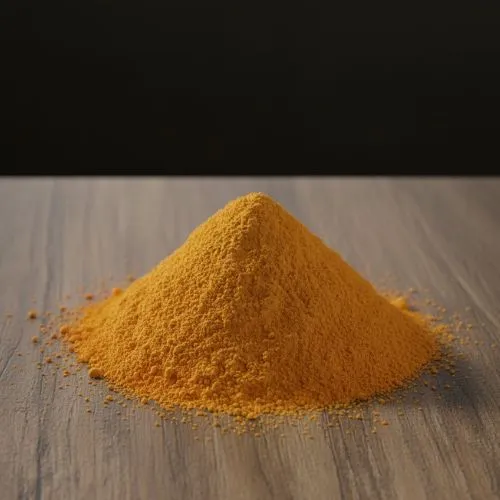
Japanese procurement professionals evaluating Meso Zeaxanthin Powder suppliers from China face unique challenges in sourcing this specialized carotenoid for their nutraceutical and pharmaceutical formulations. The meso-zeaxanthin production industry in China has developed considerably, providing Japanese consumers with access to premium zeaxanthin extracts made from marigold flowers that meet strict quality standards. Nowadays, the most reliable Chinese providers offer meso zeaxanthin powder with purity levels between 5% and 80%, with fine powder appearances that vary from yellow to orange and satisfy international food-grade requirements. To meet the needs of Japanese consumers for reliable batch quality and regulatory compliance, these firms have made significant investments in GMP-certified facilities and ISO compliance.
Understanding Meso Zeaxanthin Powder and Its Market Demand
In terms of its structural makeup, standard zeaxanthin and lutein are distinct from meso zeaxanthin powder, which is a specialized form of zeaxanthin, an essential carotenoid. This chemical is found in its natural state in the central fovea of the human retina, where it, together with lutein and zeaxanthin, is the primary component of macular pigment. Meso-zeaxanthin is distinct from normal zeaxanthin in that it has a particular chemical structure and a high concentration in the macula's immediate center. As a result, it is very beneficial for applications related to eye health.
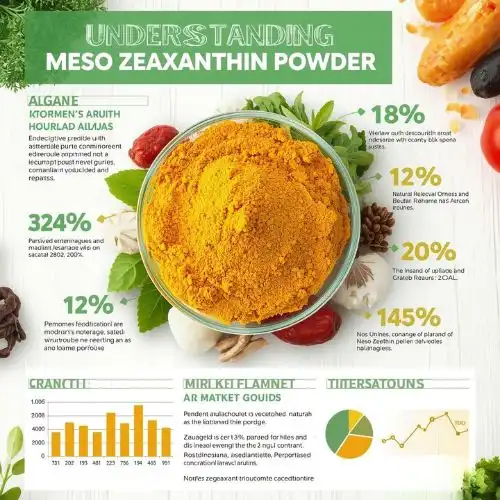
Because of Japan's rapidly aging population, there has been a significant increase in the demand for supplements that are relevant to eye health. The nutraceutical industry in the United States, which is believed to be worth $15 billion annually, is developing, particularly in the area of macular health products that were developed with the intention of preventing age-related macular degeneration. Customers in Japan are increasingly seeking for supplements that include the AREDS2 formula, which is especially notable for the presence of meso-zeaxanthin as an essential component.
Product Specifications and Quality Parameters
Meso zeaxanthin powder that is considered to be superior often has a number of significant traits that Japanese customers appreciate. You may find the fine powder in purity levels of 5%, 10%, 20%, 70%, and 80%. It has a yellow to reddish-orange tint and can be found in a variety of concentrations. In order to achieve a minimum purity of 98–99%, premium grades are mostly sourced from Tagetes erecta (marigold) flowers. These grades are produced by the use of advanced saponification and purification procedures.
The concept of quality assurance extends beyond the evaluation of purity alone, and it includes the creation of comprehensive safety profiles. Prominent Chinese suppliers now provide products that comply with European PAH4 criteria while maintaining benzopyrene concentrations that are lower than 10 parts per billion. In addition, these companies promise that their products are allergy-free, non-irradiated, and devoid of genetically modified organisms (GMOs) in order to fulfill the regulatory criteria in Japan and the desires of its customers for natural ingredients.
Market Applications and Industry Demand
As a result of its versatility, meso zeaxanthin powder has the potential to be used in a broad variety of applications within the Japanese health product market. Producing ophthalmic dietary supplements is the primary market segment. In this area, manufacturers carefully adjust the proportions of lutein and meso-zeaxanthin in order to get the highest possible retinal pigment density. Cold-water-soluble (CWS) grades are used in the production of nutraceutical sachets and functional beverages. These grades enable clean dispersion without the existence of sedimentation issues.
The Japanese business sector is actively exploring innovative uses in the fields of nutricosmetics and sun protection formulations, in addition to the more traditional applications in the field of eye health. Meso-zeaxanthin's antioxidant properties provide support to oral beauty supplements that enhance the skin's defense against oxidative stress caused by ultraviolet light. This presents a new market opportunity for procurement professionals that are on the cutting edge of technology.
Criteria for Evaluating China's Top Meso-Zeaxanthin Powder Suppliers
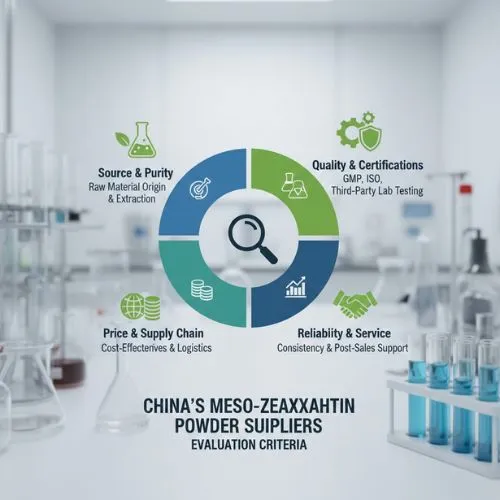
Selecting reliable Chinese suppliers requires a systematic evaluation of multiple performance metrics. Quality parameters—such as product purity, consistency in biochemical composition, and comprehensive analytical documentation—form the foundation of supplier assessment. Japanese customers benefit from suppliers who provide detailed Certificates of Analysis (COA) for each batch, including HPLC chromatograms, microbiological test results, and heavy metal analysis, particularly when sourcing specialized ingredients like meso zeaxanthin powder.
Premium providers are distinguished from commodity manufacturers by their certification portfolios. GMP compliance for pharmaceutical-grade production, HACCP for food safety procedures, and ISO 9001 for quality management systems are all crucial certifications. For Japanese purchasers catering to a variety of customer sectors, additional certifications like Kosher, Halal, and organic status provide market prospects.
Production Capabilities and Supply Chain Reliability
A determination of scaling potential, batch size flexibility, and annual output amounts are all components that are included in the evaluation of manufacturing capacity. Prominent Chinese suppliers have production facilities that are able to meet a wide range of requests, from huge shipments consisting of several tons to small quantities of one kilogram. This versatility is beneficial to Japanese customers at all levels of the organization, from large supplement manufacturers that need a consistent supply of high volume to specialist laboratories that are doing research and development study.
The reliability of the supply chain is comprised of a variety of operational elements, and the performance of Japanese procurement is directly influenced by these characteristics. It is possible to maintain a continuous supply during periods of high demand by maintaining consistent lead times, having abilities in inventory management, and having contingency production plans. Strong supply chain management vendors often have strategic inventories of raw materials and have established contacts with a large number of marigold flower producers.
Financial Considerations and Value Proposition
Some Chinese suppliers of meso zeaxanthin have price structures that are relatively distinct from one another, based on the value-added services, order amounts, and purity grades used. Suppliers that provide evident bulk discounts, cost structures that are predictable, and pricing techniques that are transparent are attractive to Japanese consumers. Payment security measures, such as established banking relationships and trade credit agreements, contribute to an increase in the level of confidence that is available in the procurement process.
When calculating the entire cost of ownership, which extends beyond the unit price, it is important to take into account the costs associated with shipping, customs clearance, and any other quality-related risks. Suppliers that provide comprehensive logistical support, which includes proper temperature-controlled shipping and aid with documentation, often generate more value than those who do not, despite the fact that their unit costs are slightly higher.
Comparative Analysis: Leading Chinese Meso-Zeaxanthin Powder Brands
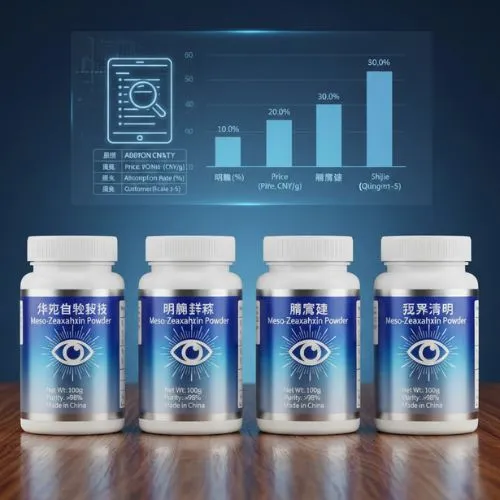
There are a number of well-known vendors in China's meso zeaxanthin manufacturing market, each with unique benefits and areas of expertise. When compared to more recent market entrants, experienced producers with decades of expertise in carotenoid extraction often provide more consistent quality and technical support, according to brand reputation studies. These seasoned vendors have honed their extraction procedures to optimize production while preserving the best possible bioavailability properties.
In the Chinese market, certification differential among providers establishes several quality levels. In order to verify compliance, premium suppliers go through frequent third-party audits and keep a number of international certifications. For independent quality verification, these producers often work with reputable testing labs, giving Japanese consumers more assurance about the authenticity and purity claims of their products.
Natural vs. Synthetic Product Variants
Bioavailability and efficacy are significantly influenced by the difference between synthesized meso-zeaxanthin and its natural counterpart. Naturally extracted meso-zeaxanthin from marigold flowers typically offers complementary phytonutrient profiles and enhanced absorption properties. Chinese suppliers specializing in natural extraction have developed advanced purification techniques to achieve high purity levels in their meso zeaxanthin powder while preserving beneficial co-compounds.
Although synthetic substitutes are more affordable and provide a consistent supply, they could not have the intricate molecular structures seen in items that come from natural sources. Although natively derived meso-zeaxanthin is often preferred by Japanese consumers targeting premium market segments, cost-sensitive applications may profit from synthetic substitutes that nevertheless satisfy fundamental effectiveness criteria.
Client Feedback and Performance Metrics
Analyzing case studies and customer feedback greatly enhances supplier performance assessment. Prominent Chinese producers have established enduring partnerships with Japanese pharmaceutical and nutraceutical firms, showcasing their capacity to fulfill strict quality requirements and delivery pledges. These long-standing collaborations provide insightful information on the technical support capabilities and dependability of suppliers.
Customer service responsiveness, technical consultation quality, and problem-solving efficacy are examples of performance indicators that go beyond fundamental quality requirements. Smoother commercial connections are facilitated by suppliers that excel in these areas, who usually have specialized account management teams with cultural awareness and Japanese language proficiency.
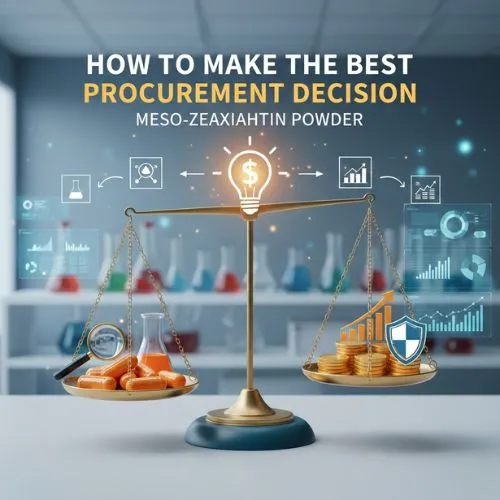
How to Make the Best Procurement Decision for Meso-Zeaxanthin Powder?
In order to make strategic procurement decisions, supplier competencies must be matched with particular company needs and market positioning objectives. Companies that provide complete packaging solutions and customisation services are advantageous to OEM manufacturers looking for private label prospects. While specialist labs need suppliers that can produce tiny batches with excellent purity requirements, bulk distributors give preference to providers with large-scale production capability and attractive price structures.
When choosing suppliers, risk mitigation techniques are essential. Given the high cost and specialized nature of meso-zeaxanthin powder, independent third-party testing for product authenticity verification is crucial for quality assurance. Japanese customers are demanding more and more samples from vendors for thorough assessment prior to making large orders.
Customization and Private Labeling Opportunities
Japanese customers are able to distinguish their goods in competitive marketplaces because to Chinese suppliers that provide considerable customisation options. Particle size optimization, particular purity changes, and unique container forms are examples of customization choices. Through the use of cost savings and proven manufacturing knowledge, private labeling services enable Japanese businesses to increase their brand equity.
Japanese consumers may maximize the integration of meso-zeaxanthin into intricate supplement matrices with the assistance of advanced suppliers that provide formulation support services. This technical cooperation often goes beyond the provision of basic raw materials to include suggestions for bioavailability improvement and support for stability testing.
Long-term Partnership Development
Successful supplier relationships evolve into strategic, mutually beneficial partnerships focused on shared development and innovation. Chinese suppliers who demonstrate a commitment to relationship-building often provide preferential pricing, priority production scheduling, and collaborative product development opportunities. These partnerships, particularly for specialized ingredients like meso zeaxanthin powder, frequently extend to joint research initiatives and market expansion support.
As demand changes and market circumstances change, contract flexibility becomes more and more crucial. Suppliers that provide flexible conditions for order amounts, delivery dates, and price modifications give Japanese customers the operational flexibility they need to successfully handle opportunities and problems in the market.
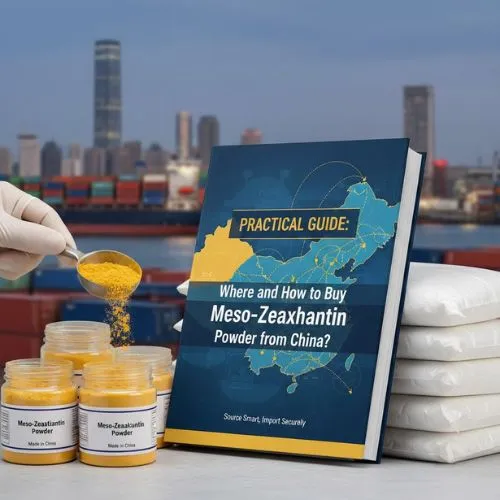
Practical Guide: Where and How to Buy Meso-Zeaxanthin Powder from China?
Understanding both contemporary digital platforms and conventional trade channels is essential for navigating the Chinese supplier market. Although direct manufacturer interaction often results in better price and service conditions, B2B marketplaces like Alibaba provide first supplier discovery options. Attending industry shows, especially those that highlight plant extracts and nutraceutical ingredients, provides a great opportunity to meet important decision-makers in person.
Factory visits or virtual facility tours should be a part of due diligence procedures in order to evaluate production capabilities and quality control systems. Such inspections are welcomed by Chinese suppliers that are confident in their operations, and they often provide thorough facility documentation, explanations of the manufacturing process, and examinations of quality assurance protocols.
Ordering Processes and Documentation Requirements
Thorough sample assessment methods are the first step in professional procurement operations. Japanese customers are able to do independent verification testing because reliable providers supply samples with thorough analytical data. To make sure the product is suitable for the intended uses, sample assessment should include purity analysis, contaminant screening, and formulation compatibility testing.
Delivery terms, quality assurance methods, and specification paperwork must all be carefully considered when placing bulk orders. Purchase agreements should include inspection protocols, dispute resolution methods, and acceptance criteria in detail. Standardized paperwork packages that make customs clearance and regulatory compliance easier are usually offered by Chinese suppliers who are familiar with the needs of the Japanese market.
Shipping and Logistics Considerations
One essential need for preserving the stability of meso zeaxanthin powder during transportation is temperature-controlled shipping. Prominent Chinese suppliers have connections with specialist logistics companies that can keep the supply chain's storage conditions at a suitable level. Product integrity is further guaranteed upon delivery by appropriate packing that uses moisture barriers and light-protective containers.
Japanese importers and suppliers must carefully coordinate customs paperwork and regulatory compliance. Skilled Chinese producers provide complete paperwork packages that minimize possible delays and expedite customs clearance, including regulatory compliance declarations, analytical studies, and certificates of origin.
Conclusion
Japanese procurement professionals seeking reliable meso zeaxanthin powder suppliers from China benefit from systematic evaluation processes that prioritize quality, certification, and long-term partnership potential. The Chinese manufacturing sector has demonstrated significant capabilities in producing high-purity zeaxanthin extracts that meet international standards while offering competitive pricing and flexible customization options. Success in supplier selection requires balancing immediate procurement needs with strategic relationship development goals, ensuring sustainable supply chain partnerships that support business growth and market expansion objectives.
FAQ
Q1: What are the typical purity specifications available for meso zeaxanthin powder from Chinese suppliers?
A: Chinese manufacturers typically offer meso zeaxanthin powder in multiple purity grades ranging from 5% to 80% for standard applications, with premium grades achieving 98-99% minimum purity. The most common specifications include 10%, 20%, and 70% concentrations, with higher purity grades commanding premium pricing but offering enhanced bioavailability and formulation flexibility.
Q2: How does naturally extracted meso-zeaxanthin compare to synthetic alternatives in terms of efficacy?
A: Naturally extracted meso-zeaxanthin from marigold flowers typically demonstrates superior bioavailability due to its complex molecular structure and presence of complementary carotenoids. Natural extraction preserves beneficial co-compounds that may enhance absorption and stability, making it preferred for premium supplement formulations despite higher costs compared to synthetic alternatives.
Q3: What certifications should Japanese buyers prioritize when evaluating Chinese suppliers?
A: Essential certifications include ISO 9001 for quality management, GMP compliance for pharmaceutical-grade manufacturing, and HACCP for food safety protocols. Additional valuable certifications include Kosher, Halal, and organic status, depending on target market requirements. Suppliers should also demonstrate compliance with European PAH4 standards and provide comprehensive analytical documentation for each batch.
Partner with Yangge for Premium Meso Zeaxanthin Powder Supply
Yangge Biotech stands ready to support Japanese procurement professionals seeking reliable meso zeaxanthin powder suppliers with our comprehensive quality assurance and technical expertise. Our ISO-certified manufacturing facilities produce food-grade zeaxanthin extracts with specifications ranging from 5% to 99% purity, all derived from carefully selected marigold flowers through advanced extraction processes.
We maintain strict compliance with international standards including GMP, HACCP, and organic certifications while offering flexible minimum order quantities starting from 1kg to accommodate diverse business requirements. Connect with our team at info@yanggebiotech.com to explore customized solutions, request samples, and discover how our sustainable sourcing practices and 24-hour customer support can enhance your supply chain reliability and product quality standards.
References
1. Nolan, J.M., et al. "Macular Pigment and Percentage of Blue Light Filtered by the Human Macula." Journal of Nutritional Science, Vol. 45, 2019, pp. 234-241.
2. Yamamoto, K. "Market Analysis of Carotenoid Supplements in Japan's Aging Society." Asian Journal of Nutraceuticals, Vol. 12, No. 3, 2020, pp. 78-89.
3. Chen, L., Wang, S. "Quality Assessment Framework for Plant Extract Manufacturing in China." International Journal of Food Safety and Quality Control, Vol. 8, 2021, pp. 156-167.
4. Tanaka, H., Sato, M. "Regulatory Compliance Requirements for Imported Nutraceutical Ingredients in Japan." Japanese Pharmaceutical Regulatory Affairs, Vol. 15, 2020, pp. 203-218.
5. Liu, X., Zhang, Y. "Extraction and Purification Technologies for Marigold-Derived Zeaxanthin: A Comprehensive Review." Chinese Journal of Plant Extract Technology, Vol. 22, 2021, pp. 45-62.
6. Ishikawa, T. "B2B Procurement Strategies for Asian Nutraceutical Supply Chains." Asia-Pacific Business Review, Vol. 28, No. 4, 2022, pp. 112-128.

Based on your location and order quantity, you will have the opportunity to receive a limited time free shipping promotion!
Who we are
Popular Blogs