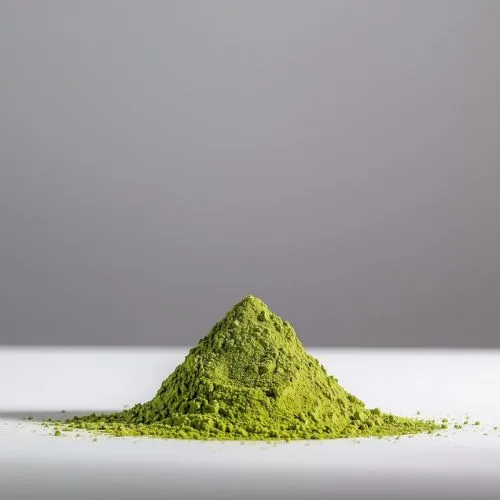
Matcha Powder is a nutritional powerhouse that has moved far beyond the tea bowl. When using it as a food ingredient, the rules change slightly: you aren't just looking for a delicate drink; you're looking for a flavor that can stand up to flour, sugar, and heat.
What is Matcha Powder?
Matcha powder is a finely ground powder made from specially grown and processed green tea leaves. Unlike traditional green tea, where leaves are steeped and discarded, matcha is consumed whole allowing you to absorb more nutrients and antioxidants.
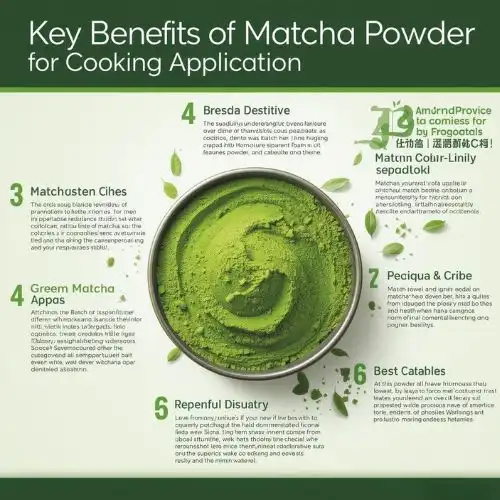
Key Benefits of Matcha Powder for Cooking Application
1. Rich Natural Color
Matcha powder delivers a vibrant green hue that enhances the visual appeal of foods. It’s ideal for baked goods, desserts, noodles, sauces, and beverages without the need for artificial coloring.
2. Distinct Umami Flavor
Matcha adds a balanced taste profile—earthy, slightly bitter, and subtly sweet. In cooking, it provides depth and complexity that pairs well with both sweet and savory recipes.
3. High Antioxidant Content
Matcha is packed with catechins, especially EGCG, which remain stable during most cooking processes. This makes it a functional ingredient for health-focused recipes.
4. Versatile Across Recipes
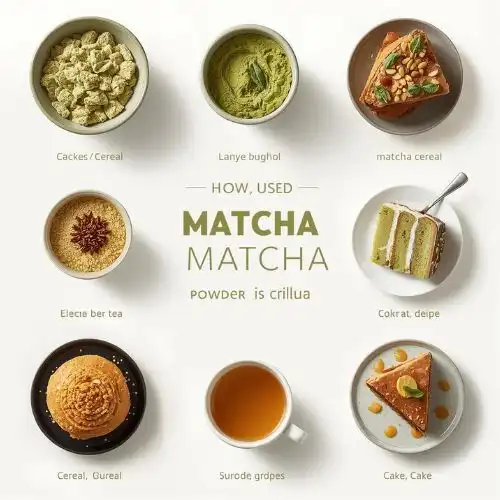
Matcha powder can be used in a wide range of applications, including:
Cakes, cookies, and pastries
Ice cream and desserts
Smoothies and lattes
Sauces, glazes, and marinades
Pasta, noodles, and bread
5. Natural Energy Boost
Because matcha contains caffeine and L-theanine, it offers sustained energy without harsh spikes. This makes matcha-infused foods appealing for breakfast and snack products.
6. Clean-Label Ingredient
Matcha fits well into clean-label and plant-based formulations. It’s minimally processed and recognizable to consumers seeking natural and premium ingredients.
7. Flavor Stability in Cooking
Culinary-grade matcha maintains its flavor when baked or mixed, making it suitable for commercial food production and home cooking alike.
8. Premium & Trend-Driven Appeal
Matcha is associated with wellness, Japanese tradition, and modern food trends—adding perceived value and differentiation to food products.
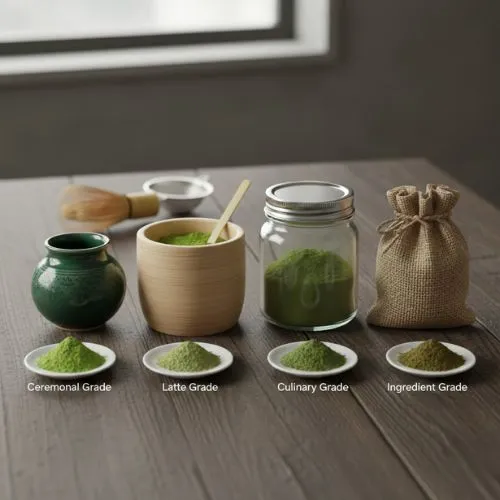
Matcha has different Type
Ceremonial Grade–Best for drinking with water; smooth and slightly sweet
Premium Grade–Ideal for daily drinking and lattes
Culinary Grade–Best for baking, smoothies, and cooking
Ingredient Grade-Refers to the purity, quality, and intended use of a substance
How to Used Matcha Powder?
Traditional Matcha Tea
Sift 1–2 teaspoons of matcha powder
Add hot (not boiling) water
Whisk in a zig-zag motion until frothy
Matcha Latte
Matcha powder
Milk (dairy or plant-based)
Sweetener (optional)
Cooking and Baking
Use matcha in
Smoothies
Desserts
Ice cream
Pancakes and cookies
How to Find High-Quality Matcha
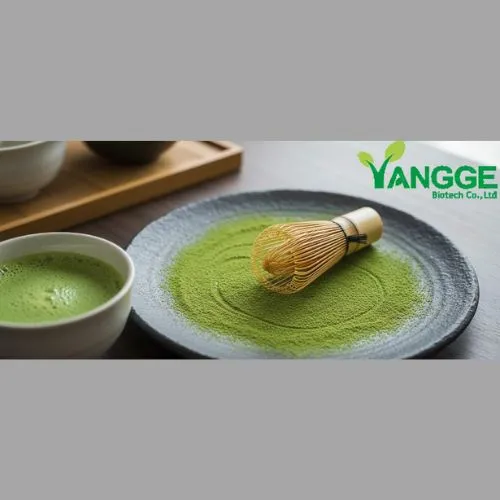
Look for bright green color
Read ingredient labels (100% pure matcha)
Avoid overly bitter or dull-colored powders
Conclusion
Matcha powder is more than just a trend it’s a versatile superfood with impressive health benefits and countless uses. Whether you enjoy it as tea, a latte, or in recipes, choosing high-quality matcha ensures the best flavor and nutritional value.
Experience the difference of working with a leading Matcha Powder supplier committed to excellence. Contact us at info@yanggebiotech.com to discuss your specific requirements and receive detailed product specifications. Our team is ready to support your next breakthrough supplement formulation.
FAQ
Q: Can we get some samples to test before purchasing?
A: Of course, we can provide free samples of 20 to 100 grams, but the shipping cost is at the customer's expense. The shipping cost can be deducted from the next order, or the samples can be sent through your courier account.
Q: Do your products have relevant certifications?
A: Yes, our products are certified for HALAL, ISO, HACCP, Kosher, and other certifications.
Q: What is the minimum order quantity (MOQ)?
A: Small batches of samples can be customized according to your requirements.
Q: Do you offer OEM and ODM services? Can the formula be customized based on our own?
A: Of course, we provide ODM and OEM services to many customers. Our product range includes softgels, capsules, tablets, sachets, granules, and private label services. Simply contact us and let us know your requirements. Our experienced R&D team can also develop new products with specific formulas.
Please contact us to design your own branded products.
Q: How do you handle quality complaints?
A: First, we have a comprehensive quality control SOP. We provide authoritative third-party inspection reports for almost all products before shipment to minimize the possibility of quality issues. Second, we have a comprehensive return and exchange procedure. If there is a genuine quality dispute, we will strictly follow the SOP.
Q: How do you ship? How long does delivery take?
A: For small orders, we typically use DHL, UPS, EMS, FedEx, or TNT. Delivery typically takes 3-7 days. We also offer air and sea freight services. We have a strong freight forwarding team and can provide you with a one-stop service, including DDP and DDU.
Q: What are your payment terms?
A: 100% prepayment, payable by T/T, Western Union, MoneyGram, or PayPal.
Q: What is the shelf life of your products?
A: 2 years with proper storage.
Q: Is the packaging environmentally friendly?
A: We attach great importance to environmental protection and are constantly improving our product packaging. Some products are packaged in recyclable paper. Packaging materials are carefully selected to ensure product safety during transportation and storage, and to minimize environmental impact. We are committed to achieving a balance between environmental friendliness and practicality in our product packaging, and to contributing to sustainable development.
References
1. International Tea Committee. "Global Tea Market Analysis and Matcha Industry Trends." Annual Tea Industry Report, 2023.
2. Food and Agriculture Organization. "Quality Standards for Tea Products and Processing Guidelines." FAO Agricultural Standards Publication, 2022.
3. Asian Tea Association. "Matcha Production Methods and Quality Assessment Protocols." Technical Handbook for Tea Processors, 2023.
4. Journal of Food Quality and Safety. "Comparative Analysis of Matcha Quality Parameters from Different Geographic Origins." Volume 45, Issue 3, 2023.
5. International Organization for Standardization. "ISO 11287:2011 Green Tea Definition and Basic Requirements." International Standards for Tea Products, 2022.
6. Tea Research Institute. "Supply Chain Management in the Global Matcha Industry: Best Practices and Quality Assurance." Industry Research Publication, 2023.