Gardenia Blue Powder as a Natural Blue Color for Modern Beverages
Gardenia blue powder is a plant-based blue colorant extracted from the fruit of Gardenia jasminoides Ellis. Produced through enzymatic biotransformation of geniposide using amino acids, this natural pigment fills a long-standing gap in beverage formulation—stable blue without synthetic chemistry. Unlike phycocyanin from spirulina, which degrades above 60°C, gardenia blue powder holds its hue past 100°C and across a wide pH range. Available from Yangge in specifications E30 through E200, it suits everything from craft sodas to functional drinks where color consistency is non-negotiable.
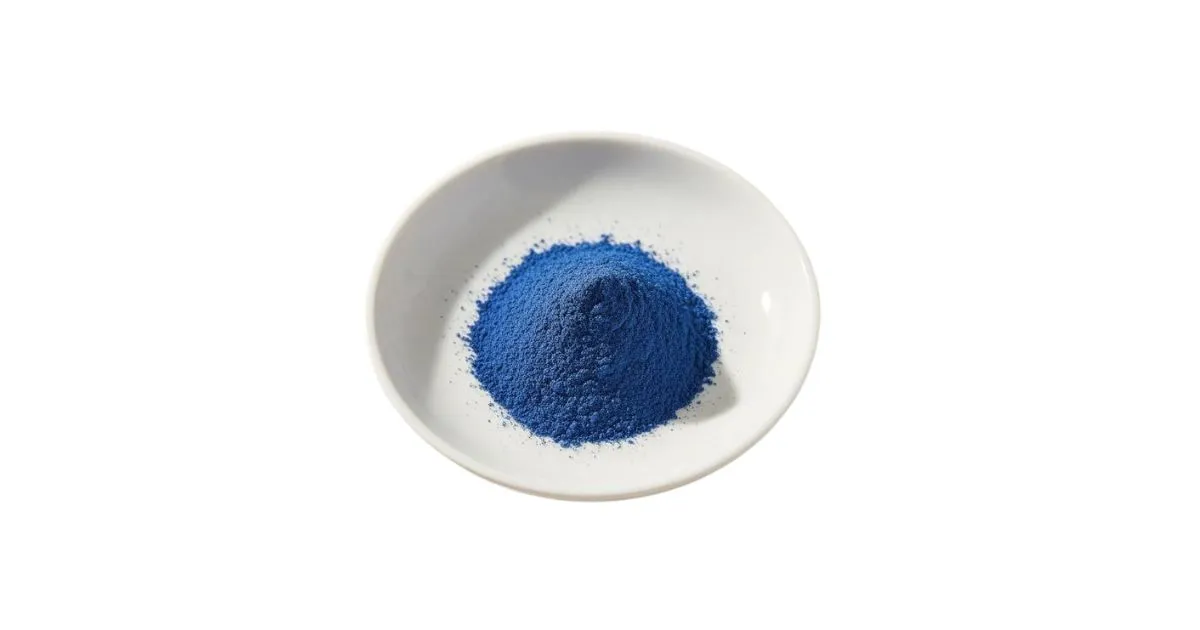
Understanding Gardenia Blue Powder: Origin, Composition, and Benefits
Botanical Origin and Core Chemistry
Ellis's Gardenia jasminoides is in the Rubiaceae family. Geniposide, an iridoid glycoside, is found in its ripe fruit. β-glucosidase breaks down geniposide into genipin during production. Genipin then joins with amino acids to form the stable blue chromophore. The end result is a fine, light gray to deep blue gardenia blue powder that mixes easily with water and aqueous ethanol but not with most organic solvents. This makes it perfect for use in water-based drinks.
Safety and Regulatory Standing
GMOs, gluten, and man-made chemicals are not found in gardenia blue. It doesn't have any known manufactured residues on it. Yangge makes gardenia blue powder that is certified as ISO, HACCP, Kosher, and Halal. This meets the standards for the U.S., EU, and major Asian markets. Its non-toxic and plant-based nature makes it perfect for the clean label trend that is now influencing buying choices in the beverage industry.
Why It Matters for Modern Beverages
Mintel research from 2023 confirms that 73% of people in the U.S. who buy drinks prefer products that list only natural ingredients. Gardenia blue powder meets that need without the color shifting that makes formulators mad. Its color stays the same at temperatures above 100°C and pH levels between 4.0 and 9.0, so it can be used for pasteurization, hot-fill production, and a lot of different types of drinks, from sports drinks to flavored waters.
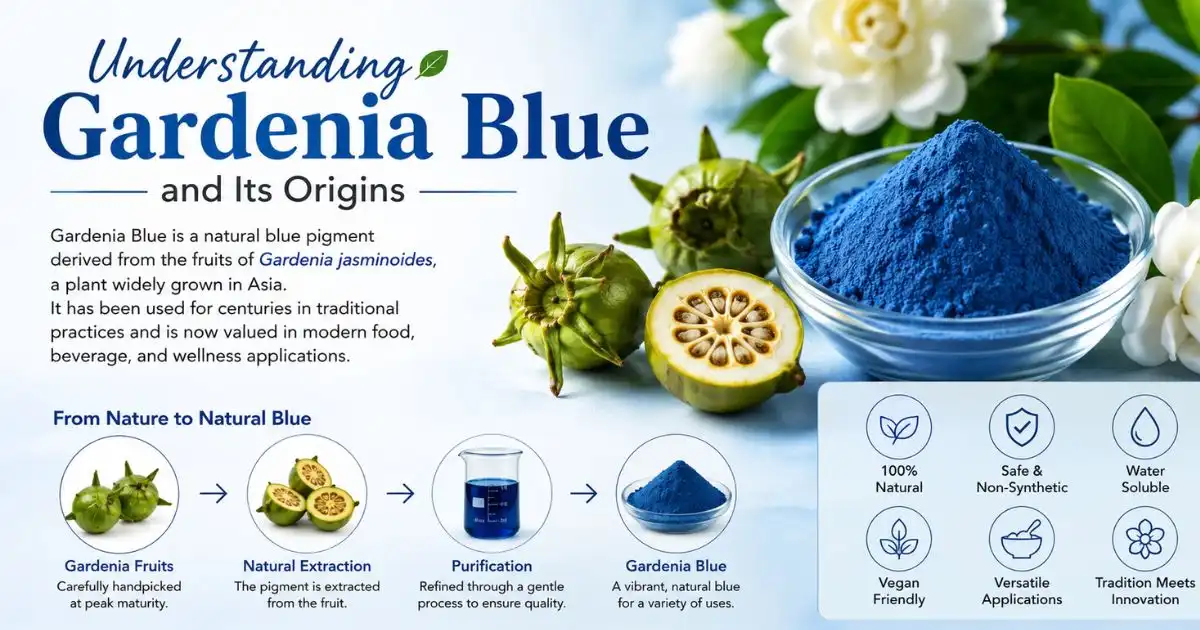
Comparative Analysis: Gardenia Blue Powder vs. Other Natural and Synthetic Blue Colorants
To pick the best blue colorant, you have to look at stability, label requirements, and processing conditions all at the same time. The table below shows a direct comparison of the most common choices.
| Colorant | Heat Stability | pH Stability | Clean Label | Key Risk |
|---|---|---|---|---|
| Gardenia Blue | >100°C | pH 4.0–9.0 | Yes | Regulatory variation by market |
| Spirulina (Phycocyanin) | Degrades >60°C | Moderate | Yes | Unstable in hot-fill processing |
| Butterfly Pea Flower | Moderate | Color shifts | Yes | Turns purple/red in acidic media |
| FD&C Blue No. 1 | High | High | No | More opposition from customers and regulators |
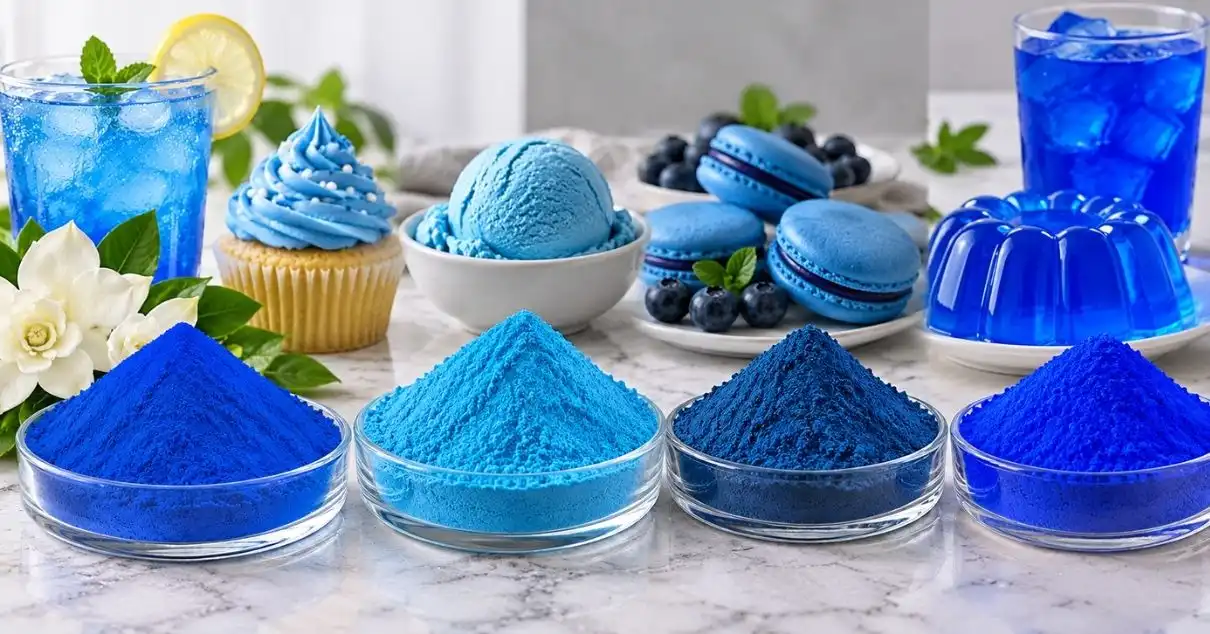
Extraction and Production Process: From Gardenia Fruit to Blue Powder
Enzymatic Biotransformation
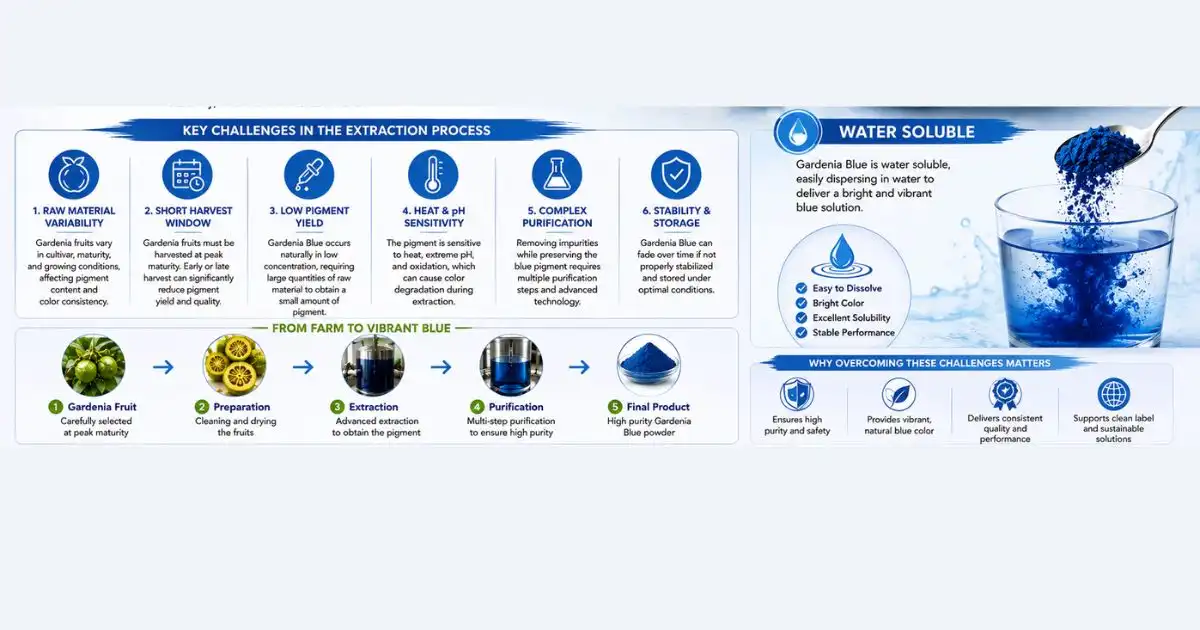
The first step in production is picking mature Gardenia jasminoides fruit. To get geniposide, it is first taken out and then broken down by β-glucosidase, which makes genipin. The blue iridoid polymer is made when genipin combines with free amino acids in a controlled way. This method is different from simple solvent extraction because it makes a pigment that is more chemically stable and has the same color in all batches.
HPLC-Based Quality Control
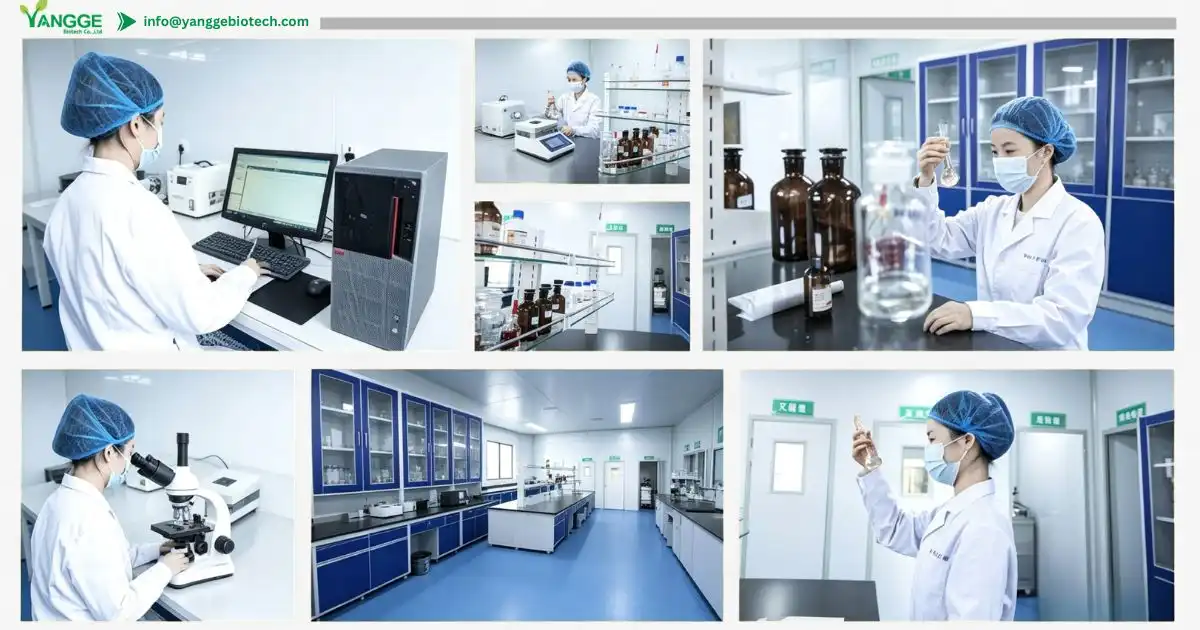
Yangge uses HPLC (high-performance liquid chromatography) as the main method for testing each batch of production. This makes sure that there are no contaminants and confirms the concentration of the chromophore. It also sets the color value (E value) for each specification. This way, buyers get powder that has a very small difference between batches and matches the stated E value (E30, E60, E80, E100, or E200).
Storage and Shelf Life
Gardenia blue powder can hold water. Caking happens when something absorbs moisture, which changes how easily it mixes in a formulation. Yangge says to store them in airtight cases that are covered and kept in a dry place away from direct light at temperatures below 25°C. When kept in these settings, the shelf life usually lasts for 24 months. For buying teams that order in bulk, the building conditions are just as important as the specifications.
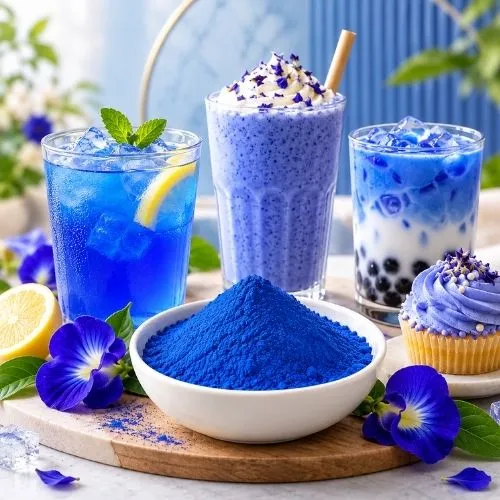
Practical Guide for Procuring Gardenia Blue Powder for Beverage Manufacturing
Specification Selection by Application
The first technical choice in any procurement process is picking the right E value. The table below shows how typical beverage uses are matched with suggested dosage ranges.
| Beverage Type | Recommended Spec | Typical Dosage Range |
|---|---|---|
| Functional drinks / sports beverages | E30–E60 | 0.05–0.15% |
| Flavored water / carbonated beverages | E60–E80 | 0.03–0.10% |
| Alcoholic beverages / liqueurs | E80–E100 | 0.02–0.08% |
| Concentrated syrups / premixes | E100–E200 | 0.01–0.05% |
Higher E values give you deeper color at lower use rates, which lowers the cost per unit. For purchasing managers who have to weigh cost vs. color intensity, switching from E60 to E100 can lower the amount of money spent on ingredients per liter without affecting the desired color.
Supplier Evaluation Criteria
When looking for a natural blue pigment seller, purchasing teams should ask for batch-specific HPLC certificates of analysis, make sure the supplier has current food-grade certifications (ISO, HACCP, Halal, Kosher), and make sure the supplier can ship samples before placing a trial order. All five standards are always in stock at Yangge, and the minimum order quantity (MOQ) is open for formulation trials. Regulatory information for specific countries, such as the US and EU, can be provided upon request.
Co-Production Advantage with Gardenia Yellow
The fruit that gardenia yellow and gardenia blue powder come from is the same. Yangge makes both colorants from the same stream of raw materials. This saves money on raw materials compared to suppliers who get each pigment separately. Formulation teams that want to make natural green shades can mix gardenia blue and yellow in a 1:1 to 2:1 ratio (blue:yellow by E value). This makes green tones that stay the same through pasteurization. For people who need both colors, this co-production approach saves them money.
Implementing Gardenia Blue Powder in Modern Beverage Formulations
Dosage and Dispersion Method
Before adding it to the drink base, dissolve the gardenia blue powder in water or a watery buffer at 40 to 60°C. Pre-dispersing in a small amount of water keeps the color from clumping and makes sure it spreads out evenly. Most ready-to-drink drinks have a standard dosage of between 0.03% and 0.15%, but this can change depending on the E value chosen and the target color depth. The color is organoleptically neutral at these levels, which means it doesn't change the smell or taste of anything.
Stability Interactions in Beverage Systems
Gardenia blue works well in most beverage mixtures, but some relationships need extra attention when the recipe is being made. If there are a lot of reducing sugars (above 15 Brix), the mixture may take longer to blend. This problem can be fixed by dissolving the powder first, then adding the sugar concentrates.
At normal use levels, the color also stays steady when mixed with popular preservatives like potassium sorbate and sodium benzoate. When formulators work with systems that have a pH level below 3.0, they should do stability tests because a slight greenish shift may show up in very acidic conditions.
Green Color Formulation with Gardenia Yellow
Gardenia blue and gardenia yellow can be used together instead of synthetic color mixes for brands that want natural green tones in matcha drinks, flavored waters, or herbal spirits. A green that is well-balanced is made by mixing 1.5 parts gardenia blue with 1 part gardenia yellow (by color unit). Change the amount little by little based on the color of the drink. Formulators can use a clean-label two-ingredient color system that comes from a single plant source with this method.
Conclusion
Gardenia blue powder is a useful, stable, and clean-label option for beverage makers in places where natural blue pigments haven't worked well in the past. It can stand up to heat and changes in pH, and the consistency of each batch can be reliably controlled by HPLC. This lowers the formulation risk that slows down product launches.
With Yangge's E30–E200 specification range, buyers can find the right color intensity for the job without giving too many details. The cost advantage of co-production with gardenia yellow makes a choice that was already technically sound even better for procurement teams that are in charge of multiple SKU beverage lines.
FAQ
Is gardenia blue powder safe for use in beverages?
Yes. The colorant gardenia blue powder comes from plants and is safe to use. It doesn't have any GMOs or gluten. The products that Yangge makes are certified by ISO, HACCP, Kosher, and Halal. Always make sure you know the exact regulatory situation in the market you want to reach, as approval categories vary from place to place.
How does gardenia blue compare to spirulina blue in heat processing?
Because it is made of proteins, spirulina blue (phycocyanin) starts to break down above 60°C. Gardenia blue powder stays blue at temperatures above 100°C, so it can be used in hot-fill, pasteurized, and retort-processed drinks where spirulina blue would turn colorless.
What is the minimum order quantity for sampling?
Before committing to a large order, approved buyers can try out samples of all five models (E30–E200) from Yangge. You can ask for a sample and a specification sheet by emailing info@yanggebiotech.com.
Can gardenia blue be used in alcoholic beverages?
Yes. The color breaks down in water-based ethanol solutions and stays stable at the ethanol levels found in liqueurs and spirits. The E80–E100 standards work well for most uses involving drinking drinks.
Does it affect the taste of the beverage?
Gardenia blue powder is organoleptically neutral at the doses that are suggested. At normal use rates, it doesn't add any off-flavors or off-aromas.
Partner with Yangge for Trusted Gardenia Blue Powder Supply
Yangge Biotech is a real company that makes gardenia blue powder. They have all the specifications you need (E30–E200) in stock and ready to ship. Every batch is backed by our ISO, HACCP, Kosher, and Halal certifications, and our HPLC-controlled production makes sure that the color consistency your formula needs. Our team gets back to you within 24 hours whether you need trial samples for bench testing or large amounts for scale-up. To get samples and prices right away, go to blog.yanggebiotech.com or email us at info@yanggebiotech.com.
References
1. Mintel Group. (2023). Global Food & Drink Trends: Natural Ingredients and Clean Label Demands. Mintel.
2. Tanaka, T., & Shnimizu, M. (2011). Iridoid glycosides from Gardenia jasminoides and their biological activities. Phytochemistry, 72(1), 1–10.
3. Mortensen, A. (2006). Carotenoids and other pigments as natural colorants. Pure and Applied Chemistry, 78(8), 1477–1491.
4. Scotter, M. J. (2011). Methods for the determination of European Union-permitted natural food colorants. Food Additives & Contaminants: Part A, 28(5), 527–596.
5. Hendry, G. A. F., & Houghton, J. D. (Eds.). (1996). Natural Food Colorants (2nd ed.). Blackie Academic & Professional.
6. Downham, A., & Collins, P. (2000). Colouring our foods in the last and next millennium. International Journal of Food Science & Technology, 35(1), 5–22.

Based on your location and order quantity, you will have the opportunity to receive a limited time free shipping promotion!
Who we are
Popular Blogs