Do you need meso-zeaxanthin?
If you're a formulation engineer, purchasing manager, or R&D professional in the health supplement, functional food, or cosmetic industry, the answer is likely yes especially when considering product differentiation and science-backed efficacy. Meso-zeaxanthin represents a specialized isomer of the broader xanthophyll family, distinctly concentrated in the macular center of the human retina. Unlike its counterparts lutein and regular zeaxanthin, meso-zeaxanthin is not abundantly available through diet alone, making supplementation both clinically relevant and commercially attractive. High-quality zeaxanthin powder sourced from marigold flowers offers the purity, batch consistency, and regulatory compliance needed to formulate premium eye health products. Whether you're developing AREDS2-compliant supplements, nutricosmetics, or fortified beverages, understanding meso-zeaxanthin's unique role can unlock significant market opportunities.

Comprehending Meso-Zeaxanthin and Zeaxanthin Powder
Molecular Structure and Natural Sources
Meso-zeaxanthin is a stereoisomer of zeaxanthin that has a different 3R,3'S structure than the 3R,3'R form that is found in foods like corn, peppers, and egg whites. The human body can change lutein into meso-zeaxanthin in the macula, but this process alone is not enough to achieve the best macular pigment density.
As a result, direct addition is necessary, especially for older people or people who spend a lot of time in front of digital computers. The blooms of Tagetes erecta L. (marigold flowers) are mostly used to make zeaxanthin powder by using saponification and crystallization. This makes sure that the strength is the same across specs ranging from 5% to 99% purity.
Critical Health Benefits for Product Development
Meso-zeaxanthin's main benefit is that it protects the health of the macula. Supplementation raises the Macular Pigment Optical Density (MPOD), which filters out dangerous blue light bands between 400 and 500 nm and neutralizes reactive oxygen species that cause Age-Related Macular Degeneration (AMD). In addition to protecting eyes, zeaxanthin is a general antioxidant that stops lipid breakdown and supports heart health.
New brain study also shows cognitive benefits, like longer attention spans and faster neural processing. This means the chemical can be used in more nootropic and brain health products. These many benefits make meso-zeaxanthin a useful ingredient that can be used in a wide range of health areas.
Dosage Guidelines and Safety Considerations
Standard supplementation guidelines say to take 10 to 20 mg of zeaxanthin and meso-zeaxanthin together every day. This is usually mixed with 10 mg of lutein to get the scientifically proven 5:1 ratio seen in the AREDS2 study. Even at higher doses, the safety rating is still good, with no known side effects at amounts as high as 75 mg per day. Premium zeaxanthin powder is safe for people with allergies because it is non-GMO and has not been treated. It also meets European PAH4 standards (Benzopyrene ≤10 ppb), which means it is safe from a chemical point of view.
When procurement workers look at supplier specs, they should give priority to goods that have been tested by a third-party lab for heavy metals, microbiological contaminants, and pesticide residues. Under normal storing conditions (sealed, light-protected areas), stability stays effective for 24 months, which is a key factor for planning supplies.

Comparing Zeaxanthin Variants: Meso-Zeaxanthin vs Lutein and Others
Functional Differences Between Carotenoid Compounds
Even though lutein, zeaxanthin, and meso-zeaxanthin all come from the same family of carotenoids, they are found in very different places in the eye and do very different biological jobs. Lutein is mostly found in the outer retina, while zeaxanthin and meso-zeaxanthin are mostly found in the foveal center, which is where clear central vision comes from. Based on this regional difference, it seems that meso-zeaxanthin protects the retinal cells that are doing the most metabolic work.
From a formulation point of view, this specificity lets marketers make focused claims about "central vision support" or "foveal protection," which sets their products apart from general supplements that only contain lutein. The fact that all three chemicals work together to make combination formulas more useful shows why they're useful: they balance broad retinal covering with focused foveal defense.
Pure Meso-Zeaxanthin Versus Mixed Carotenoid Blends
When choosing between pure meso-zeaxanthin isolates and multi-carotenoid mixes, there are trade-offs between how easy it is to make the product and how valuable it is seen by the market. Single-ingredient meso-zeaxanthin products make it easier to control the dose and send the product to the government. This is especially helpful when going after professional healthcare outlets or marketing claims based on proof. Instead, mixed formulas that use naturally occurring marigold products are more cost-effective and match what customers want in "whole food" or "full-spectrum" ingredients.
We see that B2B buyers who work with mass-market names tend to prefer normal blends like 5% or 10% zeaxanthin powder. On the other hand, buyers of premium or clinical-grade products like high-purity isolates with concentrations above 70%. To find a balance between these factors, R&D goals, target customer groups, and cost-of-goods standards need to be in sync.
Organic Versus Synthetic Sourcing Implications
The source of meso-zeaxanthin—whether it comes from natural plant extraction or manufactured chemistry—has big effects on how it is approved by regulators, how it is marketed, and how clear the supply chain is. Natural zeaxanthin powder made from marigold flowers is in line with organic standards (USDA, EU Organic), Non-GMO Project verification, and clean label placement, all of which are things that North American and European customers want more and more.
Even though synthetic versions are basically the same, they are looked at more closely in markets that value plant authenticity and may take longer to register in some places. Traceability is very important, so top providers use blockchain to track everything from growing the plants in the field to putting them in capsules. This meets audit and corporate social responsibility standards. When looking at possible partners, find out if they are ready to give you full paperwork, from genetic information about the seeds to instructions for processing them after the harvest.

Sourcing and Procurement: How to Buy Meso-Zeaxanthin and Zeaxanthin Powder in Bulk?
Global Sourcing Hubs and Supplier Evaluation Criteria
The world zeaxanthin supply landscape is dominated by three main areas. China produces the most raw materials. They offer reasonable prices and scalable capacity because they grow a lot of marigolds in Yunnan and Qinghai provinces. Europe, especially Spain and the Netherlands, puts a lot of emphasis on strict environmental rules and organically approved production, which appeals to buyers who care about sustainability. There are specialized makers in the US that focus on pharmaceutical-grade purity and processing that is FDA-compliant.
These manufacturers charge higher prices but offer full paperwork and technical support to back up their claims. Procurement teams should check that suppliers have GMP, ISO 9001 (quality management), or HACCP (food safety) certifications when deciding how trustworthy they are. Check the supplier's analytical skills as well. HPLC testing, bacteria labs, and relationships with reputable third-party organizations like SGS or Eurofins are all signs of a strong quality assurance system.
Pricing Models and Purchasing Strategies
The price of bulk zeaxanthin powder changes depending on the purity grade, the amount ordered, and the terms of the contract. Usually, it costs between $200 and $600 per kilogram for concentrations between 5% and 20% and between $1,500 and $4,000 per kilogram for isolates that are 80 to 99% pure. When you deal directly with makers, you don't have to pay dealer margins. This cuts landed costs by 15 to 25 percent and lets you customize particle size, solubility profiles (for example, cold water soluble versions), and packing configurations.
Wholesaler partnerships give you the freedom to make smaller batches and turn them around faster, but you give up some of your negotiating power when it comes to specs. We suggest making dual-sourcing deals to reduce supply problems. This is especially important since volatile farming commodities affect marigold harvests. When you make a 12-month promise to buy a certain amount of something, you can often get tiered price savings and priority allocation during times of high demand.
OEM and Private Label Customization Options
OEM relationships have strategic benefits that go beyond just rebranding. They also include co-developing formulations, testing for stability, and putting together regulatory dossiers. Advanced sellers offer complete packages that include choosing the right excipients to maximize bioavailability, encasing the supplement in veggie or gelatin softgels, and making sure it meets the rules for each country's supplement market in the USA, EU, and Asia-Pacific regions.
Private label programs help brands that don't have their own research and development departments get their products to market faster by giving them access to tested mixtures of meso-zeaxanthin with other ingredients that work well together, such as omega-3 DHA, bilberry extract, or astaxanthin. Minimum order numbers vary a lot. Reliable partners can handle initial runs as low as 1 kilogram for testing samples, and promises of multiple tons for established product lines. When you involve manufacturers early on in the product development process, you can work with them to make unique SKUs that take advantage of new clinical insights and market trends.

Evaluating Quality and Effectiveness of Zeaxanthin Powders
Analytical Verification Methods and Quality Markers
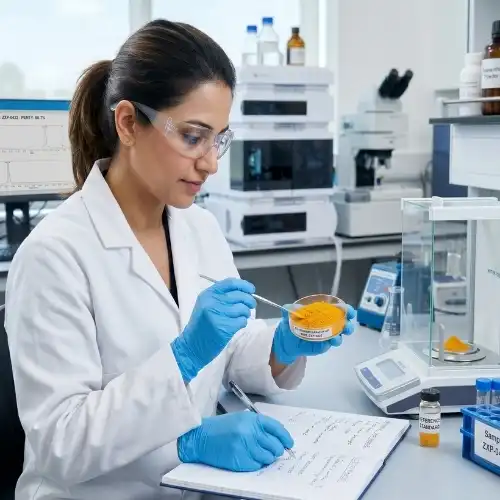
High-Performance Liquid Chromatography (HPLC) research is the gold standard for measuring zeaxanthin powder content, making sure stereoisomer purity, and finding possible contaminants or breakdown products. It is the first step in a strict quality assessment process. For pharmaceutical-grade uses, specifications should require at least 98% purity, along with thorough reports of analysis showing that the product is free of moisture (usually less than 5%), heavy metals (lead less than 2 ppm, arsenic less than 1 ppm), and microbiological load (total plate count less than 1,000 cfu/g).
Oxidative stability is checked using peroxide value tests and rapid shelf-life studies that mimic keeping for 24 months at a controlled temperature and humidity. Color uniformity, which can be anywhere from yellow to reddish-orange based on concentration, is a good way to get a general idea of the quality of the sample, but it can't replace instrumental analysis. Buyers should insist on paperwork that is special to each batch and should keep the option to do their own retesting in their own approved labs.
Clinical Evidence Supporting Product Efficacy
The trustworthiness of zeaxanthin-based products depends a lot on written clinical studies that show measurable health benefits. The important AREDS2 study, which included more than 4,000 people and was led by the National Eye Institute, found that taking 2 mg of zeaxanthin and 10 mg of lutein every day slowed the development to advanced AMD by 10–20% over five years. Later studies have found that MPOD rises between 15 and 35 percent after 6 to 12 months of supplementation, which is linked to better contrast perception and glare recovery.
Beyond eye health, new study suggests that a higher carotenoid intake may be linked to a lower risk of cognitive decline and cardiovascular events. However, these links need to be confirmed in randomized controlled studies. Align marketing claims about a product's benefits exactly with the amount of proof that backs them up. For example, structure-function statements based on well-known mechanisms should be used instead of therapeutic claims that need pre-market approval.
Regulatory Frameworks and Compliance Requirements
To get around in the world of regulations, you need to know a lot about the rules that apply to food supplements and useful ingredients in each country. Under DSHEA, zeaxanthin is considered a dietary ingredient in the United States. This means that it can be sold over-the-counter as long as the goods meet FDA Current Good Manufacturing Practice (cGMP) guidelines and don't make unapproved disease claims. The European Food Safety Authority (EFSA) keeps a list of vitamins and minerals that are safe to eat.
Xanthophylls like zeaxanthin are also allowed as long as they meet the quality and labeling requirements set out in Regulation (EC) No 1925/2006. Different Asian markets have different rules. For example, Japan's FOSHU (Foods for Specified Health Uses) system requires clinical proof for health claims, and China's Blue Hat registration process includes a lot of chemical tests and proof of effectiveness. Procurement teams should get notarized statements of compliance and up-to-date legal status certifications from suppliers to make sure that their quality management systems are in line with the rules in the target market.
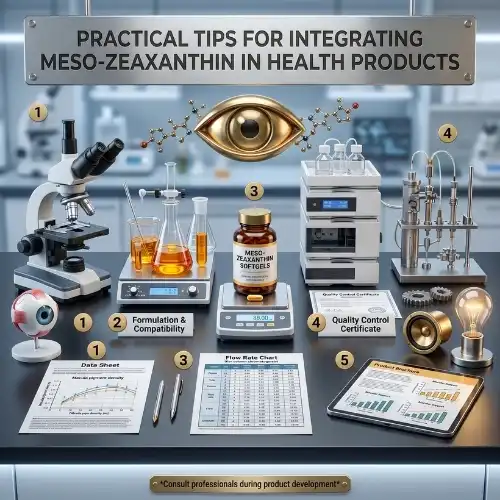
Practical Tips for Integrating Meso-Zeaxanthin in Health Products
Optimal Dosage Forms and Formulation Considerations
Choosing the right transport method has a big effect on bioavailability, customer satisfaction, and the ease of production. Zeaxanthin powder versions give you the most options because they can be put inside capsules, tablets, or mixed into protein blends and drink mixes. The cold water soluble (CWS) version, which is made possible by microencapsulation, stops oil rings or sedimentation from forming in water-based uses. This is important for ready-to-drink functional drinks or dissolving packets.
Softgel capsules improve absorption through lipid-based matrices, taking advantage of the fact that zeaxanthin dissolves in fat, and they also keep air out better than veggie capsules. People of all ages like liquid solutions, but they need strong preservation systems and homogenization procedures to keep the doses the same. To find the best concentration per serve, you should weigh the therapeutic benefit (10–20 mg mixed carotenoids) against the cost-per-dose and the product's place in the market.
Storage and Logistics Best Practices
To keep the purity of zeaxanthin throughout the supply chain, strict rules about the climate and how to handle it must be followed. Because the substance is sensitive to air, light, and high temperatures, it must be kept in amber or opaque containers that are tightly sealed and don't get warmer than 25°C. The relative humidity must also be kept at 60%. We suggest flushing the air of the package with nitrogen during the filling process to keep oxidative breakdown to a minimum. This will increase the shelf life from 18 to 30 months.
During travel, keep the goods out of direct sunlight and uncontrolled ambient conditions for long periods of time. Refrigerated crates are helpful for foreign shipping going through equatorial routes. Using a first-expired-first-out (FEFO) inventory rotation system, put new batches in a holding area until they can be analyzed and then released to production. Recording the conditions of storage along the whole cold chain is very important for quality reviews and regulatory checks because it allows for easy tracking.
Marketing Strategies and Claim Substantiation
To turn technical specs into appealing customer value propositions, you need a strategic positioning based on solid science and accepted certifications. Bringing attention to third-party testing by respected labs (USP, NSF International, Informed-Choice) builds trust, especially among health-conscious customers and professional athletes who are worried about drugs that aren't allowed on the field. To reach certain groups of people, stress that your products must meet strict cleanliness standards, such as Non-GMO Project verification, organic certification, or Kosher/Halal approval.
Adding educational material that connects meso-zeaxanthin to living factors like using digital devices, playing sports outside, and ageing well makes the product more relevant and increases the desire to buy it. Claims have to strike a balance between what people want and what the government allows. For example, structure-function statements like "supports macular density" are legal, but medicinal statements like "prevents AMD" get a drug classification. Use links to clinical studies in white papers or professional emails to show B2B buyers that your product is based on evidence and has been proven properly.
Conclusion
Adding meso-zeaxanthin to your health products is more than just a matter of following the recipe; it shows that you are committed to evidence-based innovation and setting yourself apart in the market. As people become more aware of blue light exposure and take more responsibility for their eye health, the demand for scientifically proven carotene vitamins keeps growing in both North America and Europe.
When procurement pros favor seller partnerships that offer clear sourcing, thorough certifications, and strong technical support, their brands are set up to stay ahead of the competition. Because it has many benefits, including protecting the eyes, improving brain function, and fighting free radicals throughout the body, it can be marketed to a wide range of demographics. You can turn meso-zeaxanthin from a raw ingredient into a key part of trusted health solutions by making sure that formulation methods are in line with clinical research, regulatory requirements, and customer preferences.
Partner With Yangge for Premium Zeaxanthin Powder Solutions
Yangge Biotech is a reliable company that makes zeaxanthin powder and is dedicated to providing approved, high-purity meso-zeaxanthin and lutein products that meet the needs of businesses around the world. Our products from marigolds range in quality from 5% to 99% and are made in a way that meets all FDA and EU standards and is certified by ISO, HACCP, Kosher, and Halal. We provide adaptable OEM packing options, cold water soluble (CWS) formulations that can be changed to fit your needs, and full technical support that includes advice on extraction methods and stability tests.
Yangge helps health supplement, functional food, and makeup brands feel sure about coming up with new ideas by letting them order samples and keeping track of products from farm to table. Get in touch with our knowledgeable staff at info@yanggebiotech.com to talk about your specific formulation needs, ask for full product specifications, and find out how our premium zeaxanthin powder supplier can help you speed up the development of your products while maintaining the highest quality standards.
FAQ
Q: Can we get some samples to test before purchasing?
A: Of course, we can provide free samples of 20 to 100 grams, but the shipping cost is at the customer's expense. The shipping cost can be deducted from the next order, or the samples can be sent through your courier account.
Q: Do your products have relevant certifications?
A: Yes, our products are certified for HALAL, ISO, HACCP, Kosher, and other certifications.
Q: What is the minimum order quantity (MOQ)?
A: Small batches of samples can be customized according to your requirements.
Q: Do you offer OEM and ODM services? Can the formula be customized based on our own?
A: Of course, we provide ODM and OEM services to many customers. Our product range includes softgels, capsules, tablets, sachets, granules, and private label services. Simply contact us and let us know your requirements. Our experienced R&D team can also develop new products with specific formulas.
Please contact us to design your own branded products.
Q: How do you handle quality complaints?
A: First, we have a comprehensive quality control SOP. We provide authoritative third-party inspection reports for almost all products before shipment to minimize the possibility of quality issues. Second, we have a comprehensive return and exchange procedure. If there is a genuine quality dispute, we will strictly follow the SOP.
A: For small orders, we typically use DHL, UPS, EMQ: How do you ship? How long does delivery take?S, FedEx, or TNT. Delivery typically takes 3-7 days. We also offer air and sea freight services. We have a strong freight forwarding team and can provide you with a one-stop service, including DDP and DDU.
Q: What are your payment terms?
A: 100% prepayment, payable by T/T, Western Union, MoneyGram, or PayPal.
Q: What is the shelf life of your products?
A: 2 years with proper storage.
Q: Is the packaging environmentally friendly?
A: We attach great importance to environmental protection and are constantly improving our product packaging. Some products are packaged in recyclable paper. Packaging materials are carefully selected to ensure product safety during transportation and storage, and to minimize environmental impact. We are committed to achieving a balance between environmental friendliness and practicality in our product packaging, and to contributing to sustainable development.
References
Age-Related Eye Disease Study 2 Research Group. "Lutein + Zeaxanthin and Omega-3 Fatty Acids for Age-Related Macular Degeneration: The Age-Related Eye Disease Study 2
1. Randomized Clinical Trial." Journal of the American Medical Association, vol. 309, no. 19, 2013, pp. 2005-2015.
2. Bone, Richard A., et al. "Macular Pigment Response to a Supplement Containing Meso-Zeaxanthin, Lutein and Zeaxanthin." Nutrition & Metabolism, vol. 4, no. 12, 2007.
3. Nolan, John M., et al. "The Impact of Macular Pigment Augmentation on Visual Performance in Normal Subjects: COMPASS." Vision Research, vol. 51, no. 5, 2011, pp. 459-469.
4. Tan, Joey S.L., et al. "Dietary Antioxidants and the Long-term Incidence of Age-Related Macular Degeneration: The Blue Mountains Eye Study." Ophthalmology, vol. 115, no. 2, 2008, pp. 334-341.
5. Stringham, James M., and B. Robert Hammond. "Macular Pigment and Visual Performance Under Glare Conditions." Optometry and Vision Science, vol. 85, no. 2, 2008, pp. 82-88.
6. European Food Safety Authority. "Scientific Opinion on the Substantiation of Health Claims Related to Zeaxanthin and Maintenance of Normal Vision." EFSA Journal, vol. 9, no. 6, 2011.

Based on your location and order quantity, you will have the opportunity to receive a limited time free shipping promotion!
Who we are
Popular Blogs