Black Carrot Concentrate Guide: Uses, Benefits, and OEM Tips
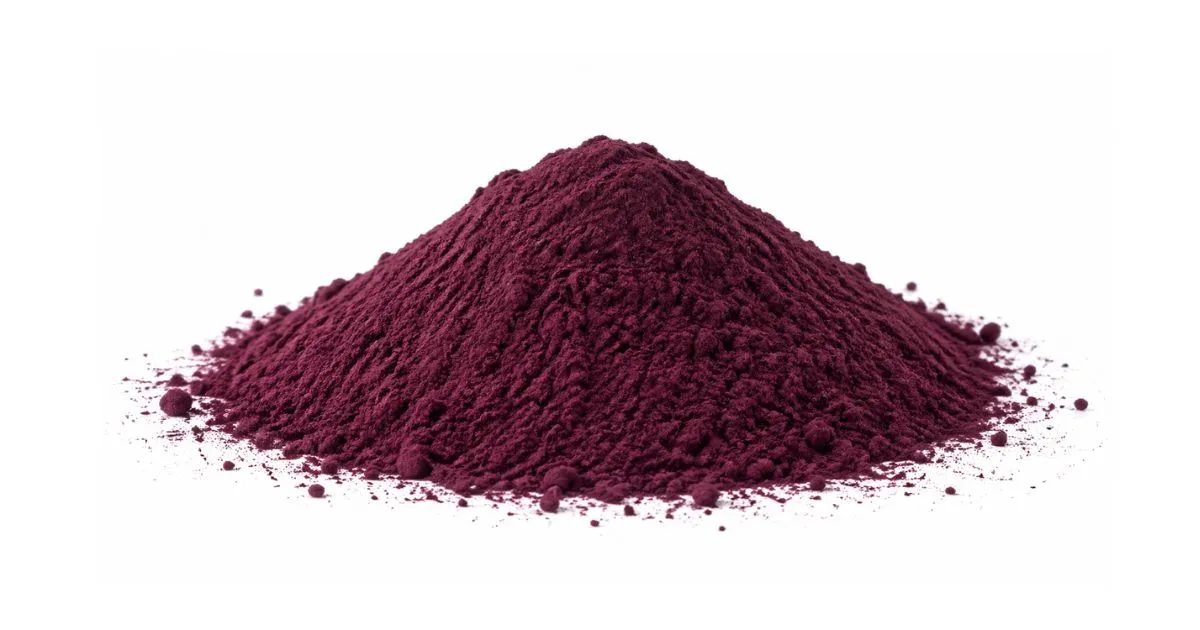
Black carrot concentrate is a dark red-purple powder extracted from the roots of Daucus carota L., packed with acylated anthocyanins that deliver both natural color and measurable antioxidant activity. For food and beverage manufacturers working to replace synthetic dyes like Allura Red, this ingredient offers a clean-label path with real technical advantages. This guide walks through its composition, manufacturing applications, supplier selection criteria, and OEM procurement tips to help your team move from sample request to full-scale production with confidence. Contact us or you may ask for a sample or get a price, email info@yanggebiotech.com or go to blog.yanggebiotech.com right now.
Understanding Black Carrot Concentrate: Composition and Benefits
What Makes It Different From Regular Carrot
Acidic cyanidin-3-glycosides, not beta-carotene, give black carrot extract its dark color. About 60–90% of its anthocyanins are acylated with sinapic, ferulic, and coumaric acids. This creates a protective chemical structure that makes the color more resistant to heat and light than sources that aren't acylated, like grape skin extract.
Nutritional Profile at a Glance
There are a lot of nutrients in this ingredient. Based on data from the USDA and FDA, for every 100 grams of black carrot root:
| Nutrient | Amount | % RDI |
|---|---|---|
| Calories | 35 kcal | — |
| Carbohydrates | 8.2g | — |
| Dietary Fiber | 2.9g | — |
| Protein | 1g | — |
| Vitamin A | — | 334% |
| Vitamin C | — | 6% |
| Potassium | — | 7% |
The food has 35 kcal of calories, 8.2g of carbohydrates, 2.9g of dietary fiber, and 1g of protein. It also has 334% of the RDI for vitamin A, 6% of the RDI for vitamin C, and 7% of the RDI for potassium.
Documented Health Functions
With these numbers, black carrot extract is shown to be more than just a colorant, which is helpful when trying to sell to health-conscious people.

Applications and Usage of Black Carrot Concentrate in Manufacturing
pH Behavior and Color Range
Black carrot concentrate extract can naturally show you what the pH level is. Between pH 3.0 and 4.0, it is a bright ruby red. Between pH 4.0 and 5.0, it changes to a violet-purple color. Above pH 6.0, it turns blue-gray. In other words, it works best in acidic product systems and needs to be pH-managed in dairy or protein-rich ones.
Here are the main places where this ingredient has been used in the past and worked well:
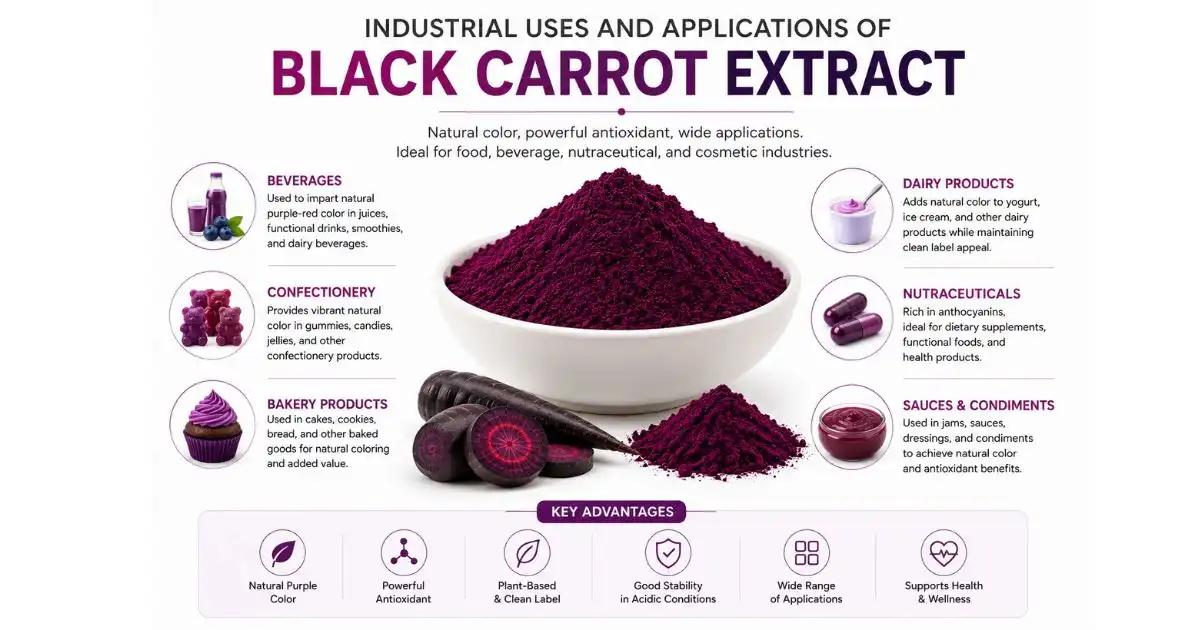
- Carbonated beverages and functional waters (pH 2.5–3.5): The extract maintains a crystal-clear red hue for 12+ months of shelf life, even under fluorescent retail lighting. It does not sediment or cause neck-ringing issues common with lake pigments, making it a direct technical upgrade from synthetic reds.
- Gummies and hard candies (processing temps >100°C): Unlike beet juice concentrate, which browns under Maillard conditions during high-heat depositing, black carrot extract retains its color intensity. It covers "berry," "cherry," and "grape" flavor categories across standard gummy production lines.
- Dairy and plant-based alternatives (pH 4.0–4.6): In fruit-on-the-bottom yogurt and sorbet applications, the extract is typically formulated into the acidic fruit preparation first to hold a red-purple profile before swirling into the neutral base.
Carbonated drinks and useful waters (pH 2.5–3.5): Even when stored in bright lights, the extract stays a clear red color for 12 months or more. It doesn't settle or cause neck-ringing problems like lake pigments do, so it's a straight scientific improvement over synthetic reds.
Powder vs. Liquid Format
alternative foods to dairy and plants (pH 4.0–4.6): When making fruit-on-the-bottom yogurt and sorbet, the extract is usually mixed into the sour fruit mixture first to give it a reddish-purple color before being mixed into the neutral base.
Choosing the Right Black Carrot Concentrate Supplier: A B2B Procurement Guide
Certifications and Compliance Standards
Proof of a supplier's reliability starts with paperwork. The legal bar is high for companies that want to sell in the EU and the US. You can find Yangge Biotech's black carrot concentrate products under GMP standards and see that it has ISO and HACCP certifications. Through partnerships with approved third-party laboratories, it can prove that its Black Carrot Extract meets the European PAH4 standard and has benzopyrene levels of less than 10 parts per billion. There are also Kosher and Halal certifications, which makes it easier to sell in North America, the EU, and the Middle East. Yangge Black Carrot Extract is:
| Compliance/Certification | Yangge Black Carrot Extract |
|---|---|
| PAH4 (EU standard) | ✓ Compliant |
| Benzopyrene | ≤10 ppb |
| Non-GMO | ✓ |
| Non-Irradiated | ✓ |
| Allergen-Free | ✓ |
| ISO / HACCP / GMP | ✓ |
| Kosher / Halal | ✓ |
Evaluating Supplier Reliability
A reliable provider should offer more than just certifications. They should also be able to track each batch, provide uniform color values (E1% 1cm, ranging from 4 to 120 units based on concentration), and offer quick technical support. The farm-to-table traceability model used by Yangge directly supports this, and it includes sustainable sourcing partnerships in its food supply chain.
Red Flags to Avoid
Price should never be the only factor used to choose a supplier for EU-bound goods. Suppliers who can't show PAH4 test records from approved labs or certificates of analysis that are specific to a batch pose a legal risk that is much greater than any cost savings. Always ask for proof that a third party has checked the paperwork again before allowing a new vendor.

OEM Tips: Maximizing Black Carrot Concentrate's Value in Your Product Line
Stabilizing Anthocyanins in Formulation
Anthocyanin degradation during processing is the most common technical problem that OEM teams have to deal with. To keep things safe, keep the pH below 4.0 during production, use opaque or UV-blocking packaging, and use microencapsulation when making things in neutral or protein-heavy matrices. These steps directly increase the shelf life of the color without changing the fact that the finished product still has a clean label.
Private Label and Custom Packaging
As standard, Yangge packages black carrot concentrate in 1 kg aluminum foil bags. For larger OEM orders, custom packaging is also available. This adaptability helps private-label projects that need labels and batch records that are specific to a brand. You can talk to the commercial team directly about custom minimum order numbers and wait times.
Export Compliance for EU and US Markets
Manufacturers that send goods to the EU should make sure that their suppliers follow EC No. 1333/2008 for food chemicals and EC No. 1881/2006 for pollution limits, especially for PAH compounds. For anthocyanin-based colorants in the US, check the GRAS status or relevant FDA notification records. Yangge's paperwork package covers both regulatory settings, which makes it easier for internal quality assurance (QA) during the provider onboarding process.

Procurement Transaction Insights: How to Buy Black Carrot Concentrate Effectively
To quickly find this ingredient, you need to know where to look and what questions to ask. Trade shows in your industry, like Fi Europe and SupplySide West, are good places to meet potential new sellers in person. Searching Google for "black carrot concentrate supplier" or "anthocyanin colorant manufacturer" will bring up both wholesalers and direct producers. To be sure that the latter is who you're looking for, you'll need to ask for facility audit records.
Usually, it takes 6–12 weeks from the first contact to mass production. Here's what happens: check color value and matrix compatibility; look over EU compliance papers; ask for samples; test for stability; make a pilot batch; and so on. When buyers make technical specification sheets before making the first contact, the time they spend going back and forth during qualification is cut down by a large amount.
When buying in bulk, it's easier to keep track of the real cost-per-application if you negotiate prices per color unit (E value) instead of per kilogram. Long-term supply deals also help keep prices stable even when the prices of raw materials change with the seasons, which can happen with colors that come from plants.

Conclusion
Black carrot concentrate satisfies the requirements for clean-label product development, which include stable natural color, EU compliance, and a source that can be tracked with proof. Because it doesn't react with heat, dissolves easily in water, and has a lot of anthocyanins, it can be used instead of synthetic reds in drinks, sweets, and plant-based foods.
The single most important thing for sourcing and formulation teams to do for a smooth ingredient shift is to choose a certified source with full batch traceability. Yangge's Black Carrot Extract meets these standards with its GMP-made powder that is PAH4-compliant, HPLC-tested, and ready to help you start your next product.
FAQ
What is the difference between black carrot powder and liquid concentrate?
Black carrot powder is spray-dried for easy handling, stable shelf life, and dry-mix applications. Liquid concentrate (40–70 Brix) suits direct beverage blending. Both deliver the same anthocyanin pigment profile; the choice depends on your processing line and dosing system.
Does black carrot extract work in dairy formulations?
It can, with proper pH management. Dairy systems typically sit at pH 4.0–6.5, which causes color shift toward purple or blue. Formulators usually incorporate the extract into an acidic fruit preparation (pH 3.5) before mixing it into the dairy base to preserve the desired red-purple shade.
How do I verify a supplier's EU compliance for PAH4 and benzopyrene limits?
Request batch-specific certificates of analysis from accredited third-party laboratories, not only in-house test reports. Suppliers should reference EC No 1881/2006 contaminant limits and provide documentation showing benzopyrene ≤10 ppb and PAH4 compliance for each production lot.
What certifications should I look for in a black carrot extract supplier?
Prioritize ISO, HACCP, GMP, Non-GMO, and Kosher/Halal certifications. These cover quality management, food safety systems, and market access requirements across EU, North American, and ANZ regions.
What is the typical minimum order quantity?
Yangge offers standard packaging in 1kg aluminum foil bags with custom order sizes available. Contact the team directly for volume pricing and minimum order details based on your production schedule.
Partner With Yangge for Your Black Carrot Concentrate Supply
Yangge Biotech is a reliable company that makes black carrot extract. They have ISO, HACCP, Kosher, and Halal standards, as well as all the paperwork that the EU requires. Our Non-GMO, HPLC-tested Black Carrot Extract ships in batches that have been checked and backed up by retesting by a third-party lab. If you need samples to test for stability or a long-term supply contract, our team is ready to help. To ask for a sample or get a price, email info@yanggebiotech.com or go to blog.yanggebiotech.com right now.
References
1. Giusti, M. M., & Wrolstad, R. E. (2003). Acylated anthocyanins from edible sources and their applications in food systems. Biochemical Engineering Journal.
2. Kammerer, D., Carle, R., & Schieber, A. (2004). Quantification of anthocyanins in black carrot extracts (Daucus carota ssp. sativus var. atrorubens) by HPLC-DAD. Journal of Agricultural and Food Chemistry.
3. European Food Safety Authority (EFSA). (2012). Scientific opinion on the re-evaluation of anthocyanins (E 163) as a food additive. EFSA Journal.
4. Khoo, H. E., Azlan, A., Tang, S. T., & Lim, S. M. (2017). Anthocyanidins and anthocyanins: colored pigments as food, pharmaceutical ingredients, and the potential health benefits. Food & Nutrition Research.
5. Regulation (EC) No 1881/2006 setting maximum levels for certain contaminants in foodstuffs. Official Journal of the European Union, 2006.
6. United States Department of Agriculture (USDA) Agricultural Research Service. (2019). FoodData Central: Carrot, raw nutritional profile. USDA National Nutrient Database.

Based on your location and order quantity, you will have the opportunity to receive a limited time free shipping promotion!
Who we are
Popular Blogs